
BuddhistCatholicContemplativeEvangelicalGeneral ChristianHinduJewishLatter-day SaintMuslimNew VisionsProgressive Christian
Beliefs
- Buddhist
- Catholic
- Contemplative
- Evangelical
- General Christian
- Hindu
- Jewish
- Latter-day Saint
- More Voices
- Muslim
- New Visions
- Pagan
- Progressive Christian
Topics
- Religion News
- Food and Religion
- Sports and Religion
- Religious Art
- Religious Music and Entertainment
- Religious Events
- History and Religion
- Style and Religion
- Politics and Religion
- Women in Religion
- Recreation Outdoors and Religion
- Business Finance and Religion
- Careers Workplace and Religion
- Education and Religion
- Family Parenting and Religion
- Health Fitness and Religion
- Home and Religion
- Relationships and Religion
- Technology and Religion
- Travel and Religion
Columnists
- Buddhist Columnists
- Business Finance and Religion Columnists
- Careers Workplace and Religion Columnists
- Catholic Columnists
- Contemplative Columnists
- Education and Religion Columnists
- Evangelists Columnists
- Family Parenting and Religion Columnists
- General Christian Columnists
- Health Fitness and Religion Columnists
- Hindu Columnists
- History and Religion Columnists
- Home and Religion Columnists
- Jewish Columnists
- More Voices Columnists
- Latter Day Columnists
- Muslim Columnists
- New Visions Columnists
- Nonreligious Columnists
- Pagan Columnists
- Politics and Religion Columnists
- Progressive Columnists
- Recreation Outdoors and Religion Columnists
- Relationships and Religion Columnists
- Religion News Columnists
- Religious Art Columnists
- Religious Events Columnists
- Religious Music and Entertainment Columnists
- Sports and Religion Columnists
- Style and Religion Columnists
- Technology and Religion Columnists
- Travel and Religion Columnists
- Women in Religion Columnists
Resource Library
- 2026 Calendar
- Library of World Religions
- The 100 Most Holy Places on Earth
- Patheos Answers
- Podcasts
- Videos
- Faith Leaders Database
- Anglican Episcopalian
- Bahai
- Baptist
- Buddhism
- Christianity
- Confucianism
- Eastern Orthodoxy
- Hinduism
- Holiness and Pentecostal
- ISKCON
- Islam
- Judaism
- Lutheran
- Methodist
- The Church of Jesus Christ of Latter-day Saints
- New Age
- Paganism
- Presbytarian and Reformed
- Protestantism
- Religion Behind the Scenes
- Roman Catholic
- Scientology
- Shia Islam
- Sikhism
- Sufism
- Sunni Islam
- Taoism
- Zen
- See all religions
Research Tools
 Ad-Free & Subscriber Log-In Subscription Support
Ad-Free & Subscriber Log-In Subscription Support
Follow Patheos 

- Trending:
- Forgiveness
- |
- Marriage
- |
- Consciousness
- |
- Death Penalty
- |
- Election
- |
- Halloween
 Christian Crier
- Home
- Evangelical
- What Are The Important Things In A Relationship?
What Are The Important Things In A Relationship?
Last updated on: June 24, 2016 at 2:05 pm by Jack Wellman
What Are The Important Things In A Relationship? 2016-06-24T14:05:12-05:00 Jack Wellman
Patheos Explore the world's faith through different perspectives on religion and spirituality! Patheos has the views of the prevalent religions and spiritualities of the world.
What are some really important things to consider in relationships?
Transparency
If we can’t be transparent or honest with our spouses or our best friends, who can we be (besides God)? James wrote, “confess your sins to one another and pray for one another, that you may be healed” (James 5:16a). James says at least two things here; confess your sins to one another. He does not say confess your sins to “everyone.” Secondly, we are to pray for one another. This can bring healing…either physical or emotional, and certainly relationally. I think James’ point is prayer and confession can bring healing. There is something refreshing about sharing your struggles and exposing your faults to a close friend or spouse. With them, it feels like a “safe zone” where you can just talk about anything and everything, and not fear being judged by it.
Honesty
Nothing hurts like being lied to. If you don’t have someone’s trust, you don’t have much of anything in a relationship. It’s nothing more than a plutonic relationship if there is no trust. If it becomes a relationship where a husband and a wife continually lie to one another, and so often that it’s hard to tell when they’re telling the truth, then that relationship is in trouble. It’s hard to trust them with the finances, with the children, with other responsibilities, or just about anything. It is so much easier to lose trust than it is to gain it back. The dangers of lying to a friend or a spouse are just not worth the risk.
Accountability
As the Body of Christ, the church, we are all accountable to one another. Certainly the church treasurer is accountable to the church, the preacher is accountable to the congregation, and the church is accountable for how they treat one another. When Christ returns, will He see a bride that has self-inflicted wounds from other members judging them over non-essentials and wounding them with words that hurt? God will hold each one of us accountable in our relationships in life and we won’t be able to drag our parents or anyone else we might want to blame for our behavior. We shall all stand before the judgment seat of Christ and have to give an account to Him (Rom 14:10). Thankfully, Jesus’ righteousness is accounted to us (2nd Cor 5:21) but that makes us accountable to Him. Ultimately, you’re accountable to God but God will hold you accountable for how you responded to others in your relationships with them.
Can’t Change Them
I remember a young couple that had marital difficulties right from the start, even they had gone through premarital counseling. What had happened was the woman married a man who had a drinking problem but he had promised, “Once we get married, I’m done.” He never came through on that promise. Their marriage has been on the rocks ever since. Perhaps there was a misunderstanding that she could change him once they were married, but rarely does permanent change come from outside influences. Change that comes from within the person is more likely to succeed in whatever they are endeavoring to accomplish and only that may bring permanent change, for the better you would think. In a person’s effort to change someone, all they end up doing is make them dig in their heels even deeper. It also brings about the possibility of a backlash which results in open hostility and a defiant resistance to any change.
Forgiveness
One pastor who had retired from the pastorate gave an account of an experience with a young couple in the airport. The older couple had been married for many years but the newlyweds had been married that very day. They noticed the older couple sitting together, holding hands, so the newlywed bride ask the older couple, “How long have you been married?” They said over 54 years, so the woman asked, “What’s the secret to staying married for so long” and the retired pastor thought and pondered the question for a moment but his wife knew the answer already. She said the key to a long and successful marriage is “forgiveness.” Of course, she’s right. The word “for” is used as a function to indicate the purpose of giving so forgiving is giving something; your forgiveness or you are saying, “I release this…it’s over. We don’t trip over what’s behind us.” So forgiveness is the function of giving…in this case, forgiveness. Letting go, releasing it and, like saying, “Drop the gavel. Case dismissed.”
Love
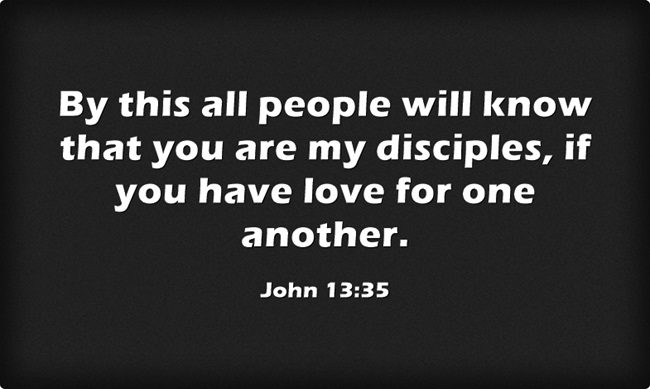
Love is the common thread of any relationship, including a spouse, children, parents, friends, and really, anyone and everyone. Jesus said that our love shows that we are or are not His disciples as recorded in the Gospel of John, “By this all people will know that you are my disciples, if you have love for one another” (John 13:35). The fact that Jesus mentioned “all people” is significant because it doesn’t refer only to those in the church but everyone, is all people. Those inside and outside of the church will know a disciple of Christ when they see them love like Christ. When they recognize that love, they can recognize Christ, however a red flag comes up when someone “says, “I love God,” and hates his brother, he is a liar; for he who does not love his brother whom he has seen cannot love God whom he has not seen” (1st John 4:20).
Conclusion
We were created for relationships and God knew it was not good for us to be alone (Gen 2:18) and it doesn’t feel good to be alone, so I agree with God. Life is a lot about relationships because no man really is an island. No man really lives to himself (Rom 14:7). We all have an effect on those around us and those around us have an effect on us; either for good or for bad. We are an interdependent society and we need one another. That’s why relationships are so vital to our wellbeing and the wellbeing of others.
Article by Jack Wellman
Jack Wellman is Pastor of the Mulvane Brethren Church in Mulvane Kansas. Jack is also the Senior Writer at What Christians Want To Know whose mission is to equip, encourage, and energize Christians and to address questions about the believer’s daily walk with God and the Bible. You can follow Jack on Google Plus or check out his book Teaching Children the Gospel available on Amazon.
Previous Post

June 23, 2016
What Are The Important Values To Live By?
Next Post
June 24, 2016 What Should I Do With The Rest Of My Life?
Browse Our Archives
Select a Category Bible Answers Bible Definitions Bible Story Bible Study Bible Verses Christian Books Christian Entertainment Christian Fathers Christian Mothers Christian Quotes Devotional Famous Christians Music News Parables Prayers Quotes Sunday School Lesson Uncategorized Youth Sermons
Select a Month October 2019 September 2019 August 2019 July 2019 June 2019 May 2019 April 2019 March 2019 February 2019 January 2019 December 2018 November 2018 October 2018 September 2018 August 2018 July 2018 June 2018 May 2018 April 2018 March 2018 February 2018 January 2018 December 2017 November 2017 October 2017 September 2017 August 2017 July 2017 June 2017 May 2017 April 2017 March 2017 February 2017 January 2017 December 2016 November 2016 October 2016 September 2016 August 2016 July 2016 June 2016 May 2016 March 2016 February 2016 January 2016 December 2015 November 2015 October 2015 September 2015 August 2015 July 2015 June 2015 May 2015 April 2015 March 2015 February 2015 January 2015 December 2014 November 2014 October 2014 September 2014 August 2014 July 2014 June 2014 May 2014 April 2014 March 2014 February 2014 January 2014 December 2013 November 2013 October 2013 September 2013 August 2013 July 2013 June 2013 May 2013 April 2013 March 2013
Follow Us!
TAKE THE
Religious Wisdom Quiz
Who does Paul say is the man of lawlessness who will exalt himself in God's temple?
Select your answer to see how you score.
The one doomed to destruction Satan The beast The antichrist
Related posts from Christian Crier

What Does The Bible Say About Our Thoughts?

Do Colors Have Special Meaning In The Bible?

The Glass – Half Empty Or Half Full?

TRENDING AT PATHEOS Evangelical

The REST of Your Life: A Creative Wrestles...
This week I had a conversation with a good friend from church....

How the author of the world's best hymn...
I've been working with John Newton for a while now. This makes...

Long before this Lectio Divina, Psalm 130 - the song - started...

What About the Trees? Another Living Parable
After I finished writing the last article about falling leaves as a...

Why Classical Education Is a Conversation, Not a...
Come and Read: Joy in Classical Education When I was a little...

Cornell University has received a great deal of negative publicity and intense...
view all Evangelical blogs
Ad-Free & Subscriber Log-In Subscription Support
- About Us
- 2026 Calendar
- Videos
- Podcasts
- Library of World Religions
- Faith In Media Tracker
- Advertise With Us
- Write for Us
- Privacy Policy
- Terms of Service
- Do Not Sell My Data
- Contact Us
- Radiant Digital
- Manage Newsletter Subscriptions
- Unsubscribe From Notifications
- Sitemap
Copyright 2008-2026, Patheos. All rights reserved.
Subscription Support Ad-Free & Subscriber Log-In
Follow Patheos