
BuddhistCatholicContemplativeEvangelicalGeneral ChristianHinduJewishLatter-day SaintMuslimNew VisionsProgressive Christian
Beliefs
- Buddhist
- Catholic
- Contemplative
- Evangelical
- General Christian
- Hindu
- Jewish
- Latter-day Saint
- More Voices
- Muslim
- New Visions
- Pagan
- Progressive Christian
Topics
- Religion News
- Food and Religion
- Sports and Religion
- Religious Art
- Religious Music and Entertainment
- Religious Events
- History and Religion
- Style and Religion
- Politics and Religion
- Women in Religion
- Recreation Outdoors and Religion
- Business Finance and Religion
- Careers Workplace and Religion
- Education and Religion
- Family Parenting and Religion
- Health Fitness and Religion
- Home and Religion
- Relationships and Religion
- Technology and Religion
- Travel and Religion
Columnists
- Buddhist Columnists
- Business Finance and Religion Columnists
- Careers Workplace and Religion Columnists
- Catholic Columnists
- Contemplative Columnists
- Education and Religion Columnists
- Evangelists Columnists
- Family Parenting and Religion Columnists
- General Christian Columnists
- Health Fitness and Religion Columnists
- Hindu Columnists
- History and Religion Columnists
- Home and Religion Columnists
- Jewish Columnists
- More Voices Columnists
- Latter Day Columnists
- Muslim Columnists
- New Visions Columnists
- Nonreligious Columnists
- Pagan Columnists
- Politics and Religion Columnists
- Progressive Columnists
- Recreation Outdoors and Religion Columnists
- Relationships and Religion Columnists
- Religion News Columnists
- Religious Art Columnists
- Religious Events Columnists
- Religious Music and Entertainment Columnists
- Sports and Religion Columnists
- Style and Religion Columnists
- Technology and Religion Columnists
- Travel and Religion Columnists
- Women in Religion Columnists
Resource Library
- 2026 Calendar
- Library of World Religions
- The 100 Most Holy Places on Earth
- Patheos Answers
- Podcasts
- Videos
- Faith Leaders Database
- Anglican Episcopalian
- Bahai
- Baptist
- Buddhism
- Christianity
- Confucianism
- Eastern Orthodoxy
- Hinduism
- Holiness and Pentecostal
- ISKCON
- Islam
- Judaism
- Lutheran
- Methodist
- The Church of Jesus Christ of Latter-day Saints
- New Age
- Paganism
- Presbytarian and Reformed
- Protestantism
- Religion Behind the Scenes
- Roman Catholic
- Scientology
- Shia Islam
- Sikhism
- Sufism
- Sunni Islam
- Taoism
- Zen
- See all religions
Research Tools
 Ad-Free & Subscriber Log-In Subscription Support
Ad-Free & Subscriber Log-In Subscription Support
Follow Patheos 

- Trending:
- Forgiveness
- |
- Marriage
- |
- Consciousness
- |
- Death Penalty
- |
- Election
- |
- Halloween
 Christian Crier
- Home
- Evangelical
- What Should A Church Use For Communion? Grape Juice or Wine?
What Should A Church Use For Communion? Grape Juice or Wine?
Last updated on: June 20, 2016 at 12:18 pm by Jack Wellman
What Should A Church Use For Communion? Grape Juice or Wine? 2016-06-20T12:18:19-05:00 Jack Wellman
Patheos Explore the world's faith through different perspectives on religion and spirituality! Patheos has the views of the prevalent religions and spiritualities of the world.
Should churches use wine or grape juice for Communion? What do you think?
The Command for Communion
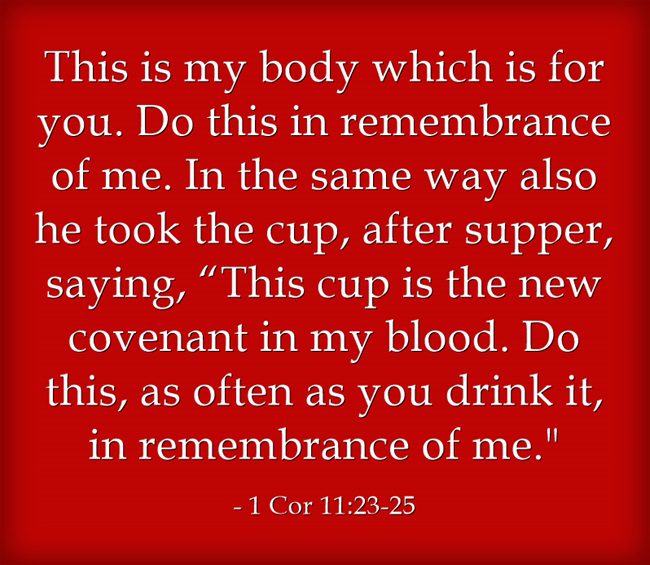
Believers in Christ are commanded to partake in and observe the Lord’s Supper or Communion, as at the Apostle Paul wrote, “For I received from the Lord what I also delivered to you, that the Lord Jesus on the night when he was betrayed took bread, and when he had given thanks, he broke it, and said, “This is my body which is for you. Do this in remembrance of me. In the same way also he took the cup, after supper, saying, “This cup is the new covenant in my blood. Do this, as often as you drink it, in remembrance of me” (1st Cor 11:23-25). The reason Communion is given and we partake in it is just as Paul wrote; “For as often as you eat this bread and drink the cup, you proclaim the Lord’s death until he comes” (1st Cor 11:26). This means that we are not given an option. It is command and by our observance of Communion, we are actually proclaiming Jesus coming. This isn’t just Paul’s command but Jesus Himself says to us, “This is my body, which is given for you. Do this in remembrance of me” (Luke 22:19), not “if you think its right” or “if you feel like it.” The command form or structure of this sentence is “Do this” and is an imperative command. We know we must partake in the Lord’s Supper or Communion. It is commanded.
Self-Examination
The Apostle Paul was clearly angry with the way that the Corinthian church was observing Passover or the Communion meal as he wrote, “When you come together, it is not the Lord’s supper that you eat. For in eating, each one goes ahead with his own meal. One goes hungry, another gets drunk. What! Do you not have houses to eat and drink in? Or do you despise the church of God and humiliate those who have nothing? What shall I say to you? Shall I commend you in this? No, I will not” (1st Cor 11:20-22). The Corinthians had turned the love feast into a drunken party. There is no other way to put it, therefore Paul gave a serious warning about the implications by writing that “Whoever, therefore, eats the bread or drinks the cup of the Lord in an unworthy manner will be guilty concerning the body and blood of the Lord” (1st Cor 11:27). They should have first examined their hearts, confessed any unconfessed sin, and sought to reconcile any broken relationships before partaking in Communion. If it’s done lightly or without introspection, they could possibly drink it to their damnation.
Wine or Grape Juice?
I believe grape juice is best at Communion because there may be some who are former alcoholics who shouldn’t be exposed to any alcohol at all. There are others who are on medication where alcohol could create physical complications, but then there is the fact that today’s wine is stronger than that which the apostles had in their day. Bible scholars believe it was closer to grape juice than fermented wine and they drank it because clean water was not easily accessible to them in that day and a touch of wine would possibly rid the water of any dangerous toxins. Anyway, the alcoholic context was very low compared to today and so low in fact that it probably had little or no effect on those who drank it. Besides, the wine that’s partaken in Communion is in such a small amount that any alcohol content wouldn’t have even have been felt. Overall, I believe it is best to use grape juice and not alcoholic wine because it just doesn’t seem right to be drinking alcohol in the house where God places His name.
Alternatives
Since some must abstain from alcohol, there is simply no reason that grape juice cannot be used because Jesus’ blood is not represented by alcohol but by the shedding of His blood so that we might be saved, rather it is the fruit of the vine that Jesus’ blood is symbolized by. Grape juice can just as easily be used in place of wine and since it’s not real blood but the symbol of the New Covenant in the wine, it doesn’t matter what we drink because the focus is on Jesus’ broken body and His shed blood in which we find the significance of Communion. It is not in the elements of communion themselves (wine and bread) but in the establishment of a new and better covenant made possible by Jesus’ life given for our sakes. Paul stated that it was because of the Corinthian’s unholy partaking of Communion that he says “many of you are weak and ill, and some have died” (1st Cor 11:30). That sounds dead serious, doesn’t it?
Conclusion
Paul’s conclusion about Communion to the Corinthians (and to us) is “So then, my brothers, when you come together to eat, wait for one another— if anyone is hungry, let him eat at home—so that when you come together it will not be for judgment. About the other things I will give directions when I come” (1st Cor 11:33-34). I hope you can see that there is nothing wrong with using grape juice for Communion. It’s just a symbol of the precious blood of the Lamb of God but we still must consider these elements and not partake in the irreverently.
Article by Jack Wellman
Jack Wellman is Pastor of the Mulvane Brethren Church in Mulvane Kansas. Jack is also the Senior Writer at What Christians Want To Know whose mission is to equip, encourage, and energize Christians and to address questions about the believer’s daily walk with God and the Bible. You can follow Jack on Google Plus or check out his book Teaching Children the Gospel available on Amazon.
Previous Post

June 20, 2016
How To Know If You Are Being Called To Preach
Next Post
June 20, 2016 7 Bible Verses To Encourage The Unemployed
Browse Our Archives
Select a Category Bible Answers Bible Definitions Bible Story Bible Study Bible Verses Christian Books Christian Entertainment Christian Fathers Christian Mothers Christian Quotes Devotional Famous Christians Music News Parables Prayers Quotes Sunday School Lesson Uncategorized Youth Sermons
Select a Month October 2019 September 2019 August 2019 July 2019 June 2019 May 2019 April 2019 March 2019 February 2019 January 2019 December 2018 November 2018 October 2018 September 2018 August 2018 July 2018 June 2018 May 2018 April 2018 March 2018 February 2018 January 2018 December 2017 November 2017 October 2017 September 2017 August 2017 July 2017 June 2017 May 2017 April 2017 March 2017 February 2017 January 2017 December 2016 November 2016 October 2016 September 2016 August 2016 July 2016 June 2016 May 2016 March 2016 February 2016 January 2016 December 2015 November 2015 October 2015 September 2015 August 2015 July 2015 June 2015 May 2015 April 2015 March 2015 February 2015 January 2015 December 2014 November 2014 October 2014 September 2014 August 2014 July 2014 June 2014 May 2014 April 2014 March 2014 February 2014 January 2014 December 2013 November 2013 October 2013 September 2013 August 2013 July 2013 June 2013 May 2013 April 2013 March 2013
Follow Us!
TAKE THE
Religious Wisdom Quiz
Commanded to go to Nineveh, I fled in the opposite direction on a ship to Tarshish. Who am I?
Select your answer to see how you score.
Elijah Jonah Hosea Jeremiah
Related posts from Christian Crier

What Does The Bible Say About Our Thoughts?

Top 13 Bible Verses About Virtue

Do Colors Have Special Meaning In The Bible?

The Greatest Father In History
TRENDING AT PATHEOS Evangelical

How the author of the world's best hymn...
I've been working with John Newton for a while now. This makes...

Long before this Lectio Divina, Psalm 130 - the song - started...

What About the Trees? Another Living Parable
After I finished writing the last article about falling leaves as a...

Why Classical Education Is a Conversation, Not a...
Come and Read: Joy in Classical Education When I was a little...

Falling Leaves: A Living Parable on Letting Go
I’ve spent the vast majority of my life in the southeast corner...

Cornell University has received a great deal of negative publicity and intense...
view all Evangelical blogs
Ad-Free & Subscriber Log-In Subscription Support
- About Us
- 2026 Calendar
- Videos
- Podcasts
- Library of World Religions
- Faith In Media Tracker
- Advertise With Us
- Write for Us
- Privacy Policy
- Terms of Service
- Do Not Sell My Data
- Contact Us
- Radiant Digital
- Manage Newsletter Subscriptions
- Unsubscribe From Notifications
- Sitemap
Copyright 2008-2026, Patheos. All rights reserved.
Subscription Support Ad-Free & Subscriber Log-In
Follow Patheos