
BuddhistCatholicContemplativeEvangelicalGeneral ChristianHinduJewishLatter-day SaintMuslimNew VisionsProgressive Christian
Beliefs
- Buddhist
- Catholic
- Contemplative
- Evangelical
- General Christian
- Hindu
- Jewish
- Latter-day Saint
- More Voices
- Muslim
- New Visions
- Pagan
- Progressive Christian
Topics
- Religion News
- Food and Religion
- Sports and Religion
- Religious Art
- Religious Music and Entertainment
- Religious Events
- History and Religion
- Style and Religion
- Politics and Religion
- Women in Religion
- Recreation Outdoors and Religion
- Business Finance and Religion
- Careers Workplace and Religion
- Education and Religion
- Family Parenting and Religion
- Health Fitness and Religion
- Home and Religion
- Relationships and Religion
- Technology and Religion
- Travel and Religion
Columnists
- Buddhist Columnists
- Business Finance and Religion Columnists
- Careers Workplace and Religion Columnists
- Catholic Columnists
- Contemplative Columnists
- Education and Religion Columnists
- Evangelists Columnists
- Family Parenting and Religion Columnists
- General Christian Columnists
- Health Fitness and Religion Columnists
- Hindu Columnists
- History and Religion Columnists
- Home and Religion Columnists
- Jewish Columnists
- More Voices Columnists
- Latter Day Columnists
- Muslim Columnists
- New Visions Columnists
- Nonreligious Columnists
- Pagan Columnists
- Politics and Religion Columnists
- Progressive Columnists
- Recreation Outdoors and Religion Columnists
- Relationships and Religion Columnists
- Religion News Columnists
- Religious Art Columnists
- Religious Events Columnists
- Religious Music and Entertainment Columnists
- Sports and Religion Columnists
- Style and Religion Columnists
- Technology and Religion Columnists
- Travel and Religion Columnists
- Women in Religion Columnists
Resource Library
- 2026 Calendar
- Library of World Religions
- The 100 Most Holy Places on Earth
- Patheos Answers
- Podcasts
- Videos
- Faith Leaders Database
- Anglican Episcopalian
- Bahai
- Baptist
- Buddhism
- Christianity
- Confucianism
- Eastern Orthodoxy
- Hinduism
- Holiness and Pentecostal
- ISKCON
- Islam
- Judaism
- Lutheran
- Methodist
- The Church of Jesus Christ of Latter-day Saints
- New Age
- Paganism
- Presbytarian and Reformed
- Protestantism
- Religion Behind the Scenes
- Roman Catholic
- Scientology
- Shia Islam
- Sikhism
- Sufism
- Sunni Islam
- Taoism
- Zen
- See all religions
Research Tools
 Ad-Free & Subscriber Log-In Subscription Support
Ad-Free & Subscriber Log-In Subscription Support
Follow Patheos 

- Trending:
- Forgiveness
- |
- Marriage
- |
- Consciousness
- |
- Death Penalty
- |
- Election
- |
- Halloween
 Christian Crier
- Home
- Evangelical
- What Is Dogmatic Theology?
What Is Dogmatic Theology?
Last updated on: June 20, 2016 at 9:58 am by Jack Wellman
What Is Dogmatic Theology? 2016-06-20T09:58:47-05:00 Jack Wellman
Patheos Explore the world's faith through different perspectives on religion and spirituality! Patheos has the views of the prevalent religions and spiritualities of the world.
What exactly is Dogmatic Theology?
What’s being Dogmatic?
The word “dogmatic” comes from the Greek word “dogma” and it simply refers to a basic set of beliefs that someone holds to regarding any strong set of principles concerning faith, morals, values, or beliefs like those laid down by a church or denomination and is a belief or set of beliefs that is accepted by the members of a group without being questioned or doubted. The word “dogma” means “opinion,” so for the Christian, it might be dogmatically holding onto the divinity of Christ, the holiness of God, and that we are saved by grace alone as the Apostle Paul writes that it is “by grace you have been saved through faith. And this is not your own doing; it is the gift of God, not a result of works, so that no one may boast” (Eph 2:8-9). Christians tenaciously hold to this biblical truth of being saved by grace alone and for them (and us), it is not negotiable since the Bible records it in several places. A person that holds to this belief is said to be dogmatic in their belief.
Dogmatic Theology
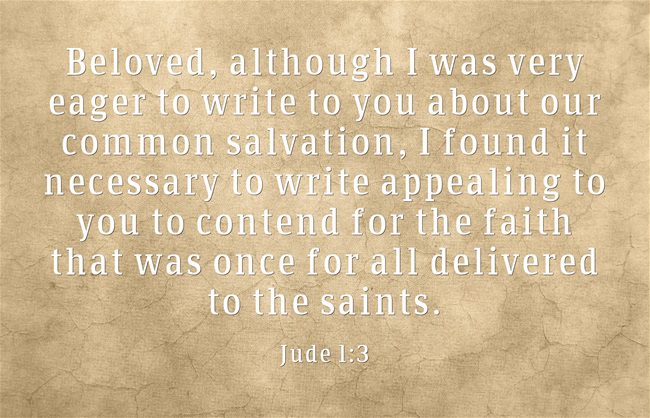
Dogmatic Theology is a set of beliefs that are held by a church or denomination that are, corporately, held to be true and cannot ever be changed. It would be like the sun is always hot and we know that from experience and we will not vary on this clear scientific fact. For churches, dogmatic theology is said to be related to theological beliefs or truths of the faith concerning God and biblical doctrines as revealed in the Word of God, the Bible. Dogmatic Theology was also a response of the Protestant Reformation against the traditions of the Catholic Church, but more than that, it is a guarding of the immutable truths found in Scripture that reveal salvation, sin, repentance, confession of sin, sanctification, and God’s command to obey Him and live lives of holiness (although not sinless-ness, which is not possible this side of heaven). These things are considered crucial to the Christian faith and to deny these essentials would be to fall into heresy and what Jude was striving for when he wrote “Beloved, although I was very eager to write to you about our common salvation, I found it necessary to write appealing to you to contend for the faith that was once for all delivered to the saints” (Jude 1:4).
The Origin of Dogmatic Theology
L. Reinhardt apparently created the term Dogmatic Theology in 1659 which designated the so-called “Articles of Faith” which is close to a church’s creed, but the idea was to have the resolve to hold onto the truths of the Bible and to expose heresy where those who hold to different beliefs can be identified as being false. Theologian Karl Barth wrote a massive six-volume series titled Church Dogmatics that described God as “totally other” or “wholly other,” and as such, He is set apart from His creation and His created creatures, however we can have a personal relationship with God, so it’s not that He’s set apart from us totally and He is unknowable. Jesus told Thomas, who had just asked to see the Father (John 14:8), “Have I been with you so long, and you still do not know me, Philip? Whoever has seen me has seen the Father. How can you say, ‘Show us the Father’” (John 14:9)? In fact, to see Jesus or know Jesus, is to know “the radiance of the glory of God and the exact imprint of his nature, and he upholds the universe by the word of his power. After making purification for sins, he sat down at the right hand of the Majesty on high” (Heb 1:3).
Dogmatism
It’s good to be dogmatic if you’re dogmatic about things that are true. One example is that humans used to believe that the earth was flat but that belief didn’t make it true. Truth is unaltered by human opinion or belief and human belief are subjective to error at times because we may be wrong (and it turns out we are at times), but the Word of God is objective truth and not subject to error as humans are. We need to be dogmatic in things like what the Apostle John taught, where he wrote, “we know that the Son of God has come and has given us understanding, so that we may know him who is true; and we are in him who is true, in his Son Jesus Christ. He is the true God and eternal life” (1st John 5:20). A true believer is dogmatic in his or her belief that Jesus was God before entering into human flesh (John 1) and that He lived a sinless life of perfection, that He suffered, died, and was raised again on the third day, and as such, made Himself the all-sufficient sacrifice to redeem those who are brought to repentance and faith by God.
Conclusion
If you accuse someone of being dogmatic or you’re accused of being dogmatic, we must examine what beliefs they (or we) are dogmatically holding too. Just because someone’s dogmatic doesn’t mean they have the truth, but the truth is what we should be dogmatic about when we find it and we must be like a bulldog that refuses to let go of what he’s got in his teeth and no matter what, he will hold on. That is what we must do with the essentials of the faith (e.g. Acts 4:12; Rom 10:9-13); hold on tight and never let go of the basic doctrines of the Bible, for they are always true and they will always be true, even when we are not.
Article by Jack Wellman
Jack Wellman is Pastor of the Mulvane Brethren Church in Mulvane Kansas. Jack is also the Senior Writer at What Christians Want To Know whose mission is to equip, encourage, and energize Christians and to address questions about the believer’s daily walk with God and the Bible. You can follow Jack on Google Plus or check out his book Teaching Children the Gospel available on Amazon.
Previous Post

June 18, 2016
What Is Narrative Theology?
Next Post
June 20, 2016 How To Know If You Are Being Called To Preach
Browse Our Archives
Select a Category Bible Answers Bible Definitions Bible Story Bible Study Bible Verses Christian Books Christian Entertainment Christian Fathers Christian Mothers Christian Quotes Devotional Famous Christians Music News Parables Prayers Quotes Sunday School Lesson Uncategorized Youth Sermons
Select a Month October 2019 September 2019 August 2019 July 2019 June 2019 May 2019 April 2019 March 2019 February 2019 January 2019 December 2018 November 2018 October 2018 September 2018 August 2018 July 2018 June 2018 May 2018 April 2018 March 2018 February 2018 January 2018 December 2017 November 2017 October 2017 September 2017 August 2017 July 2017 June 2017 May 2017 April 2017 March 2017 February 2017 January 2017 December 2016 November 2016 October 2016 September 2016 August 2016 July 2016 June 2016 May 2016 March 2016 February 2016 January 2016 December 2015 November 2015 October 2015 September 2015 August 2015 July 2015 June 2015 May 2015 April 2015 March 2015 February 2015 January 2015 December 2014 November 2014 October 2014 September 2014 August 2014 July 2014 June 2014 May 2014 April 2014 March 2014 February 2014 January 2014 December 2013 November 2013 October 2013 September 2013 August 2013 July 2013 June 2013 May 2013 April 2013 March 2013
Follow Us!
TAKE THE
Religious Wisdom Quiz
Who was Lydia's profession?
Select your answer to see how you score.
Weaver Potter Cloth merchant Farmer
Related posts from Christian Crier

What Does The Bible Say About Our Thoughts?

Top 13 Bible Verses About Virtue

Do Colors Have Special Meaning In The Bible?

The Greatest Father In History
TRENDING AT PATHEOS Evangelical

The REST of Your Life: A Creative Wrestles...
This week I had a conversation with a good friend from church....

How the author of the world's best hymn...
I've been working with John Newton for a while now. This makes...

Long before this Lectio Divina, Psalm 130 - the song - started...

What About the Trees? Another Living Parable
After I finished writing the last article about falling leaves as a...

Why Classical Education Is a Conversation, Not a...
Come and Read: Joy in Classical Education When I was a little...

Cornell University has received a great deal of negative publicity and intense...
view all Evangelical blogs
Ad-Free & Subscriber Log-In Subscription Support
- About Us
- 2026 Calendar
- Videos
- Podcasts
- Library of World Religions
- Faith In Media Tracker
- Advertise With Us
- Write for Us
- Privacy Policy
- Terms of Service
- Do Not Sell My Data
- Contact Us
- Radiant Digital
- Manage Newsletter Subscriptions
- Unsubscribe From Notifications
- Sitemap
Copyright 2008-2026, Patheos. All rights reserved.
Subscription Support Ad-Free & Subscriber Log-In
Follow Patheos