
BuddhistCatholicContemplativeEvangelicalGeneral ChristianHinduJewishLatter-day SaintMuslimNew VisionsProgressive Christian
Beliefs
- Buddhist
- Catholic
- Contemplative
- Evangelical
- General Christian
- Hindu
- Jewish
- Latter-day Saint
- More Voices
- Muslim
- New Visions
- Pagan
- Progressive Christian
Topics
- Religion News
- Food and Religion
- Sports and Religion
- Religious Art
- Religious Music and Entertainment
- Religious Events
- History and Religion
- Style and Religion
- Politics and Religion
- Women in Religion
- Recreation Outdoors and Religion
- Business Finance and Religion
- Careers Workplace and Religion
- Education and Religion
- Family Parenting and Religion
- Health Fitness and Religion
- Home and Religion
- Relationships and Religion
- Technology and Religion
- Travel and Religion
Columnists
- Buddhist Columnists
- Business Finance and Religion Columnists
- Careers Workplace and Religion Columnists
- Catholic Columnists
- Contemplative Columnists
- Education and Religion Columnists
- Evangelists Columnists
- Family Parenting and Religion Columnists
- General Christian Columnists
- Health Fitness and Religion Columnists
- Hindu Columnists
- History and Religion Columnists
- Home and Religion Columnists
- Jewish Columnists
- More Voices Columnists
- Latter Day Columnists
- Muslim Columnists
- New Visions Columnists
- Nonreligious Columnists
- Pagan Columnists
- Politics and Religion Columnists
- Progressive Columnists
- Recreation Outdoors and Religion Columnists
- Relationships and Religion Columnists
- Religion News Columnists
- Religious Art Columnists
- Religious Events Columnists
- Religious Music and Entertainment Columnists
- Sports and Religion Columnists
- Style and Religion Columnists
- Technology and Religion Columnists
- Travel and Religion Columnists
- Women in Religion Columnists
Resource Library
- 2026 Calendar
- Library of World Religions
- The 100 Most Holy Places on Earth
- Patheos Answers
- Podcasts
- Videos
- Faith Leaders Database
- Anglican Episcopalian
- Bahai
- Baptist
- Buddhism
- Christianity
- Confucianism
- Eastern Orthodoxy
- Hinduism
- Holiness and Pentecostal
- ISKCON
- Islam
- Judaism
- Lutheran
- Methodist
- The Church of Jesus Christ of Latter-day Saints
- New Age
- Paganism
- Presbytarian and Reformed
- Protestantism
- Religion Behind the Scenes
- Roman Catholic
- Scientology
- Shia Islam
- Sikhism
- Sufism
- Sunni Islam
- Taoism
- Zen
- See all religions
Research Tools
 Ad-Free & Subscriber Log-In Subscription Support
Ad-Free & Subscriber Log-In Subscription Support
Follow Patheos 

- Trending:
- Forgiveness
- |
- Marriage
- |
- Consciousness
- |
- Death Penalty
- |
- Election
- |
- Halloween
 Christian Crier
- Home
- Evangelical
- What Is Liberation Theology?
What Is Liberation Theology?
Last updated on: June 18, 2016 at 9:03 am by Jack Wellman
What Is Liberation Theology? 2016-06-18T09:03:09-05:00 Jack Wellman
Patheos Explore the world's faith through different perspectives on religion and spirituality! Patheos has the views of the prevalent religions and spiritualities of the world.
Have you heard or read about Liberation Theology? What does this mean? Liberated from what?
Liberation Theology
The word “liberation” simply means the act or process of freeing someone or something from another’s control. It’s basically the act of liberating someone or something from another or something else that’s restricting their freedom. More precisely, for the Roman Catholic Church, it is a school of theology that calls for people to be free from political, social, and economic oppression. It could also include the call to be free from racism as well. This system of theology was developed by South American Roman Catholics clergy. It is the struggle from oppression of many things, but it is forward-looking toward the ultimate salvation. Their political philosophy has been accused of being a bit Marxist looking, but the South American Catholics look at it as a struggle for liberation from social, political, racial, and economic injustice.
Liberation Theology’s Roots
Liberation Theology has been described as a “poor man’s” theology, birthed out of experiences of the poor. It has now spread and became an international movement among many denominations; however the Vatican’s not happy with it because some of the past oppression apparently included the Catholic Church itself, including those that go back hundreds of years ago. The church didn’t accept any blame for past oppressions from the church’s hierarchy and to them, it’s not in the same class as the “poor man’s” theology because that arose due to political, economic, and social oppression; therefore the Vatican rejected the South American’s Liberation Theology. The United States has not looked favorably upon it either because they saw it as resembling Marxism.
The Primitive Church
The first Brethren Church (formed 1708) focused on living like the so-called “primitive church” did as we can read about it in the Book of Acts. Alexander Mack was the church’s first pastor and he shared much of his wealth for the poor in his church until he ran out of money. This is what Liberation Theology seeks to return to; the first century church in both practice and living, however it’s interesting that the first century church was actually less involved in the social and political sphere of Jerusalem. The only time members of the church got involved in the political system was when they got arrested for preaching the gospel, and neither did they prayed (in the Book of Acts) for society to change but rather prayed to change themselves into more Christ-likeness and be bolder in proclaiming the gospel (Acts 4:29-30). Liberation Theology’s goal and the first century church’s goal are not the same. Liberation Theology seeks to reform society and the political system without, but the first century church sought out lost people and sought change within. They also prayed for their leaders.
Liberation Theology Gone Bad
Liberation Theology is a great idea, up to a point. Yes, we desperately need political reform with things like term limits for Congress, (even though it’s doubtful that that will ever happen), but how best do we go about doing that? The problem comes when someone who is liberal interprets Liberation Theology given permission to use as a sword, and point to Matthew 10:34 where Jesus said, “Do not think that I have come to bring peace to the earth. I have not come to bring peace, but a sword,” but clearly, the context of Matthew 10 isn’t about arming a mob and having them retake Jerusalem by force. Jesus didn’t need a force. He had legions of angels at His disposal. Anyway, knowing what Jesus taught about loving our enemies, praying for our enemies, and doing good to those who hate us (Matt 5), we know His intent in saying, statement, “he that hath a purse, let him take it, and likewise his scrip: and he that hath no sword, let him sell his garment, and buy one” (Luke 22:36). This is not Jesus instructing His disciples to arm themselves and awaiting His signal to overthrow the Romans. Context is always king.
The Real Liberation Theology
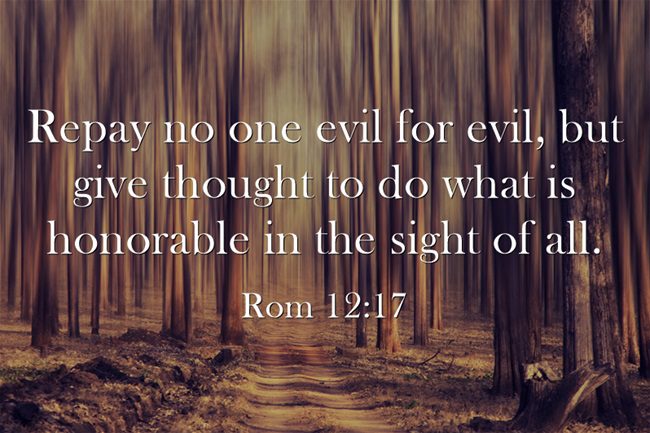
We don’t need to come up with some new theology. We have all the theology we need and will ever need. The Apostle Paul wrote that our theology of life should be that we “Live in harmony with one another. Do not be haughty, but associate with the lowly. Never be wise in your own sight” (Rom 12:16), and never “Repay no one evil for evil, but give thought to do what is honorable in the sight of all” (Rom 12:17) and if it’s at all “possible, so far as it depends on you, live peaceably with all. Beloved, never avenge yourselves, but leave it to the wrath of God, for it is written, “Vengeance is mine, I will repay, says the Lord” (Rom 12:18-19). Ignore your natural impulse to respond with anger, but “To the contrary, “if your enemy is hungry, feed him; if he is thirsty, give him something to drink” (Rom 12:20).
Conclusion
I believe we should do as much good as we can to make this world a better place, like recycling, using our resources wisely, and helping those who cannot help themselves, but in the end, it will take an act of God to change this world, but it will be an act of God Who will change this world, and that will come in the Person of Jesus Christ Who will reign and rule in righteousness. There will be no more hurt, pain, sorrow, grief, and even death (Rev 21:4), so set your eyes upon Jesus for He will make every crooked thing straight.
Article by Jack Wellman
Jack Wellman is Pastor of the Mulvane Brethren Church in Mulvane Kansas. Jack is also the Senior Writer at What Christians Want To Know whose mission is to equip, encourage, and energize Christians and to address questions about the believer’s daily walk with God and the Bible. You can follow Jack on Google Plus or check out his book Teaching Children the Gospel available on Amazon.
Previous Post

June 17, 2016
What Is Nibiru?
Next Post
June 18, 2016 What Is Natural Theology?
Browse Our Archives
Select a Category Bible Answers Bible Definitions Bible Story Bible Study Bible Verses Christian Books Christian Entertainment Christian Fathers Christian Mothers Christian Quotes Devotional Famous Christians Music News Parables Prayers Quotes Sunday School Lesson Uncategorized Youth Sermons
Select a Month October 2019 September 2019 August 2019 July 2019 June 2019 May 2019 April 2019 March 2019 February 2019 January 2019 December 2018 November 2018 October 2018 September 2018 August 2018 July 2018 June 2018 May 2018 April 2018 March 2018 February 2018 January 2018 December 2017 November 2017 October 2017 September 2017 August 2017 July 2017 June 2017 May 2017 April 2017 March 2017 February 2017 January 2017 December 2016 November 2016 October 2016 September 2016 August 2016 July 2016 June 2016 May 2016 March 2016 February 2016 January 2016 December 2015 November 2015 October 2015 September 2015 August 2015 July 2015 June 2015 May 2015 April 2015 March 2015 February 2015 January 2015 December 2014 November 2014 October 2014 September 2014 August 2014 July 2014 June 2014 May 2014 April 2014 March 2014 February 2014 January 2014 December 2013 November 2013 October 2013 September 2013 August 2013 July 2013 June 2013 May 2013 April 2013 March 2013
Follow Us!
TAKE THE
Religious Wisdom Quiz
How long was Israel in Egyptian bondage?
Select your answer to see how you score.
500 years 200 years 400 years 300 years
Related posts from Christian Crier

What Does The Bible Say About Our Thoughts?

Top 13 Bible Verses About Virtue

Do Colors Have Special Meaning In The Bible?

The Greatest Father In History
TRENDING AT PATHEOS Evangelical

The REST of Your Life: A Creative Wrestles...
This week I had a conversation with a good friend from church....

How the author of the world's best hymn...
I've been working with John Newton for a while now. This makes...

Long before this Lectio Divina, Psalm 130 - the song - started...

What About the Trees? Another Living Parable
After I finished writing the last article about falling leaves as a...

Why Classical Education Is a Conversation, Not a...
Come and Read: Joy in Classical Education When I was a little...

Cornell University has received a great deal of negative publicity and intense...
view all Evangelical blogs
Ad-Free & Subscriber Log-In Subscription Support
- About Us
- 2026 Calendar
- Videos
- Podcasts
- Library of World Religions
- Faith In Media Tracker
- Advertise With Us
- Write for Us
- Privacy Policy
- Terms of Service
- Do Not Sell My Data
- Contact Us
- Radiant Digital
- Manage Newsletter Subscriptions
- Unsubscribe From Notifications
- Sitemap
Copyright 2008-2026, Patheos. All rights reserved.
Subscription Support Ad-Free & Subscriber Log-In
Follow Patheos