
BuddhistCatholicContemplativeEvangelicalGeneral ChristianHinduJewishLatter-day SaintMuslimNew VisionsProgressive Christian
Beliefs
- Buddhist
- Catholic
- Contemplative
- Evangelical
- General Christian
- Hindu
- Jewish
- Latter-day Saint
- More Voices
- Muslim
- New Visions
- Pagan
- Progressive Christian
Topics
- Religion News
- Food and Religion
- Sports and Religion
- Religious Art
- Religious Music and Entertainment
- Religious Events
- History and Religion
- Style and Religion
- Politics and Religion
- Women in Religion
- Recreation Outdoors and Religion
- Business Finance and Religion
- Careers Workplace and Religion
- Education and Religion
- Family Parenting and Religion
- Health Fitness and Religion
- Home and Religion
- Relationships and Religion
- Technology and Religion
- Travel and Religion
Columnists
- Buddhist Columnists
- Business Finance and Religion Columnists
- Careers Workplace and Religion Columnists
- Catholic Columnists
- Contemplative Columnists
- Education and Religion Columnists
- Evangelists Columnists
- Family Parenting and Religion Columnists
- General Christian Columnists
- Health Fitness and Religion Columnists
- Hindu Columnists
- History and Religion Columnists
- Home and Religion Columnists
- Jewish Columnists
- More Voices Columnists
- Latter Day Columnists
- Muslim Columnists
- New Visions Columnists
- Nonreligious Columnists
- Pagan Columnists
- Politics and Religion Columnists
- Progressive Columnists
- Recreation Outdoors and Religion Columnists
- Relationships and Religion Columnists
- Religion News Columnists
- Religious Art Columnists
- Religious Events Columnists
- Religious Music and Entertainment Columnists
- Sports and Religion Columnists
- Style and Religion Columnists
- Technology and Religion Columnists
- Travel and Religion Columnists
- Women in Religion Columnists
Resource Library
- 2026 Calendar
- Library of World Religions
- The 100 Most Holy Places on Earth
- Patheos Answers
- Podcasts
- Videos
- Faith Leaders Database
- Anglican Episcopalian
- Bahai
- Baptist
- Buddhism
- Christianity
- Confucianism
- Eastern Orthodoxy
- Hinduism
- Holiness and Pentecostal
- ISKCON
- Islam
- Judaism
- Lutheran
- Methodist
- The Church of Jesus Christ of Latter-day Saints
- New Age
- Paganism
- Presbytarian and Reformed
- Protestantism
- Religion Behind the Scenes
- Roman Catholic
- Scientology
- Shia Islam
- Sikhism
- Sufism
- Sunni Islam
- Taoism
- Zen
- See all religions
Research Tools
 Ad-Free & Subscriber Log-In Subscription Support
Ad-Free & Subscriber Log-In Subscription Support
Follow Patheos 

- Trending:
- Forgiveness
- |
- Marriage
- |
- Consciousness
- |
- Death Penalty
- |
- Election
- |
- Halloween
 Christian Crier
- Home
- Evangelical
- Who Was Watchman Nee?
Who Was Watchman Nee?
Last updated on: June 16, 2016 at 1:51 pm by Jack Wellman
Who Was Watchman Nee? 2016-06-16T13:51:02-05:00 Jack Wellman
Patheos Explore the world's faith through different perspectives on religion and spirituality! Patheos has the views of the prevalent religions and spiritualities of the world.
Who was Watchman Nee and why is it important that we know about him?
Watchman Nee
Watchman Need was a somewhat controversial author and Christian teacher who taught very questionable beliefs and has led many into error, yet his fame spread worldwide last century. Watchman Nee or Ni Tuosheng (November 1903-May 1972) was one of nine children born to Lin He-Ping and Ni Weng-hsiu, who the latter, happened to be a highly respected officer in China’s Imperial Customs Service. Both of Nee’s parents were baptized and members of the Methodist Church, a very conservative church at the time of the early 20th century. When he was only 13, Nee entered the Church Missionary Society to begin his Western-style education. After he entered Trinity College in Fuzhou, China, the teachers were stunned by his intellect and ambition and his test scores consistently placed him at the top of his class. His mother, a Methodist convert, changed his name from Nee Shi-Tsu to “Bell Ringer” or in the native tongue, “Watchman,” thus his name became Watchman Nee.
Early Life
When Nee was only 17, he attended a ten-day revival of the Church of Heavenly Peace in Fuzhou and that was where the stirrings within his soul for soulwinning began. It was on the night of April 28th, 1920 that he saw the heavy weight and severe penalty of his own sins and that his sins had placed him in the path of God’s wrath. That was when he cried out to God and claimed to believe in God for the very first time. He had read about but had never fully comprehended the thorough cleansing that the blood of the Lamb of God could bring. He quickly began to witness to his classmates in college as many had never had a real conversion before. Nee wanted to fix that gap and, at one time, he had a list of 70 students for whom he would pray for on a daily basis. He had caught the bug of evangelism at Trinity College but more so at the revivals in 1920 at the Church of Heavenly Peace.
Questionable Beliefs
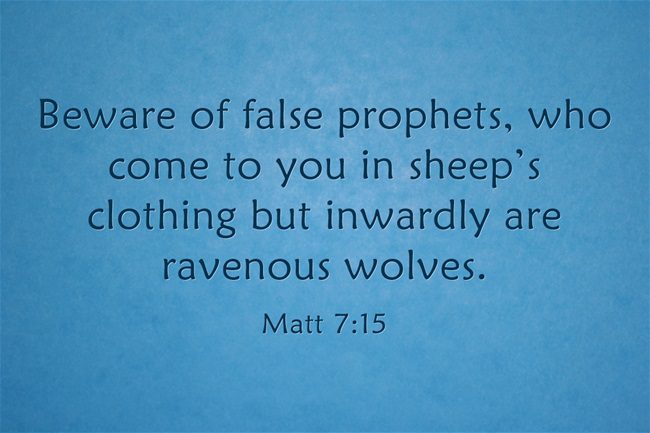
Later in Nee’s life, he began to believe and teach things that were extra-biblical and highly questionable. This path to error began when he attended a Bible school in Shanghai and came under the influence of a female teacher, Miss Yu. Miss Yu then directed him to Miss M.E. Barber who taught him the Keswick concept of the filling of the Spirit and in February 1922, claimed he was “baptized in the Spirit.” After being exposed to the teachings of John Darby he rejected all other clergy preaching from the other churches, seeing them as apostate in their duties of teaching biblical truths. Adopting yet another person’s beliefs, he was then influenced by Elizabeth Fischbacker who introduced to him the idea that speaking in tongues were evidence of the Holy Spirit’s presence, even though the Bible teaches no such thing.
Doctrinal Errors
Many believed in Watchman Nee’s teachings, but slowly and surely, his teachings began to unravel when placed against Scripture. It seemed that every time Nee would meet someone with different beliefs, he would incorporate their beliefs into his own philosophy, often claiming it as his own. It was like a smorgasbord where he could pick and choose some of this and some of that but excluding those things that are explicitly taught in Bible those things that he didn’t especially like. He began to see emotionalism as the evidence of conversion, saying that the Spirit only flows through the channel of emotions. Nee never let theological certainty or clarity to stand in the way of his preaching and thus, there was his downfall. He was right on the gospel but it was the non-essentials that he made into essentials. He believed all denominations were in error and very sinful but without a sufficient explanation as to why. At times, Nee would place “spiritual experiences” above that of the written word. His “two-tiered” teachings were that some had been sanctified by letting Christ live in them while others were obviously false converts. He looked at the outward actions and response of individuals as evidence of an inward conversion.
Conclusion
When Mao-Tse Tung came to power in 1949, Nee was seen as an imperialist since he was a factory owner, and was imprisoned until his death in 1972. Some believe his tongue was cut out so that he would no longer preach. He once asked, “Do you not realize that edification is not a question of doctrine, but of spirit? If your brother speaks through his spirit, you will be washed and cleansed each time his spirit comes out and touches you.” [1] He taught that any teaching of doctrine which does not result in reviving the spirit can only be considered as dead letter, and on that, he may be right.
Article by Jack Wellman
Jack Wellman is Pastor of the Mulvane Brethren Church in Mulvane Kansas. Jack is also the Senior Writer at What Christians Want To Know whose mission is to equip, encourage, and energize Christians and to address questions about the believer’s daily walk with God and the Bible. You can follow Jack on Google Plus or check out his book Teaching Children the Gospel available on Amazon.
1. Nee, Watchman. The Release of the Spirit. Christian Literature Crusade, 1989. p. 90.
Previous Post

June 16, 2016
Who Was Jack Hyles?
Next Post
June 16, 2016 Who Was D.L. Moody?
Browse Our Archives
Select a Category Bible Answers Bible Definitions Bible Story Bible Study Bible Verses Christian Books Christian Entertainment Christian Fathers Christian Mothers Christian Quotes Devotional Famous Christians Music News Parables Prayers Quotes Sunday School Lesson Uncategorized Youth Sermons
Select a Month October 2019 September 2019 August 2019 July 2019 June 2019 May 2019 April 2019 March 2019 February 2019 January 2019 December 2018 November 2018 October 2018 September 2018 August 2018 July 2018 June 2018 May 2018 April 2018 March 2018 February 2018 January 2018 December 2017 November 2017 October 2017 September 2017 August 2017 July 2017 June 2017 May 2017 April 2017 March 2017 February 2017 January 2017 December 2016 November 2016 October 2016 September 2016 August 2016 July 2016 June 2016 May 2016 March 2016 February 2016 January 2016 December 2015 November 2015 October 2015 September 2015 August 2015 July 2015 June 2015 May 2015 April 2015 March 2015 February 2015 January 2015 December 2014 November 2014 October 2014 September 2014 August 2014 July 2014 June 2014 May 2014 April 2014 March 2014 February 2014 January 2014 December 2013 November 2013 October 2013 September 2013 August 2013 July 2013 June 2013 May 2013 April 2013 March 2013
Follow Us!
TAKE THE
Religious Wisdom Quiz
How many chapters are in Proverbs?
Select your answer to see how you score.
50 40 28 31
Related posts from Christian Crier
The Apostle Paul’s Last Will And Testament
How Handel’s Messiah Handles Theology
The Book Of Jonah: The Reluctant Prophet
TRENDING AT PATHEOS Evangelical

How the author of the world's best hymn...
I've been working with John Newton for a while now. This makes...

Long before this Lectio Divina, Psalm 130 - the song - started...

What About the Trees? Another Living Parable
After I finished writing the last article about falling leaves as a...

Why Classical Education Is a Conversation, Not a...
Come and Read: Joy in Classical Education When I was a little...

Falling Leaves: A Living Parable on Letting Go
I’ve spent the vast majority of my life in the southeast corner...

Cornell University has received a great deal of negative publicity and intense...
view all Evangelical blogs
Ad-Free & Subscriber Log-In Subscription Support
- About Us
- 2026 Calendar
- Videos
- Podcasts
- Library of World Religions
- Faith In Media Tracker
- Advertise With Us
- Write for Us
- Privacy Policy
- Terms of Service
- Do Not Sell My Data
- Contact Us
- Radiant Digital
- Manage Newsletter Subscriptions
- Unsubscribe From Notifications
- Sitemap
Copyright 2008-2026, Patheos. All rights reserved.
Subscription Support Ad-Free & Subscriber Log-In
Follow Patheos