
BuddhistCatholicContemplativeEvangelicalGeneral ChristianHinduJewishLatter-day SaintMuslimNew VisionsProgressive Christian
Beliefs
- Buddhist
- Catholic
- Contemplative
- Evangelical
- General Christian
- Hindu
- Jewish
- Latter-day Saint
- More Voices
- Muslim
- New Visions
- Pagan
- Progressive Christian
Topics
- Religion News
- Food and Religion
- Sports and Religion
- Religious Art
- Religious Music and Entertainment
- Religious Events
- History and Religion
- Style and Religion
- Politics and Religion
- Women in Religion
- Recreation Outdoors and Religion
- Business Finance and Religion
- Careers Workplace and Religion
- Education and Religion
- Family Parenting and Religion
- Health Fitness and Religion
- Home and Religion
- Relationships and Religion
- Technology and Religion
- Travel and Religion
Columnists
- Buddhist Columnists
- Business Finance and Religion Columnists
- Careers Workplace and Religion Columnists
- Catholic Columnists
- Contemplative Columnists
- Education and Religion Columnists
- Evangelists Columnists
- Family Parenting and Religion Columnists
- General Christian Columnists
- Health Fitness and Religion Columnists
- Hindu Columnists
- History and Religion Columnists
- Home and Religion Columnists
- Jewish Columnists
- More Voices Columnists
- Latter Day Columnists
- Muslim Columnists
- New Visions Columnists
- Nonreligious Columnists
- Pagan Columnists
- Politics and Religion Columnists
- Progressive Columnists
- Recreation Outdoors and Religion Columnists
- Relationships and Religion Columnists
- Religion News Columnists
- Religious Art Columnists
- Religious Events Columnists
- Religious Music and Entertainment Columnists
- Sports and Religion Columnists
- Style and Religion Columnists
- Technology and Religion Columnists
- Travel and Religion Columnists
- Women in Religion Columnists
Resource Library
- 2026 Calendar
- Library of World Religions
- The 100 Most Holy Places on Earth
- Patheos Answers
- Podcasts
- Videos
- Faith Leaders Database
- Anglican Episcopalian
- Bahai
- Baptist
- Buddhism
- Christianity
- Confucianism
- Eastern Orthodoxy
- Hinduism
- Holiness and Pentecostal
- ISKCON
- Islam
- Judaism
- Lutheran
- Methodist
- The Church of Jesus Christ of Latter-day Saints
- New Age
- Paganism
- Presbytarian and Reformed
- Protestantism
- Religion Behind the Scenes
- Roman Catholic
- Scientology
- Shia Islam
- Sikhism
- Sufism
- Sunni Islam
- Taoism
- Zen
- See all religions
Research Tools
 Ad-Free & Subscriber Log-In Subscription Support
Ad-Free & Subscriber Log-In Subscription Support
Follow Patheos 

- Trending:
- Forgiveness
- |
- Marriage
- |
- Consciousness
- |
- Death Penalty
- |
- Election
- |
- Halloween
 Christian Crier
- Home
- Evangelical
- Who Was John Wesley?
Who Was John Wesley?
Last updated on: June 16, 2016 at 12:55 pm by Jack Wellman
Who Was John Wesley? 2016-06-16T12:55:55-05:00 Jack Wellman
Patheos Explore the world's faith through different perspectives on religion and spirituality! Patheos has the views of the prevalent religions and spiritualities of the world.
Who was John Wesley? What impact did he leave on the Christian world?
John Wesley
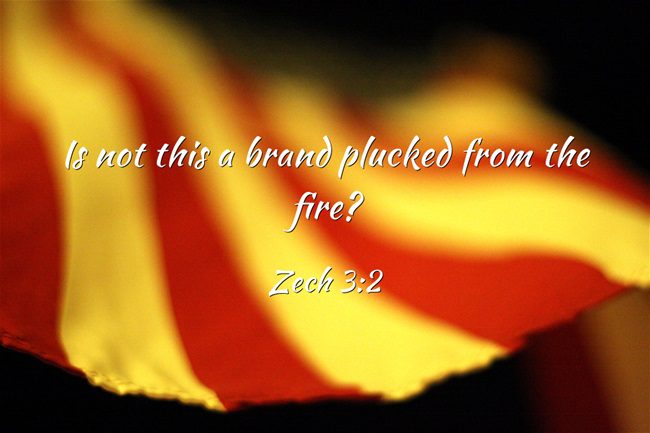
John Wesley (June 1703-Marcy 1791) was an Anglican minister and theologian who later, along with his brother Charles and Wesley’s fellow cleric, George Whitefield, formed a group called the Methodists or sometimes referred to as the Holy Club or Holiness movement. They were known for fasting twice a week and having diligent studies of the Bible. Wesley was born of Samuel and Susanna Wesley who were members of the Church of England early on. Wesley’s parents, like most parents at the time, educated their own children at home and of course this included a huge dose of biblical studies and reading. They taught their children Latin and Greek in order to help them learn portions of the New Testament. While the children were still young, there was a fire in the rectory (1709) and all of the children managed to make it out safely except John Wesley. He was left on the second floor with no escape possible until a fellow parishioner stood on another man’s shoulders and lifted young John out of the window. He never forgot that episode and was the main reason he referred to himself as “a brand plucked out of the fire,” quoting Zechariah 3:2.
Education
In June 1720, John Wesley entered Christ Church School in Oxford, England where he attained a bachelor’s degree, and later, a master’s degree. In 1725 he was ordained as a deacon. In that very same year, Wesley read Thomas à Kempis and Jeremy Taylor who both inspired him to seek more biblical truth. This was the beginning of what is called the revival of the 18th century. Much of his learning prompted Wesley to form a “Holy Club” but they were derisively called “Methodists” by most due to their methodical studies of the Bible and their devotion to holiness. Not long after the Methodists were formed, they created social programs which included visiting Oxford prisoners, perhaps the first prison ministry ever. They taught the prisoners to read, help them gain an education, and even paid their debts off which was the reason many were imprisoned. Their social activities included gathering and distributing clothes, food, medicine and even books for the poor.
Aborted Mission
When Wesley’s father died in 1735, John Burton, a friend of his from Oxford, convinced him to oversee the lives of the colonists in Georgia and to also evangelize the local Indians there. His heavy handedness over the flock and greatly irritated the colonists and his attempt to evangelize Native American Indians also failed, so he returned to England a defeated man, however things were about to change for him. Wesley met Peter Böhler who was a Moravian, who helped him discovered the truth that had long since been buried and that was we are saved by grace alone through faith alone. He learned this through the biblical commentaries of Martin Luther, particularly in the Book of Galatians. From this point on, at age 35, Wesley felt compelled to share this “good news” of salvation by faith alone in Christ alone. This caused the Church of England to disfellowship him so Wesley gathered together scattered groups of the Moravians who also believed in faith alone and who detested the many traditions that the church’s had been practicing. To Wesley, there were more rituals and traditions than actual teaching of the Bible.
The Methodist Societies
After Wesley gathered converts into societies for continuing fellowship and spiritual growth, he was asked by a London group to become their leader. When he began to preach outdoors he realized that open-air services were much more successful in reaching men and women than churches were because most of those he preached too would never enter most churches in England at that time, likely because they wouldn’t have been allowed in. For much of the remainder of his life, some fifty years, he would enter churches when he was invited or preach in the fields, in halls, cottages, and chapels because most churches would let him behind a pulpit. From 1739 onward, the Methodists began to be severely persecuted and Wesley was seen as a social threat by the Church of England. Many of England’s clergy began to attack his preaching. He was even accused of trying to reestablish Catholicism (which was certainly untrue). He saw most of the churches in England at the time as not even preaching about the need for repentance, confession of sin, living a life of holiness, and even worse, many were dying without ever hearing the true gospel.
Later Years
During the waning years of Wesley’s life, he began to attack the evils of slavery and thus became an abolitionist, which was not popular at the time. He once said about slavery, “Liberty is the right of every human creature, as soon as he breathes the vital air; and no human law can deprive him of that right which he derives from the law of nature.” This drew into his circle of friends two powerful men who would do much to end slavery in England, and they were John Newton and William Wilberforce. It is believed that John Wesley simply wore himself out for the sake of the gospel as John Wesley travelled on horseback about 250,000 miles while he preached two or three times each day and gave away 30,000 pounds of his own personal wealth. During this time, Wesley preached more than 40,000 sermons. During his waning moments on earth, just before dying, he said “Farewell, farewell,” saying “The best of all is, God is with us,” and lifted his arms and raised his feeble voice again, repeating the words, “The best of all is, God is with us” and then shortly thereafter, passed into glory on March 2nd, 1791.
Conclusion
John Wesley left a huge impact on England and biblical doctrine as well as making a difference for those who would follow in his footsteps with the Methodist faith. Since he had given all of his wealth away, he died in near poverty but left behind some 130,000 Methodists and 541 preachers. It was said that after he died, he left nothing behind but the souls whom he managed to saved, thousands of like-minded believers, and the Methodist Church.
Article by Jack Wellman
Jack Wellman is Pastor of the Mulvane Brethren Church in Mulvane Kansas. Jack is also the Senior Writer at What Christians Want To Know whose mission is to equip, encourage, and energize Christians and to address questions about the believer’s daily walk with God and the Bible. You can follow Jack on Google Plus or check out his book Teaching Children the Gospel available on Amazon.
Previous Post

June 15, 2016
Who Was Billy Sunday?
Next Post
June 16, 2016 Who Was Jack Hyles?
Browse Our Archives
Select a Category Bible Answers Bible Definitions Bible Story Bible Study Bible Verses Christian Books Christian Entertainment Christian Fathers Christian Mothers Christian Quotes Devotional Famous Christians Music News Parables Prayers Quotes Sunday School Lesson Uncategorized Youth Sermons
Select a Month October 2019 September 2019 August 2019 July 2019 June 2019 May 2019 April 2019 March 2019 February 2019 January 2019 December 2018 November 2018 October 2018 September 2018 August 2018 July 2018 June 2018 May 2018 April 2018 March 2018 February 2018 January 2018 December 2017 November 2017 October 2017 September 2017 August 2017 July 2017 June 2017 May 2017 April 2017 March 2017 February 2017 January 2017 December 2016 November 2016 October 2016 September 2016 August 2016 July 2016 June 2016 May 2016 March 2016 February 2016 January 2016 December 2015 November 2015 October 2015 September 2015 August 2015 July 2015 June 2015 May 2015 April 2015 March 2015 February 2015 January 2015 December 2014 November 2014 October 2014 September 2014 August 2014 July 2014 June 2014 May 2014 April 2014 March 2014 February 2014 January 2014 December 2013 November 2013 October 2013 September 2013 August 2013 July 2013 June 2013 May 2013 April 2013 March 2013
Follow Us!
TAKE THE
Religious Wisdom Quiz
What does "Bethany" mean in Hebrew?
Select your answer to see how you score.
House of affliction House of bread House of mercy House of stone
Related posts from Christian Crier
The Apostle Paul’s Last Will And Testament
How Handel’s Messiah Handles Theology
The Book Of Jonah: The Reluctant Prophet
TRENDING AT PATHEOS Evangelical

The REST of Your Life: A Creative Wrestles...
This week I had a conversation with a good friend from church....

How the author of the world's best hymn...
I've been working with John Newton for a while now. This makes...

Long before this Lectio Divina, Psalm 130 - the song - started...

What About the Trees? Another Living Parable
After I finished writing the last article about falling leaves as a...

Why Classical Education Is a Conversation, Not a...
Come and Read: Joy in Classical Education When I was a little...

Cornell University has received a great deal of negative publicity and intense...
view all Evangelical blogs
Ad-Free & Subscriber Log-In Subscription Support
- About Us
- 2026 Calendar
- Videos
- Podcasts
- Library of World Religions
- Faith In Media Tracker
- Advertise With Us
- Write for Us
- Privacy Policy
- Terms of Service
- Do Not Sell My Data
- Contact Us
- Radiant Digital
- Manage Newsletter Subscriptions
- Unsubscribe From Notifications
- Sitemap
Copyright 2008-2026, Patheos. All rights reserved.
Subscription Support Ad-Free & Subscriber Log-In
Follow Patheos