
BuddhistCatholicContemplativeEvangelicalGeneral ChristianHinduJewishLatter-day SaintMuslimNew VisionsProgressive Christian
Beliefs
- Buddhist
- Catholic
- Contemplative
- Evangelical
- General Christian
- Hindu
- Jewish
- Latter-day Saint
- More Voices
- Muslim
- New Visions
- Pagan
- Progressive Christian
Topics
- Religion News
- Food and Religion
- Sports and Religion
- Religious Art
- Religious Music and Entertainment
- Religious Events
- History and Religion
- Style and Religion
- Politics and Religion
- Women in Religion
- Recreation Outdoors and Religion
- Business Finance and Religion
- Careers Workplace and Religion
- Education and Religion
- Family Parenting and Religion
- Health Fitness and Religion
- Home and Religion
- Relationships and Religion
- Technology and Religion
- Travel and Religion
Columnists
- Buddhist Columnists
- Business Finance and Religion Columnists
- Careers Workplace and Religion Columnists
- Catholic Columnists
- Contemplative Columnists
- Education and Religion Columnists
- Evangelists Columnists
- Family Parenting and Religion Columnists
- General Christian Columnists
- Health Fitness and Religion Columnists
- Hindu Columnists
- History and Religion Columnists
- Home and Religion Columnists
- Jewish Columnists
- More Voices Columnists
- Latter Day Columnists
- Muslim Columnists
- New Visions Columnists
- Nonreligious Columnists
- Pagan Columnists
- Politics and Religion Columnists
- Progressive Columnists
- Recreation Outdoors and Religion Columnists
- Relationships and Religion Columnists
- Religion News Columnists
- Religious Art Columnists
- Religious Events Columnists
- Religious Music and Entertainment Columnists
- Sports and Religion Columnists
- Style and Religion Columnists
- Technology and Religion Columnists
- Travel and Religion Columnists
- Women in Religion Columnists
Resource Library
- 2026 Calendar
- Library of World Religions
- The 100 Most Holy Places on Earth
- Patheos Answers
- Podcasts
- Videos
- Faith Leaders Database
- Anglican Episcopalian
- Bahai
- Baptist
- Buddhism
- Christianity
- Confucianism
- Eastern Orthodoxy
- Hinduism
- Holiness and Pentecostal
- ISKCON
- Islam
- Judaism
- Lutheran
- Methodist
- The Church of Jesus Christ of Latter-day Saints
- New Age
- Paganism
- Presbytarian and Reformed
- Protestantism
- Religion Behind the Scenes
- Roman Catholic
- Scientology
- Shia Islam
- Sikhism
- Sufism
- Sunni Islam
- Taoism
- Zen
- See all religions
Research Tools
 Ad-Free & Subscriber Log-In Subscription Support
Ad-Free & Subscriber Log-In Subscription Support
Follow Patheos 

- Trending:
- Forgiveness
- |
- Marriage
- |
- Consciousness
- |
- Death Penalty
- |
- Election
- |
- Halloween
 Christian Crier
- Home
- Evangelical
- Who Was Charles Spurgeon?
Who Was Charles Spurgeon?
Last updated on: June 14, 2016 at 4:17 pm by Jack Wellman
Who Was Charles Spurgeon? 2016-06-14T16:17:07-05:00 Jack Wellman
Patheos Explore the world's faith through different perspectives on religion and spirituality! Patheos has the views of the prevalent religions and spiritualities of the world.
Who was Charles Spurgeon? Why did they call him the “Prince of Preachers?”
Charles Spurgeon
Charles Hadden Spurgeon (1834-1892) was born in Kelvedon, Essex in England in 1834 to non-conformists parents. Spurgeon’s father and grandfather were non-conformist ministers, meaning that they lived a simple, pious life and were not of the Anglican Church. Spurgeon became obsessed by the martyrs of the Christian faith and loved John Bunyan’s Pilgrim’s Progress and Fox’s Book of Martyrs. When Spurgeon turned 15, he decided to become a Baptist but he attributed it to divine sovereignty because he was forced to seek shelter from a snowstorm in an old Methodist church. It is there, he says, that he heard the gospel in its fullest sense, for the very first time. Even though four months later, he was baptized and joined a Baptist church, he marks that that day as the day of his new birth, which is sometimes called being born again (John 3:3-8). It didn’t take long for Spurgeon to receive his very special calling from God and at a very young age!
Who was Charles Spurgeon?
Charles Spurgeon was saved as a youth, and amazingly, only four years after his conversion, he was selected to be the pastor of the New Park Street Church, which was formerly pastored by a Bible scholar, known as John Gill, the great Baptist theologian, so Spurgeon had a very long shadow cast before him. As a youth, he did try attending school but never did earn a degree, however he always had an intense interest in the Bible and wanted to learn Greek from a tutor to gain some insight into Scripture, but he also devoured every Puritan book he could place his hands on. Spurgeon was only 15 when he broke away from his family’s faith and became a Baptist, no doubt heavily influenced by the so-called “Dunkards,” which he had been reading about (Puritan books). The so-called “Dunkards” got their name from submerging or dunking under the water (baptizing) as was their custom. The Puritans and the German Brethren Church were called Anabaptists (or re-baptizers) because they refused to accept infant baptism. They believed in the full-submersion baptism that resembled what the early church practiced but the Puritans and the Brethren suffered severe persecution, imprisonment, torture, and death for their beliefs. Charles Spurgeon was drawn to such devotion to Christ.
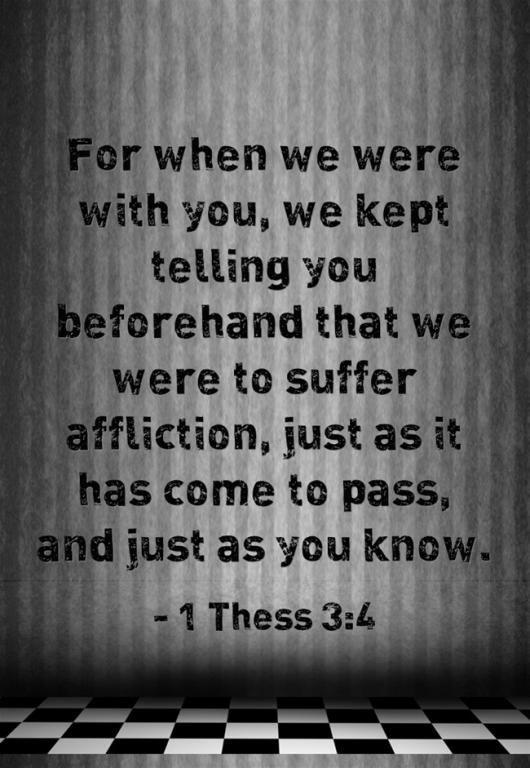
Spurgeon’s Passion
Charles Spurgeon believed in preaching only biblical messages. He never spoke a word on the pulpit but that every other word, or at least sentence, referred to or literally quote Scripture. He did use real-life stories or examples that would lead into his sermons, but he understood that this was where the power of God resided (Rom 1:16; 1st Cor 1:18). His belief in the power of the Word was even more established as on one occasion where he was trying out the acoustics in a new tabernacle and said “Behold, the Lamb of God!” Suddenly, a maintenance worker came and fell at his feet, feeling convicted because he had never been saved and the fear of Christ’s appearance made him realize that he needed saving. Spurgeon never forgot that. He was often accused of being vulgar, but not using profanities, and he did admit, “I am perhaps vulgar, but it is not intentional, save that I must and will make people listen. My firm conviction is that we have had enough polite preachers.”
The Last Years
The end was swiftly approaching for the ministry of Charles Spurgeon as he began to run into some controversy called the Down Grade Controversy, when he began exposing some of the evils of ritualism, hypocrisy, but mostly Modernism. His church attendance began to sharply decline because most of his congregants had jobs that were part of the Industrial Revolution. That was also about the same time that Charles Spurgeon’s health was failing him. Charles Spurgeon suffered a lot during his mid to latter years. He suffered from bouts of depression but also suffered from gout, rheumatism, and Bright’s disease, where blood is found in the urine. When Charles Hadden Spurgeon died on January 31st, 1892, there were over 100,000 mourners who lined the streets of London to form a funeral parade. That reveals just how great of an impact this “Prince of Preachers” had left on the nation. Over 60,000 people came to give their respects as he lie in state at the Metropolitan Tabernacle. Flags flew at half-staff in England, pubs closed down, and London went into mourning in that late January day in 1892.
Conclusion
Charles Spurgeon was highly evangelistic and he taught his church to be also because of the imperative command given by Christ to “Go therefore and make disciples of all nations, baptizing them in the name of the Father and of the Son and of the Holy Spirit, teaching them to observe all that I have commanded you” (Matt 28:19-20). Believing in the sovereignty of God and knowing that God will save whom He chooses to save, he was nonetheless trying to reach the lost by means of the saved. He stressed the fact that God will and has used people as a means to be saved as they point them to Christ. The “Prince of Preachers,” during his later years of suffering and disenfranchisement, understood that eternity will so overshadow today, that it’s beyond comparison (Rom 8:18).
Article by Jack Wellman
Jack Wellman is Pastor of the Mulvane Brethren Church in Mulvane Kansas. Jack is also the Senior Writer at What Christians Want To Know whose mission is to equip, encourage, and energize Christians and to address questions about the believer’s daily walk with God and the Bible. You can follow Jack on Google Plus or check out his book Teaching Children the Gospel available on Amazon.
Previous Post

June 14, 2016
Who Was C.S. Lewis?
Next Post
June 14, 2016 Who Was Corrie Ten Boom?
Browse Our Archives
Select a Category Bible Answers Bible Definitions Bible Story Bible Study Bible Verses Christian Books Christian Entertainment Christian Fathers Christian Mothers Christian Quotes Devotional Famous Christians Music News Parables Prayers Quotes Sunday School Lesson Uncategorized Youth Sermons
Select a Month October 2019 September 2019 August 2019 July 2019 June 2019 May 2019 April 2019 March 2019 February 2019 January 2019 December 2018 November 2018 October 2018 September 2018 August 2018 July 2018 June 2018 May 2018 April 2018 March 2018 February 2018 January 2018 December 2017 November 2017 October 2017 September 2017 August 2017 July 2017 June 2017 May 2017 April 2017 March 2017 February 2017 January 2017 December 2016 November 2016 October 2016 September 2016 August 2016 July 2016 June 2016 May 2016 March 2016 February 2016 January 2016 December 2015 November 2015 October 2015 September 2015 August 2015 July 2015 June 2015 May 2015 April 2015 March 2015 February 2015 January 2015 December 2014 November 2014 October 2014 September 2014 August 2014 July 2014 June 2014 May 2014 April 2014 March 2014 February 2014 January 2014 December 2013 November 2013 October 2013 September 2013 August 2013 July 2013 June 2013 May 2013 April 2013 March 2013
Follow Us!
TAKE THE
Religious Wisdom Quiz
What principle is behind "let your light shine before men"?
Select your answer to see how you score.
Boast of your wealth Hide your faith Show good deeds to glorify God Never speak of God
Related posts from Christian Crier
The Apostle Paul’s Last Will And Testament
How Handel’s Messiah Handles Theology
The Book Of Jonah: The Reluctant Prophet
TRENDING AT PATHEOS Evangelical

How the author of the world's best hymn...
I've been working with John Newton for a while now. This makes...

Long before this Lectio Divina, Psalm 130 - the song - started...

What About the Trees? Another Living Parable
After I finished writing the last article about falling leaves as a...

Why Classical Education Is a Conversation, Not a...
Come and Read: Joy in Classical Education When I was a little...

Falling Leaves: A Living Parable on Letting Go
I’ve spent the vast majority of my life in the southeast corner...

Cornell University has received a great deal of negative publicity and intense...
view all Evangelical blogs
Ad-Free & Subscriber Log-In Subscription Support
- About Us
- 2026 Calendar
- Videos
- Podcasts
- Library of World Religions
- Faith In Media Tracker
- Advertise With Us
- Write for Us
- Privacy Policy
- Terms of Service
- Do Not Sell My Data
- Contact Us
- Radiant Digital
- Manage Newsletter Subscriptions
- Unsubscribe From Notifications
- Sitemap
Copyright 2008-2026, Patheos. All rights reserved.
Subscription Support Ad-Free & Subscriber Log-In
Follow Patheos