
BuddhistCatholicContemplativeEvangelicalGeneral ChristianHinduJewishLatter-day SaintMuslimNew VisionsProgressive Christian
Beliefs
- Buddhist
- Catholic
- Contemplative
- Evangelical
- General Christian
- Hindu
- Jewish
- Latter-day Saint
- More Voices
- Muslim
- New Visions
- Pagan
- Progressive Christian
Topics
- Religion News
- Food and Religion
- Sports and Religion
- Religious Art
- Religious Music and Entertainment
- Religious Events
- History and Religion
- Style and Religion
- Politics and Religion
- Women in Religion
- Recreation Outdoors and Religion
- Business Finance and Religion
- Careers Workplace and Religion
- Education and Religion
- Family Parenting and Religion
- Health Fitness and Religion
- Home and Religion
- Relationships and Religion
- Technology and Religion
- Travel and Religion
Columnists
- Buddhist Columnists
- Business Finance and Religion Columnists
- Careers Workplace and Religion Columnists
- Catholic Columnists
- Contemplative Columnists
- Education and Religion Columnists
- Evangelists Columnists
- Family Parenting and Religion Columnists
- General Christian Columnists
- Health Fitness and Religion Columnists
- Hindu Columnists
- History and Religion Columnists
- Home and Religion Columnists
- Jewish Columnists
- More Voices Columnists
- Latter Day Columnists
- Muslim Columnists
- New Visions Columnists
- Nonreligious Columnists
- Pagan Columnists
- Politics and Religion Columnists
- Progressive Columnists
- Recreation Outdoors and Religion Columnists
- Relationships and Religion Columnists
- Religion News Columnists
- Religious Art Columnists
- Religious Events Columnists
- Religious Music and Entertainment Columnists
- Sports and Religion Columnists
- Style and Religion Columnists
- Technology and Religion Columnists
- Travel and Religion Columnists
- Women in Religion Columnists
Resource Library
- 2026 Calendar
- Library of World Religions
- The 100 Most Holy Places on Earth
- Patheos Answers
- Podcasts
- Videos
- Faith Leaders Database
- Anglican Episcopalian
- Bahai
- Baptist
- Buddhism
- Christianity
- Confucianism
- Eastern Orthodoxy
- Hinduism
- Holiness and Pentecostal
- ISKCON
- Islam
- Judaism
- Lutheran
- Methodist
- The Church of Jesus Christ of Latter-day Saints
- New Age
- Paganism
- Presbytarian and Reformed
- Protestantism
- Religion Behind the Scenes
- Roman Catholic
- Scientology
- Shia Islam
- Sikhism
- Sufism
- Sunni Islam
- Taoism
- Zen
- See all religions
Research Tools
 Ad-Free & Subscriber Log-In Subscription Support
Ad-Free & Subscriber Log-In Subscription Support
Follow Patheos 

- Trending:
- Forgiveness
- |
- Marriage
- |
- Consciousness
- |
- Death Penalty
- |
- Election
- |
- Halloween
 Christian Crier
- Home
- Evangelical
- Who Was C.S. Lewis?
Who Was C.S. Lewis?
Last updated on: June 14, 2016 at 1:23 pm by Jack Wellman
Who Was C.S. Lewis? 2016-06-14T13:23:33-05:00 Jack Wellman
Patheos Explore the world's faith through different perspectives on religion and spirituality! Patheos has the views of the prevalent religions and spiritualities of the world.
Who was C.S. Lewis? Why did this man leave such a huge impact on Christianity?
Who was C.S. Lewis?
Clive Staples Lewis or C.S. Lewis (1898-1963) may have been the greatest writer of his time, producing myriads of books, very much like those of his close friend, J.R.R. Tolkien who wrote the trilogy of “The Hobbit,” “The Lord of the Rings,” and “The Silmarillion.” Both men would later serve on the Oxford University faculty and in World War One. When Lewis mother died while he was only 10, he was sent to Belfast, Ireland so he could attend Wynyard School, and while there, he began to drift away from his earlier, so-thought conversion and baptism while he was still young. When Lewis fell ill he had to move to a health resort at Malvern, Worcestershire, and it is there, at age 15, that he fell away from the faith and proclaimed himself an atheist. He became intensely interested in mythology and the occult. He was enthralled with the ancient literature of the Scandinavians and later, the Norse mythologies. He also immersed himself into Greek literature. When he was shipped off to France during World War One, just after having entered Oxford university, it was there that he saw the graphic and morbid violence of war and how it took the lives of so many. That made him even more determined to claim atheism. It was only later that Tolkien and a few others convinced him to return to the Anglican Communion and so he did, and at age 32, he came to believe as he had never really believed before. That was when he felt an overpowering call towards Christian literature.
Books of Impact
When C.S. Lewis began to feel the passion to write books, it wasn’t long (mid-1920s) before he wrote his very first one, “Dymer” (1926), a satirical look at life, and then “The Allegory of Love” (1936), but this was only a period of training for the books that he would later write and these books would change the Christian culture forever. He wrote “The Screwtape Letters,” “The Chronicles of Narnia,” and “The Space Trilogy,” and several non-fiction books that dealt with Christian apologetics, such as “Mere Christianity,”, “Miracles,” and “The Problem of Pain.” It was when he began writing his apologetic books that people really began to take notice of Lewis and his accomplishments.
Apologetics
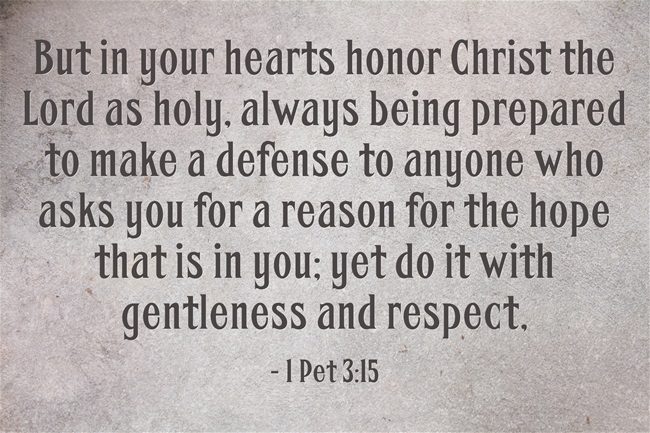
One of C.S. Lewis’ greatest strengths as a writer was his ability of logic and reason. This served him well in his apologetics. He inherently knew there were dozens of reasons to believe in God but one of his strongest objections for the argument of there being no God was his “Moral Argument” for God’s existence and it is something like this:
1. If God does not exist, objective moral values and duties do not exist.
2. Objective moral values and duties do exist.
3. Therefore, God exists.
To Lewis, there are so many laws that govern human behavior and activities that it is obvious that objective moral values do exist, not in the least for the governments of the world. To him, the moral objectives clearly reflected the Moral Lawgiver, Who is God. His point was that objective morals and values are more than accidental or random chemical reactions in the brain. He couldn’t understand why atheists could be sure God doesn’t exist. Since it is estimated that humans only know about one-half of one percent of all the knowledge that there is to know, could not God exist in that 99.9% of knowledge that’s missing? Lewis never understood how an atheist could know for certain that there is no god when they are unable to prove it.
Lewis’ Later Life
By early June of 1961, Lewis began suffering from kidney inflammation which resulted in blood poisoning. After what appeared to be a full recovery in 1963, in mid-July of that year he fell ill again, but this time it was considerably more serious. When he finally entered the hospital, he experienced a heart attack and fell into a coma. They must have thought that this was the end of Lewis’ life but he unexpectedly awoke and was later discharged from the hospital. He was feeling just fine for a while when suddenly, just one week before he would turn 65, he would collapse and die (Nov 22nd, 1963). Tragically, few people knew of Lewis’ death because that was the same day that John F. Kennedy died after being assassinated and that event captured all of the world’s attention, and so Lewis’ death was overshadowed by another.
Conclusion
C.S. Lewis became of the intellectual giants of the 20th century. Today, he is still among the best-selling authors of Christian literature and many of his books have been turned into movies. C.S. Lewis’ life left such a legacy and impact that, most people know his name, they know some of the movies that came from his books, and he is still well-respected and admired around the world by millions as his books have been translated into more than 30 languages with books that have sold well into the millions.
Article by Jack Wellman
Jack Wellman is Pastor of the Mulvane Brethren Church in Mulvane Kansas. Jack is also the Senior Writer at What Christians Want To Know whose mission is to equip, encourage, and energize Christians and to address questions about the believer’s daily walk with God and the Bible. You can follow Jack on Google Plus or check out his book Teaching Children the Gospel available on Amazon.
1. C. S. Lewis, Mere Christianity. Harper San Francisco, Zondervan Publishing House, 2001, p. 38-39.
Previous Post

June 14, 2016
Who Was Amy Carmichael?
Next Post
June 14, 2016 Who Was Charles Spurgeon?
Browse Our Archives
Select a Category Bible Answers Bible Definitions Bible Story Bible Study Bible Verses Christian Books Christian Entertainment Christian Fathers Christian Mothers Christian Quotes Devotional Famous Christians Music News Parables Prayers Quotes Sunday School Lesson Uncategorized Youth Sermons
Select a Month October 2019 September 2019 August 2019 July 2019 June 2019 May 2019 April 2019 March 2019 February 2019 January 2019 December 2018 November 2018 October 2018 September 2018 August 2018 July 2018 June 2018 May 2018 April 2018 March 2018 February 2018 January 2018 December 2017 November 2017 October 2017 September 2017 August 2017 July 2017 June 2017 May 2017 April 2017 March 2017 February 2017 January 2017 December 2016 November 2016 October 2016 September 2016 August 2016 July 2016 June 2016 May 2016 March 2016 February 2016 January 2016 December 2015 November 2015 October 2015 September 2015 August 2015 July 2015 June 2015 May 2015 April 2015 March 2015 February 2015 January 2015 December 2014 November 2014 October 2014 September 2014 August 2014 July 2014 June 2014 May 2014 April 2014 March 2014 February 2014 January 2014 December 2013 November 2013 October 2013 September 2013 August 2013 July 2013 June 2013 May 2013 April 2013 March 2013
Follow Us!
TAKE THE
Religious Wisdom Quiz
What guards the Garden of Eden?
Select your answer to see how you score.
Lions Cherubim Eagles Serpents
Related posts from Christian Crier
The Apostle Paul’s Last Will And Testament

How Handel’s Messiah Handles Theology

When Worship Music Replaces Worship Of God

TRENDING AT PATHEOS Evangelical

The REST of Your Life: A Creative Wrestles...
This week I had a conversation with a good friend from church....

How the author of the world's best hymn...
I've been working with John Newton for a while now. This makes...

Long before this Lectio Divina, Psalm 130 - the song - started...

What About the Trees? Another Living Parable
After I finished writing the last article about falling leaves as a...

Why Classical Education Is a Conversation, Not a...
Come and Read: Joy in Classical Education When I was a little...

Cornell University has received a great deal of negative publicity and intense...
view all Evangelical blogs
Ad-Free & Subscriber Log-In Subscription Support
- About Us
- 2026 Calendar
- Videos
- Podcasts
- Library of World Religions
- Faith In Media Tracker
- Advertise With Us
- Write for Us
- Privacy Policy
- Terms of Service
- Do Not Sell My Data
- Contact Us
- Radiant Digital
- Manage Newsletter Subscriptions
- Unsubscribe From Notifications
- Sitemap
Copyright 2008-2026, Patheos. All rights reserved.
Subscription Support Ad-Free & Subscriber Log-In
Follow Patheos