
BuddhistCatholicContemplativeEvangelicalGeneral ChristianHinduJewishLatter-day SaintMuslimNew VisionsProgressive Christian
Beliefs
- Buddhist
- Catholic
- Contemplative
- Evangelical
- General Christian
- Hindu
- Jewish
- Latter-day Saint
- More Voices
- Muslim
- New Visions
- Pagan
- Progressive Christian
Topics
- Religion News
- Food and Religion
- Sports and Religion
- Religious Art
- Religious Music and Entertainment
- Religious Events
- History and Religion
- Style and Religion
- Politics and Religion
- Women in Religion
- Recreation Outdoors and Religion
- Business Finance and Religion
- Careers Workplace and Religion
- Education and Religion
- Family Parenting and Religion
- Health Fitness and Religion
- Home and Religion
- Relationships and Religion
- Technology and Religion
- Travel and Religion
Columnists
- Buddhist Columnists
- Business Finance and Religion Columnists
- Careers Workplace and Religion Columnists
- Catholic Columnists
- Contemplative Columnists
- Education and Religion Columnists
- Evangelists Columnists
- Family Parenting and Religion Columnists
- General Christian Columnists
- Health Fitness and Religion Columnists
- Hindu Columnists
- History and Religion Columnists
- Home and Religion Columnists
- Jewish Columnists
- More Voices Columnists
- Latter Day Columnists
- Muslim Columnists
- New Visions Columnists
- Nonreligious Columnists
- Pagan Columnists
- Politics and Religion Columnists
- Progressive Columnists
- Recreation Outdoors and Religion Columnists
- Relationships and Religion Columnists
- Religion News Columnists
- Religious Art Columnists
- Religious Events Columnists
- Religious Music and Entertainment Columnists
- Sports and Religion Columnists
- Style and Religion Columnists
- Technology and Religion Columnists
- Travel and Religion Columnists
- Women in Religion Columnists
Resource Library
- 2026 Calendar
- Library of World Religions
- The 100 Most Holy Places on Earth
- Patheos Answers
- Podcasts
- Videos
- Faith Leaders Database
- Anglican Episcopalian
- Bahai
- Baptist
- Buddhism
- Christianity
- Confucianism
- Eastern Orthodoxy
- Hinduism
- Holiness and Pentecostal
- ISKCON
- Islam
- Judaism
- Lutheran
- Methodist
- The Church of Jesus Christ of Latter-day Saints
- New Age
- Paganism
- Presbytarian and Reformed
- Protestantism
- Religion Behind the Scenes
- Roman Catholic
- Scientology
- Shia Islam
- Sikhism
- Sufism
- Sunni Islam
- Taoism
- Zen
- See all religions
Research Tools
 Ad-Free & Subscriber Log-In Subscription Support
Ad-Free & Subscriber Log-In Subscription Support
Follow Patheos 

- Trending:
- Forgiveness
- |
- Marriage
- |
- Consciousness
- |
- Death Penalty
- |
- Election
- |
- Halloween
 Christian Crier
- Home
- Evangelical
- Who Was Jim Elliot?
Who Was Jim Elliot?
Last updated on: June 8, 2016 at 8:40 pm by Jack Wellman
Who Was Jim Elliot? 2016-06-08T20:40:32-05:00 Jack Wellman
Patheos Explore the world's faith through different perspectives on religion and spirituality! Patheos has the views of the prevalent religions and spiritualities of the world.
Who was Jim Elliot and why is it important for us to know?
Jim Elliot
Philip James “Jim” Elliot (Oct. 1927-Jan. 1956) was born in Portland, Oregon from Scottish parents and even though his parents strictly enforced the rules around the house, they encouraged him to live for Christ. That phrase would never really go away. It didn’t take long before he realized that he wanted to be involved in a Christian ministry because his father, Fred Elliot, was a working minister with the Plymouth Brethren Church before moving to Oregon. In school, his extracurricular activity was full of writing, speaking, wrestling, school plays (drama) and after some of his teachers admired his acting abilities and his oratory skill, they suggested he be an actor but did not like the thought of a secular work. Like many of the Brethren before his day and in his day, they were non-resistance (conscientious objectors) and non-conformists and so was Jim Elliot. Elliot, like the Brethren, saw Jesus as a Man of peace who would not strike another. The Brethren Church has always had a “peace initiative” as part of their doctrinal beliefs which they base upon the New Testament including the teachings of Jesus, the sacraments of the church, and church discipline. For the Brethren, the Bible was their creed. Doubtless, these were sincere men and women in the church who took Jesus’ and the Apostle’s teachings quite literally and fully endeavored to follow the “primitive church” of the first century (e.g. Acts 2:42-47). That’s the background of Jim Elliot.
Wheaten College
Long before 1945, Jim Elliot felt compelled to enter a Bible college but finally did at Wheaton College in Illinois. Since he was a natural athlete, even before his high school days, he enrolled in the wrestling team but subjects such as philosophy, politics, and anthropology seemed pointless to him and of worldly interest. They didn’t seem right for a “Bible college.” He was deeply disappointed because he valued Bible study and biblical education as being of the highest priority. After his second year in college, Elliot and a friend of his, Ron Harris, took a missionary trip to Mexico where they worked with and lived with a local missionary. A year later, he happened to meet another missionary, this one from Brazil. After talking with him, he felt he had complete confirmation that he was supposed to go to South America and reach one of the unreached tribes there. It was at Camp Wycliffe where he learned how to translate an unknown language into words that he could communicate with them. When the missionary warned him about the Ecuadorian indigenous people, he told them that they were considered violent and dangerous to any outsiders, Elliot didn’t hesitate to think about the risks or dwell on his personal safety. He was that sure that it was God’s will.
The Beginning and End
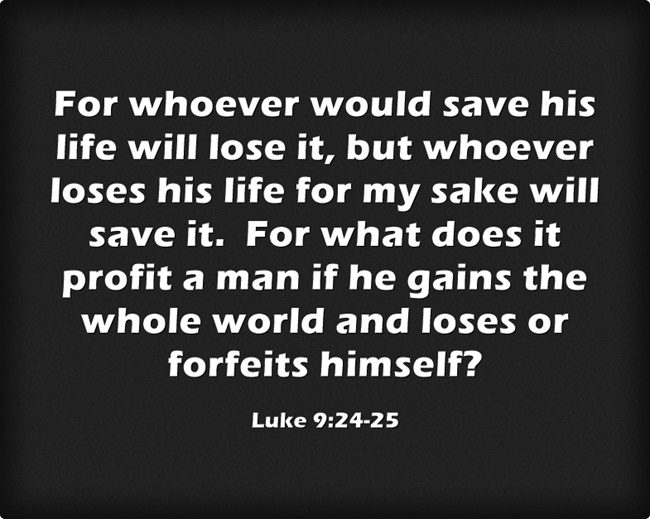
Finally, Jim Elliot, and his friend Peter Fleming landed in Ecuador on February 21st, 1952 with plans to evangelize the Ecuador’s Quechua Indians. After ministering to the local Indians, he decided it was time to reach the tribe of Huaorani. Some had already made contact with them by flying over them and dropping gifts from a lowered basket and they thought they had gained access to them since a few came out to meet them and seemed friendly enough. With that encouraging sign, they decide to set up camp a short distance from where the Huaorani or the Waodani lived, but the next time they say the Huaorani, there were ten warriors who showed up and they were armed to kill and kill they did. They killed them all, including Jim Elliot and three other missionaries, Ed McCully, Roger Youderian, and his friend, Peter Fleming. Interestingly, one of the Bible verses in Elliot’s journal was Luke 9:24; “For whoever would save his life will lose it, but whoever loses his life for my sake will save it.” Jim Elliot has made the supreme sacrifice; that of his own life, but in the performance of His Supreme Commander, Jesus Christ, Who gave the Great Commission. Today, after the death of the Christian martyr, Jim Elliot’s famous quote rings more true today than in the day in which he wrote it: “He is no fool who gives what he cannot keep to gain that which he cannot lose.”
Conclusion
Jim Elliot just couldn’t understand why more people didn’t become missionaries. He had little patience for those who refused to “go” into all the world, let alone next door. Jim Elliot comes to mind in reading John 15:13 where Jesus says, “Greater love has no one than this, that someone lay down his life for his friends,” and fewer men had a greater love for witnessing for Christ and going into places that angels might fear to tread. He deemed and esteemed other men’s souls as more valuable than his life.
Article by Jack Wellman
Jack Wellman is Pastor of the Mulvane Brethren Church in Mulvane Kansas. Jack is also the Senior Writer at What Christians Want To Know whose mission is to equip, encourage, and energize Christians and to address questions about the believer’s daily walk with God and the Bible. You can follow Jack on Google Plus or check out his book Teaching Children the Gospel available on Amazon.
Previous Post

June 8, 2016
Who Was William Carey?
Next Post
June 14, 2016 Who Was Amy Carmichael?
Browse Our Archives
Select a Category Bible Answers Bible Definitions Bible Story Bible Study Bible Verses Christian Books Christian Entertainment Christian Fathers Christian Mothers Christian Quotes Devotional Famous Christians Music News Parables Prayers Quotes Sunday School Lesson Uncategorized Youth Sermons
Select a Month October 2019 September 2019 August 2019 July 2019 June 2019 May 2019 April 2019 March 2019 February 2019 January 2019 December 2018 November 2018 October 2018 September 2018 August 2018 July 2018 June 2018 May 2018 April 2018 March 2018 February 2018 January 2018 December 2017 November 2017 October 2017 September 2017 August 2017 July 2017 June 2017 May 2017 April 2017 March 2017 February 2017 January 2017 December 2016 November 2016 October 2016 September 2016 August 2016 July 2016 June 2016 May 2016 March 2016 February 2016 January 2016 December 2015 November 2015 October 2015 September 2015 August 2015 July 2015 June 2015 May 2015 April 2015 March 2015 February 2015 January 2015 December 2014 November 2014 October 2014 September 2014 August 2014 July 2014 June 2014 May 2014 April 2014 March 2014 February 2014 January 2014 December 2013 November 2013 October 2013 September 2013 August 2013 July 2013 June 2013 May 2013 April 2013 March 2013
Follow Us!
TAKE THE
Religious Wisdom Quiz
Who cried at the tomb of Lazarus?
Select your answer to see how you score.
Jesus John Peter David
Related posts from Christian Crier
The Apostle Paul’s Last Will And Testament
How Handel’s Messiah Handles Theology

The Book Of Jonah: The Reluctant Prophet
TRENDING AT PATHEOS Evangelical

How the author of the world's best hymn...
I've been working with John Newton for a while now. This makes...

Long before this Lectio Divina, Psalm 130 - the song - started...

What About the Trees? Another Living Parable
After I finished writing the last article about falling leaves as a...

Why Classical Education Is a Conversation, Not a...
Come and Read: Joy in Classical Education When I was a little...

Falling Leaves: A Living Parable on Letting Go
I’ve spent the vast majority of my life in the southeast corner...

Cornell University has received a great deal of negative publicity and intense...
view all Evangelical blogs
Ad-Free & Subscriber Log-In Subscription Support
- About Us
- 2026 Calendar
- Videos
- Podcasts
- Library of World Religions
- Faith In Media Tracker
- Advertise With Us
- Write for Us
- Privacy Policy
- Terms of Service
- Do Not Sell My Data
- Contact Us
- Radiant Digital
- Manage Newsletter Subscriptions
- Unsubscribe From Notifications
- Sitemap
Copyright 2008-2026, Patheos. All rights reserved.
Subscription Support Ad-Free & Subscriber Log-In
Follow Patheos