
BuddhistCatholicContemplativeEvangelicalGeneral ChristianHinduJewishLatter-day SaintMuslimNew VisionsProgressive Christian
Beliefs
- Buddhist
- Catholic
- Contemplative
- Evangelical
- General Christian
- Hindu
- Jewish
- Latter-day Saint
- More Voices
- Muslim
- New Visions
- Pagan
- Progressive Christian
Topics
- Religion News
- Food and Religion
- Sports and Religion
- Religious Art
- Religious Music and Entertainment
- Religious Events
- History and Religion
- Style and Religion
- Politics and Religion
- Women in Religion
- Recreation Outdoors and Religion
- Business Finance and Religion
- Careers Workplace and Religion
- Education and Religion
- Family Parenting and Religion
- Health Fitness and Religion
- Home and Religion
- Relationships and Religion
- Technology and Religion
- Travel and Religion
Columnists
- Buddhist Columnists
- Business Finance and Religion Columnists
- Careers Workplace and Religion Columnists
- Catholic Columnists
- Contemplative Columnists
- Education and Religion Columnists
- Evangelists Columnists
- Family Parenting and Religion Columnists
- General Christian Columnists
- Health Fitness and Religion Columnists
- Hindu Columnists
- History and Religion Columnists
- Home and Religion Columnists
- Jewish Columnists
- More Voices Columnists
- Latter Day Columnists
- Muslim Columnists
- New Visions Columnists
- Nonreligious Columnists
- Pagan Columnists
- Politics and Religion Columnists
- Progressive Columnists
- Recreation Outdoors and Religion Columnists
- Relationships and Religion Columnists
- Religion News Columnists
- Religious Art Columnists
- Religious Events Columnists
- Religious Music and Entertainment Columnists
- Sports and Religion Columnists
- Style and Religion Columnists
- Technology and Religion Columnists
- Travel and Religion Columnists
- Women in Religion Columnists
Resource Library
- 2026 Calendar
- Library of World Religions
- The 100 Most Holy Places on Earth
- Patheos Answers
- Podcasts
- Videos
- Faith Leaders Database
- Anglican Episcopalian
- Bahai
- Baptist
- Buddhism
- Christianity
- Confucianism
- Eastern Orthodoxy
- Hinduism
- Holiness and Pentecostal
- ISKCON
- Islam
- Judaism
- Lutheran
- Methodist
- The Church of Jesus Christ of Latter-day Saints
- New Age
- Paganism
- Presbytarian and Reformed
- Protestantism
- Religion Behind the Scenes
- Roman Catholic
- Scientology
- Shia Islam
- Sikhism
- Sufism
- Sunni Islam
- Taoism
- Zen
- See all religions
Research Tools
 Ad-Free & Subscriber Log-In Subscription Support
Ad-Free & Subscriber Log-In Subscription Support
Follow Patheos 

- Trending:
- Forgiveness
- |
- Marriage
- |
- Consciousness
- |
- Death Penalty
- |
- Election
- |
- Halloween
 Christian Crier
- Home
- Evangelical
- Top 7 Bible Verses About Moses
Top 7 Bible Verses About Moses
Last updated on: May 18, 2016 at 9:11 am by Jack Wellman
Top 7 Bible Verses About Moses 2016-05-18T09:11:39-05:00 Jack Wellman
Patheos Explore the world's faith through different perspectives on religion and spirituality! Patheos has the views of the prevalent religions and spiritualities of the world.
Here are seven of the top Bible verses about Moses.
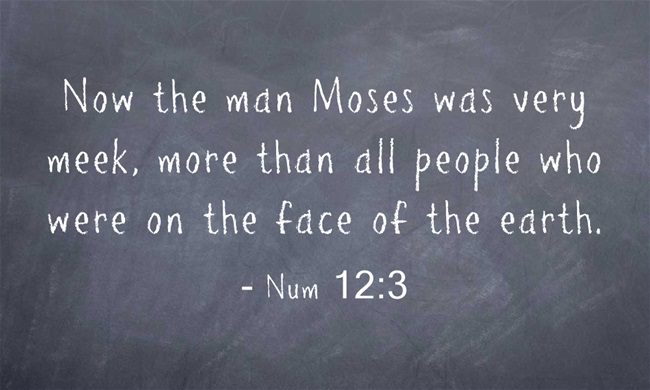
Numbers 12:3 “Now the man Moses was very meek, more than all people who were on the face of the earth.”
When Moses was said to be the meekest man on earth, it didn’t mean he was the weakest man on earth. Isn’t meekness only strength that’s under control? Yes, Moses did have a problem with his temper, but he had intervened for Israel several times. On one occasion after Israel had once again rebelled against God, He was just going to start over with Moses descendants (Ex 32:11-14) but Moses prayed for the sake of God’s own name, which He had sworn by, that He had told Abram (later, Abraham), “And I will make of you a great nation, and I will bless you and make your name great, so that you will be a blessing. I will bless those who bless you, and him who dishonors you I will curse, and in you all the families of the earth shall be blessed” (Gen 12:2-3).
Number 12:7-8 “But this is not true of my servant Moses; he is faithful in all my house. With him I speak face to face, clearly and not in riddles; he sees the form of the Lord.”
This was right after “Miriam and Aaron spoke against Moses because of the Cushite woman whom he had married” and tauntingly, they asked “Has the Lord indeed spoken only through Moses? Has he not spoken through us also?” And the Lord heard it” (Num 12:2). God asked them, “Why then were you not afraid to speak against my servant Moses?” And the anger of the Lord was kindled against them, and he departed” (Num 12:8b-9). It may have only been because Moses pleaded for their lives that God did spare them, but not of all of the consequences for speaking evil of their leader, Moses (Num 12:13). The point is, God spoke directly to His servant Moses and was as close to Him as to see “the form of the Lord.”
Acts 3:22 “Moses said, ‘The Lord God will raise up for you a prophet like me from your brothers. You shall listen to him in whatever he tells you.”
This verse comes right after the Apostle Peter had helped a lame man to walk but acknowledges that it is in Jesus’ “name—by faith in his name—has made this man strong whom you see and know, and the faith that is through Jesus has given the man this perfect health in the presence of you all” (Acts 3:16). Peter says to those gathered “in the portico called Solomon’s” (Acts 3:11) that they had “killed the Author of life, whom God raised from the dead. To this we are witnesses” (Acts 3:15) and this was Him who Moses prophesied about that would be from among their own brothers (Judah), and they will “listen to him in whatever he tells you.” Part of this prophecy, found in Deuteronomy 18:15-19, says “whoever will not listen to my words that he shall speak in my name, I myself will require it of him” (Deut 18:19). Jesus said that He would speak the Father’s words in John 12:49: “For I have not spoken on my own authority, but the Father who sent me has himself given me a commandment—what to say and what to speak.”
Hebrews 11:24-25 “By faith Moses, when he was grown up, refused to be called the son of Pharaoh’s daughter, choosing rather to be mistreated with the people of God than to enjoy the fleeting pleasures of sin.”
Moses chose to go out with his own people, rather than remain in the nation where he was born. That’s because “He considered the reproach of Christ greater wealth than the treasures of Egypt, for he was looking to the reward. By faith he left Egypt, not being afraid of the anger of the king, for he endured as seeing him who is invisible” (Heb 11:26-27). It was a display of faith when Moses “kept the Passover and sprinkled the blood, so that the Destroyer of the firstborn might not touch them” (Heb 11:28). That’s testimony against instant gratification and seeking eternal or permanent joy by being with God (Rev 21:3; 22:4).
Acts 26:22-23 “To this day I have had the help that comes from God, and so I stand here testifying both to small and great, saying nothing but what the prophets and Moses said would come to pass: that the Christ must suffer and that, by being the first to rise from the dead, he would proclaim light both to our people and to the Gentiles.”
Paul was trying to show King Agrippa, who knew the writings of the prophets and Moses, so he was only preaching what was written in the Scriptures of old. Even Moses wrote about the great prophet, the one to come, referring to Jesus Christ (Deut 18:15-19), and that this was what the Jewish leaders had access too as well as the king. Paul was appealing to the king’s knowledge of Scripture and since he believed in God, Paul was preaching what God has spoken through His word in order to prove that Jesus Christ was the Messiah or the Christ.
Mark 9:2, 4 “And after six days Jesus took with him Peter and James and John, and led them up a high mountain by themselves. And he was transfigured before them. And there appeared to them Elijah with Moses, and they were talking with Jesus.”
Just as Paul had mentioned Moses and the prophets, Peter, James, and John all witnessed Jesus transfiguration and the appearance of Elijah and Moses, who represented the law and the prophets. Jesus told them to tell no one, at least “until the Son of Man had risen from the dead” (Mark 9:9) and so “they kept the matter to themselves” (Mark 9:10a). This was a preview of the glory to come when Jesus returns in His full splendor of glory.
Acts 7:22 “And Moses was instructed in all the wisdom of the Egyptians, and he was mighty in his words and deeds.”
Moses had obviously had the best education you could receive at that time. He had very likely learned mathematics, geometry, construction, and that included “all the wisdom of the Egyptians,” so Moses was a very highly educated man. Well equipped to lead such a large nation. Moses was mighty in deeds and in words, before the Pharaoh and Israel as he was the mediator for the nation so God worked powerfully through Moses and all for God’s glory.
Conclusion
Moses is perhaps the most famous man in Jewish history. That’s good in one way but the Orthodox Jews in Jesus day just couldn’t see the Scriptures and how Jesus had perfectly fulfilled them, even down to the cross (Isaiah 53), but those who have repented and trusted in Christ see Him as Lord and Savior, but also as the King of kings. Paul writes, “we impart a secret and hidden wisdom of God, which God decreed before the ages for our glory. None of the rulers of this age understood this, for if they had, they would not have crucified the Lord of glory” (1st Cor 2:7-8) since “these things God has revealed to us through the Spirit. For the Spirit searches everything, even the depths of God” (1st Cor 2:10).
Article by Jack Wellman
Jack Wellman is Pastor of the Mulvane Brethren Church in Mulvane Kansas. Jack is also the Senior Writer at What Christians Want To Know whose mission is to equip, encourage, and energize Christians and to address questions about the believer’s daily walk with God and the Bible. You can follow Jack on Google Plus or check out his book Teaching Children the Gospel available on Amazon.
Previous Post

May 17, 2016
Top 7 Bible Verses About Noah
Next Post
May 18, 2016 Top 7 Bible Verses About Joshua
Browse Our Archives
Select a Category Bible Answers Bible Definitions Bible Story Bible Study Bible Verses Christian Books Christian Entertainment Christian Fathers Christian Mothers Christian Quotes Devotional Famous Christians Music News Parables Prayers Quotes Sunday School Lesson Uncategorized Youth Sermons
Select a Month October 2019 September 2019 August 2019 July 2019 June 2019 May 2019 April 2019 March 2019 February 2019 January 2019 December 2018 November 2018 October 2018 September 2018 August 2018 July 2018 June 2018 May 2018 April 2018 March 2018 February 2018 January 2018 December 2017 November 2017 October 2017 September 2017 August 2017 July 2017 June 2017 May 2017 April 2017 March 2017 February 2017 January 2017 December 2016 November 2016 October 2016 September 2016 August 2016 July 2016 June 2016 May 2016 March 2016 February 2016 January 2016 December 2015 November 2015 October 2015 September 2015 August 2015 July 2015 June 2015 May 2015 April 2015 March 2015 February 2015 January 2015 December 2014 November 2014 October 2014 September 2014 August 2014 July 2014 June 2014 May 2014 April 2014 March 2014 February 2014 January 2014 December 2013 November 2013 October 2013 September 2013 August 2013 July 2013 June 2013 May 2013 April 2013 March 2013
Follow Us!
TAKE THE
Religious Wisdom Quiz
True or False: Psalm 23 begins with 'The Lord is my shepherd; I shall not want.'
Select your answer to see how you score.
TRUE FALSE
Related posts from Christian Crier

Top 13 Bible Verses About Virtue

The Living, Active, Word Of God
The Exclusivity Of Salvation Through Christ Alone
Bible Verses To Help You Spot Apostasy Or...
TRENDING AT PATHEOS Evangelical

The REST of Your Life: A Creative Wrestles...
This week I had a conversation with a good friend from church....

How the author of the world's best hymn...
I've been working with John Newton for a while now. This makes...

Long before this Lectio Divina, Psalm 130 - the song - started...

What About the Trees? Another Living Parable
After I finished writing the last article about falling leaves as a...

Why Classical Education Is a Conversation, Not a...
Come and Read: Joy in Classical Education When I was a little...

Cornell University has received a great deal of negative publicity and intense...
view all Evangelical blogs
Ad-Free & Subscriber Log-In Subscription Support
- About Us
- 2026 Calendar
- Videos
- Podcasts
- Library of World Religions
- Faith In Media Tracker
- Advertise With Us
- Write for Us
- Privacy Policy
- Terms of Service
- Do Not Sell My Data
- Contact Us
- Radiant Digital
- Manage Newsletter Subscriptions
- Unsubscribe From Notifications
- Sitemap
Copyright 2008-2026, Patheos. All rights reserved.
Subscription Support Ad-Free & Subscriber Log-In
Follow Patheos