
BuddhistCatholicContemplativeEvangelicalGeneral ChristianHinduJewishLatter-day SaintMuslimNew VisionsProgressive Christian
Beliefs
- Buddhist
- Catholic
- Contemplative
- Evangelical
- General Christian
- Hindu
- Jewish
- Latter-day Saint
- More Voices
- Muslim
- New Visions
- Pagan
- Progressive Christian
Topics
- Religion News
- Food and Religion
- Sports and Religion
- Religious Art
- Religious Music and Entertainment
- Religious Events
- History and Religion
- Style and Religion
- Politics and Religion
- Women in Religion
- Recreation Outdoors and Religion
- Business Finance and Religion
- Careers Workplace and Religion
- Education and Religion
- Family Parenting and Religion
- Health Fitness and Religion
- Home and Religion
- Relationships and Religion
- Technology and Religion
- Travel and Religion
Columnists
- Buddhist Columnists
- Business Finance and Religion Columnists
- Careers Workplace and Religion Columnists
- Catholic Columnists
- Contemplative Columnists
- Education and Religion Columnists
- Evangelists Columnists
- Family Parenting and Religion Columnists
- General Christian Columnists
- Health Fitness and Religion Columnists
- Hindu Columnists
- History and Religion Columnists
- Home and Religion Columnists
- Jewish Columnists
- More Voices Columnists
- Latter Day Columnists
- Muslim Columnists
- New Visions Columnists
- Nonreligious Columnists
- Pagan Columnists
- Politics and Religion Columnists
- Progressive Columnists
- Recreation Outdoors and Religion Columnists
- Relationships and Religion Columnists
- Religion News Columnists
- Religious Art Columnists
- Religious Events Columnists
- Religious Music and Entertainment Columnists
- Sports and Religion Columnists
- Style and Religion Columnists
- Technology and Religion Columnists
- Travel and Religion Columnists
- Women in Religion Columnists
Resource Library
- 2026 Calendar
- Library of World Religions
- The 100 Most Holy Places on Earth
- Patheos Answers
- Podcasts
- Videos
- Faith Leaders Database
- Anglican Episcopalian
- Bahai
- Baptist
- Buddhism
- Christianity
- Confucianism
- Eastern Orthodoxy
- Hinduism
- Holiness and Pentecostal
- ISKCON
- Islam
- Judaism
- Lutheran
- Methodist
- The Church of Jesus Christ of Latter-day Saints
- New Age
- Paganism
- Presbytarian and Reformed
- Protestantism
- Religion Behind the Scenes
- Roman Catholic
- Scientology
- Shia Islam
- Sikhism
- Sufism
- Sunni Islam
- Taoism
- Zen
- See all religions
Research Tools
 Ad-Free & Subscriber Log-In Subscription Support
Ad-Free & Subscriber Log-In Subscription Support
Follow Patheos 

- Trending:
- Forgiveness
- |
- Marriage
- |
- Consciousness
- |
- Death Penalty
- |
- Election
- |
- Halloween
 Christian Crier
- Home
- Evangelical
- Why Doesn’t The Book Of Esther Mention God By Name?
Why Doesn’t The Book Of Esther Mention God By Name?
Last updated on: March 18, 2016 at 12:42 pm by Jack Wellman
Why Doesn’t The Book Of Esther Mention God By Name? 2016-03-18T12:42:26-05:00 Jack Wellman
Patheos Explore the world's faith through different perspectives on religion and spirituality! Patheos has the views of the prevalent religions and spiritualities of the world.
Why doesn’t the Book of Esther ever mention God by name?
Silence of God?
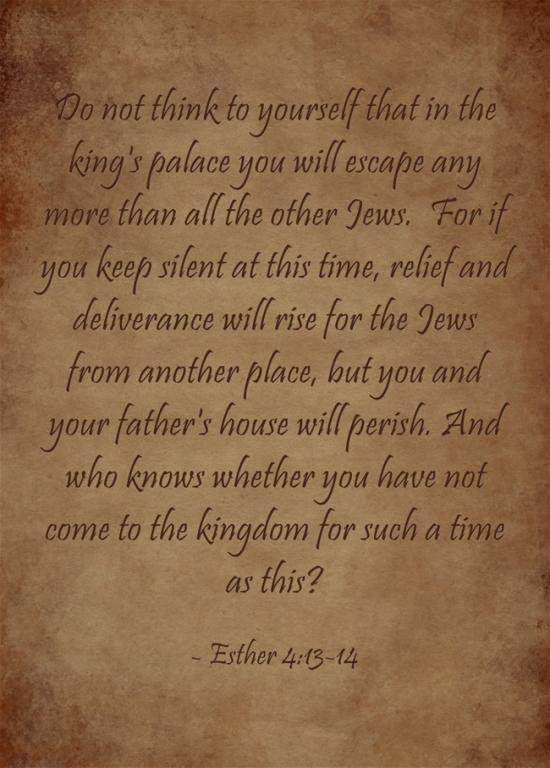
The silence of God doesn’t mean the absence of God and so it is in the Book of Esther, where God’s never mentioned by name, but He is inferred in the book because the Jews fasted over their impending extermination and why would they fast if there was no God to fast before? When Mordecai discovered a plot to kill all of the Jews, he informed Queen Esther, who herself was a Jew, and told her that all the Jews were to be wiped out, including her, if she didn’t approach the king about it. Mordecai sent a message to Queen Esther which said, “Do not think to yourself that in the king’s palace you will escape any more than all the other Jews. For if you keep silent at this time, relief and deliverance will rise for the Jews from another place, but you and your father’s house will perish. And who knows whether you have not come to the kingdom for such a time as this?” Then Esther told them to reply to Mordecai” (Esther 4:13-14) so “Then Esther told them to reply to Mordecai, “Go, gather all the Jews to be found in Susa, and hold a fast on my behalf, and do not eat or drink for three days, night or day. I and my young women will also fast as you do. Then I will go to the king, though it is against the law, and if I perish, I perish” (Esther 4:15-16). Esther risked her life but “for such a time as this” did God place Esther in the King’s house and gave her favor in the eyes of King Ahasuerus who “reigned from India to Ethiopia over 127 provinces” (Esther 1:1), showing his kingdom was by far, the greatest power at that time the world knew.
Does it Matter?
It really doesn’t matter why God’s name was never mentioned in the Book of Esther but the fact is, the Book of Esther is canonized and is part of the inspired Word of God, so the Book of Esther is God speaking. He speaks through His written Word, so God is not missing in the Book of Esther because “All Scripture is breathed out by God and profitable for teaching, for reproof, for correction, and for training in righteousness” (2nd Tim 3:16) because “no prophecy of Scripture comes from someone’s own interpretation” (2nd Pet 1:20) and “no prophecy was ever produced by the will of man, but men spoke from God as they were carried along by the Holy Spirit” (2nd Pet 1:21). The author of most of the Psalms, King David, acknowledge Who it was that spoke through him in writing in the psalms; “The Spirit of the Lord speaks by me; his word is on my tongue” (2nd Sam 23:2), so God’s Spirit spoke to him, put the words on his tongue, and he wrote these words down. God speaks through His written Word, the Bible, by means of the authors who were each led by and were under the inspiration of the Spirit of God. My computer did not write this article. My computer was used in the process of writing this but my computer’s processor didn’t come up with the words, purpose, or meaning. I was the literal author, not the computer.
Silence is Irrelevant
The omission of God’s name in the Book of Esther doesn’t mean that God was not moving events behind the scenes because He was obviously working through Queen Esther and had caused her to be placed in the most prominent position there was at that time; that of the Queen to King Ahasuerus who ruled from India to Ethiopia no one could do anything contrary to his decree and he ensured the plot to kill the Jews wouldn’t happen. There was Esther; queen of the most powerful king on earth, and whom God had sovereignly placed and at exactly the right time, just prior to the plot to kill all of the Jews would have been carried out. The Book of Esther is rich in theology, even without God’s proper name being used or referred to. His providence ensured that the Jews would not be extinguished and that the perpetrator of the plot would pay the price.
Conclusion
The Book of Esther is a great historical account but the lessons that we can glean from it are we must speak up at certain times for certain things and can’t remain silent; we must seek God’s will to be done, even if it’s dangerous to do so; and we must believe that the silence of God is not the absence of God. God speaks to us in His written Word, the Bible, so He is never silent and never is absent for all those who have repented and trusted in Christ. For all others, they are still separated from a Holy God by their sins (Isaiah 59:2) and if they refuse to humble themselves, repent of their sins, and put their trust in Christ, God speaks to them too (Rev 20:12-15; 21:8) but in a far different way than He does to the children of God (John 6:37, 39; 10:28-29).
Article by Jack Wellman
Jack Wellman is Pastor of the Mulvane Brethren Church in Mulvane Kansas. Jack is also the Senior Writer at What Christians Want To Know whose mission is to equip, encourage, and energize Christians and to address questions about the believer’s daily walk with God and the Bible. You can follow Jack on Google Plus or check out his book Teaching Children the Gospel available on Amazon.
Previous Post

March 18, 2016
Where Does The Bible Say Hell Is?
Next Post
March 18, 2016 What Does The Bible Say About Saving For Retirement?
Browse Our Archives
Select a Category Bible Answers Bible Definitions Bible Story Bible Study Bible Verses Christian Books Christian Entertainment Christian Fathers Christian Mothers Christian Quotes Devotional Famous Christians Music News Parables Prayers Quotes Sunday School Lesson Uncategorized Youth Sermons
Select a Month October 2019 September 2019 August 2019 July 2019 June 2019 May 2019 April 2019 March 2019 February 2019 January 2019 December 2018 November 2018 October 2018 September 2018 August 2018 July 2018 June 2018 May 2018 April 2018 March 2018 February 2018 January 2018 December 2017 November 2017 October 2017 September 2017 August 2017 July 2017 June 2017 May 2017 April 2017 March 2017 February 2017 January 2017 December 2016 November 2016 October 2016 September 2016 August 2016 July 2016 June 2016 May 2016 March 2016 February 2016 January 2016 December 2015 November 2015 October 2015 September 2015 August 2015 July 2015 June 2015 May 2015 April 2015 March 2015 February 2015 January 2015 December 2014 November 2014 October 2014 September 2014 August 2014 July 2014 June 2014 May 2014 April 2014 March 2014 February 2014 January 2014 December 2013 November 2013 October 2013 September 2013 August 2013 July 2013 June 2013 May 2013 April 2013 March 2013
Follow Us!
TAKE THE
Religious Wisdom Quiz
What acrostic device is used in many Psalms and Proverbs?
Select your answer to see how you score.
Alphabetic order Reversed order Chronological order Numerical sequence
Related posts from Christian Crier

What Does The Bible Say About Our Thoughts?

Do Colors Have Special Meaning In The Bible?

The Glass – Half Empty Or Half Full?

TRENDING AT PATHEOS Evangelical

How the author of the world's best hymn...
I've been working with John Newton for a while now. This makes...

Long before this Lectio Divina, Psalm 130 - the song - started...

What About the Trees? Another Living Parable
After I finished writing the last article about falling leaves as a...

Why Classical Education Is a Conversation, Not a...
Come and Read: Joy in Classical Education When I was a little...

Falling Leaves: A Living Parable on Letting Go
I’ve spent the vast majority of my life in the southeast corner...

Cornell University has received a great deal of negative publicity and intense...
view all Evangelical blogs
Ad-Free & Subscriber Log-In Subscription Support
- About Us
- 2026 Calendar
- Videos
- Podcasts
- Library of World Religions
- Faith In Media Tracker
- Advertise With Us
- Write for Us
- Privacy Policy
- Terms of Service
- Do Not Sell My Data
- Contact Us
- Radiant Digital
- Manage Newsletter Subscriptions
- Unsubscribe From Notifications
- Sitemap
Copyright 2008-2026, Patheos. All rights reserved.
Subscription Support Ad-Free & Subscriber Log-In
Follow Patheos