
BuddhistCatholicContemplativeEvangelicalGeneral ChristianHinduJewishLatter-day SaintMuslimNew VisionsProgressive Christian
Beliefs
- Buddhist
- Catholic
- Contemplative
- Evangelical
- General Christian
- Hindu
- Jewish
- Latter-day Saint
- More Voices
- Muslim
- New Visions
- Pagan
- Progressive Christian
Topics
- Religion News
- Food and Religion
- Sports and Religion
- Religious Art
- Religious Music and Entertainment
- Religious Events
- History and Religion
- Style and Religion
- Politics and Religion
- Women in Religion
- Recreation Outdoors and Religion
- Business Finance and Religion
- Careers Workplace and Religion
- Education and Religion
- Family Parenting and Religion
- Health Fitness and Religion
- Home and Religion
- Relationships and Religion
- Technology and Religion
- Travel and Religion
Columnists
- Buddhist Columnists
- Business Finance and Religion Columnists
- Careers Workplace and Religion Columnists
- Catholic Columnists
- Contemplative Columnists
- Education and Religion Columnists
- Evangelists Columnists
- Family Parenting and Religion Columnists
- General Christian Columnists
- Health Fitness and Religion Columnists
- Hindu Columnists
- History and Religion Columnists
- Home and Religion Columnists
- Jewish Columnists
- More Voices Columnists
- Latter Day Columnists
- Muslim Columnists
- New Visions Columnists
- Nonreligious Columnists
- Pagan Columnists
- Politics and Religion Columnists
- Progressive Columnists
- Recreation Outdoors and Religion Columnists
- Relationships and Religion Columnists
- Religion News Columnists
- Religious Art Columnists
- Religious Events Columnists
- Religious Music and Entertainment Columnists
- Sports and Religion Columnists
- Style and Religion Columnists
- Technology and Religion Columnists
- Travel and Religion Columnists
- Women in Religion Columnists
Resource Library
- 2026 Calendar
- Library of World Religions
- The 100 Most Holy Places on Earth
- Patheos Answers
- Podcasts
- Videos
- Faith Leaders Database
- Anglican Episcopalian
- Bahai
- Baptist
- Buddhism
- Christianity
- Confucianism
- Eastern Orthodoxy
- Hinduism
- Holiness and Pentecostal
- ISKCON
- Islam
- Judaism
- Lutheran
- Methodist
- The Church of Jesus Christ of Latter-day Saints
- New Age
- Paganism
- Presbytarian and Reformed
- Protestantism
- Religion Behind the Scenes
- Roman Catholic
- Scientology
- Shia Islam
- Sikhism
- Sufism
- Sunni Islam
- Taoism
- Zen
- See all religions
Research Tools
 Ad-Free & Subscriber Log-In Subscription Support
Ad-Free & Subscriber Log-In Subscription Support
Follow Patheos 

- Trending:
- Forgiveness
- |
- Marriage
- |
- Consciousness
- |
- Death Penalty
- |
- Election
- |
- Halloween
 Christian Crier
- Home
- Evangelical
- A Sunday School Lesson On Trust
A Sunday School Lesson On Trust
Last updated on: January 28, 2016 at 12:29 pm by Jack Wellman
A Sunday School Lesson On Trust 2016-01-28T12:29:40-06:00 Jack Wellman
Patheos Explore the world's faith through different perspectives on religion and spirituality! Patheos has the views of the prevalent religions and spiritualities of the world.
Here is a Sunday school lesson or Bible study on the subject of trust from the Bible.
Who do you Trust?
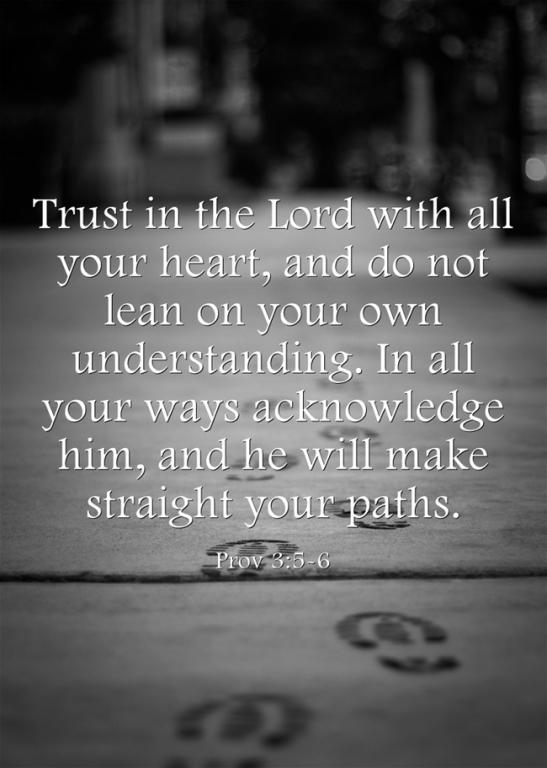
Proverbs 3:5-6 “Trust in the Lord with all your heart, and do not lean on your own understanding. In all your ways acknowledge him, and he will make straight your paths.”
If you’re like me, you like to trust in yourself; in your own intelligence, your own intuition, and your own experience, but these three have failed me many times. It was only later that I learned to lean on God’s Word and trusting it with all my heart. It turns out that my trust was well placed for He made my paths straighter and I didn’t stumble as often as I did before. If you’ve got a Bible, then you’ve got the Word of God, and if you read it, you’ll agree with what the psalmist wrote; “Your word is a lamp to my feet and a light to my path” (Psalm 119:105). Jesus’ teachings are found in the New Testament and are part of the Word of God, but He is actually proclaimed to be the very Word of God (John 1:1, 14), and so by trusting in Him, you are trusting in His Word. The point is, the Bible illuminates those things around your feet so that you might not stumble over something unforeseen, but there’s more; His Word lights up the path, so we can see our steps and but also what we’re about to trip over if we’re not careful (1st Cor 6:18; James 4:7). Both of these lessen the chance of having a fall. Trust the Light (John 8:12) because the darkness cannot overcome it (John 1:5). If you lean on your own understanding there’s nothing holding you up and you’re going to fall; instead, acknowledge Him and He’ll straighten the path for you.
Why does the psalmist say we must “acknowledge Him?”
What does it mean that God will “straighten your paths?”
Why is the Word described as a lamp for our feet and light to our path?
Do you try to walk in the path of your own understanding? How so?
Trusting in Self
Luke 18:9-10 “He also told this parable to some who trusted in themselves that they were righteous, and treated others with contempt: Two men went up into the temple to pray, one a Pharisee and the other a tax collector.”
If we are trusting in ourselves like the Pharisees did, then we’re in serious jeopardy because we are not trustworthy. We are finite human beings that could be here today and gone tomorrow. James wrote, “Today or tomorrow we will go into such and such a town and spend a year there and trade and make a profit”— yet you do not know what tomorrow will bring. What is your life? For you are a mist that appears for a little time and then vanishes” (James 4:13-14), so now is no time to be trusting in ourselves. The trust that Jesus was talking about was much more than just our life. The implications are eternal. The self-righteous trust in their own good works but to God, these are deplorable and worthless to Him (Isaiah 64:6; Eph 2:8-9). The tax collector, generally scorned by the Jews, was “standing far off, would not even lift up his eyes to heaven, but beat his breast, saying, ‘God, be merciful to me, a sinner’” (Luke 18:13) so Jesus said “this man went down to his house justified, rather than the other”(Luke 18:14).
Why was one justified and the other not (Luke 18:13-14)?
Do you know some people who trust in themselves?
Are they on dangerous ground if they’re not saved?
What happens if Christians start to trust in themselves?
Trusting in God
Psalm 25:2 “O my God, in you I trust; let me not be put to shame; let not my enemies exult over me.”
If you want to read about the subject of trust, then I strongly suggest you dive into the Book of Psalms because this book contains more than one third of all the biblical references about trust (53 times) in the Bible (147 times) so if you’re having a hard time with trust, dive into the Book of Psalms. The level of trust that the psalmist had in God was obvious in his writings. He wrote, “Blessed is the man who makes the Lord his trust, who does not turn to the proud, to those who go astray after a lie” (Psalm 40:4). By turning “to the proud,” the psalmist may have meant the wealthy but his point is “Commit your way to the Lord; trust in him, and he will act” (Psalm 37:5).
Why does it mean that God will act if we trust Him?
Does that mean we’ll receive what we’re praying for?
Why does he say “let me not be put to shame?”
Hope in Him
Job 13:15 “Though he slay me, I will hope in him; yet I will argue my ways to his face.”
The way the word hope is used in the Bible and by its definition, it’s almost another word for faith or trust, so think about Job’s state for a moment; he had lost all he had, including his family and possessions, his health, and his own wife said “Curse God and die” (Job 2:9), so she was not much help. Even his friends turned on him. You would think that Job was surely going to lose his faith, but he never did. He questioned God and God’s goodness, but his belief in God never wavered, and in fact, it was stronger than ever after his trial was over (Job 42:7-17). Job’s faith was such that he could confidently say, “I know that my Redeemer lives, and at the last he will stand upon the earth whom I shall see for myself, and my eyes shall behold, and not another. My heart faints within me” (Job 19:26-27)! Job could trust in God no matter what was going on around him (even “though he slay me”).
What made Job change his mind (Job 42:1-6)?
Could you say that about God (Job 13:15)?
Why did Job still want to “argue [his] ways to [God’s] face?
Conclusion
I urge you in your study to look at all of the Bible verses and read them aloud in the class so that you can get the most out of this lesson on trust and this lesson could not be more important today where it’s hard to trust people you don’t know and maybe even those you do. Only God is worthy of our complete and utter trust. For those who have repented of their sins and left them all behind, and then put their trust in Jesus Christ, they have Jesus’ own word on it that, “Whoever believes in me, though he die, yet shall he live, and everyone who lives and believes in me shall never die. Do you believe this” (John 11:25-26)?
Do you believe John 11:25-26?
How hard is it to trust in Job-like circumstances?
Have you ever tried walking in the dark? Is it hard to trust where you’re going?
What has changed in your understanding about trust in this study?
Article by Jack Wellman
Jack Wellman is Pastor of the Mulvane Brethren Church in Mulvane Kansas. Jack is also the Senior Writer at What Christians Want To Know whose mission is to equip, encourage, and energize Christians and to address questions about the believer’s daily walk with God and the Bible. You can follow Jack on Google Plus or check out his book Teaching Children the Gospel available on Amazon.
Previous Post

January 26, 2016
A Sunday School Lesson On Thankfulness
Next Post
January 28, 2016 A Sunday School Lesson On Worship
Browse Our Archives
Select a Category Bible Answers Bible Definitions Bible Story Bible Study Bible Verses Christian Books Christian Entertainment Christian Fathers Christian Mothers Christian Quotes Devotional Famous Christians Music News Parables Prayers Quotes Sunday School Lesson Uncategorized Youth Sermons
Select a Month October 2019 September 2019 August 2019 July 2019 June 2019 May 2019 April 2019 March 2019 February 2019 January 2019 December 2018 November 2018 October 2018 September 2018 August 2018 July 2018 June 2018 May 2018 April 2018 March 2018 February 2018 January 2018 December 2017 November 2017 October 2017 September 2017 August 2017 July 2017 June 2017 May 2017 April 2017 March 2017 February 2017 January 2017 December 2016 November 2016 October 2016 September 2016 August 2016 July 2016 June 2016 May 2016 March 2016 February 2016 January 2016 December 2015 November 2015 October 2015 September 2015 August 2015 July 2015 June 2015 May 2015 April 2015 March 2015 February 2015 January 2015 December 2014 November 2014 October 2014 September 2014 August 2014 July 2014 June 2014 May 2014 April 2014 March 2014 February 2014 January 2014 December 2013 November 2013 October 2013 September 2013 August 2013 July 2013 June 2013 May 2013 April 2013 March 2013
Follow Us!
TAKE THE
Religious Wisdom Quiz
Who helped Jesus carry His cross?
Select your answer to see how you score.
Peter John Judas Simon of Cyrene
Related posts from Christian Crier

6 Things That Damage Our Relationship With God


Seeing The Gospel In Biblical Accounts
Getting The Most Out Of Your Bible Reading
TRENDING AT PATHEOS Evangelical

How the author of the world's best hymn...
I've been working with John Newton for a while now. This makes...

Long before this Lectio Divina, Psalm 130 - the song - started...

What About the Trees? Another Living Parable
After I finished writing the last article about falling leaves as a...

Why Classical Education Is a Conversation, Not a...
Come and Read: Joy in Classical Education When I was a little...

Falling Leaves: A Living Parable on Letting Go
I’ve spent the vast majority of my life in the southeast corner...

Cornell University has received a great deal of negative publicity and intense...
view all Evangelical blogs
Ad-Free & Subscriber Log-In Subscription Support
- About Us
- 2026 Calendar
- Videos
- Podcasts
- Library of World Religions
- Faith In Media Tracker
- Advertise With Us
- Write for Us
- Privacy Policy
- Terms of Service
- Do Not Sell My Data
- Contact Us
- Radiant Digital
- Manage Newsletter Subscriptions
- Unsubscribe From Notifications
- Sitemap
Copyright 2008-2026, Patheos. All rights reserved.
Subscription Support Ad-Free & Subscriber Log-In
Follow Patheos