
BuddhistCatholicContemplativeEvangelicalGeneral ChristianHinduJewishLatter-day SaintMuslimNew VisionsProgressive Christian
Beliefs
- Buddhist
- Catholic
- Contemplative
- Evangelical
- General Christian
- Hindu
- Jewish
- Latter-day Saint
- More Voices
- Muslim
- New Visions
- Pagan
- Progressive Christian
Topics
- Religion News
- Food and Religion
- Sports and Religion
- Religious Art
- Religious Music and Entertainment
- Religious Events
- History and Religion
- Style and Religion
- Politics and Religion
- Women in Religion
- Recreation Outdoors and Religion
- Business Finance and Religion
- Careers Workplace and Religion
- Education and Religion
- Family Parenting and Religion
- Health Fitness and Religion
- Home and Religion
- Relationships and Religion
- Technology and Religion
- Travel and Religion
Columnists
- Buddhist Columnists
- Business Finance and Religion Columnists
- Careers Workplace and Religion Columnists
- Catholic Columnists
- Contemplative Columnists
- Education and Religion Columnists
- Evangelists Columnists
- Family Parenting and Religion Columnists
- General Christian Columnists
- Health Fitness and Religion Columnists
- Hindu Columnists
- History and Religion Columnists
- Home and Religion Columnists
- Jewish Columnists
- More Voices Columnists
- Latter Day Columnists
- Muslim Columnists
- New Visions Columnists
- Nonreligious Columnists
- Pagan Columnists
- Politics and Religion Columnists
- Progressive Columnists
- Recreation Outdoors and Religion Columnists
- Relationships and Religion Columnists
- Religion News Columnists
- Religious Art Columnists
- Religious Events Columnists
- Religious Music and Entertainment Columnists
- Sports and Religion Columnists
- Style and Religion Columnists
- Technology and Religion Columnists
- Travel and Religion Columnists
- Women in Religion Columnists
Resource Library
- 2026 Calendar
- Library of World Religions
- The 100 Most Holy Places on Earth
- Patheos Answers
- Podcasts
- Videos
- Faith Leaders Database
- Anglican Episcopalian
- Bahai
- Baptist
- Buddhism
- Christianity
- Confucianism
- Eastern Orthodoxy
- Hinduism
- Holiness and Pentecostal
- ISKCON
- Islam
- Judaism
- Lutheran
- Methodist
- The Church of Jesus Christ of Latter-day Saints
- New Age
- Paganism
- Presbytarian and Reformed
- Protestantism
- Religion Behind the Scenes
- Roman Catholic
- Scientology
- Shia Islam
- Sikhism
- Sufism
- Sunni Islam
- Taoism
- Zen
- See all religions
Research Tools
 Ad-Free & Subscriber Log-In Subscription Support
Ad-Free & Subscriber Log-In Subscription Support
Follow Patheos 

- Trending:
- Forgiveness
- |
- Marriage
- |
- Consciousness
- |
- Death Penalty
- |
- Election
- |
- Halloween
 Christian Crier
- Home
- Evangelical
- A Sunday School Lesson On Loving Your Neighbor
A Sunday School Lesson On Loving Your Neighbor
Last updated on: January 23, 2016 at 2:18 pm by Jack Wellman
A Sunday School Lesson On Loving Your Neighbor 2016-01-23T14:18:41-06:00 Jack Wellman
Patheos Explore the world's faith through different perspectives on religion and spirituality! Patheos has the views of the prevalent religions and spiritualities of the world.
Here is a Sunday school lesson or Bible study about loving your neighbor.
Loving God First
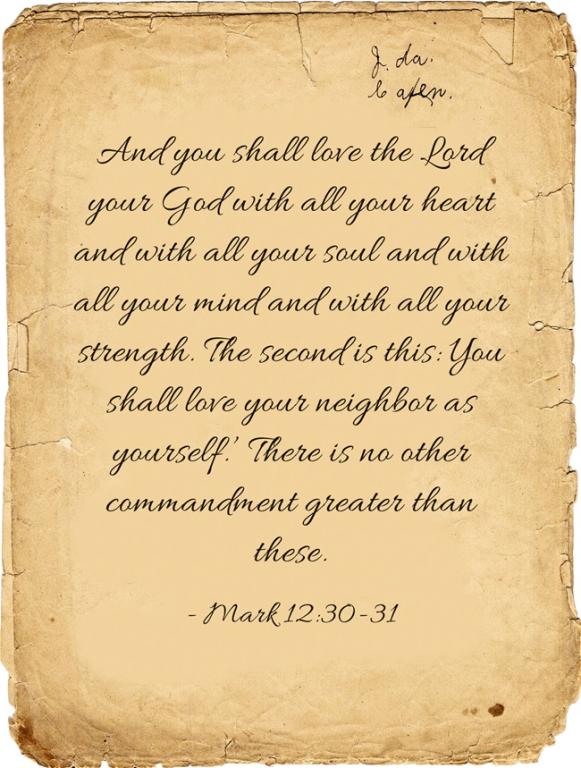
Mark 12:30-31 “And you shall love the Lord your God with all your heart and with all your soul and with all your mind and with all your strength.’ The second is this: ‘You shall love your neighbor as yourself.’ There is no other commandment greater than these.”
Mark 12:30-32 is when Jesus had told the scribes what the greatest of all the commandments were as a response to the time when “the scribes came up and heard them disputing with one another, and seeing that he answered them well, asked him, “Which commandment is the most important of all” (Mark 12:28). After one of the scribes answered correctly “Jesus saw that he answered wisely, he said to him, “You are not far from the kingdom of God.” And after that no one dared to ask him any more questions” (Mark 12:34). We too are near the kingdom when we love God first and foremost (Matt 6:33) and then love our neighbor in the same way that we love ourselves.
Is it humanly possible to love God with all our “soul and with all [our] mind and with all [our] strength?
How do we love ourselves?
How can we love our neighbors when they are hard to love?
Loving our Neighbor
Galatians 5:14 “For the whole law is fulfilled in one word: “You shall love your neighbor as yourself.”
This amazing statement of Paul’s declared that “the whole law is fulfilled in one word” or one sentence and that is “You shall love your neighbor as yourself.” What law was this fulfilling? Is the command to love our neighbor found in the Old Testament? Yes, as it says in Leviticus 19:18 “You shall not take vengeance or bear a grudge against the sons of your own people, but you shall love your neighbor as yourself: I am the LORD.” Part of loving our neighbor means we won’t bear a grudge or not forgive them and neither should we seek to take revenge into our own hands. That is not love but that is seeking to seat ourselves on the throne of God and it’s a one-seater! Instead, Paul tells us to “never avenge yourselves, but leave it to the wrath of God, for it is written, “Vengeance is mine, I will repay, says the Lord” (Rom 12:19) and to “Repay no one evil for evil, but give thought to do what is honorable in the sight of all” and as much as “possible, so far as it depends on you, live peaceably with all” (Rom 12:17-18) because “Love does no wrong to a neighbor; therefore love is the fulfilling of the law” (Rom 13:10).
Why isn’t it loving to seek revenge against our neighbor?
How isn’t it loving to hold a grudge against our neighbor?
How hard is it to wait on God for Him to repay all evil done against us?
Loving our Enemies?
Matthew 5:43 “You have heard that it was said, ‘You shall love your neighbor and hate your enemy.’”
In the Beatitudes, Jesus said some very shocking things like “Love your enemies and pray for those who persecute you” (Matt 5:44) and we are to do this “so that you may be sons of your Father who is in heaven. For he makes his sun rise on the evil and on the good, and sends rain on the just and on the unjust” (Matt 5:45) because “if you love those who love you, what reward do you have? Do not even the tax collectors do the same” (Matt 5:46)? How are we any different from the world if we only show love to those of our own household? Next, there is even more radical teaching where Jesus says “Love your enemies, do good to those who hate you, bless those who curse you, pray for those who mistreat you” (Luke 6:27-28). Really Jesus?! Do good to those who hate us and pray for those who mistreat us and bless those who curse us? Yes! That’s because “while we were still sinners, Christ died for us” (Rom 5:8) and “while we were enemies we were reconciled to God by the death of his Son, much more, now that we are reconciled, shall we be saved by his life” (Rom 5:10). Paul’s point is that we were once enemies of God but God still sent His Son “at the right time Christ died for the ungodly” (Rom 5:6) which means us!
Why is it hard to pray for and bless those who hate us and curse us?
Do you consider anyone your enemy? Have you prayed for that person?
Do we tend to only show love to those that are our family and church members?
Who is our Neighbor?
Luke 10:29 “But he, desiring to justify himself, said to Jesus, “And who is my neighbor?”
In the Parable of the Good Samaritan Jesus said that the true neighbor who was loving was the one who went out of their way to help someone who had been beaten and robbed (Luke 10:3) but the supposedly religious ones avoided the man, so much so, that when they “saw him he passed by on the other side” (Luke 10:342b) hoping to not get involved which is much like our society today. When a Samaritan was the only one who helped (Luke 10:33-36), Jesus showed that the real neighbor is not the person who is trained in religion or the religious type but the one who actually helped, and in this case it came from someone who the Jews absolutely despised; the Samaritans. Jesus asks the listeners “Which of these three, do you think, proved to be a neighbor to the man who fell among the robbers?” He said, “The one who showed him mercy.” And Jesus said to him, “You go, and do likewise” (Luke 10:36-37).
Do we assume some people will be more loving because of who they are or what they do?
Does it sometime appear that the least likely person to help is sometimes the very one that help?
Have you ever been a “good Samaritan?”
Conclusion
I urge you in your study to look at all of the Bible verses and read them aloud in the class so that you can get the most out of this lesson on loving our neighbors as ourselves but an important point that Jesus made was our neighbors are more than those who live next door. Just look at everyone you see as your neighbor because they too were created in the image of God (Gen 1:27) so we must treat others the way that we would like to be treated and loving our neighbors might be taking care of them just as we take care of ourselves. The end purpose is “so that you may be sons of your Father who is in heaven. For he makes his sun rise on the evil and on the good, and sends rain on the just and on the unjust” (Matt 5:45).
Does it make sense that we should treat others in the same way that we treat ourselves?
Is it hard to see the “image of God” in people?
What have you learned about loving your neighbor in this study?
Article by Jack Wellman
Jack Wellman is Pastor of the Mulvane Brethren Church in Mulvane Kansas. Jack is also the Senior Writer at What Christians Want To Know whose mission is to equip, encourage, and energize Christians and to address questions about the believer’s daily walk with God and the Bible. You can follow Jack on Google Plus or check out his book Teaching Children the Gospel available on Amazon.
Previous Post

January 22, 2016
A Sunday School Lesson On Leadership
Next Post
January 22, 2016 A Sunday School Lesson On Money
Browse Our Archives
Select a Category Bible Answers Bible Definitions Bible Story Bible Study Bible Verses Christian Books Christian Entertainment Christian Fathers Christian Mothers Christian Quotes Devotional Famous Christians Music News Parables Prayers Quotes Sunday School Lesson Uncategorized Youth Sermons
Select a Month October 2019 September 2019 August 2019 July 2019 June 2019 May 2019 April 2019 March 2019 February 2019 January 2019 December 2018 November 2018 October 2018 September 2018 August 2018 July 2018 June 2018 May 2018 April 2018 March 2018 February 2018 January 2018 December 2017 November 2017 October 2017 September 2017 August 2017 July 2017 June 2017 May 2017 April 2017 March 2017 February 2017 January 2017 December 2016 November 2016 October 2016 September 2016 August 2016 July 2016 June 2016 May 2016 March 2016 February 2016 January 2016 December 2015 November 2015 October 2015 September 2015 August 2015 July 2015 June 2015 May 2015 April 2015 March 2015 February 2015 January 2015 December 2014 November 2014 October 2014 September 2014 August 2014 July 2014 June 2014 May 2014 April 2014 March 2014 February 2014 January 2014 December 2013 November 2013 October 2013 September 2013 August 2013 July 2013 June 2013 May 2013 April 2013 March 2013
Follow Us!
TAKE THE
Religious Wisdom Quiz
Who said, "All things work together for good"?
Select your answer to see how you score.
John Paul Peter James
Related posts from Christian Crier



How To Love Your Brothers And Sisters

TRENDING AT PATHEOS Evangelical

How the author of the world's best hymn...
I've been working with John Newton for a while now. This makes...

Long before this Lectio Divina, Psalm 130 - the song - started...

What About the Trees? Another Living Parable
After I finished writing the last article about falling leaves as a...

Why Classical Education Is a Conversation, Not a...
Come and Read: Joy in Classical Education When I was a little...

Falling Leaves: A Living Parable on Letting Go
I’ve spent the vast majority of my life in the southeast corner...

Cornell University has received a great deal of negative publicity and intense...
view all Evangelical blogs
Ad-Free & Subscriber Log-In Subscription Support
- About Us
- 2026 Calendar
- Videos
- Podcasts
- Library of World Religions
- Faith In Media Tracker
- Advertise With Us
- Write for Us
- Privacy Policy
- Terms of Service
- Do Not Sell My Data
- Contact Us
- Radiant Digital
- Manage Newsletter Subscriptions
- Unsubscribe From Notifications
- Sitemap
Copyright 2008-2026, Patheos. All rights reserved.
Subscription Support Ad-Free & Subscriber Log-In
Follow Patheos