
BuddhistCatholicContemplativeEvangelicalGeneral ChristianHinduJewishLatter-day SaintMuslimNew VisionsProgressive Christian
Beliefs
- Buddhist
- Catholic
- Contemplative
- Evangelical
- General Christian
- Hindu
- Jewish
- Latter-day Saint
- More Voices
- Muslim
- New Visions
- Pagan
- Progressive Christian
Topics
- Religion News
- Food and Religion
- Sports and Religion
- Religious Art
- Religious Music and Entertainment
- Religious Events
- History and Religion
- Style and Religion
- Politics and Religion
- Women in Religion
- Recreation Outdoors and Religion
- Business Finance and Religion
- Careers Workplace and Religion
- Education and Religion
- Family Parenting and Religion
- Health Fitness and Religion
- Home and Religion
- Relationships and Religion
- Technology and Religion
- Travel and Religion
Columnists
- Buddhist Columnists
- Business Finance and Religion Columnists
- Careers Workplace and Religion Columnists
- Catholic Columnists
- Contemplative Columnists
- Education and Religion Columnists
- Evangelists Columnists
- Family Parenting and Religion Columnists
- General Christian Columnists
- Health Fitness and Religion Columnists
- Hindu Columnists
- History and Religion Columnists
- Home and Religion Columnists
- Jewish Columnists
- More Voices Columnists
- Latter Day Columnists
- Muslim Columnists
- New Visions Columnists
- Nonreligious Columnists
- Pagan Columnists
- Politics and Religion Columnists
- Progressive Columnists
- Recreation Outdoors and Religion Columnists
- Relationships and Religion Columnists
- Religion News Columnists
- Religious Art Columnists
- Religious Events Columnists
- Religious Music and Entertainment Columnists
- Sports and Religion Columnists
- Style and Religion Columnists
- Technology and Religion Columnists
- Travel and Religion Columnists
- Women in Religion Columnists
Resource Library
- 2026 Calendar
- Library of World Religions
- The 100 Most Holy Places on Earth
- Patheos Answers
- Podcasts
- Videos
- Faith Leaders Database
- Anglican Episcopalian
- Bahai
- Baptist
- Buddhism
- Christianity
- Confucianism
- Eastern Orthodoxy
- Hinduism
- Holiness and Pentecostal
- ISKCON
- Islam
- Judaism
- Lutheran
- Methodist
- The Church of Jesus Christ of Latter-day Saints
- New Age
- Paganism
- Presbytarian and Reformed
- Protestantism
- Religion Behind the Scenes
- Roman Catholic
- Scientology
- Shia Islam
- Sikhism
- Sufism
- Sunni Islam
- Taoism
- Zen
- See all religions
Research Tools
 Ad-Free & Subscriber Log-In Subscription Support
Ad-Free & Subscriber Log-In Subscription Support
Follow Patheos 

- Trending:
- Forgiveness
- |
- Marriage
- |
- Consciousness
- |
- Death Penalty
- |
- Election
- |
- Halloween
 Christian Crier
- Home
- Evangelical
- Where Is Purgatory In The Bible?
Where Is Purgatory In The Bible?
Last updated on: January 15, 2016 at 11:22 am by Jack Wellman
Where Is Purgatory In The Bible? 2016-01-15T11:22:32-06:00 Jack Wellman
Patheos Explore the world's faith through different perspectives on religion and spirituality! Patheos has the views of the prevalent religions and spiritualities of the world.
Does the Bible mention purgatory? If so, what Scriptures are used to support it?
What is Purgatory?
If you’re looking for the word “purgatory” in the Bible you won’t find it. If you’re looking for the concept of purgatory, I still don’t believe you can find it because I couldn’t, so the question is; what is purgatory? Does it really exist? The Catholic Encyclopedia says that purgatory is a place or condition of temporal punishment for those who, departing this life in God’s grace, are not entirely free from venial faults, or have not fully paid the satisfaction due to their transgressions. In other words, if a person dies with faith in Christ, they don’t go to hell but they go to purgatory if they had unconfessed sins or had what are called “venial sins or faults.” Venial sins are those sins that are able to be forgiven or pardoned but are not serious, even though they are still sin. Venial sins are seen by Catholics as not as serious as mortal sins which are considered to be more severe or mortal and considered to be sins like sexual immorality, adultery, idolatry, murder, or other such sins but is purgatory a real place?
Is purgatory a real place?
What Bible verses do people use to claim that purgatory is real?
Is a person who dies with unconfessed mortal sins, do they still go to purgatory or do they go straight to hell?
Can anyone get out of purgatory by their own effort or do they need help?
Why Purgatory?
Many people believe that purgatory is necessary to purge the sins that weren’t cleansed and see purgatory as a purification process so that they can achieve the holiness necessary “to enter the joy of heaven” which is experienced by those “who die in God’s grace and friendship, but still imperfectly purified” (CCC 1030).[1] What Bible verses do Catholics use to prove that purgatory is a real place? Some use Luke 12:59, 1st Peter 3:19, and Matthew 12:32 among others.
Matthew 12:32 “And whoever speaks a word against the Son of Man will be forgiven, but whoever speaks against the Holy Spirit will not be forgiven, either in this age or in the age to come.”
Who can help us get out of purgatory?
Why is this important?
Doesn’t being in a state of un-forgiveness “in this age” and “in the age to come” contradict the belief of purgatory?
Scriptural Support for Purgatory?
Luke 12:57-59 “Why don’t you judge for yourselves what is right? Why don’t you judge for yourselves what is right? As you are going with your adversary to the magistrate, try hard to be reconciled on the way, or your adversary may drag you off to the judge, and the judge turn you over to the officer, and the officer throw you into prison. I tell you, you will not get out until you have paid the last penny.”
I included the paragraph (verses 57-59) and not just verse 59 because the context is critical. Some believe that Jesus spoke about purgatory in Luke 12:59 but what is the context of this paragraph?
Is Jesus speaking about judgment and settling an account with a judge?
Would any judge allow someone to work their way out of prison by works?
Is there any way that someone else can help them out of prison?
It seems cloudy to me that Jesus is speaking about a temporary judgment by paying every “last penny” when someone in prison doesn’t earn money. Context is so important because if we try to cherry-pick only a few verses, we can rip text out of context and make it a pretext; and often a false one. It takes the whole context of the whole word and often the whole chapter to see the whole meaning.
Did Peter Write About Purgatory?
1st Pet 3:18-19 “Christ also suffered once for sins, the righteous for the unrighteous, that he might bring us to God, being put to death in the flesh but made alive in the spirit, in which he went and proclaimed to the spirits in prison”
This is another Bible verse that is used to support purgatory but if we go back to verse 18, notice that Peter wrote “Christ also suffered once for sins, the righteous for the unrighteous” so does “once for sins” allow for purgatory to exist?
Then, Jesus “went and proclaimed to the spirits in prison” (1st Pet 3:19) but who or what are these spirits? Fallen angels (demons) or the dead who’ve been judged already?
Does it say that these spirits were set free?
Since Jesus suffered once for the sins of the unrighteous, can purgatory still be true?
Didn’t He suffer enough?
Wasn’t His sufficient to take away all sins or only some of them?
Who were these “spirits in prison” that Jesus went to preach too?
Does preaching to those “spirits in prison” mean those who are in purgatory?
Hadn’t they heard the gospel already?
If they hadn’t, wouldn’t they be in hell and not purgatory?
The fact that Jesus went to preach to the spirits in prison doesn’t mean that they had a second chance. There is nothing said about that in these verses. The Bible clearly shows that after death comes the judgment (Heb 9:27) and not that there is another chance to be saved (Dan 12:1-3). The Bible teaches “today is the day of salvation” (2nd Cor 6:2). We can be wrong about purgatory but we must not be wrong about our salvation and that is through repentance and faith and not one drop of works (Eph 2:8-9) but one that should be bearing good works.
Jesus + Purgatory = Salvation?
It almost seems as if people who believe in purgatory and need to pay for the rest of their sins are telling Jesus, “Nice try Jesus but it’s not quite enough…I have to pay for the rest of my sins in purgatory because the cross wasn’t enough. When I’m done, I’ll see you in heaven.”
I know that sounds harsh but isn’t it robbing God of glory to require someone to pay for the rest of their sins by their own suffering?
If we’re supposed to add to our own salvation in purgatory by being purged because we’re “still imperfectly purified” (CCC 1030), then isn’t that a works-based righteousness which God will not accept (Eph 2:8-9) and one that says the cross wasn’t enough?
Some believe that Matthew 12:32 refers to purgatory where Jesus says “And whoever speaks a word against the Son of Man will be forgiven, but whoever speaks against the Holy Spirit will not be forgiven, either in this age or in the age to come” (Matt 12:32) but does this suggest that one can be freed after death from the consequences of one’s sins?
I do not see this in the verse or even in the context of this paragraph because Jesus is speaking to the self-righteous Jews who attributed the power of the miracles of Christ to the Devil. Jesus says that this is blaspheme and “whoever speaks against the Holy Spirit will not be forgiven, either in this age or in the age to come” which means there is never any chance of forgiveness, “in this age or in the age to come” (including any time period for purgatory).
How do you feel about purgatory?
Does it seem to contradict Scripture?
Wasn’t Jesus’ payment enough?
Conclusion
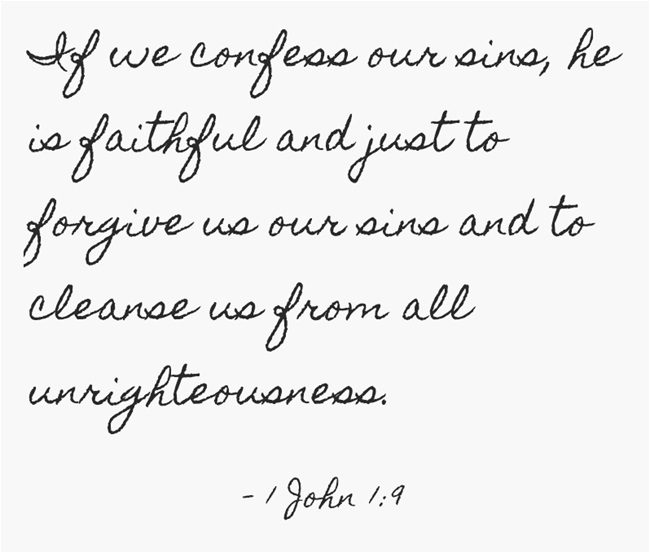
I don’t believe in purgatory but those who do are still our brothers and sister in Christ. We can differ over things like the rapture, the millennium, and the gifts of the Spirit but we do agree that Jesus lived a sinless life and offered up Himself so that we might be redeemed and receive eternal life. I believe Jesus Christ died once for all sins and takes away all of our sins forever (Psalm 103:12; 1st John 1:9), not most of them. The Apostle John writes in “If we confess our sins, he is faithful and just to forgive us our sins and to cleanse us from all unrighteousness” (1st John 1:9). John says nothing about those sins that God missed or the ones we must make up for. Our purification was from Jesus “who gave himself for us to redeem us from all lawlessness and to purify for himself a people for his own possession who are zealous for good works” (Titus 2:14). Jesus missed nothing! He has cleansed us from all of sins and from all of our unrighteousness, so there is none after death to be purged. Paul knew that when he was away from his body (death) he was present with the Lord (2nd Cor 5:8). Since God made Jesus “to be sin who knew no sin, so that in him we might become the righteousness of God” (2nd Cor 5:21), can we be made any more righteous by our own purging? Isn’t Jesus enough (Acts 4:12)? I believe He is.
1. The Catechism of the Catholic Church.
Article by Jack Wellman
Jack Wellman is Pastor of the Mulvane Brethren Church in Mulvane Kansas. Jack is also the Senior Writer at What Christians Want To Know whose mission is to equip, encourage, and energize Christians and to address questions about the believer’s daily walk with God and the Bible. You can follow Jack on Google Plus or check out his book Teaching Children the Gospel available on Amazon.
Previous Post

December 30, 2015
Top 7 Bible Verses About Insecurity
Next Post
January 15, 2016 Where Is Divorce Talked About In The Bible?
Browse Our Archives
Select a Category Bible Answers Bible Definitions Bible Story Bible Study Bible Verses Christian Books Christian Entertainment Christian Fathers Christian Mothers Christian Quotes Devotional Famous Christians Music News Parables Prayers Quotes Sunday School Lesson Uncategorized Youth Sermons
Select a Month October 2019 September 2019 August 2019 July 2019 June 2019 May 2019 April 2019 March 2019 February 2019 January 2019 December 2018 November 2018 October 2018 September 2018 August 2018 July 2018 June 2018 May 2018 April 2018 March 2018 February 2018 January 2018 December 2017 November 2017 October 2017 September 2017 August 2017 July 2017 June 2017 May 2017 April 2017 March 2017 February 2017 January 2017 December 2016 November 2016 October 2016 September 2016 August 2016 July 2016 June 2016 May 2016 March 2016 February 2016 January 2016 December 2015 November 2015 October 2015 September 2015 August 2015 July 2015 June 2015 May 2015 April 2015 March 2015 February 2015 January 2015 December 2014 November 2014 October 2014 September 2014 August 2014 July 2014 June 2014 May 2014 April 2014 March 2014 February 2014 January 2014 December 2013 November 2013 October 2013 September 2013 August 2013 July 2013 June 2013 May 2013 April 2013 March 2013
Follow Us!
TAKE THE
Religious Wisdom Quiz
How did Saul die?
Select your answer to see how you score.
Killed by Philistines Fell on his own sword Stoned by Israelites Died of old age
Related posts from Christian Crier

What Does The Bible Say About Our Thoughts?

Do Colors Have Special Meaning In The Bible?

The Glass – Half Empty Or Half Full?

TRENDING AT PATHEOS Evangelical

The REST of Your Life: A Creative Wrestles...
This week I had a conversation with a good friend from church....

How the author of the world's best hymn...
I've been working with John Newton for a while now. This makes...

Long before this Lectio Divina, Psalm 130 - the song - started...

What About the Trees? Another Living Parable
After I finished writing the last article about falling leaves as a...

Why Classical Education Is a Conversation, Not a...
Come and Read: Joy in Classical Education When I was a little...

Cornell University has received a great deal of negative publicity and intense...
view all Evangelical blogs
Ad-Free & Subscriber Log-In Subscription Support
- About Us
- 2026 Calendar
- Videos
- Podcasts
- Library of World Religions
- Faith In Media Tracker
- Advertise With Us
- Write for Us
- Privacy Policy
- Terms of Service
- Do Not Sell My Data
- Contact Us
- Radiant Digital
- Manage Newsletter Subscriptions
- Unsubscribe From Notifications
- Sitemap
Copyright 2008-2026, Patheos. All rights reserved.
Subscription Support Ad-Free & Subscriber Log-In
Follow Patheos