
BuddhistCatholicContemplativeEvangelicalGeneral ChristianHinduJewishLatter-day SaintMuslimNew VisionsProgressive Christian
Beliefs
- Buddhist
- Catholic
- Contemplative
- Evangelical
- General Christian
- Hindu
- Jewish
- Latter-day Saint
- More Voices
- Muslim
- New Visions
- Pagan
- Progressive Christian
Topics
- Religion News
- Food and Religion
- Sports and Religion
- Religious Art
- Religious Music and Entertainment
- Religious Events
- History and Religion
- Style and Religion
- Politics and Religion
- Women in Religion
- Recreation Outdoors and Religion
- Business Finance and Religion
- Careers Workplace and Religion
- Education and Religion
- Family Parenting and Religion
- Health Fitness and Religion
- Home and Religion
- Relationships and Religion
- Technology and Religion
- Travel and Religion
Columnists
- Buddhist Columnists
- Business Finance and Religion Columnists
- Careers Workplace and Religion Columnists
- Catholic Columnists
- Contemplative Columnists
- Education and Religion Columnists
- Evangelists Columnists
- Family Parenting and Religion Columnists
- General Christian Columnists
- Health Fitness and Religion Columnists
- Hindu Columnists
- History and Religion Columnists
- Home and Religion Columnists
- Jewish Columnists
- More Voices Columnists
- Latter Day Columnists
- Muslim Columnists
- New Visions Columnists
- Nonreligious Columnists
- Pagan Columnists
- Politics and Religion Columnists
- Progressive Columnists
- Recreation Outdoors and Religion Columnists
- Relationships and Religion Columnists
- Religion News Columnists
- Religious Art Columnists
- Religious Events Columnists
- Religious Music and Entertainment Columnists
- Sports and Religion Columnists
- Style and Religion Columnists
- Technology and Religion Columnists
- Travel and Religion Columnists
- Women in Religion Columnists
Resource Library
- 2026 Calendar
- Library of World Religions
- The 100 Most Holy Places on Earth
- Patheos Answers
- Podcasts
- Videos
- Faith Leaders Database
- Anglican Episcopalian
- Bahai
- Baptist
- Buddhism
- Christianity
- Confucianism
- Eastern Orthodoxy
- Hinduism
- Holiness and Pentecostal
- ISKCON
- Islam
- Judaism
- Lutheran
- Methodist
- The Church of Jesus Christ of Latter-day Saints
- New Age
- Paganism
- Presbytarian and Reformed
- Protestantism
- Religion Behind the Scenes
- Roman Catholic
- Scientology
- Shia Islam
- Sikhism
- Sufism
- Sunni Islam
- Taoism
- Zen
- See all religions
Research Tools
 Ad-Free & Subscriber Log-In Subscription Support
Ad-Free & Subscriber Log-In Subscription Support
Follow Patheos 

- Trending:
- Forgiveness
- |
- Marriage
- |
- Consciousness
- |
- Death Penalty
- |
- Election
- |
- Halloween
 Christian Crier
- Home
- Evangelical
- Who Were The Wise Men That Visited Jesus After His Birth?
Who Were The Wise Men That Visited Jesus After His Birth?
Last updated on: November 28, 2015 at 1:18 pm by Jack Wellman
Who Were The Wise Men That Visited Jesus After His Birth? 2015-11-28T13:18:03-06:00 Jack Wellman
Patheos Explore the world's faith through different perspectives on religion and spirituality! Patheos has the views of the prevalent religions and spiritualities of the world.
Who were these “wise men” or magi that visited Jesus after His birth? Why did this do this?
Who were the Wise Men?
Some translations call the “wise men” the magi but who were these men? How many were there? The word “magi” is from the Greek word “magos” (plural) and means magicians or astrologers but some translations have it as “wise men.” This name was given by the Babylonians (Chaldeans), Medes, Persians, and nearly every other nation to the teachers, priests, physicians, astrologers, seers, interpreters of dreams (like Daniel), soothsayers, and sorcerers so we can’t know with precision who these men were nor can we tell how many there were as the Bible is silent on how many wise men there were. The Bible only says that they brought three gifts befitting of a king. Another misconception is that they were from the Orient but the Bible says that they came “from the east,” meaning east from Judea or Jerusalem and specifically, Bethlehem. The word used for east is simply the word used for directions, in this case, the direction from where the sun rises. One thing to know is that they were astrologers which would make sense of the fact that they “saw his star when it rose” and thus decided to follow it.
Old Testament References
There aren’t very many verses where we read about the wise men or magi and only Matthew has any reference at all. There are some references in the Old Testament concerning Daniel who was considered one of the wise men and was a chief governor in Babylon. Daniel’s prophecy contains a lot about the coming of the Messiah (Dan 9:25) and the end times so perhaps Daniel’s prophecies were preserved by the Chaldeans (Babylonians) so that these cataclysmic events wouldn’t happen to their nation (Dan 9:26-27). In Daniel’s prophetic time-scale, it is believed that the 69 weeks amounts to 69 units of seven years each or a total of 483 years and if you count from 455 B.C. to the year AD 29, you have 483 years. This places us in the time of Christ, the long-awaited Messiah. The magi or wise men could have followed Daniel’s prophetic calendar and so knew when it was the time to go to Jerusalem or Judea and so that they could go and worship the coming king for themselves. That explains why they brought gifts worthy of a king and also explain why the magi were sent at a specific time; a time identified by Daniel in his prophecies about the end times (Dan 9:24-27).
New Testament References
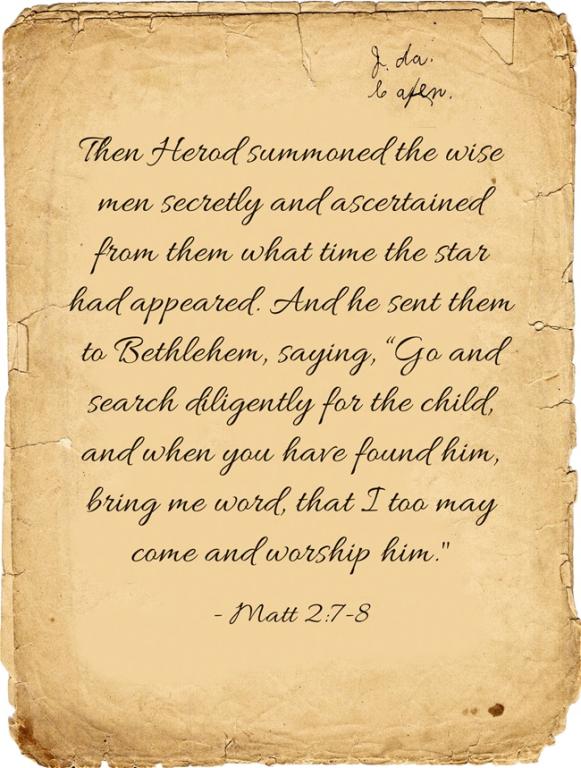
The wise men or magi make their appearance in the New Testament in Matthew 2:1-2 which says that “after Jesus was born in Bethlehem of Judea in the days of Herod the king, behold, wise men from the east came to Jerusalem, saying, “Where is he who has been born king of the Jews? For we saw his star when it rose and have come to worship him” (Matt 2:1-2). Later, Herod actually “summoned the wise men secretly and ascertained from them what time the star had appeared” (Matt 2:7) and then sent them to Bethlehem, so apparently the wise men knew the time of the Messiah’s arrival or birth. It may have been due to the old prophecies or writings of Daniel, some of which might have survived the fall of Babylon and have been preserved by some of the wise men and taken back to their own nations. Because of Daniel’s God-given dream interpretations of the king’s dreams, Daniel may have been the most trusted of all of wise men in Babylon, therefore the wise men of latter years would have highly regarded any of his prophecies. Regardless, it was after some days that Herod “saw that he had been tricked by the wise men, became furious, and he sent and killed all the male children in Bethlehem and in all that region who were two years old or under, according to the time that he had ascertained from the wise men” (Matt 2:16). Matthew’s summary is that the wise men were from the east, they brought gifts, and they knew they were coming to worship a king; the king of the Jews.
Conclusion
Today, the most wise thing any man or woman could do is to repent and believe the gospel, which is just what Jesus said to begin His ministry (Mark 1:15). It doesn’t take a lot of wisdom to see that we’re all going to die. That we need a Savior so that our sins will be taken away and the wrath of God placed upon the Son of God so you can either repent and believe and worship Him, or you can reject Him and be judged at the Great White Throne Judgment. The fool says there is no God (Psalm 14:1); the wise believe and will see God face to face (Rev 21:3; 22:4).
Article by Jack Wellman
Jack Wellman is Pastor of the Mulvane Brethren Church in Mulvane Kansas. Jack is also the Senior Writer at What Christians Want To Know whose mission is to equip, encourage, and energize Christians and to address questions about the believer’s daily walk with God and the Bible. You can follow Jack on Google Plus or check out his book Teaching Children the Gospel available on Amazon.
Previous Post

November 28, 2015
What Is Epiphany?
Next Post
November 28, 2015 3 Prayers For Christmas
Browse Our Archives
Select a Category Bible Answers Bible Definitions Bible Story Bible Study Bible Verses Christian Books Christian Entertainment Christian Fathers Christian Mothers Christian Quotes Devotional Famous Christians Music News Parables Prayers Quotes Sunday School Lesson Uncategorized Youth Sermons
Select a Month October 2019 September 2019 August 2019 July 2019 June 2019 May 2019 April 2019 March 2019 February 2019 January 2019 December 2018 November 2018 October 2018 September 2018 August 2018 July 2018 June 2018 May 2018 April 2018 March 2018 February 2018 January 2018 December 2017 November 2017 October 2017 September 2017 August 2017 July 2017 June 2017 May 2017 April 2017 March 2017 February 2017 January 2017 December 2016 November 2016 October 2016 September 2016 August 2016 July 2016 June 2016 May 2016 March 2016 February 2016 January 2016 December 2015 November 2015 October 2015 September 2015 August 2015 July 2015 June 2015 May 2015 April 2015 March 2015 February 2015 January 2015 December 2014 November 2014 October 2014 September 2014 August 2014 July 2014 June 2014 May 2014 April 2014 March 2014 February 2014 January 2014 December 2013 November 2013 October 2013 September 2013 August 2013 July 2013 June 2013 May 2013 April 2013 March 2013
Follow Us!
TAKE THE
Religious Wisdom Quiz
Who was the major prophet during King Hezekiah's reign in Judah?
Select your answer to see how you score.
Isaiah Jeremiah Ezekiel Daniel
Related posts from Christian Crier

What Does The Bible Say About Our Thoughts?

Do Colors Have Special Meaning In The Bible?

The Glass – Half Empty Or Half Full?

TRENDING AT PATHEOS Evangelical

The REST of Your Life: A Creative Wrestles...
This week I had a conversation with a good friend from church....

How the author of the world's best hymn...
I've been working with John Newton for a while now. This makes...

Long before this Lectio Divina, Psalm 130 - the song - started...

What About the Trees? Another Living Parable
After I finished writing the last article about falling leaves as a...

Why Classical Education Is a Conversation, Not a...
Come and Read: Joy in Classical Education When I was a little...

Cornell University has received a great deal of negative publicity and intense...
view all Evangelical blogs
Ad-Free & Subscriber Log-In Subscription Support
- About Us
- 2026 Calendar
- Videos
- Podcasts
- Library of World Religions
- Faith In Media Tracker
- Advertise With Us
- Write for Us
- Privacy Policy
- Terms of Service
- Do Not Sell My Data
- Contact Us
- Radiant Digital
- Manage Newsletter Subscriptions
- Unsubscribe From Notifications
- Sitemap
Copyright 2008-2026, Patheos. All rights reserved.
Subscription Support Ad-Free & Subscriber Log-In
Follow Patheos