
BuddhistCatholicContemplativeEvangelicalGeneral ChristianHinduJewishLatter-day SaintMuslimNew VisionsProgressive Christian
Beliefs
- Buddhist
- Catholic
- Contemplative
- Evangelical
- General Christian
- Hindu
- Jewish
- Latter-day Saint
- More Voices
- Muslim
- New Visions
- Pagan
- Progressive Christian
Topics
- Religion News
- Food and Religion
- Sports and Religion
- Religious Art
- Religious Music and Entertainment
- Religious Events
- History and Religion
- Style and Religion
- Politics and Religion
- Women in Religion
- Recreation Outdoors and Religion
- Business Finance and Religion
- Careers Workplace and Religion
- Education and Religion
- Family Parenting and Religion
- Health Fitness and Religion
- Home and Religion
- Relationships and Religion
- Technology and Religion
- Travel and Religion
Columnists
- Buddhist Columnists
- Business Finance and Religion Columnists
- Careers Workplace and Religion Columnists
- Catholic Columnists
- Contemplative Columnists
- Education and Religion Columnists
- Evangelists Columnists
- Family Parenting and Religion Columnists
- General Christian Columnists
- Health Fitness and Religion Columnists
- Hindu Columnists
- History and Religion Columnists
- Home and Religion Columnists
- Jewish Columnists
- More Voices Columnists
- Latter Day Columnists
- Muslim Columnists
- New Visions Columnists
- Nonreligious Columnists
- Pagan Columnists
- Politics and Religion Columnists
- Progressive Columnists
- Recreation Outdoors and Religion Columnists
- Relationships and Religion Columnists
- Religion News Columnists
- Religious Art Columnists
- Religious Events Columnists
- Religious Music and Entertainment Columnists
- Sports and Religion Columnists
- Style and Religion Columnists
- Technology and Religion Columnists
- Travel and Religion Columnists
- Women in Religion Columnists
Resource Library
- 2026 Calendar
- Library of World Religions
- The 100 Most Holy Places on Earth
- Patheos Answers
- Podcasts
- Videos
- Faith Leaders Database
- Anglican Episcopalian
- Bahai
- Baptist
- Buddhism
- Christianity
- Confucianism
- Eastern Orthodoxy
- Hinduism
- Holiness and Pentecostal
- ISKCON
- Islam
- Judaism
- Lutheran
- Methodist
- The Church of Jesus Christ of Latter-day Saints
- New Age
- Paganism
- Presbytarian and Reformed
- Protestantism
- Religion Behind the Scenes
- Roman Catholic
- Scientology
- Shia Islam
- Sikhism
- Sufism
- Sunni Islam
- Taoism
- Zen
- See all religions
Research Tools
 Ad-Free & Subscriber Log-In Subscription Support
Ad-Free & Subscriber Log-In Subscription Support
Follow Patheos 

- Trending:
- Forgiveness
- |
- Marriage
- |
- Consciousness
- |
- Death Penalty
- |
- Election
- |
- Halloween
 Christian Crier
- Home
- Evangelical
- What Is The Purpose Of The Book Of Revelation? A Bible Study
What Is The Purpose Of The Book Of Revelation? A Bible Study
Last updated on: November 20, 2015 at 9:58 am by Jack Wellman
What Is The Purpose Of The Book Of Revelation? A Bible Study 2015-11-20T09:58:06-06:00 Jack Wellman
Patheos Explore the world's faith through different perspectives on religion and spirituality! Patheos has the views of the prevalent religions and spiritualities of the world.
Why did John write the Book of Revelation, or did he? What is the purpose behind this book?
The Author
The Book of Revelation isn’t really the Apostle John’s revelation but Jesus Christ’s, the Author of Life itself (Acts 3:15) and although John wrote it, the very first two sentences tell us Who the actual author is as it says, “The revelation of Jesus Christ, which God gave him to show to his servants the things that must soon take place. He made it known by sending his angel to his servant John, who bore witness to the word of God and to the testimony of Jesus Christ, even to all that he saw” (Rev 1:1-2). Some Bible scholars believe that the Book of Revelation was written around AD 85-90 but more recently, Bible scholars and theologians such as Dr. R. C. Sproul believe it was written just prior to the fall of Jerusalem in AD 70.
The Purpose
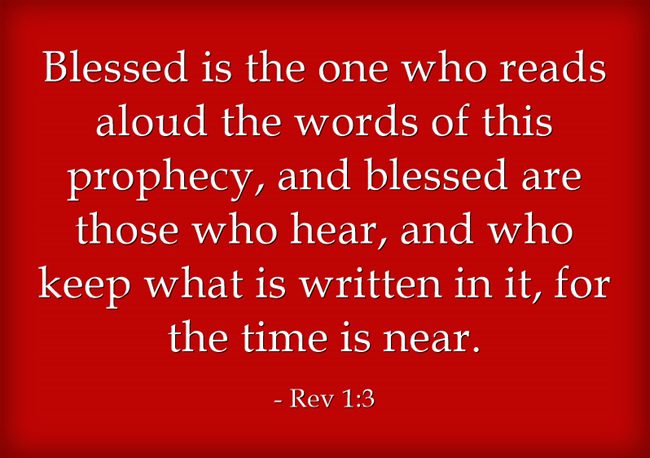
Since Jesus Christ is the actual author of the Book of revelation, we can ask what the Apostle John’s purpose was but should we not rather ask what Jesus Christ’s purpose for having John write this book? Apparently Jesus wanted John to write letters to the seven churches in the Roman province of Asia (Rev 1:4) that were literal churches at the time John wrote this. In these letters (Rev 2, 3) John gives Jesus’ correction to the churches and but he also encourages them to endure till the end. Of all the churches mentioned in the Book of Revelation, only the church at Laodicea never received any encouraging word from Jesus Christ because they were steeped in the world and had grown lukewarm (Rev 3:14-22). Very much like the churches of today, they had compromised the Gospel of Jesus Christ and so as a warning, John wrote about those things that “must soon take place” (Rev 1:1) in the hopes that they would repent and do the former works that they had been doing. The events John wrote about pointed to a coming time of tribulation that the world had never seen before. It would appear to fit the first century and some of the calamities that happened during the fall of Jerusalem and the destruction of the temple. To believe that most of these events wouldn’t take place for over 2,000 years and yet having John write that these “things that must soon take place” doesn’t seem to make much sense since John wrote “for the time is near” (Rev 1:3).
The Focal Point
The central point John may have been making was to prepare for a time of tribulation that the world hadn’t seen yet just as Jesus said in Matthew 24:21 that “there will be great tribulation, such as has not been from the beginning of the world until now, no, and never will be.” This book also shows the final consummation of the kingdom of heaven which is preceded by the fall and punishment of Satan and his demons as John writes; “the devil who had deceived them was thrown into the lake of fire and sulfur where the beast and the false prophet were, and they will be tormented day and night forever and ever” (Rev 20:11). Not only that, the great white throne judgment comes when “the dead, great and small, standing before the throne, and books were opened. Then another book was opened, which is the book of life. And the dead were judged by what was written in the books, according to what they had done” (Rev 20:12) and “they were judged, each one of them, according to what they had done” (Rev 20:13b). When the books are examined (Rev 20:12-13) “if anyone’s name was not found written in the book of life, he was thrown into the lake of fire” (Rev 20:15). No wonder that Jesus makes His appeal saying “He who has an ear, let him hear what the Spirit says to the churches” (Rev 2:7).
The Kingdom of Heaven
At the end of the age, the time when the kingdoms of man come crashing down and the New Jerusalem comes down out of heaven is the climactic end of the history of humanity ruling themselves. This is when John “saw the holy city, new Jerusalem, coming down out of heaven from God, prepared as a bride adorned for her husband” (Rev 21:2) where God takes over a physical rule and God “will dwell with them, and they will be his people, and God himself will be with them as their God” (Rev 21:3). This is the time when God “will wipe away every tear from their eyes, and death shall be no more, neither shall there be mourning, nor crying, nor pain anymore, for the former things have passed away” (Rev 21:4).
Conclusion
The Book of Revelation is one of the most mysterious books in the Bible but that’s no reason not to read it because John writes, “Blessed is the one who reads aloud the words of this prophecy, and blessed are those who hear, and who keep what is written in it, for the time is near” (Rev 1:3). John doesn’t write that if you fully understand this book and read it you’ll be blessed but only if you read it and if you keep what’s written in it. The day is coming (soon?) when God will make a final and full revelation of His coming kingdom and we will have to wonder no more about when that is to take place. If you have repented and trusted in Christ then you will hear Jesus say to you “Well done, good and faithful servant. You have been faithful over a little; I will set you over much. Enter into the joy of your master.’” (Matt 25:21) but to those who reject Jesus Christ, He will say “cast the worthless servant into the outer darkness. In that place there will be weeping and gnashing of teeth’” (Matt 25:30).
Article by Jack Wellman
Jack Wellman is Pastor of the Mulvane Brethren Church in Mulvane Kansas. Jack is also the Senior Writer at What Christians Want To Know whose mission is to equip, encourage, and energize Christians and to address questions about the believer’s daily walk with God and the Bible. You can follow Jack on Google Plus or check out his book Teaching Children the Gospel available on Amazon.
Previous Post

November 19, 2015
What Is The Purpose Of The Book Of Jude? A Bible Study
Next Post
November 20, 2015 What Was The Role Of Government In Bible Times?
Browse Our Archives
Select a Category Bible Answers Bible Definitions Bible Story Bible Study Bible Verses Christian Books Christian Entertainment Christian Fathers Christian Mothers Christian Quotes Devotional Famous Christians Music News Parables Prayers Quotes Sunday School Lesson Uncategorized Youth Sermons
Select a Month October 2019 September 2019 August 2019 July 2019 June 2019 May 2019 April 2019 March 2019 February 2019 January 2019 December 2018 November 2018 October 2018 September 2018 August 2018 July 2018 June 2018 May 2018 April 2018 March 2018 February 2018 January 2018 December 2017 November 2017 October 2017 September 2017 August 2017 July 2017 June 2017 May 2017 April 2017 March 2017 February 2017 January 2017 December 2016 November 2016 October 2016 September 2016 August 2016 July 2016 June 2016 May 2016 March 2016 February 2016 January 2016 December 2015 November 2015 October 2015 September 2015 August 2015 July 2015 June 2015 May 2015 April 2015 March 2015 February 2015 January 2015 December 2014 November 2014 October 2014 September 2014 August 2014 July 2014 June 2014 May 2014 April 2014 March 2014 February 2014 January 2014 December 2013 November 2013 October 2013 September 2013 August 2013 July 2013 June 2013 May 2013 April 2013 March 2013
Follow Us!
TAKE THE
Religious Wisdom Quiz
What does Paul tell the Philippians to rejoice in always?
Select your answer to see how you score.
God's goodness The Lord Their salvation All circumstances
Related posts from Christian Crier


Seeing The Gospel In Biblical Accounts
Getting The Most Out Of Your Bible Reading

Philippians 2 As A Mission Statement
TRENDING AT PATHEOS Evangelical

How the author of the world's best hymn...
I've been working with John Newton for a while now. This makes...

Long before this Lectio Divina, Psalm 130 - the song - started...

What About the Trees? Another Living Parable
After I finished writing the last article about falling leaves as a...

Why Classical Education Is a Conversation, Not a...
Come and Read: Joy in Classical Education When I was a little...

Falling Leaves: A Living Parable on Letting Go
I’ve spent the vast majority of my life in the southeast corner...

Cornell University has received a great deal of negative publicity and intense...
view all Evangelical blogs
Ad-Free & Subscriber Log-In Subscription Support
- About Us
- 2026 Calendar
- Videos
- Podcasts
- Library of World Religions
- Faith In Media Tracker
- Advertise With Us
- Write for Us
- Privacy Policy
- Terms of Service
- Do Not Sell My Data
- Contact Us
- Radiant Digital
- Manage Newsletter Subscriptions
- Unsubscribe From Notifications
- Sitemap
Copyright 2008-2026, Patheos. All rights reserved.
Subscription Support Ad-Free & Subscriber Log-In
Follow Patheos