
BuddhistCatholicContemplativeEvangelicalGeneral ChristianHinduJewishLatter-day SaintMuslimNew VisionsProgressive Christian
Beliefs
- Buddhist
- Catholic
- Contemplative
- Evangelical
- General Christian
- Hindu
- Jewish
- Latter-day Saint
- More Voices
- Muslim
- New Visions
- Pagan
- Progressive Christian
Topics
- Religion News
- Food and Religion
- Sports and Religion
- Religious Art
- Religious Music and Entertainment
- Religious Events
- History and Religion
- Style and Religion
- Politics and Religion
- Women in Religion
- Recreation Outdoors and Religion
- Business Finance and Religion
- Careers Workplace and Religion
- Education and Religion
- Family Parenting and Religion
- Health Fitness and Religion
- Home and Religion
- Relationships and Religion
- Technology and Religion
- Travel and Religion
Columnists
- Buddhist Columnists
- Business Finance and Religion Columnists
- Careers Workplace and Religion Columnists
- Catholic Columnists
- Contemplative Columnists
- Education and Religion Columnists
- Evangelists Columnists
- Family Parenting and Religion Columnists
- General Christian Columnists
- Health Fitness and Religion Columnists
- Hindu Columnists
- History and Religion Columnists
- Home and Religion Columnists
- Jewish Columnists
- More Voices Columnists
- Latter Day Columnists
- Muslim Columnists
- New Visions Columnists
- Nonreligious Columnists
- Pagan Columnists
- Politics and Religion Columnists
- Progressive Columnists
- Recreation Outdoors and Religion Columnists
- Relationships and Religion Columnists
- Religion News Columnists
- Religious Art Columnists
- Religious Events Columnists
- Religious Music and Entertainment Columnists
- Sports and Religion Columnists
- Style and Religion Columnists
- Technology and Religion Columnists
- Travel and Religion Columnists
- Women in Religion Columnists
Resource Library
- 2026 Calendar
- Library of World Religions
- The 100 Most Holy Places on Earth
- Patheos Answers
- Podcasts
- Videos
- Faith Leaders Database
- Anglican Episcopalian
- Bahai
- Baptist
- Buddhism
- Christianity
- Confucianism
- Eastern Orthodoxy
- Hinduism
- Holiness and Pentecostal
- ISKCON
- Islam
- Judaism
- Lutheran
- Methodist
- The Church of Jesus Christ of Latter-day Saints
- New Age
- Paganism
- Presbytarian and Reformed
- Protestantism
- Religion Behind the Scenes
- Roman Catholic
- Scientology
- Shia Islam
- Sikhism
- Sufism
- Sunni Islam
- Taoism
- Zen
- See all religions
Research Tools
 Ad-Free & Subscriber Log-In Subscription Support
Ad-Free & Subscriber Log-In Subscription Support
Follow Patheos 

- Trending:
- Forgiveness
- |
- Marriage
- |
- Consciousness
- |
- Death Penalty
- |
- Election
- |
- Halloween
 Christian Crier
- Home
- Evangelical
- What Is The Purpose Of The Book Of James? A Bible Study
What Is The Purpose Of The Book Of James? A Bible Study
Last updated on: November 18, 2015 at 10:16 pm by Jack Wellman
What Is The Purpose Of The Book Of James? A Bible Study 2015-11-18T22:16:49-06:00 Jack Wellman
Patheos Explore the world's faith through different perspectives on religion and spirituality! Patheos has the views of the prevalent religions and spiritualities of the world.
Why did James write this book? What is the purpose of this book for us today?
The Author
There is little doubt that James, the half-brother of Jesus, wrote the Book of James. Many consider it to be part of the wisdom literature of the Bible, and rightly it should. James begins the letter by identifying himself as “James, a servant (lit. “slave”) of God and of the Lord Jesus Christ, To the twelve tribes in the Dispersion” (James 1:1). This book may have been the very first book making it the oldest of the New Testament books and was written anywhere from AD 44 to AD 50. This book was written primarily to the Jews who had been dispersed amidst the Roman Empire during a time of intense persecution.
The Purpose
James gave instructions for the Jews who were dispersed or spread abroad and well beyond the Jerusalem church and so he wanted them to stay connected to the body of Christ. James provides biblical methods for praying, having faith, how to suffer, controlling the tongue, what works and salvation have to do with one another (a “dead faith”), doing and not merely hearing, he chastises the rich (James 2:6; 5:1-2), comforts the poor, shows how to acquire wisdom, and what true religion really is (James 1:27). The purpose is manifold in the Book of James because he talks so much about the Christian faith and examining ourselves to see if we’re bearing works worthy of a genuine Christian.
The Focal Point
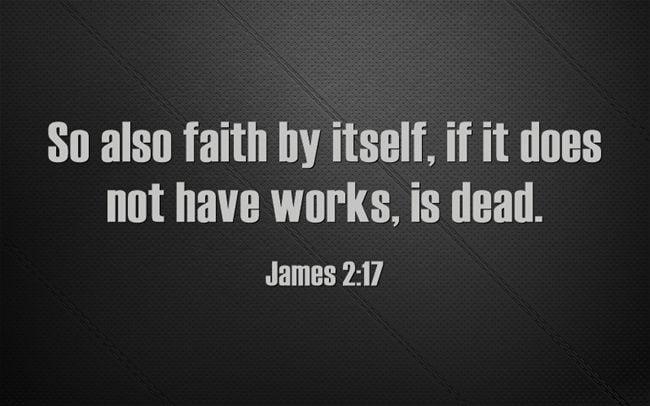
James central point may have been that people can talk all they want about saying they’re a Christian but if they have no works to show it, then they are only hearers of the law and not doers and that person’s faith is dead. James writes “faith by itself, if it is not accompanied by action, is dead. But someone will say, ‘You have faith; I have deeds.’ Show me your faith without deeds, and I will show you my faith by what I do” (James 2:17-18). If there are no deeds or good works that come as a result of faith, then that is not real faith. It is dead on arrival. If you believe in God, James says so what! You’ve just qualified to be a demon because even they believe in God and shudder with fear (James 2:19).
The Tongue
Talk about one of the most difficult members of the human body to control! The tongue wins the prize for being the most unruly, unwholesome, filthy, degrading, and destructive of all physical members of the body (James 3:6). James compares the tongue to a tiny rudder directing a huge ship and shows how much damage this little member can bring (James 1:3) and “How great a forest is set ablaze by such a small fire” (James 3:5)! We’ve managed to tame about everything else in nature, including some very large mammals and animals, “but no human being can tame the tongue. It is a restless evil, full of deadly poison” (James 3:8) and with it we both bless and curse people (James 3:10) knowing full well that they are made in the image of God (Gen 1:27; James 3:9).
Sufferings is never Wasted
James wrote this letter in a time of great sorrow for the Jewish Christians. It was bad enough being a Jew but a Jewish Christian? That really ramped up the persecution. Many lost jobs, homes, families, possessions, and many lost their lives. Those who managed to survive were driven out into other parts of the empire but with them they brought the only hope for humanity in Jesus Christ (Acts 4:12). James wanted these suffering servants of Christ to know their suffering’s not going to waste. Ironically, suffering from want brings a lack for nothing as he wrote “that the testing of your faith produces steadfastness. And let steadfastness have its full effect, that you may be perfect and complete, lacking in nothing” (James 1:3-4). Suffering leads to sufficiency, even if only in Christ. Blessed is that one “who remains steadfast under trial, for when he has stood the test he will receive the crown of life, which God has promised to those who love him” (James 1:12).
Conclusion
I also believe James identifies what true religion is and it’s found in James 1:27 where he writes “Religion that is pure and undefiled before God, the Father, is this: to visit orphans and widows in their affliction, and to keep oneself unstained from the world.” Visiting the orphans and widows would be considered the sort of works that James wrote about that would be produced as a result of having genuine, saving faith. These kinds of works would be evident and if not, there there’s evidently no saving faith in the first place. Visiting orphans and widows could be single parent’s children, those in prison, those in homeless shelters, men and women in the nursing home and who happen to be nearly all orphans and in a nursing home a great majority of them are widows or widowers. This is the type of religion “that is pure and undefiled before God, the Father” and that’s the only audience that matters. That’s pure religion to James (and to God) but there’s more to it than that. One has to keep oneself unstained from the world and the “world” surely means the sins of the world and living in a sinful lifestyle.
Article by Jack Wellman
Jack Wellman is Pastor of the Mulvane Brethren Church in Mulvane Kansas. Jack is also the Senior Writer at What Christians Want To Know whose mission is to equip, encourage, and energize Christians and to address questions about the believer’s daily walk with God and the Bible. You can follow Jack on Google Plus or check out his book Teaching Children the Gospel available on Amazon.
Previous Post

November 18, 2015
What Is The Purpose Of The Book Of Hebrews? A Bible Study
Next Post
November 19, 2015 What Is The Purpose Of The Book Of 1st Peter? A Bible Study
Browse Our Archives
Select a Category Bible Answers Bible Definitions Bible Story Bible Study Bible Verses Christian Books Christian Entertainment Christian Fathers Christian Mothers Christian Quotes Devotional Famous Christians Music News Parables Prayers Quotes Sunday School Lesson Uncategorized Youth Sermons
Select a Month October 2019 September 2019 August 2019 July 2019 June 2019 May 2019 April 2019 March 2019 February 2019 January 2019 December 2018 November 2018 October 2018 September 2018 August 2018 July 2018 June 2018 May 2018 April 2018 March 2018 February 2018 January 2018 December 2017 November 2017 October 2017 September 2017 August 2017 July 2017 June 2017 May 2017 April 2017 March 2017 February 2017 January 2017 December 2016 November 2016 October 2016 September 2016 August 2016 July 2016 June 2016 May 2016 March 2016 February 2016 January 2016 December 2015 November 2015 October 2015 September 2015 August 2015 July 2015 June 2015 May 2015 April 2015 March 2015 February 2015 January 2015 December 2014 November 2014 October 2014 September 2014 August 2014 July 2014 June 2014 May 2014 April 2014 March 2014 February 2014 January 2014 December 2013 November 2013 October 2013 September 2013 August 2013 July 2013 June 2013 May 2013 April 2013 March 2013
Follow Us!
TAKE THE
Religious Wisdom Quiz
What animal is mentioned in Proverbs as having little strength but great wisdom?
Select your answer to see how you score.
Lion Ant Ox Bear
Related posts from Christian Crier


What Does It Mean, “Work Out Your Own...

Seeing The Gospel In Biblical Accounts
TRENDING AT PATHEOS Evangelical

How the author of the world's best hymn...
I've been working with John Newton for a while now. This makes...

Long before this Lectio Divina, Psalm 130 - the song - started...

What About the Trees? Another Living Parable
After I finished writing the last article about falling leaves as a...

Why Classical Education Is a Conversation, Not a...
Come and Read: Joy in Classical Education When I was a little...

Falling Leaves: A Living Parable on Letting Go
I’ve spent the vast majority of my life in the southeast corner...

Cornell University has received a great deal of negative publicity and intense...
view all Evangelical blogs
Ad-Free & Subscriber Log-In Subscription Support
- About Us
- 2026 Calendar
- Videos
- Podcasts
- Library of World Religions
- Faith In Media Tracker
- Advertise With Us
- Write for Us
- Privacy Policy
- Terms of Service
- Do Not Sell My Data
- Contact Us
- Radiant Digital
- Manage Newsletter Subscriptions
- Unsubscribe From Notifications
- Sitemap
Copyright 2008-2026, Patheos. All rights reserved.
Subscription Support Ad-Free & Subscriber Log-In
Follow Patheos