
BuddhistCatholicContemplativeEvangelicalGeneral ChristianHinduJewishLatter-day SaintMuslimNew VisionsProgressive Christian
Beliefs
- Buddhist
- Catholic
- Contemplative
- Evangelical
- General Christian
- Hindu
- Jewish
- Latter-day Saint
- More Voices
- Muslim
- New Visions
- Pagan
- Progressive Christian
Topics
- Religion News
- Food and Religion
- Sports and Religion
- Religious Art
- Religious Music and Entertainment
- Religious Events
- History and Religion
- Style and Religion
- Politics and Religion
- Women in Religion
- Recreation Outdoors and Religion
- Business Finance and Religion
- Careers Workplace and Religion
- Education and Religion
- Family Parenting and Religion
- Health Fitness and Religion
- Home and Religion
- Relationships and Religion
- Technology and Religion
- Travel and Religion
Columnists
- Buddhist Columnists
- Business Finance and Religion Columnists
- Careers Workplace and Religion Columnists
- Catholic Columnists
- Contemplative Columnists
- Education and Religion Columnists
- Evangelists Columnists
- Family Parenting and Religion Columnists
- General Christian Columnists
- Health Fitness and Religion Columnists
- Hindu Columnists
- History and Religion Columnists
- Home and Religion Columnists
- Jewish Columnists
- More Voices Columnists
- Latter Day Columnists
- Muslim Columnists
- New Visions Columnists
- Nonreligious Columnists
- Pagan Columnists
- Politics and Religion Columnists
- Progressive Columnists
- Recreation Outdoors and Religion Columnists
- Relationships and Religion Columnists
- Religion News Columnists
- Religious Art Columnists
- Religious Events Columnists
- Religious Music and Entertainment Columnists
- Sports and Religion Columnists
- Style and Religion Columnists
- Technology and Religion Columnists
- Travel and Religion Columnists
- Women in Religion Columnists
Resource Library
- 2026 Calendar
- Library of World Religions
- The 100 Most Holy Places on Earth
- Patheos Answers
- Podcasts
- Videos
- Faith Leaders Database
- Anglican Episcopalian
- Bahai
- Baptist
- Buddhism
- Christianity
- Confucianism
- Eastern Orthodoxy
- Hinduism
- Holiness and Pentecostal
- ISKCON
- Islam
- Judaism
- Lutheran
- Methodist
- The Church of Jesus Christ of Latter-day Saints
- New Age
- Paganism
- Presbytarian and Reformed
- Protestantism
- Religion Behind the Scenes
- Roman Catholic
- Scientology
- Shia Islam
- Sikhism
- Sufism
- Sunni Islam
- Taoism
- Zen
- See all religions
Research Tools
 Ad-Free & Subscriber Log-In Subscription Support
Ad-Free & Subscriber Log-In Subscription Support
Follow Patheos 

- Trending:
- Forgiveness
- |
- Marriage
- |
- Consciousness
- |
- Death Penalty
- |
- Election
- |
- Halloween
 Christian Crier
- Home
- Evangelical
- What Is The Purpose Of The Book Of Romans? A Bible Study
What Is The Purpose Of The Book Of Romans? A Bible Study
Last updated on: November 17, 2015 at 1:05 pm by Jack Wellman
What Is The Purpose Of The Book Of Romans? A Bible Study 2015-11-17T13:05:05-06:00 Jack Wellman
Patheos Explore the world's faith through different perspectives on religion and spirituality! Patheos has the views of the prevalent religions and spiritualities of the world.
Why did Paul write the Book of Romans? What was his purpose in writing it?
The Author
Obviously the author of the Book of Romans is the Apostle Paul as he identifies himself in the very first line; “Paul, a servant of Christ Jesus, called to be an apostle, set apart for the gospel of God” (Rom 1:1). Bible scholars believe it was written around A.D. 60 in Corinth and possibly during his third missionary trip. He wrote it at a time when the church in Rome was facing increasing persecution. Many had lost their jobs, lost their possessions, lost their homes, lost their family, lost their freedom, and many lost their lives.
The Book of Romans
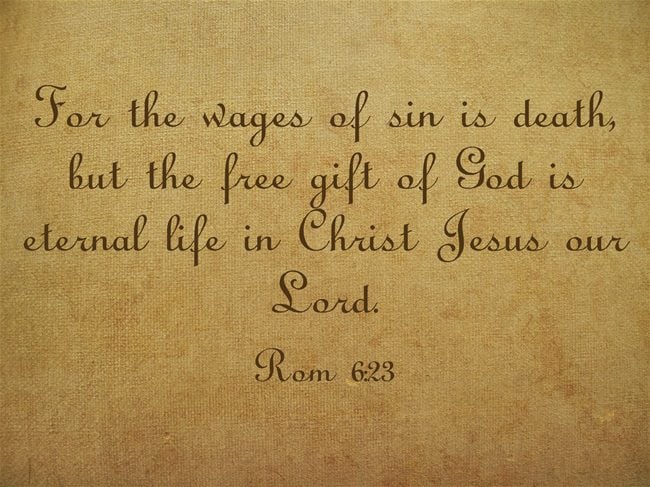
The Book of Romans might be Paul’s greatest written work. It is a literature masterpiece by itself! This book or letter, sometimes called an epistle, has Paul giving the sinner the bad news first and then making them see how good the good news really is (John 3:16). Truthfully, if we see how real God’s wrath is against the sinner (John 3:36b) the mercy of God will seem irrelevant. The vast majority of people think they’re going to heaven based upon what they’ve done, which is contrary to biblical doctrine (Eph 2:8-9), so Paul reminds the church at Rome (and all who read) that “None is righteous, no, not one” (Rom 3:10 and “All have turned aside; together they have become worthless; no one does good, not even one” (Rom 3:12). Do good people go to heaven? No! Only justified people do because none are good…not one! To make his point, Paul brings in the Old Testament, going all the way back to Adam and then moving the reader forward, all the way to Jesus Christ. In doing so, he leads the sinner down the Roman Road to salvation with verses like Romans3:23 which says “all have sinned and fall short of the glory of God” (Rom 3:23) and that “wages of sin is death” (Rom 6:23a).
The Roman Road
From my experiences in witnessing to people about Christ, almost nine in ten believed that they did enough good things to go to heaven. Of course there were atheists I spoke with too and I told them I don’t have enough faith to be an atheist, but among those who expressed a belief in God, the vast majority of them believed that they deserved to go to heaven based upon what they’ve done in their lives. Most have never heard about the need for repentance, which is what half of the message of the gospel (Mark 1:15). Some think that it’s what they do instead of what Jesus’ done, but to add one drop of works to Christ’s atoning sacrifice is to make yourself a co-redeemer and God will have none of it. Christ + Your Works = Zero but Christ + Nothing = Everything!
The Purpose
Paul is clear about the purpose of this letter by writing “the righteousness of God is revealed from faith for faith, as it is written, “The righteous shall live by faith” (Rom 1:17), pointing back to the fact that even in the Old Testament, “the righteous shall live by his faith” (Hab 2:4). The “righteous” is sometimes translated the “just” which means the justified since all who are in Christ have been justified. Paul proves this point by writing “those whom he called he also justified, and those whom he justified he also glorified” (Rom 8:30). This includes the patriarchs and matriarchs of the Old Testament (Heb 11) like Abraham who “believed God, and it was counted to him as righteousness” (Rom 4:3; Heb 10:38). The promise to Abraham is a promise to us too if we will place our faith in Christ because “the promise to Abraham and his offspring that he would be heir of the world did not come through the law but through the righteousness of faith” (Rom 4:13) received by “the free gift of God is eternal life in Christ Jesus our Lord” (Rom 6:23b). Paul wants the sinner to know his or her perilous state, standing on the precipice of eternity and judgment, when at any second, God could require their soul (Luke 12:20; Heb 9:27) and make them run to the cross down the path of repentance, turning away from their sins, and running up to and trusting in Christ.
Conclusion
We should thank God that it is “by grace you have been saved through faith. And this is not your own doing; it is the gift of God, not a result of works, so that no one may boast” (Eph 2:8-9). If it were by works plus Christ, then how would we know when we had enough? How would we find this imaginary threshold where we’d know “we’re in?” I thank God that it is a free gift not earned by works and that is even the one Who God grants repentance (2nd Tim 2:25) and Who calls us (John 6:44). Still thinking of works? Here are the only works that will ever help you: “This is the work of God, that you believe in him whom he has sent” (John 6:29).
Article by Jack Wellman
Jack Wellman is Pastor of the Mulvane Brethren Church in Mulvane Kansas. Jack is also the Senior Writer at What Christians Want To Know whose mission is to equip, encourage, and energize Christians and to address questions about the believer’s daily walk with God and the Bible. You can follow Jack on Google Plus or check out his book Teaching Children the Gospel available on Amazon.
Previous Post

November 17, 2015
What Is The Purpose Of The Book Of Job? A Bible Study
Next Post
November 17, 2015 What Is The Purpose Of The Book Of Colossians? A Bible Study
Browse Our Archives
Select a Category Bible Answers Bible Definitions Bible Story Bible Study Bible Verses Christian Books Christian Entertainment Christian Fathers Christian Mothers Christian Quotes Devotional Famous Christians Music News Parables Prayers Quotes Sunday School Lesson Uncategorized Youth Sermons
Select a Month October 2019 September 2019 August 2019 July 2019 June 2019 May 2019 April 2019 March 2019 February 2019 January 2019 December 2018 November 2018 October 2018 September 2018 August 2018 July 2018 June 2018 May 2018 April 2018 March 2018 February 2018 January 2018 December 2017 November 2017 October 2017 September 2017 August 2017 July 2017 June 2017 May 2017 April 2017 March 2017 February 2017 January 2017 December 2016 November 2016 October 2016 September 2016 August 2016 July 2016 June 2016 May 2016 March 2016 February 2016 January 2016 December 2015 November 2015 October 2015 September 2015 August 2015 July 2015 June 2015 May 2015 April 2015 March 2015 February 2015 January 2015 December 2014 November 2014 October 2014 September 2014 August 2014 July 2014 June 2014 May 2014 April 2014 March 2014 February 2014 January 2014 December 2013 November 2013 October 2013 September 2013 August 2013 July 2013 June 2013 May 2013 April 2013 March 2013
Follow Us!
TAKE THE
Religious Wisdom Quiz
What does "Bethesda" mean?
Select your answer to see how you score.
House of olives House of bread House of mercy House of wind
Related posts from Christian Crier


Seeing The Gospel In Biblical Accounts

Getting The Most Out Of Your Bible Reading

Philippians 2 As A Mission Statement
TRENDING AT PATHEOS Evangelical

How the author of the world's best hymn...
I've been working with John Newton for a while now. This makes...

Long before this Lectio Divina, Psalm 130 - the song - started...

What About the Trees? Another Living Parable
After I finished writing the last article about falling leaves as a...

Why Classical Education Is a Conversation, Not a...
Come and Read: Joy in Classical Education When I was a little...

Falling Leaves: A Living Parable on Letting Go
I’ve spent the vast majority of my life in the southeast corner...

Cornell University has received a great deal of negative publicity and intense...
view all Evangelical blogs
Ad-Free & Subscriber Log-In Subscription Support
- About Us
- 2026 Calendar
- Videos
- Podcasts
- Library of World Religions
- Faith In Media Tracker
- Advertise With Us
- Write for Us
- Privacy Policy
- Terms of Service
- Do Not Sell My Data
- Contact Us
- Radiant Digital
- Manage Newsletter Subscriptions
- Unsubscribe From Notifications
- Sitemap
Copyright 2008-2026, Patheos. All rights reserved.
Subscription Support Ad-Free & Subscriber Log-In
Follow Patheos