
BuddhistCatholicContemplativeEvangelicalGeneral ChristianHinduJewishLatter-day SaintMuslimNew VisionsProgressive Christian
Beliefs
- Buddhist
- Catholic
- Contemplative
- Evangelical
- General Christian
- Hindu
- Jewish
- Latter-day Saint
- More Voices
- Muslim
- New Visions
- Pagan
- Progressive Christian
Topics
- Religion News
- Food and Religion
- Sports and Religion
- Religious Art
- Religious Music and Entertainment
- Religious Events
- History and Religion
- Style and Religion
- Politics and Religion
- Women in Religion
- Recreation Outdoors and Religion
- Business Finance and Religion
- Careers Workplace and Religion
- Education and Religion
- Family Parenting and Religion
- Health Fitness and Religion
- Home and Religion
- Relationships and Religion
- Technology and Religion
- Travel and Religion
Columnists
- Buddhist Columnists
- Business Finance and Religion Columnists
- Careers Workplace and Religion Columnists
- Catholic Columnists
- Contemplative Columnists
- Education and Religion Columnists
- Evangelists Columnists
- Family Parenting and Religion Columnists
- General Christian Columnists
- Health Fitness and Religion Columnists
- Hindu Columnists
- History and Religion Columnists
- Home and Religion Columnists
- Jewish Columnists
- More Voices Columnists
- Latter Day Columnists
- Muslim Columnists
- New Visions Columnists
- Nonreligious Columnists
- Pagan Columnists
- Politics and Religion Columnists
- Progressive Columnists
- Recreation Outdoors and Religion Columnists
- Relationships and Religion Columnists
- Religion News Columnists
- Religious Art Columnists
- Religious Events Columnists
- Religious Music and Entertainment Columnists
- Sports and Religion Columnists
- Style and Religion Columnists
- Technology and Religion Columnists
- Travel and Religion Columnists
- Women in Religion Columnists
Resource Library
- 2026 Calendar
- Library of World Religions
- The 100 Most Holy Places on Earth
- Patheos Answers
- Podcasts
- Videos
- Faith Leaders Database
- Anglican Episcopalian
- Bahai
- Baptist
- Buddhism
- Christianity
- Confucianism
- Eastern Orthodoxy
- Hinduism
- Holiness and Pentecostal
- ISKCON
- Islam
- Judaism
- Lutheran
- Methodist
- The Church of Jesus Christ of Latter-day Saints
- New Age
- Paganism
- Presbytarian and Reformed
- Protestantism
- Religion Behind the Scenes
- Roman Catholic
- Scientology
- Shia Islam
- Sikhism
- Sufism
- Sunni Islam
- Taoism
- Zen
- See all religions
Research Tools
 Ad-Free & Subscriber Log-In Subscription Support
Ad-Free & Subscriber Log-In Subscription Support
Follow Patheos 

- Trending:
- Forgiveness
- |
- Marriage
- |
- Consciousness
- |
- Death Penalty
- |
- Election
- |
- Halloween
 Christian Crier
- Home
- Evangelical
- What Clothes Would Have Jesus Worn While On Earth?
What Clothes Would Have Jesus Worn While On Earth?
Last updated on: October 29, 2015 at 1:05 pm by Jack Wellman
What Clothes Would Have Jesus Worn While On Earth? 2015-10-29T13:05:41-05:00 Jack Wellman
Patheos Explore the world's faith through different perspectives on religion and spirituality! Patheos has the views of the prevalent religions and spiritualities of the world.
What type of clothing did those living in Jesus’ earthly ministry days wear? What did Jesus wear?
Dressing in Modesty
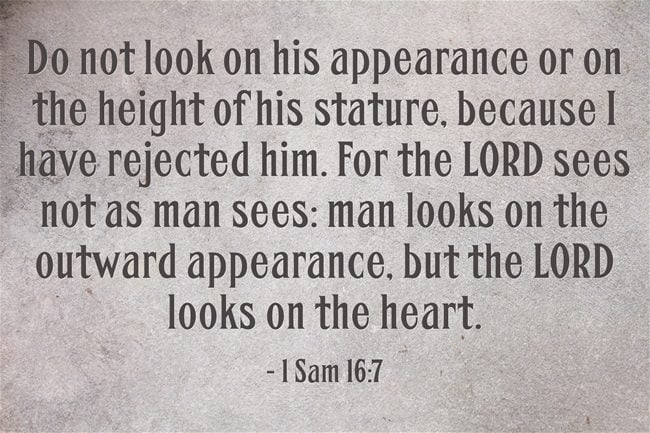
The Apostle Peter wrote to women that “Your beauty should not come from outward adornment, such as elaborate hairstyles and the wearing of gold jewelry or fine clothes. Rather, it should be that of your inner self, the unfading beauty of a gentle and quiet spirit, which is of great worth in God’s sight” (1st Pet 3:3-4). Paul wrote “that women should adorn themselves in respectable apparel, with modesty and self-control, not with braided hair and gold or pearls or costly attire but with what is proper for women who profess godliness—with good works” (1st Tim 2:9-10). The same applies to men of course as God looks at the heart (the “inner self”) and not at outward appearances so as God told Samuel when selecting Israel’s second king, “Do not look on his appearance or on the height of his stature, because I have rejected him. For the LORD sees not as man sees: man looks on the outward appearance, but the LORD looks on the heart” (1 Sam 16:7) so you and I must not make an assessment of a person simply by looking at what they wear or what they look like.
Jesus’ Attire
There are only a couple of references to the type of clothing that Jesus wore during His time on earth and it would not have been much different from the way that other Jewish men dressed at that time, particularly rabbis. Once such reference was “When the soldiers had crucified Jesus, they took his garments and divided them into four parts, one part for each soldier; also his tunic” (John 19:23a). The word “tunic” is from the Greek word “chiton” which is a long garment worn under the cloak next to the skin so what Jesus was wearing “was seamless, woven in one piece from top to bottom, so they said to one another, “Let us not tear it, but cast lots for it to see whose it shall be” (John 19:23b-24.) A seamless piece of clothing was very valuable in that day because most clothing at the time was not “woven in one piece from the top to bottom” as Jesus’ tunic was.
Touching Jesus
When a woman with a disease came to Jesus it says “And behold, a woman who had suffered from a discharge of blood for twelve years came up behind him and touched the fringe of his garment, for she said to herself, “If I only touch his garment, I will be made well” (Matt 9:20-21). Jesus may have been wearing what had been worn and commanded of the ancient Israelites where God told Moses “Speak to the people of Israel, and tell them to make tassels on the corners of their garments throughout their generations, and to put a cord of blue on the tassel of each corner” (Num 15:38). These tassels were originally intended for them to “look at and remember all the commandments of the Lord, to do them, not to follow after your own heart and your own eyes, which you are inclined to whore after” (Num 15:28-29). These tassels on the corners of their garments closely resembled what the Pharisees wore and about which Jesus said, “They do all their deeds to be seen by others. For they make their phylacteries broad and their fringes long” (Matt 23:5). The longer the phylacteries were, the more holy they thought themselves to be and the more they expected others to regard them as holy. To the Jews, it would have been an abomination to have a woman with a blood discharge touch Jesus. They believed that would have declared Him as unclean.
What Jesus Wore
Jesus certainly wore sandals.
Jesus wore a tunic underneath His garments.
Jesus wore a cloak.
Jesus wore plain linens.
A sash to tuck in the clothing if necessary.
Jesus wore comfortable long robes.
Jesus might have worn a Jewish turban while outside.
Jesus’ Appearance
The Bible does not give a physical description of Jesus although we do know that He was from the tribe of Judah and was a descendant of King David so He likely had darker skin, dark eyes, and dark hair but so did most of the Jews in that day. Isaiah wrote “For he grew up before him like a young plant, and like a root out of dry ground; he had no form or majesty that we should look at him, and no beauty that we should desire him” (53:2) so He looked like most of the Jewish men in that day. It is not probable that He had a long, white, flowing robe and seems unlikely that he had long, flowing hair as Jewish men kept their hair short. Paul even wrote about what the length of men’s hair should be (1st Cor 11:14). A robe yes, but most were not pure white. Most Jewish robes were colorful and white was reserved only for a select few in the Jewish religion. It is believed that Jesus came from a poor family and likely would not have worn elaborate clothing.
Conclusion
Jesus’ appearance was changed at one point and it was for our sake (2nd Cor 5:21). Isaiah writes about this change of appearance in Jesus where “many were astonished at you— his appearance was so marred, beyond human semblance, and his form beyond that of the children of mankind” (52:14) but “because he poured out his soul to death and was numbered with the transgressors” He would bear “the sin of many, and makes intercession for the transgressors” (53:12). That is our only way to the Father (John 6:44; Acts 4:12).
Article by Jack Wellman
Jack Wellman is Pastor of the Mulvane Brethren church in Mulvane Kansas. Jack is also the Senior Writer at What Christians Want To Know whose mission is to equip, encourage, and energize Christians and to address questions about the believer’s daily walk with God and the Bible. You can follow Jack on Google Plus or check out his book Teaching Children the Gospel available on Amazon.
Previous Post

October 29, 2015
What Did People Do For Fun Or Entertainment In Bible Times?
Next Post
October 29, 2015 Top 6 Religions Around The World By Number Of Followers
Browse Our Archives
Select a Category Bible Answers Bible Definitions Bible Story Bible Study Bible Verses Christian Books Christian Entertainment Christian Fathers Christian Mothers Christian Quotes Devotional Famous Christians Music News Parables Prayers Quotes Sunday School Lesson Uncategorized Youth Sermons
Select a Month October 2019 September 2019 August 2019 July 2019 June 2019 May 2019 April 2019 March 2019 February 2019 January 2019 December 2018 November 2018 October 2018 September 2018 August 2018 July 2018 June 2018 May 2018 April 2018 March 2018 February 2018 January 2018 December 2017 November 2017 October 2017 September 2017 August 2017 July 2017 June 2017 May 2017 April 2017 March 2017 February 2017 January 2017 December 2016 November 2016 October 2016 September 2016 August 2016 July 2016 June 2016 May 2016 March 2016 February 2016 January 2016 December 2015 November 2015 October 2015 September 2015 August 2015 July 2015 June 2015 May 2015 April 2015 March 2015 February 2015 January 2015 December 2014 November 2014 October 2014 September 2014 August 2014 July 2014 June 2014 May 2014 April 2014 March 2014 February 2014 January 2014 December 2013 November 2013 October 2013 September 2013 August 2013 July 2013 June 2013 May 2013 April 2013 March 2013
Follow Us!
TAKE THE
Religious Wisdom Quiz
What miracle did Elijah perform for a widow at Zarephath?
Select your answer to see how you score.
Cured leprosy Multiplied flour and oil Fed 5,000 Turned water to wine
Related posts from Christian Crier

What Does The Bible Say About Our Thoughts?

Do Colors Have Special Meaning In The Bible?

The Glass – Half Empty Or Half Full?

TRENDING AT PATHEOS Evangelical

The REST of Your Life: A Creative Wrestles...
This week I had a conversation with a good friend from church....

How the author of the world's best hymn...
I've been working with John Newton for a while now. This makes...

Long before this Lectio Divina, Psalm 130 - the song - started...

What About the Trees? Another Living Parable
After I finished writing the last article about falling leaves as a...

Why Classical Education Is a Conversation, Not a...
Come and Read: Joy in Classical Education When I was a little...

Cornell University has received a great deal of negative publicity and intense...
view all Evangelical blogs
Ad-Free & Subscriber Log-In Subscription Support
- About Us
- 2026 Calendar
- Videos
- Podcasts
- Library of World Religions
- Faith In Media Tracker
- Advertise With Us
- Write for Us
- Privacy Policy
- Terms of Service
- Do Not Sell My Data
- Contact Us
- Radiant Digital
- Manage Newsletter Subscriptions
- Unsubscribe From Notifications
- Sitemap
Copyright 2008-2026, Patheos. All rights reserved.
Subscription Support Ad-Free & Subscriber Log-In
Follow Patheos