
BuddhistCatholicContemplativeEvangelicalGeneral ChristianHinduJewishLatter-day SaintMuslimNew VisionsProgressive Christian
Beliefs
- Buddhist
- Catholic
- Contemplative
- Evangelical
- General Christian
- Hindu
- Jewish
- Latter-day Saint
- More Voices
- Muslim
- New Visions
- Pagan
- Progressive Christian
Topics
- Religion News
- Food and Religion
- Sports and Religion
- Religious Art
- Religious Music and Entertainment
- Religious Events
- History and Religion
- Style and Religion
- Politics and Religion
- Women in Religion
- Recreation Outdoors and Religion
- Business Finance and Religion
- Careers Workplace and Religion
- Education and Religion
- Family Parenting and Religion
- Health Fitness and Religion
- Home and Religion
- Relationships and Religion
- Technology and Religion
- Travel and Religion
Columnists
- Buddhist Columnists
- Business Finance and Religion Columnists
- Careers Workplace and Religion Columnists
- Catholic Columnists
- Contemplative Columnists
- Education and Religion Columnists
- Evangelists Columnists
- Family Parenting and Religion Columnists
- General Christian Columnists
- Health Fitness and Religion Columnists
- Hindu Columnists
- History and Religion Columnists
- Home and Religion Columnists
- Jewish Columnists
- More Voices Columnists
- Latter Day Columnists
- Muslim Columnists
- New Visions Columnists
- Nonreligious Columnists
- Pagan Columnists
- Politics and Religion Columnists
- Progressive Columnists
- Recreation Outdoors and Religion Columnists
- Relationships and Religion Columnists
- Religion News Columnists
- Religious Art Columnists
- Religious Events Columnists
- Religious Music and Entertainment Columnists
- Sports and Religion Columnists
- Style and Religion Columnists
- Technology and Religion Columnists
- Travel and Religion Columnists
- Women in Religion Columnists
Resource Library
- 2026 Calendar
- Library of World Religions
- The 100 Most Holy Places on Earth
- Patheos Answers
- Podcasts
- Videos
- Faith Leaders Database
- Anglican Episcopalian
- Bahai
- Baptist
- Buddhism
- Christianity
- Confucianism
- Eastern Orthodoxy
- Hinduism
- Holiness and Pentecostal
- ISKCON
- Islam
- Judaism
- Lutheran
- Methodist
- The Church of Jesus Christ of Latter-day Saints
- New Age
- Paganism
- Presbytarian and Reformed
- Protestantism
- Religion Behind the Scenes
- Roman Catholic
- Scientology
- Shia Islam
- Sikhism
- Sufism
- Sunni Islam
- Taoism
- Zen
- See all religions
Research Tools
 Ad-Free & Subscriber Log-In Subscription Support
Ad-Free & Subscriber Log-In Subscription Support
Follow Patheos 

- Trending:
- Forgiveness
- |
- Marriage
- |
- Consciousness
- |
- Death Penalty
- |
- Election
- |
- Halloween
 Christian Crier
- Home
- Evangelical
- What Evidence Is There That The Bible Is True?
What Evidence Is There That The Bible Is True?
Last updated on: August 12, 2015 at 10:40 am by Jack Wellman
What Evidence Is There That The Bible Is True? 2015-08-12T10:40:44-05:00 Jack Wellman
Patheos Explore the world's faith through different perspectives on religion and spirituality! Patheos has the views of the prevalent religions and spiritualities of the world.
What evidence is there that the Bible is true and thus, we can believe what is written in it?
The Bible
The word “Bible” comes from the Greek word “biblios” which means “books” or “little books” and the Bible is just that; a collection of sixty-six books written by 40 authors over a 1,500 year span and many of these authors, not having known one another, agree contextually to certain themes in the Bible like “the just shall live by faith” (Hab 2:4; Rom 1:17; Heb 10:38) which appears in both the Old Testament and the New Testament and is the foundational principle of the Christian faith (Eph 2:8-9). Instead of referring to Christianity as a religion, it is more like a relationship; a relationship with God and in particular, Jesus Christ. Most of the religions of the world are “do, do, do” but with Christianity, it is “done!” or as Christ said on the cross “It is finished” (John 19:30) which in the Greek is like an accounting term much like “paid in full.” Many of those who wrote the Scriptures ended up as martyrs and sometimes even owning a Bible cost them their lives but much of the world today doesn’t have access to the Word of God but that is changing rapidly.
Ancient Historians
Many of the ancient historians wrote about the severest forms of Christian persecution that were mentioned in the New Testament that occurred in the first century which took place in Rome, Antioch, and Judea (present day Israel and Lebanon) among others locations and these ancient historians were not Christians writing about these accounts but were professional historians, sometimes employed by the Roman Empire and included authors/historians like Publius Cornelius Tacitus, Josephus, Tertullian, Julius Africanus, Rome’s Suetonius (A.D. 110), and the Roman governor Pliny Secundus (A.D. 100-110) all of who wrote before A.D. 250 and several of these make direct references to Jesus to affirm the historical New Testament references about His life and death.
The Mountains of Manuscripts
No other book in human history has as rich of a resource as the copious amounts of manuscripts than does the Bible. This includes both the Old Testament and the New Testament. There are over 20,000 known manuscripts today that document the New Testament accounts alone and the reliability has proven true by archeological findings throughout the Middle East. The earliest of these manuscripts date from around the turn of the first century. If you compare other books and writings of ancient antiquities and the fact that these are generally accepted as accurate, then why wouldn’t we accept the authenticity of the Bible? When compared to most human historical documents, biblical manuscripts reign supreme by far. There are over 5,700 complete or fragmented Greek manuscripts, 10,000 Latin manuscripts and 9,300 manuscripts in various other ancient languages including Syriac, Slavic, Gothic, Ethiopic, Coptic, and even Armenian. The dates of these manuscripts range from around the first century B. C. up to the invention of the printing press in the 15th century. And every year two or three New Testament manuscripts handwritten in the original Greek format are discovered. The latest large find was in 2008 when 47 new manuscripts were discovered in Albania and at least 17 of them unknown to Western scholars. The short time period between the original manuscripts ensures the trustworthiness of the New Testament manuscripts. Historically, the oldest Old Testament manuscript ever found quoted verses in Numbers: 6:24-26. They date from 800-700 B.C.
Other Ancient Books
Julius Caesar’s Gallic Wars was written in the first century B.C. There are only 10 manuscripts in existence. The earliest textual evidence we have was copied 1,000 years after the original. Aristotle has forty nine copies of his writings and the copy that is closest to the time of his living came 1,400 years after he had written them. It’s interesting that when compared to secular human history, we have some seven remaining manuscripts of one of the earliest philosophers, Plato, from around 300 B.C. but the most recent copy of these compositions came 900 years after they were written! Aristotle’s Poetics was written in the fourth century B.C. There are only 5 manuscripts in existence and the earliest textual evidence we have was copied 1,400 years after the original.
Old and New Testament Manuscripts
There are more than 14,000 manuscripts and fragments of the Old Testament of which are divided into three different kinds: approximately 10,000 from the Cairo Geniza (storeroom) find of 1897, which date back as far as about A.D. 800, nearly 190 from the Dead Sea Scrolls finds from 1947 to 1955. The oldest of these dates all the way back to 250 to 200 B.C. and the third type contains, at minimum, 4,314 assorted other copies. These include over 5,600 Dead Sea Scrolls with different authors from the Old Testament, all agreeing textually with each other (about .01% which includes vowel’s differentiation, consonant blends, etc. but never affecting the text or the context). New Testament manuscripts have been preserved by the thousands too with over 24,000 New Testament manuscripts, 5,000 of which date from the first century.
Conclusion
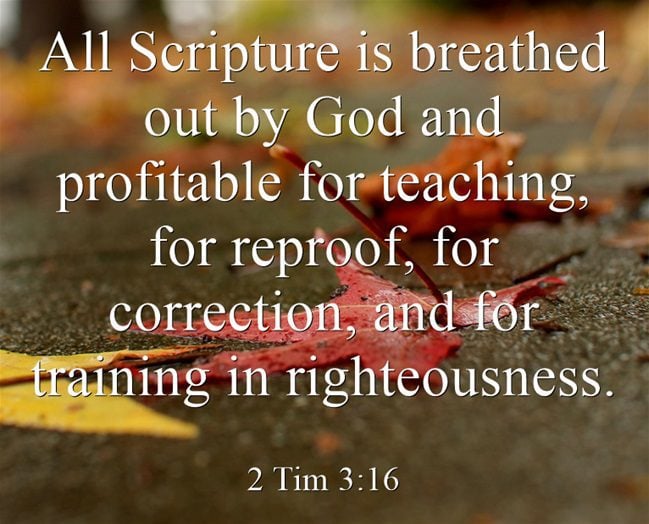
It’s interesting that we believe the accounts of Caesar’s Gallic Wars with only 10 manuscripts in existence; we believe Plato’s writings but these manuscripts came 900 years after Plato wrote them; we believe Aristotle’s writings with only 49 manuscripts and these came over 1,400 years after his writing them but we don’t believe the Bible which has, at present, over 25,000 ancient manuscripts discovered and archived so far with at least 5,600 of which are copies and fragments in the original Greek. The number of Old Testament manuscripts is well over 600 and growing. Believing is a matter of choice. You either believe the Bible and must repent or perish or you choose to disbelieve and face the judgment of God for all time. The Word of God says that “All Scripture is breathed out by God and profitable for teaching, for reproof, for correction, and for training in righteousness” (2nd Tim 3:16) so the choice seems clear so I would ask you, why not believe in the only name given to us whereby we must be saved and that is Jesus Christ (Acts 4:12)?
Article by Jack Wellman
Jack Wellman is Pastor of the Mulvane Brethren church in Mulvane Kansas. Jack is also the Senior Writer at What Christians Want To Know whose mission is to equip, encourage, and energize Christians and to address questions about the believer’s daily walk with God and the Bible. You can follow Jack on Google Plus or check out his book Blind Chance or Intelligent Design available on Amazon.
Previous Post

August 11, 2015
7 Comforting Bible Scriptures For The Terminally Ill
Next Post
August 12, 2015 What Does The Bible Say About A Red Or Blood Moon?
Browse Our Archives
Select a Category Bible Answers Bible Definitions Bible Story Bible Study Bible Verses Christian Books Christian Entertainment Christian Fathers Christian Mothers Christian Quotes Devotional Famous Christians Music News Parables Prayers Quotes Sunday School Lesson Uncategorized Youth Sermons
Select a Month October 2019 September 2019 August 2019 July 2019 June 2019 May 2019 April 2019 March 2019 February 2019 January 2019 December 2018 November 2018 October 2018 September 2018 August 2018 July 2018 June 2018 May 2018 April 2018 March 2018 February 2018 January 2018 December 2017 November 2017 October 2017 September 2017 August 2017 July 2017 June 2017 May 2017 April 2017 March 2017 February 2017 January 2017 December 2016 November 2016 October 2016 September 2016 August 2016 July 2016 June 2016 May 2016 March 2016 February 2016 January 2016 December 2015 November 2015 October 2015 September 2015 August 2015 July 2015 June 2015 May 2015 April 2015 March 2015 February 2015 January 2015 December 2014 November 2014 October 2014 September 2014 August 2014 July 2014 June 2014 May 2014 April 2014 March 2014 February 2014 January 2014 December 2013 November 2013 October 2013 September 2013 August 2013 July 2013 June 2013 May 2013 April 2013 March 2013
Follow Us!
TAKE THE
Religious Wisdom Quiz
What did Isaiah tell Hezekiah to use as a remedy for his illness?
Select your answer to see how you score.
Wine A poultice of figs Olive oil River water
Related posts from Christian Crier

What Does The Bible Say About Our Thoughts?

Do Colors Have Special Meaning In The Bible?

The Glass – Half Empty Or Half Full?

TRENDING AT PATHEOS Evangelical

How the author of the world's best hymn...
I've been working with John Newton for a while now. This makes...

Long before this Lectio Divina, Psalm 130 - the song - started...

What About the Trees? Another Living Parable
After I finished writing the last article about falling leaves as a...

Why Classical Education Is a Conversation, Not a...
Come and Read: Joy in Classical Education When I was a little...

Falling Leaves: A Living Parable on Letting Go
I’ve spent the vast majority of my life in the southeast corner...

Cornell University has received a great deal of negative publicity and intense...
view all Evangelical blogs
Ad-Free & Subscriber Log-In Subscription Support
- About Us
- 2026 Calendar
- Videos
- Podcasts
- Library of World Religions
- Faith In Media Tracker
- Advertise With Us
- Write for Us
- Privacy Policy
- Terms of Service
- Do Not Sell My Data
- Contact Us
- Radiant Digital
- Manage Newsletter Subscriptions
- Unsubscribe From Notifications
- Sitemap
Copyright 2008-2026, Patheos. All rights reserved.
Subscription Support Ad-Free & Subscriber Log-In
Follow Patheos