
BuddhistCatholicContemplativeEvangelicalGeneral ChristianHinduJewishLatter-day SaintMuslimNew VisionsProgressive Christian
Beliefs
- Buddhist
- Catholic
- Contemplative
- Evangelical
- General Christian
- Hindu
- Jewish
- Latter-day Saint
- More Voices
- Muslim
- New Visions
- Pagan
- Progressive Christian
Topics
- Religion News
- Food and Religion
- Sports and Religion
- Religious Art
- Religious Music and Entertainment
- Religious Events
- History and Religion
- Style and Religion
- Politics and Religion
- Women in Religion
- Recreation Outdoors and Religion
- Business Finance and Religion
- Careers Workplace and Religion
- Education and Religion
- Family Parenting and Religion
- Health Fitness and Religion
- Home and Religion
- Relationships and Religion
- Technology and Religion
- Travel and Religion
Columnists
- Buddhist Columnists
- Business Finance and Religion Columnists
- Careers Workplace and Religion Columnists
- Catholic Columnists
- Contemplative Columnists
- Education and Religion Columnists
- Evangelists Columnists
- Family Parenting and Religion Columnists
- General Christian Columnists
- Health Fitness and Religion Columnists
- Hindu Columnists
- History and Religion Columnists
- Home and Religion Columnists
- Jewish Columnists
- More Voices Columnists
- Latter Day Columnists
- Muslim Columnists
- New Visions Columnists
- Nonreligious Columnists
- Pagan Columnists
- Politics and Religion Columnists
- Progressive Columnists
- Recreation Outdoors and Religion Columnists
- Relationships and Religion Columnists
- Religion News Columnists
- Religious Art Columnists
- Religious Events Columnists
- Religious Music and Entertainment Columnists
- Sports and Religion Columnists
- Style and Religion Columnists
- Technology and Religion Columnists
- Travel and Religion Columnists
- Women in Religion Columnists
Resource Library
- 2026 Calendar
- Library of World Religions
- The 100 Most Holy Places on Earth
- Patheos Answers
- Podcasts
- Videos
- Faith Leaders Database
- Anglican Episcopalian
- Bahai
- Baptist
- Buddhism
- Christianity
- Confucianism
- Eastern Orthodoxy
- Hinduism
- Holiness and Pentecostal
- ISKCON
- Islam
- Judaism
- Lutheran
- Methodist
- The Church of Jesus Christ of Latter-day Saints
- New Age
- Paganism
- Presbytarian and Reformed
- Protestantism
- Religion Behind the Scenes
- Roman Catholic
- Scientology
- Shia Islam
- Sikhism
- Sufism
- Sunni Islam
- Taoism
- Zen
- See all religions
Research Tools
 Ad-Free & Subscriber Log-In Subscription Support
Ad-Free & Subscriber Log-In Subscription Support
Follow Patheos 

- Trending:
- Forgiveness
- |
- Marriage
- |
- Consciousness
- |
- Death Penalty
- |
- Election
- |
- Halloween
 Christian Crier
- Home
- Evangelical
- What Is The Book Of Leviticus About? A Bible Study
What Is The Book Of Leviticus About? A Bible Study
Last updated on: July 21, 2015 at 1:33 pm by Jack Wellman
What Is The Book Of Leviticus About? A Bible Study 2015-07-21T13:33:13-05:00 Jack Wellman
Patheos Explore the world's faith through different perspectives on religion and spirituality! Patheos has the views of the prevalent religions and spiritualities of the world.
What is the Book of Leviticus all about? Why is it still important to the Christian today?
The Book of the Leviticus
This book, more than any other book in the Bible, is about the holiness of God. There is no equal and even though it’s in the Old Testament, God is always concerned that His holiness is known. Most people, unfortunately, skip this book but there is such amazing and powerful symbolism about Christ and His atoning work on Calvary in the Book of Leviticus. As the name suggests, it has much to do with the Levitical Priesthood. Written by Moses (probably between 1440-1400 B.C) it gives exact specifications for the duties and requirements for the priesthood, it points forward or looks ahead at the cross of Christ and how God requires the need for sacrifice for the sin. It is a guidebook about holy living, teaching, and worship. This book also shows us the significance of worshiping God in truth and in spirit.
The Holiness of God
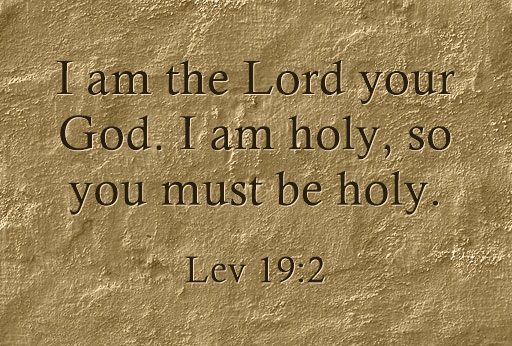
As I wrote before, this book speaks more about the holiness of God than any other book in the Bible and mentions holiness 152 times. If there was one verse that encapsulates this entire book it would be Leviticus 19:2 which says “I am the Lord your God. I am holy, so you must be holy.” Part of knowing about the holiness of God is that sin is costly and it results in the necessity of the shedding of blood. Animal sacrifices pointed toward Jesus Christ Who alone can take away sins, not just cover them as was the case in the Old Testament. These sacrifices had to be repeated time and again but with Christ, one supreme sacrifice was sufficient for all time and efficient for all people. Hebrews 9:22 makes it clear that “under the law almost everything is purified with blood, and without the shedding of blood there is no forgiveness of sins.”
Reasons for Holiness
Part of the reason for this book was to keep Israel pure and living in holiness before God as Hebrews 12:14 says “Strive for peace with everyone, and for the holiness without which no one will see the Lord.” Many of the pagan nations surrounding Israel were doing abominable things such as sacrificing children (including infants) as a live sacrifice in the fire! This explains why Moses wrote that “Any Israelite or any alien living in Israel who gives any of his children to Molech must be put to death. The people of the community are to stone him. I will set my face against that man and I will cut him off from his people; for by giving his children to Molech he has defiled my sanctuary and profaned my holy name. If the people of the community close their eyes when that man gives one of his children to Molech and they fail to put him to death, I will set my face against that man and his family and will cut off from their people both him and all who follow him in prostituting themselves to Molech” (Leviticus 20:1-5). The historical facts are that many of the ancient, pagan religions also practiced animal sacrifices but they also made human sacrifices and in particular, sacrificed children in the fire which is about as detestable and utterly cruel as one can even imagine. These were practiced by the Inca’s, Aztecs, the Moabites (in the Middle East), the Phoenicians, and many other places around the world but were strictly forbidden by the laws of God (Leviticus 18:21, 20:3).
Reasons of Mercy
God has always been concerned with the poor like the widows and orphans and this was covered in Leviticus 19:9 which says “When you reap the harvest of your land, you shall not reap your field right up to its edge, neither shall you gather the gleanings after your harvest.” The reason for this is further expounded in Leviticus 23:22 “And when you reap the harvest of your land, you shall not reap your field right up to its edge, nor shall you gather the gleanings after your harvest. You shall leave them for the poor and for the sojourner: I am the Lord your God.” Furthermore God was concerned for those who were estranged from their land and from their people as we read in Leviticus 19:34 “You shall treat the stranger who sojourns with you as the native among you, and you shall love him as yourself, for you were strangers in the land of Egypt: I am the LORD your God.”
Reasons of Justice
God is a righteous Judge and always rules without regard to social status and the Book of Leviticus gave great emphasis on having a righteous judicial system for the nation of Israel as we read in Leviticus 19:15 which says “You shall do no injustice in court. You shall not be partial to the poor or defer to the great, but in righteousness shall you judge your neighbor.” God is no respecter of persons and He expects us to not be a respecter of persons either. This extends into the New Testament as well as Paul writes “There is neither Jew nor Gentile, neither slave nor free, nor is there male and female, for you are all one in Christ Jesus” (Gal 3:28). God is always concerned with justice.
Conclusion
The Book of Leviticus points forward to the work of Christ and focuses on the holy requirements of the priesthood (Lev 8-10), of the believers life (Lev 11-15), of practical, day-to-day applications of holiness (Lev 17-33), and the conditions for receiving God’s blessings or His curses (Lev 26-27). If you desire to learn more about the holiness of God then spend sometime in the Book of Leviticus and see just how holy God is and how He expects us to live lives that are holy and pleasing to Him, for without holiness “no one will see the Lord” (Heb 12:14b) and there is only one way to see the Lord (Acts 4:12) and here is how you achieve that holiness that God expects; “For our sake he made him to be sin who knew no sin, so that in him we might become the righteousness of God” (2nd Cor 5:21).
Article by Jack Wellman
Jack Wellman is Pastor of the Mulvane Brethren church in Mulvane Kansas. Jack is also the Senior Writer at What Christians Want To Know whose mission is to equip, encourage, and energize Christians and to address questions about the believer’s daily walk with God and the Bible. You can follow Jack on Google Plus or check out his book Blind Chance or Intelligent Design available on Amazon.
Previous Post

July 21, 2015
Who Was Jael In The Bible? A Character Study
Next Post
July 21, 2015 What Is The Book Of James About? A Bible Study
Browse Our Archives
Select a Category Bible Answers Bible Definitions Bible Story Bible Study Bible Verses Christian Books Christian Entertainment Christian Fathers Christian Mothers Christian Quotes Devotional Famous Christians Music News Parables Prayers Quotes Sunday School Lesson Uncategorized Youth Sermons
Select a Month October 2019 September 2019 August 2019 July 2019 June 2019 May 2019 April 2019 March 2019 February 2019 January 2019 December 2018 November 2018 October 2018 September 2018 August 2018 July 2018 June 2018 May 2018 April 2018 March 2018 February 2018 January 2018 December 2017 November 2017 October 2017 September 2017 August 2017 July 2017 June 2017 May 2017 April 2017 March 2017 February 2017 January 2017 December 2016 November 2016 October 2016 September 2016 August 2016 July 2016 June 2016 May 2016 March 2016 February 2016 January 2016 December 2015 November 2015 October 2015 September 2015 August 2015 July 2015 June 2015 May 2015 April 2015 March 2015 February 2015 January 2015 December 2014 November 2014 October 2014 September 2014 August 2014 July 2014 June 2014 May 2014 April 2014 March 2014 February 2014 January 2014 December 2013 November 2013 October 2013 September 2013 August 2013 July 2013 June 2013 May 2013 April 2013 March 2013
Follow Us!
TAKE THE
Religious Wisdom Quiz
I was lifted up on a pole that healed those who looked at me. What am I?
Select your answer to see how you score.
The Stone Tablets The Golden Calf The bronze serpent A healing statue
Related posts from Christian Crier

What Does The Bible Say About Our Thoughts?

Top 13 Bible Verses About Virtue

Do Colors Have Special Meaning In The Bible?

The Glass – Half Empty Or Half Full?
TRENDING AT PATHEOS Evangelical

The REST of Your Life: A Creative Wrestles...
This week I had a conversation with a good friend from church....

How the author of the world's best hymn...
I've been working with John Newton for a while now. This makes...

Long before this Lectio Divina, Psalm 130 - the song - started...

What About the Trees? Another Living Parable
After I finished writing the last article about falling leaves as a...

Why Classical Education Is a Conversation, Not a...
Come and Read: Joy in Classical Education When I was a little...

Cornell University has received a great deal of negative publicity and intense...
view all Evangelical blogs
Ad-Free & Subscriber Log-In Subscription Support
- About Us
- 2026 Calendar
- Videos
- Podcasts
- Library of World Religions
- Faith In Media Tracker
- Advertise With Us
- Write for Us
- Privacy Policy
- Terms of Service
- Do Not Sell My Data
- Contact Us
- Radiant Digital
- Manage Newsletter Subscriptions
- Unsubscribe From Notifications
- Sitemap
Copyright 2008-2026, Patheos. All rights reserved.
Subscription Support Ad-Free & Subscriber Log-In
Follow Patheos