
BuddhistCatholicContemplativeEvangelicalGeneral ChristianHinduJewishLatter-day SaintMuslimNew VisionsProgressive Christian
Beliefs
- Buddhist
- Catholic
- Contemplative
- Evangelical
- General Christian
- Hindu
- Jewish
- Latter-day Saint
- More Voices
- Muslim
- New Visions
- Pagan
- Progressive Christian
Topics
- Religion News
- Food and Religion
- Sports and Religion
- Religious Art
- Religious Music and Entertainment
- Religious Events
- History and Religion
- Style and Religion
- Politics and Religion
- Women in Religion
- Recreation Outdoors and Religion
- Business Finance and Religion
- Careers Workplace and Religion
- Education and Religion
- Family Parenting and Religion
- Health Fitness and Religion
- Home and Religion
- Relationships and Religion
- Technology and Religion
- Travel and Religion
Columnists
- Buddhist Columnists
- Business Finance and Religion Columnists
- Careers Workplace and Religion Columnists
- Catholic Columnists
- Contemplative Columnists
- Education and Religion Columnists
- Evangelists Columnists
- Family Parenting and Religion Columnists
- General Christian Columnists
- Health Fitness and Religion Columnists
- Hindu Columnists
- History and Religion Columnists
- Home and Religion Columnists
- Jewish Columnists
- More Voices Columnists
- Latter Day Columnists
- Muslim Columnists
- New Visions Columnists
- Nonreligious Columnists
- Pagan Columnists
- Politics and Religion Columnists
- Progressive Columnists
- Recreation Outdoors and Religion Columnists
- Relationships and Religion Columnists
- Religion News Columnists
- Religious Art Columnists
- Religious Events Columnists
- Religious Music and Entertainment Columnists
- Sports and Religion Columnists
- Style and Religion Columnists
- Technology and Religion Columnists
- Travel and Religion Columnists
- Women in Religion Columnists
Resource Library
- 2026 Calendar
- Library of World Religions
- The 100 Most Holy Places on Earth
- Patheos Answers
- Podcasts
- Videos
- Faith Leaders Database
- Anglican Episcopalian
- Bahai
- Baptist
- Buddhism
- Christianity
- Confucianism
- Eastern Orthodoxy
- Hinduism
- Holiness and Pentecostal
- ISKCON
- Islam
- Judaism
- Lutheran
- Methodist
- The Church of Jesus Christ of Latter-day Saints
- New Age
- Paganism
- Presbytarian and Reformed
- Protestantism
- Religion Behind the Scenes
- Roman Catholic
- Scientology
- Shia Islam
- Sikhism
- Sufism
- Sunni Islam
- Taoism
- Zen
- See all religions
Research Tools
 Ad-Free & Subscriber Log-In Subscription Support
Ad-Free & Subscriber Log-In Subscription Support
Follow Patheos 

- Trending:
- Forgiveness
- |
- Marriage
- |
- Consciousness
- |
- Death Penalty
- |
- Election
- |
- Halloween
 Christian Crier
- Home
- Evangelical
- What Does The Word Raca Mean When Used In The Bible?
What Does The Word Raca Mean When Used In The Bible?
Last updated on: July 15, 2015 at 1:08 pm by Jack Wellman
What Does The Word Raca Mean When Used In The Bible? 2015-07-15T13:08:26-05:00 Jack Wellman
Patheos Explore the world's faith through different perspectives on religion and spirituality! Patheos has the views of the prevalent religions and spiritualities of the world.
What does the word “Raca” mean when Jesus uses it in the Bible? What are the implications for Christians today?
A Definition of “Raca”
The word “raca” is Arabic and is a term of reproach used by the Jews of our Savior’s time on earth and means “worthless.” The word “raca” is sometimes translated as “fool” or “useless” and even rendered “cursed” or “empty headed” so using this word in anger against someone places them on dangerous ground according to Jesus (Matt 5:22). There is also a town in Serbia called “Raca” and it’s also the name of a river in Slovenia and even a borough of Bratislava, Slovakia as well as a village in East Timor in the Lospalos district but when used in the Bible, this is not talking about a location but is used either as a noun or an adjective and it is one of the most offensive things that someone could be called in Judea at the time of Christ’s earthly ministry. Even today, calling someone a fool, useless or cursed is also one of the greatest insults that can be hurled against anyone. God never hesitates to use this in the proper context like in Psalm 14:1 which says “The fool says in his heart, “There is no God.” They are corrupt, they do abominable deeds, there is none who does good.”
The Foolishness of Denying God
Paul writes about the foolishness of denying the existence of God in Romans 1:19-20 where he writes “what can be known about God is plain to them, because God has shown it to them. For his invisible attributes, namely, his eternal power and divine nature, have been clearly perceived, ever since the creation of the world, in the things that have been made. So they are without excuse.” Even though “they knew God, they did not honor him as God or give thanks to him, but they became futile in their thinking, and their foolish hearts were darkened. Claiming to be wise, they became fools, and exchanged the glory of the immortal God for images resembling mortal man and birds and animals and creeping things” (Rom 1:21-23). That’s why “the wrath of God is revealed from heaven against all ungodliness and unrighteousness of men, who by their unrighteousness suppress the truth” (Rom 1:18). The Greek word for “suppress” is “katechō” and this word means “to hold back, to detain,” and “to restrain” so they are intentionally suppressing the knowledge of God’s existence and that’s why they have no real excuse (Rom 1:20). Calling someone who denies God a fool is true given the reason that they’re suppressing the knowledge of God and are without any real excuse for they really know, deep down, that God does exist.
In Danger of Judgment
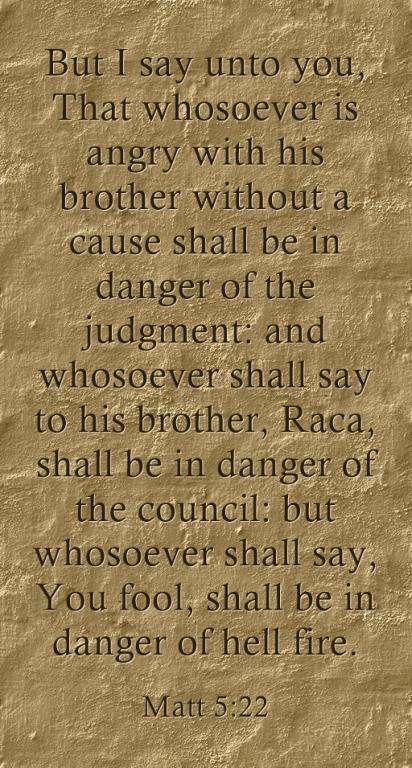
Jesus gives a stern warning to those who call other people a fool because it really means useless or cursed and some Bibles translate it as “empty headed.” We read of this account in Matthew 5:22 where Jesus warns “But I say to you that everyone who is angry with his brother will be liable to judgment; whoever insults his brother will be liable to the council; and whoever says, ‘You fool!’ (or “raca” in Aramaic) will be liable to the hell of fire.” Who was Jesus speaking to when He said this? Was it only the disciples? Was He saying this to the scribes, Pharisees, or the Sadducees? No, He was addressing “the crowds, he went up on a mountainside” as well as His disciples (Matt 5:1) so this applies to everyone, everywhere, and for all time. Notice that Jesus never said that anyone who called someone a fool was already judged but they were “liable to judgment.” He never said that they are damned to hell fire but they “will be liable to the hell of fire” unless they repent of this. Everyone loses their temper at times but the context of the way in which the Greek structure of this sentence is written means that someone that continues to call someone or others this name as a pattern or as a way of life. He isn’t saying that someone who loses their temper and calls someone a fool is judged to hell but they are in danger if this is their way of dealing with people on an everyday basis.
Conclusion
It is the height of folly to deny God’s existence for the Bible says that “every eye will see him” (Rev 1:7) and “all the peoples of the earth will mourn when they see the Son of Man coming on the clouds of heaven, with power and great glory” (Matt 24:30). For those who already trust in Christ they won’t mourn but rejoice; the ones who will mourn will be those who finally know that God does it exist but this knowledge will come too late to save them. God says “every knee shall bow to me, and every tongue shall confess to God. So then every one of us shall give account of himself to God” (Rom 14:11-12) and truly, “at the name of Jesus every knee should bow, in heaven and on earth and under the earth” (Phil 2:10) and whether they believe it or not doesn’t matter. Just because someone doesn’t believe this or believe in God, doesn’t mean that He’s not real. Whether you believe in something or not doesn’t change whether it is true.
Article by Jack Wellman
Jack Wellman is Pastor of the Mulvane Brethren church in Mulvane Kansas. Jack is also the Senior Writer at What Christians Want To Know whose mission is to equip, encourage, and energize Christians and to address questions about the believer’s daily walk with God and the Bible. You can follow Jack on Google Plus or check out his book Blind Chance or Intelligent Design available on Amazon.
Previous Post

July 15, 2015
Top 7 Bible Verses To Cast Out Demons
Next Post
July 15, 2015 5 Prayers For America
Browse Our Archives
Select a Category Bible Answers Bible Definitions Bible Story Bible Study Bible Verses Christian Books Christian Entertainment Christian Fathers Christian Mothers Christian Quotes Devotional Famous Christians Music News Parables Prayers Quotes Sunday School Lesson Uncategorized Youth Sermons
Select a Month October 2019 September 2019 August 2019 July 2019 June 2019 May 2019 April 2019 March 2019 February 2019 January 2019 December 2018 November 2018 October 2018 September 2018 August 2018 July 2018 June 2018 May 2018 April 2018 March 2018 February 2018 January 2018 December 2017 November 2017 October 2017 September 2017 August 2017 July 2017 June 2017 May 2017 April 2017 March 2017 February 2017 January 2017 December 2016 November 2016 October 2016 September 2016 August 2016 July 2016 June 2016 May 2016 March 2016 February 2016 January 2016 December 2015 November 2015 October 2015 September 2015 August 2015 July 2015 June 2015 May 2015 April 2015 March 2015 February 2015 January 2015 December 2014 November 2014 October 2014 September 2014 August 2014 July 2014 June 2014 May 2014 April 2014 March 2014 February 2014 January 2014 December 2013 November 2013 October 2013 September 2013 August 2013 July 2013 June 2013 May 2013 April 2013 March 2013
Follow Us!
TAKE THE
Religious Wisdom Quiz
What acrostic device is used in many Psalms and Proverbs?
Select your answer to see how you score.
Alphabetic order Reversed order Chronological order Numerical sequence
Related posts from Christian Crier

What Does The Bible Say About Our Thoughts?

Top 13 Bible Verses About Virtue

Do Colors Have Special Meaning In The Bible?

The Greatest Father In History
TRENDING AT PATHEOS Evangelical

How the author of the world's best hymn...
I've been working with John Newton for a while now. This makes...

Long before this Lectio Divina, Psalm 130 - the song - started...

What About the Trees? Another Living Parable
After I finished writing the last article about falling leaves as a...

Why Classical Education Is a Conversation, Not a...
Come and Read: Joy in Classical Education When I was a little...

Falling Leaves: A Living Parable on Letting Go
I’ve spent the vast majority of my life in the southeast corner...

Cornell University has received a great deal of negative publicity and intense...
view all Evangelical blogs
Ad-Free & Subscriber Log-In Subscription Support
- About Us
- 2026 Calendar
- Videos
- Podcasts
- Library of World Religions
- Faith In Media Tracker
- Advertise With Us
- Write for Us
- Privacy Policy
- Terms of Service
- Do Not Sell My Data
- Contact Us
- Radiant Digital
- Manage Newsletter Subscriptions
- Unsubscribe From Notifications
- Sitemap
Copyright 2008-2026, Patheos. All rights reserved.
Subscription Support Ad-Free & Subscriber Log-In
Follow Patheos