
BuddhistCatholicContemplativeEvangelicalGeneral ChristianHinduJewishLatter-day SaintMuslimNew VisionsProgressive Christian
Beliefs
- Buddhist
- Catholic
- Contemplative
- Evangelical
- General Christian
- Hindu
- Jewish
- Latter-day Saint
- More Voices
- Muslim
- New Visions
- Pagan
- Progressive Christian
Topics
- Religion News
- Food and Religion
- Sports and Religion
- Religious Art
- Religious Music and Entertainment
- Religious Events
- History and Religion
- Style and Religion
- Politics and Religion
- Women in Religion
- Recreation Outdoors and Religion
- Business Finance and Religion
- Careers Workplace and Religion
- Education and Religion
- Family Parenting and Religion
- Health Fitness and Religion
- Home and Religion
- Relationships and Religion
- Technology and Religion
- Travel and Religion
Columnists
- Buddhist Columnists
- Business Finance and Religion Columnists
- Careers Workplace and Religion Columnists
- Catholic Columnists
- Contemplative Columnists
- Education and Religion Columnists
- Evangelists Columnists
- Family Parenting and Religion Columnists
- General Christian Columnists
- Health Fitness and Religion Columnists
- Hindu Columnists
- History and Religion Columnists
- Home and Religion Columnists
- Jewish Columnists
- More Voices Columnists
- Latter Day Columnists
- Muslim Columnists
- New Visions Columnists
- Nonreligious Columnists
- Pagan Columnists
- Politics and Religion Columnists
- Progressive Columnists
- Recreation Outdoors and Religion Columnists
- Relationships and Religion Columnists
- Religion News Columnists
- Religious Art Columnists
- Religious Events Columnists
- Religious Music and Entertainment Columnists
- Sports and Religion Columnists
- Style and Religion Columnists
- Technology and Religion Columnists
- Travel and Religion Columnists
- Women in Religion Columnists
Resource Library
- 2026 Calendar
- Library of World Religions
- The 100 Most Holy Places on Earth
- Patheos Answers
- Podcasts
- Videos
- Faith Leaders Database
- Anglican Episcopalian
- Bahai
- Baptist
- Buddhism
- Christianity
- Confucianism
- Eastern Orthodoxy
- Hinduism
- Holiness and Pentecostal
- ISKCON
- Islam
- Judaism
- Lutheran
- Methodist
- The Church of Jesus Christ of Latter-day Saints
- New Age
- Paganism
- Presbytarian and Reformed
- Protestantism
- Religion Behind the Scenes
- Roman Catholic
- Scientology
- Shia Islam
- Sikhism
- Sufism
- Sunni Islam
- Taoism
- Zen
- See all religions
Research Tools
 Ad-Free & Subscriber Log-In Subscription Support
Ad-Free & Subscriber Log-In Subscription Support
Follow Patheos 

- Trending:
- Forgiveness
- |
- Marriage
- |
- Consciousness
- |
- Death Penalty
- |
- Election
- |
- Halloween
 Christian Crier
- Home
- Evangelical
- What Is An Inductive Bible Study?
What Is An Inductive Bible Study?
Last updated on: July 11, 2015 at 7:59 pm by Jack Wellman
What Is An Inductive Bible Study? 2015-07-11T19:59:25-05:00 Jack Wellman
Patheos Explore the world's faith through different perspectives on religion and spirituality! Patheos has the views of the prevalent religions and spiritualities of the world.
What exactly is an inductive Bible study? Is this something that could give us better understanding of the Scriptures?
The Command to Study
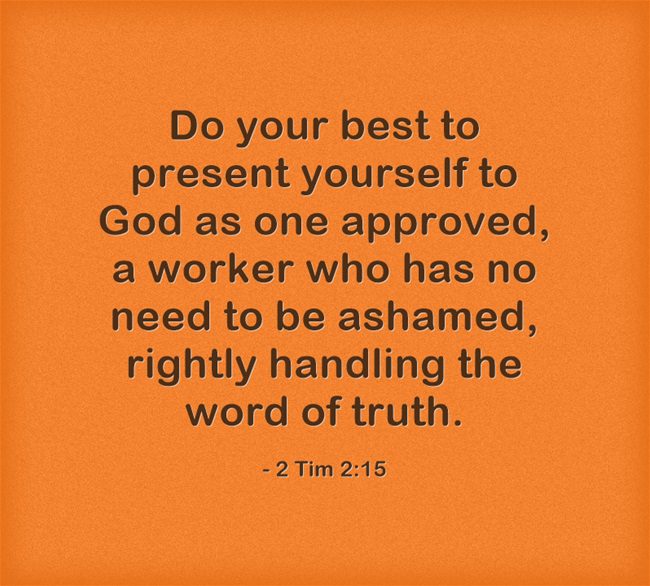
Paul told Timothy, who he was mentoring, to “Do your best to present yourself to God as one approved, a worker who has no need to be ashamed, rightly handling the word of truth” (2nd Tim 2:15). We know that the apostles taught out of the Old Testament and they used the Scriptures for this. Paul told Timothy, “devote yourself to the public reading of Scripture, to exhortation, to teaching” (1st Tim 4:13) even though Paul told Timothy that he knew “how from infancy you have known the Holy Scriptures, which are able to make you wise for salvation through faith in Christ Jesus” (2nd Tim 3:15). Even so, Timothy was to “Preach the word; be prepared in season and out of season; correct, rebuke and encourage–with great patience and careful instruction” (2nd Tim 4:2). To Titus Paul wrote “These, then, are the things you should teach. Encourage and rebuke with all authority. Do not let anyone despise you” (Titus 2:15). Scripture is clear; we are to study so that we can “grow in the grace and knowledge of our Lord and Savior Jesus Christ” (2nd Pet 3:18) and what better way to do this than to have an inductive Bible study, but what does that mean?
What does “inductive” Mean?
Before we dive into the topic of what an inductive Bible study is, I think we need to know what the word inductive means. A deductive study or deductive reasoning involves the process of reasoning from one or more statements (premises) to reach a logically certain conclusion like “all men are mortal, I am a man, therefore I am mortal.” This is a top-down study of logic or reason. On the other hand, an inductive study is seeking to supply strong evidence for the truth of the conclusion like 100% of biological life forms that we know of depend on liquid water to exist. We can seek strong evidence of this premise by studying all lifeforms that we know of and depriving them of water to see whether they can continue to live without it. We may not reach absolute, conclusive proof because we cannot possibly study all life on this planet but we can know, we reasonable certainty, that life requires water to survive; at least as far as we can come to know. I know that’s a very simple definition but that is a beginning point for how to find out what an inductive Bible study is.
An Inductive Bible Study
An inductive Bible study involves deductive reasoning (see above paragraph) and typically takes three steps in the process. Here is typically what is involved.
We can begin with a Bible verse or verses and read it and come up with a hypothesis and if we prove to be wrong about that or those verses, we can move onto another possible hypothesis. We might find out that this is absolutely not what this passage or passages are saying and that our hypothesis is not true. If we use as an example the verse that the love of money is the root of evil (1st Tim 6:10) but we study the better translations that say the love of money is the root of all kinds of evil, we have just deduced that it isn’t the money that is evil by and of itself…it is the love of money that is at the root of all kinds of evil.
Secondly, we can better understand the passage or passages by reading the context in which the verse or verses are given or any verse references about this passage that are found elsewhere in Scripture and in the case of 1st Timothy 6:10a the context of this chapter is talking about being content with what we have (1st Tim 6:6) and that it is those who have a passionate desire to be rich that “fall into temptation, into a snare, into many senseless and harmful desires that plunge people into ruin and destruction” (1st Tim 6:9) and “It is through this craving that some have wandered away from the faith and pierced themselves with many pangs” (1st Tim 6:10b) which is why Paul told Timothy to “flee these things” and “Pursue righteousness” (1st Tim 6:11).
The third and final step is “what does this passage or passages mean to me?” What are the practical implications of this verse and what is the application to my life as a believer in Jesus Christ. It appears that we are to seek righteousness first and the kingdom first and then God will add all the things that we’ll need (Matt 6:33). I must ask myself; “Am I willing to obey this? How can I apply this to my Christian walk with Christ? Where do I go from here?” I need to implement these truths into my life by applying them in practical ways…that is I must practice them once I have learned them. Truth is useless unless it is obeyed.
My conclusion then is that it is the pursuit of money that produces all sorts of evil in me. That is what the context of 1st Timothy chapter six is talking about. I need to follow the directives of Paul’s admonition to Timothy and “flee these things” and “pursue righteousness” (1st Tim 6:11) by seeking first the kingdom and that means seeking the King of the kingdom first (Matt 6:33).
Conclusion
We know that we must study the Bible and then learn the meaning for us and then live out that meaning in practical ways that allow us to grow in the grace and knowledge of God. This is an imperative command given throughout Scripture and an inductive Bible study will help us to achieve such a good and godly goal.
Article by Jack Wellman
Jack Wellman is Pastor of the Mulvane Brethren church in Mulvane Kansas. Jack is also the Senior Writer at What Christians Want To Know whose mission is to equip, encourage, and energize Christians and to address questions about the believer’s daily walk with God and the Bible. You can follow Jack on Google Plus or check out his book Blind Chance or Intelligent Design available on Amazon.
Previous Post

July 11, 2015
Does The Old Testament Contradict The New Testament?
Next Post
July 13, 2015 Top 7 Bible Verses To Use In A Toast At A Wedding
Browse Our Archives
Select a Category Bible Answers Bible Definitions Bible Story Bible Study Bible Verses Christian Books Christian Entertainment Christian Fathers Christian Mothers Christian Quotes Devotional Famous Christians Music News Parables Prayers Quotes Sunday School Lesson Uncategorized Youth Sermons
Select a Month October 2019 September 2019 August 2019 July 2019 June 2019 May 2019 April 2019 March 2019 February 2019 January 2019 December 2018 November 2018 October 2018 September 2018 August 2018 July 2018 June 2018 May 2018 April 2018 March 2018 February 2018 January 2018 December 2017 November 2017 October 2017 September 2017 August 2017 July 2017 June 2017 May 2017 April 2017 March 2017 February 2017 January 2017 December 2016 November 2016 October 2016 September 2016 August 2016 July 2016 June 2016 May 2016 March 2016 February 2016 January 2016 December 2015 November 2015 October 2015 September 2015 August 2015 July 2015 June 2015 May 2015 April 2015 March 2015 February 2015 January 2015 December 2014 November 2014 October 2014 September 2014 August 2014 July 2014 June 2014 May 2014 April 2014 March 2014 February 2014 January 2014 December 2013 November 2013 October 2013 September 2013 August 2013 July 2013 June 2013 May 2013 April 2013 March 2013
Follow Us!
TAKE THE
Religious Wisdom Quiz
Who was called by God to leave his home and go to a land God would show him?
Select your answer to see how you score.
Abram Jacob Moses Noah
Related posts from Christian Crier

What Does The Bible Say About Our Thoughts?

Top 13 Bible Verses About Virtue

Do Colors Have Special Meaning In The Bible?

The Greatest Father In History
TRENDING AT PATHEOS Evangelical

How the author of the world's best hymn...
I've been working with John Newton for a while now. This makes...

Long before this Lectio Divina, Psalm 130 - the song - started...

What About the Trees? Another Living Parable
After I finished writing the last article about falling leaves as a...

Why Classical Education Is a Conversation, Not a...
Come and Read: Joy in Classical Education When I was a little...

Falling Leaves: A Living Parable on Letting Go
I’ve spent the vast majority of my life in the southeast corner...

Cornell University has received a great deal of negative publicity and intense...
view all Evangelical blogs
Ad-Free & Subscriber Log-In Subscription Support
- About Us
- 2026 Calendar
- Videos
- Podcasts
- Library of World Religions
- Faith In Media Tracker
- Advertise With Us
- Write for Us
- Privacy Policy
- Terms of Service
- Do Not Sell My Data
- Contact Us
- Radiant Digital
- Manage Newsletter Subscriptions
- Unsubscribe From Notifications
- Sitemap
Copyright 2008-2026, Patheos. All rights reserved.
Subscription Support Ad-Free & Subscriber Log-In
Follow Patheos