
BuddhistCatholicContemplativeEvangelicalGeneral ChristianHinduJewishLatter-day SaintMuslimNew VisionsProgressive Christian
Beliefs
- Buddhist
- Catholic
- Contemplative
- Evangelical
- General Christian
- Hindu
- Jewish
- Latter-day Saint
- More Voices
- Muslim
- New Visions
- Pagan
- Progressive Christian
Topics
- Religion News
- Food and Religion
- Sports and Religion
- Religious Art
- Religious Music and Entertainment
- Religious Events
- History and Religion
- Style and Religion
- Politics and Religion
- Women in Religion
- Recreation Outdoors and Religion
- Business Finance and Religion
- Careers Workplace and Religion
- Education and Religion
- Family Parenting and Religion
- Health Fitness and Religion
- Home and Religion
- Relationships and Religion
- Technology and Religion
- Travel and Religion
Columnists
- Buddhist Columnists
- Business Finance and Religion Columnists
- Careers Workplace and Religion Columnists
- Catholic Columnists
- Contemplative Columnists
- Education and Religion Columnists
- Evangelists Columnists
- Family Parenting and Religion Columnists
- General Christian Columnists
- Health Fitness and Religion Columnists
- Hindu Columnists
- History and Religion Columnists
- Home and Religion Columnists
- Jewish Columnists
- More Voices Columnists
- Latter Day Columnists
- Muslim Columnists
- New Visions Columnists
- Nonreligious Columnists
- Pagan Columnists
- Politics and Religion Columnists
- Progressive Columnists
- Recreation Outdoors and Religion Columnists
- Relationships and Religion Columnists
- Religion News Columnists
- Religious Art Columnists
- Religious Events Columnists
- Religious Music and Entertainment Columnists
- Sports and Religion Columnists
- Style and Religion Columnists
- Technology and Religion Columnists
- Travel and Religion Columnists
- Women in Religion Columnists
Resource Library
- 2026 Calendar
- Library of World Religions
- The 100 Most Holy Places on Earth
- Patheos Answers
- Podcasts
- Videos
- Faith Leaders Database
- Anglican Episcopalian
- Bahai
- Baptist
- Buddhism
- Christianity
- Confucianism
- Eastern Orthodoxy
- Hinduism
- Holiness and Pentecostal
- ISKCON
- Islam
- Judaism
- Lutheran
- Methodist
- The Church of Jesus Christ of Latter-day Saints
- New Age
- Paganism
- Presbytarian and Reformed
- Protestantism
- Religion Behind the Scenes
- Roman Catholic
- Scientology
- Shia Islam
- Sikhism
- Sufism
- Sunni Islam
- Taoism
- Zen
- See all religions
Research Tools
 Ad-Free & Subscriber Log-In Subscription Support
Ad-Free & Subscriber Log-In Subscription Support
Follow Patheos 

- Trending:
- Forgiveness
- |
- Marriage
- |
- Consciousness
- |
- Death Penalty
- |
- Election
- |
- Halloween
 Christian Crier
- Home
- Evangelical
- What Does Blasphemy Mean in the Bible?
What Does Blasphemy Mean in the Bible?
Last updated on: October 7, 2014 at 9:00 pm by Jack Wellman
What Does Blasphemy Mean in the Bible? 2014-10-07T17:11:40-05:00 Jack Wellman
Patheos Explore the world's faith through different perspectives on religion and spirituality! Patheos has the views of the prevalent religions and spiritualities of the world.
What does the word blasphemy mean? Can Christians commit blasphemy today?
What is Blasphemy?
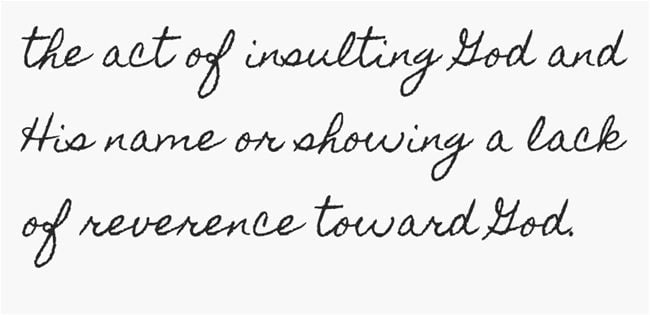
A secular dictionary defines blasphemy as a profane or contemptuous utterance, act or writing concerning God and can also be an oral reproach of God, God’s name, or His attributes. It could be the act of insulting God and His name or showing a lack of reverence toward God. It is close to slandering His holy name or spreading malicious lies that harm God’s reputation, so blasphemy in a sense is slandering God. The beast blasphemed God’s name (Rev 13) as Satan does but so too will those who receive the future punishment of God for their wickedness and failure to repent (Rev 16).
Old Testament Penalty for Blaspheming God’s Name
The Hebrew word for blaspheme is basically “curse” and today, God’s name is blasphemed regularly by those who use God’s name and Jesus’ name carelessly and even include euphemisms as curse words like “Oh my God, Jeez, my God, God dam_ it” and so on. Many people say that they’re not really thinking about it but that is all the more reason to not do it because that is a very serious sin. This is what the commandment means when is says to not take the Lord’s name in vain or in a careless, useless manner or without giving thought to it. God’s name is holy and should be revered or reverenced and God takes this very seriously. It is the 3rd Commandment which is given in Exodus 20:7 and elsewhere as “You shall not take the name of the Lord your God in vain, for the Lord will not hold him guiltless who takes his name in vain.” What happened if someone blasphemed God’s name in the Old Testament? Let’s see what happens to a person who did this in Leviticus 24:14-16 “Bring out of the camp the one who cursed, and let all who heard him lay their hands on his head, and let all the congregation stone him. And speak to the people of Israel, saying, Whoever curses his God shall bear his sin. Whoever blasphemes the name of the Lord shall surely be put to death. All the congregation shall stone him. The sojourner as well as the native, when he blasphemes the Name, shall be put to death.”
Lest you think this was written only to the nation of Israel, notice in verse 16 that this applied to “The sojourner as well as the native.” Whoever blasphemed God’s name was giving the death penalty and there were no exceptions, even if done in anger or was an off the cuff statement.
New Testament and Blaspheme
The Greek word for blaspheme is basically insult or curse, so it is close to that of the Hebrew meaning of the word. Did people blaspheme God in the New Testament? The Pharisees did when “they reviled him, saying, “You are his disciple, but we are disciples of Moses” (John 9:28). Some translations use the word “insult” or “blaspheme” instead of “revile” because in essence, it is the same thing. When Jesus hung on the cross “Those who passed by hurled insults at him, shaking their heads” (Matt 27:39) so they were blaspheming Jesus even while He died for the sins of mankind.
Blaspheming God by our Behavior?
Paul was angry at some of the Roman Christians who were claiming to be saved yet their openly, sinful activities essentially blasphemed the sacred name of God by the way that they lived. Listen to Paul’s scathing rebuke in Romans 2:21b-24 “While you preach against stealing, do you steal? You who say that one must not commit adultery, do you commit adultery? You who abhor idols, do you rob temples? You who boast in the law dishonor God by breaking the law. For, as it is written, “The name of God is blasphemed among the Gentiles because of you.” We can actually blaspheme God’s holy name by breaking His laws which dishonors Him before Gentiles and today we can do this before those who are not saved. As Paul said “The name of God is blasphemed among the Gentiles because of you” which means that by their sinful behavior and duplicity or hypocrisy, they claim to be believers but live like they’re not, thus blaspheming or bringing shame to God’s glorious name. Every time we give the world a false testimony to what should be a changed life we can blasphemy God’s name and damage His reputation before the unsaved. Anytime we claim to be God’s child and yet live like the Devil, we are slandering the name of God by our lifestyle. This brings shame to the name of God and damages the cause for which Christ came…to save a dying and sinful world. This makes them lose their testimony for Christ.
Blasphemy of the Holy Spirit
The reason Jesus warned the Pharisees that they were in danger of blaspheming God in the Person of the Holy Spirit is because they really knew that Jesus was from God (John 3:1-2) and they were attributing Jesus’ miracles to the power of Satan. That is most certainly slandering God the Holy Spirit. To portray Jesus, Who is God (John 1; Phi 2:6, etc.), as working miracles through a contemptuous, rebellious Satan was the height of insult and nothing short of cursing God. The Scribes, who were supposed to be the experts in the Scriptures, said “He is possessed by Beelzebul,” and “by the prince of demons he casts out the demons” (Mark 3:22b). That is why Jesus said that “all sins will be forgiven the children of man, and whatever blasphemies they utter, but whoever blasphemes against the Holy Spirit never has forgiveness, but is guilty of an eternal sin”— for they were saying, “He has an unclean spirit” (Mark 3:28-30). They should have known better but they were jealous of His power, His authority, and that many of the people were going after (or following after) Him. They were doing the very thing that they would later accuse Jesus of (Matt 26:65). The very same thing happened to Paul and Silas as it was written in Acts 17:5 “But other Jews were jealous; so they rounded up some bad characters from the marketplace, formed a mob and started a riot in the city. They rushed to Jason’s house in search of Paul and Silas in order to bring them out to the crowd.”
Conclusion
Many times I have counseled with people who are afraid that they’ve blasphemed the Holy Spirit and are now hopelessly lost. Are they not beyond saving? Have they lost their salvation? What would you say to them? I believe that if a person is worried about losing their salvation then they are not beyond hope or saving because they are showing remorse and giving evidence of repentance. If a person doesn’t care that they’re sinning, then they’re in danger of cutting off their own way to be saved (Acts 16:30-31). If you are concerned about having committed the unpardonable or unforgiveable sin, then that is evidence that you haven’t committed it because Jesus died for all sins. The only sin that cannot be forgiven today is to reject the only way that you can be saved (Acts 4:12) and not trusting in Christ before you die because then you’ll stand at the judgment seat and be condemned (Rev 20:11-15). This is why we must be forgiving others and not let any who sin against us not be forgiven, especially if they ask for your forgiveness because Jesus warned “If you forgive the sins of any, they are forgiven them; if you withhold forgiveness from any, it is withheld” (John 20:23). Jesus said that “Whoever believes in the Son has eternal life” but “whoever does not obey the Son shall not see life, but the wrath of God remains on him” (John 3:36). Is there any sin that Jesus’ shed blood cannot cover? No! Jesus said that whoever believes in Him will be saved (John 3:16), He didn’t say, “Whoever believes in me will be saved…unless you do this or that.” The only sin that cannot be forgiven today is to reject Jesus as Savior. In that case, once again Jesus warns “whoever does not believe is condemned already, because he has not believed in the name of the only Son of God” (John 3:18b).
Another Reading on Patheos to Check Out: What Did Jesus Really Look Like: A Look at the Bible Facts
 Article by Jack Wellman
Jack Wellman is Pastor of the Mulvane Brethren church in Mulvane Kansas. Jack is also the Senior Writer at What Christians Want To Know whose mission is to equip, encourage, and energize Christians and to address questions about the believer’s daily walk with God and the Bible. You can follow Jack on Google Plus or check out his book Blind Chance or Intelligent Design available on Amazon
Previous Post

October 7, 2014
What Does Amen Mean in the Bible? Why Do Christians Say Amen?
Next Post
October 8, 2014 Top 7 Bible Verses About The Power of Words
Browse Our Archives
Select a Category Bible Answers Bible Definitions Bible Story Bible Study Bible Verses Christian Books Christian Entertainment Christian Fathers Christian Mothers Christian Quotes Devotional Famous Christians Music News Parables Prayers Quotes Sunday School Lesson Uncategorized Youth Sermons
Select a Month October 2019 September 2019 August 2019 July 2019 June 2019 May 2019 April 2019 March 2019 February 2019 January 2019 December 2018 November 2018 October 2018 September 2018 August 2018 July 2018 June 2018 May 2018 April 2018 March 2018 February 2018 January 2018 December 2017 November 2017 October 2017 September 2017 August 2017 July 2017 June 2017 May 2017 April 2017 March 2017 February 2017 January 2017 December 2016 November 2016 October 2016 September 2016 August 2016 July 2016 June 2016 May 2016 March 2016 February 2016 January 2016 December 2015 November 2015 October 2015 September 2015 August 2015 July 2015 June 2015 May 2015 April 2015 March 2015 February 2015 January 2015 December 2014 November 2014 October 2014 September 2014 August 2014 July 2014 June 2014 May 2014 April 2014 March 2014 February 2014 January 2014 December 2013 November 2013 October 2013 September 2013 August 2013 July 2013 June 2013 May 2013 April 2013 March 2013
Follow Us!
TAKE THE
Religious Wisdom Quiz
True or False: Samson's strength came from his long hair.
Select your answer to see how you score.
FALSE TRUE
Related posts from Christian Crier

What Does The Bible Say About Our Thoughts?

Top 13 Bible Verses About Virtue

Do Colors Have Special Meaning In The Bible?

The Greatest Father In History
TRENDING AT PATHEOS Evangelical

The REST of Your Life: A Creative Wrestles...
This week I had a conversation with a good friend from church....

How the author of the world's best hymn...
I've been working with John Newton for a while now. This makes...

Long before this Lectio Divina, Psalm 130 - the song - started...

What About the Trees? Another Living Parable
After I finished writing the last article about falling leaves as a...

Why Classical Education Is a Conversation, Not a...
Come and Read: Joy in Classical Education When I was a little...

Cornell University has received a great deal of negative publicity and intense...
view all Evangelical blogs
Ad-Free & Subscriber Log-In Subscription Support
- About Us
- 2026 Calendar
- Videos
- Podcasts
- Library of World Religions
- Faith In Media Tracker
- Advertise With Us
- Write for Us
- Privacy Policy
- Terms of Service
- Do Not Sell My Data
- Contact Us
- Radiant Digital
- Manage Newsletter Subscriptions
- Unsubscribe From Notifications
- Sitemap
Copyright 2008-2026, Patheos. All rights reserved.
Subscription Support Ad-Free & Subscriber Log-In
Follow Patheos