
BuddhistCatholicContemplativeEvangelicalGeneral ChristianHinduJewishLatter-day SaintMuslimNew VisionsProgressive Christian
Beliefs
- Buddhist
- Catholic
- Contemplative
- Evangelical
- General Christian
- Hindu
- Jewish
- Latter-day Saint
- More Voices
- Muslim
- New Visions
- Pagan
- Progressive Christian
Topics
- Religion News
- Food and Religion
- Sports and Religion
- Religious Art
- Religious Music and Entertainment
- Religious Events
- History and Religion
- Style and Religion
- Politics and Religion
- Women in Religion
- Recreation Outdoors and Religion
- Business Finance and Religion
- Careers Workplace and Religion
- Education and Religion
- Family Parenting and Religion
- Health Fitness and Religion
- Home and Religion
- Relationships and Religion
- Technology and Religion
- Travel and Religion
Columnists
- Buddhist Columnists
- Business Finance and Religion Columnists
- Careers Workplace and Religion Columnists
- Catholic Columnists
- Contemplative Columnists
- Education and Religion Columnists
- Evangelists Columnists
- Family Parenting and Religion Columnists
- General Christian Columnists
- Health Fitness and Religion Columnists
- Hindu Columnists
- History and Religion Columnists
- Home and Religion Columnists
- Jewish Columnists
- More Voices Columnists
- Latter Day Columnists
- Muslim Columnists
- New Visions Columnists
- Nonreligious Columnists
- Pagan Columnists
- Politics and Religion Columnists
- Progressive Columnists
- Recreation Outdoors and Religion Columnists
- Relationships and Religion Columnists
- Religion News Columnists
- Religious Art Columnists
- Religious Events Columnists
- Religious Music and Entertainment Columnists
- Sports and Religion Columnists
- Style and Religion Columnists
- Technology and Religion Columnists
- Travel and Religion Columnists
- Women in Religion Columnists
Resource Library
- 2026 Calendar
- Library of World Religions
- The 100 Most Holy Places on Earth
- Patheos Answers
- Podcasts
- Videos
- Faith Leaders Database
- Anglican Episcopalian
- Bahai
- Baptist
- Buddhism
- Christianity
- Confucianism
- Eastern Orthodoxy
- Hinduism
- Holiness and Pentecostal
- ISKCON
- Islam
- Judaism
- Lutheran
- Methodist
- The Church of Jesus Christ of Latter-day Saints
- New Age
- Paganism
- Presbytarian and Reformed
- Protestantism
- Religion Behind the Scenes
- Roman Catholic
- Scientology
- Shia Islam
- Sikhism
- Sufism
- Sunni Islam
- Taoism
- Zen
- See all religions
Research Tools
 Ad-Free & Subscriber Log-In Subscription Support
Ad-Free & Subscriber Log-In Subscription Support
Follow Patheos 

- Trending:
- Forgiveness
- |
- Marriage
- |
- Consciousness
- |
- Death Penalty
- |
- Election
- |
- Halloween
 Christian Crier
- Home
- Evangelical
- What Are The Differences Between Law and Grace in the Bible?
What Are The Differences Between Law and Grace in the Bible?
Last updated on: September 11, 2014 at 6:22 pm by Jack Wellman
What Are The Differences Between Law and Grace in the Bible? 2014-09-11T18:22:17-05:00 Jack Wellman
Patheos Explore the world's faith through different perspectives on religion and spirituality! Patheos has the views of the prevalent religions and spiritualities of the world.
Are grace and law opposed to one another? Since we are under grace, do we still have to keep the law?
Grace is…
Grace is God’s unmerited favor which He bestows upon all those who repent and trust in Christ. Grace has been called; God’s riches at Christ’s expense. God gives us what we do not deserve. If grace were merited, then it wouldn’t be grace anymore but salvation by works and no one is saved by works. Paul clearly defined this in Romans 11:6 writing “But if it is by grace, it is no longer on the basis of works; otherwise grace would no longer be grace” and “For by grace you have been saved through faith. And this is not your own doing; it is the gift of God, not a result of works, so that no one may boast” (Eph 2:8-9). That’s good news for us because no one can possibly keep the law perfectly. Only Christ could and did so He kept the law for us who couldn’t so that we could receive eternal life by faith.
Is the Law Void?
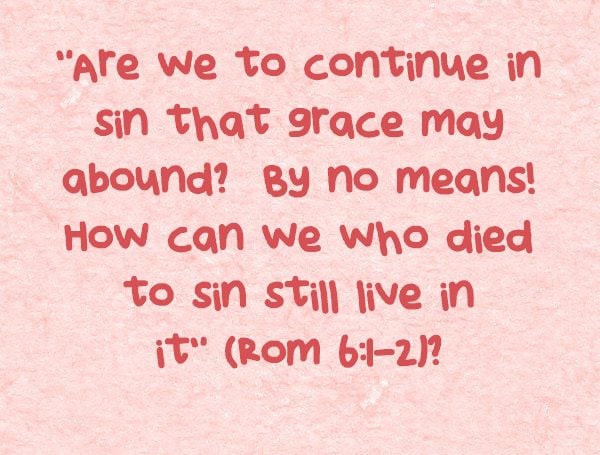
Since we are under grace, does this mean that we don’t have to worry about the law? Paul answers the question about the law by telling the church at Rome, “Are we to continue in sin that grace may abound? By no means! How can we who died to sin still live in it” (Rom 6:1-2)? Further, he says “What then? Are we to sin because we are not under law but under grace? By no means! Do you not know that if you present yourselves to anyone as obedient slaves, you are slaves of the one whom you obey, either of sin, which leads to death, or of obedience, which leads to righteousness” (Rom 6:15-16)? Just because we are not under the law but under grace doesn’t mean that we are free to break the law. The truth is that we should desire to obey God because we love Him as Jesus said “If you love me, you will keep my commandments” (John 14:15). Love is equated with a desire to live an obedient life. We should want to obey God because we love Him and we are indebted to Him by His freeing us from the eternal death penalty that we all deserved and that the law had brought. When Paul writes about the law, he is not referring to the Mosaic Law which was nailed to the cross by Christ but he was referring to the Ten Commandments which have never been voided. How can we say that God has done away with “You shall not murder, you shall not bear false witness,” or “You shall not commit adultery?”
The Purpose of the Law
The Ten Commandments are intended to show us what sin is and we wouldn’t even know what sin was except by the law (Rom 7:7). John writes that sin is transgressing the law because “Everyone who makes a practice of sinning also practices lawlessness; sin is lawlessness” (1 John 3:4) but just because the law has been lifted, this doesn’t mean that we don’t strive to obey it as much as humanly possible and by the power of the Spirit of God. Here is where we must have gratitude for Christ’s sacrifice because He “appeared in order to take away sins, and in him there is no sin” but it’s important to note that “no one who abides in him keeps on sinning; no one who keeps on sinning has either seen him or known him” (1 John 3:5:6). We are not saved by the law or by law-keeping but anyone who is living a lifestyle of breaking God’s law is obviously not saved. John makes this clear by writing “Whoever makes a practice of sinning is of the devil, for the devil has been sinning from the beginning. The reason the Son of God appeared was to destroy the works of the devil. No one born of God makes a practice of sinning, for God’s seed abides in him, and he cannot keep on sinning because he has been born of God” (1 John 3:8-9). The key word here is “practice” because if you are learning to play an instrument or playing a sport you continue to practice it because you love it so anyone that continues to practice sin, as a lifestyle, cannot truly be a person who has been born again because “No one born of God makes a practice of sinning.” That doesn’t mean that believers still don’t sin. We all sin and stumble and fall but that’s not the same thing as continually diving into it or practicing sin on an ongoing basis. We are not sinless but we strive to sin less! Just like Paul we “have the desire to do what is right, but not the ability to carry it out: (Rom 7:18). Like Paul, you and I “do not do the good [we] want, but the evil [we] do not want is what [we] keep on doing” (Rom 7:19) even though we “have the desire to do what is right, but not the ability to carry it out” (Rom 7:18).
Freed from the Law
Paul reassures us that we are no longer under the law by saying “when you were slaves of sin, you were free in regard to righteousness” (Rom 6:20) and “now that you have been set free from sin and have become slaves of God, the fruit you get leads to sanctification and its end, eternal life” (Rom 6:22). Furthermore, “you also have died to the law through the body of Christ, so that you may belong to another, to him who has been raised from the dead, in order that we may bear fruit for God” (Rom 7:4). Does this mean “That the law is sin? By no means! Yet if it had not been for the law, I would not have known sin. For I would not have known what it is to covet if the law had not said, “You shall not covet” (Rom 7:7).
Conclusion
Don’t lose heart if you continue to fall into sin. The only true concern is that if you continually practice sin as a pattern or a lifestyle. If there is no conviction of sin, that is a warning sign that your conscience may be getting seared because the more you sin, the less you care that you sin. Like a callous forms on a hand that is continually working and then becomes less sensitive, so too does sin have the effect of desensitizing us that something is wrong. Like Paul, “I see in my members another law waging war against the law of my mind and making me captive to the law of sin that dwells in my members” and like him, I cry out “Wretched man that I am! Who will deliver me from this body of death?” but then we can give “Thanks…to God through Jesus Christ our Lord! So then, I myself serve the law of God with my mind, but with my flesh I serve the law of sin” (Rom 7:23-25). That is good news because if you are waging war with the flesh, you at least know you’re on the right side of the battle. If there is no war against sin, if there is no conviction of sin, and if there is no godly sorrow or repentance, take warning because “whoever does not practice righteousness is not of God, nor is the one who does not love his brother” (1 John 3:10b) because “Whoever makes a practice of sinning is of the devil” (1 John “8a) and “Whoever says “I know him” but does not keep his commandments is a liar, and the truth is not in him” (1 John 2:4).
Another Reading on Patheos to Check Out: What Did Jesus Really Look Like: A Look at the Bible Facts
 Article by Jack Wellman
Jack Wellman is Pastor of the Mulvane Brethren church in Mulvane Kansas. Jack is also the Senior Writer at What Christians Want To Know whose mission is to equip, encourage, and energize Christians and to address questions about the believer’s daily walk with God and the Bible. You can follow Jack on Google Plus or check out his book Blind Chance or Intelligent Design available on Amazon
Previous Post

September 9, 2014
Top 7 Bible Verses About Prayer and Praying
Next Post
September 11, 2014 What are the Differences Between Paradise and Heaven in the Bible?
Browse Our Archives
Select a Category Bible Answers Bible Definitions Bible Story Bible Study Bible Verses Christian Books Christian Entertainment Christian Fathers Christian Mothers Christian Quotes Devotional Famous Christians Music News Parables Prayers Quotes Sunday School Lesson Uncategorized Youth Sermons
Select a Month October 2019 September 2019 August 2019 July 2019 June 2019 May 2019 April 2019 March 2019 February 2019 January 2019 December 2018 November 2018 October 2018 September 2018 August 2018 July 2018 June 2018 May 2018 April 2018 March 2018 February 2018 January 2018 December 2017 November 2017 October 2017 September 2017 August 2017 July 2017 June 2017 May 2017 April 2017 March 2017 February 2017 January 2017 December 2016 November 2016 October 2016 September 2016 August 2016 July 2016 June 2016 May 2016 March 2016 February 2016 January 2016 December 2015 November 2015 October 2015 September 2015 August 2015 July 2015 June 2015 May 2015 April 2015 March 2015 February 2015 January 2015 December 2014 November 2014 October 2014 September 2014 August 2014 July 2014 June 2014 May 2014 April 2014 March 2014 February 2014 January 2014 December 2013 November 2013 October 2013 September 2013 August 2013 July 2013 June 2013 May 2013 April 2013 March 2013
Follow Us!
TAKE THE
Religious Wisdom Quiz
Who said, "He must increase, but I must decrease"?
Select your answer to see how you score.
Paul John the Baptist Elijah Peter
Related posts from Christian Crier

What Does The Bible Say About Our Thoughts?

Top 13 Bible Verses About Virtue

Do Colors Have Special Meaning In The Bible?

The Greatest Father In History
TRENDING AT PATHEOS Evangelical

The REST of Your Life: A Creative Wrestles...
This week I had a conversation with a good friend from church....

How the author of the world's best hymn...
I've been working with John Newton for a while now. This makes...

Long before this Lectio Divina, Psalm 130 - the song - started...

What About the Trees? Another Living Parable
After I finished writing the last article about falling leaves as a...

Why Classical Education Is a Conversation, Not a...
Come and Read: Joy in Classical Education When I was a little...

Cornell University has received a great deal of negative publicity and intense...
view all Evangelical blogs
Ad-Free & Subscriber Log-In Subscription Support
- About Us
- 2026 Calendar
- Videos
- Podcasts
- Library of World Religions
- Faith In Media Tracker
- Advertise With Us
- Write for Us
- Privacy Policy
- Terms of Service
- Do Not Sell My Data
- Contact Us
- Radiant Digital
- Manage Newsletter Subscriptions
- Unsubscribe From Notifications
- Sitemap
Copyright 2008-2026, Patheos. All rights reserved.
Subscription Support Ad-Free & Subscriber Log-In
Follow Patheos