
BuddhistCatholicContemplativeEvangelicalGeneral ChristianHinduJewishLatter-day SaintMuslimNew VisionsProgressive Christian
Beliefs
- Buddhist
- Catholic
- Contemplative
- Evangelical
- General Christian
- Hindu
- Jewish
- Latter-day Saint
- More Voices
- Muslim
- New Visions
- Pagan
- Progressive Christian
Topics
- Religion News
- Food and Religion
- Sports and Religion
- Religious Art
- Religious Music and Entertainment
- Religious Events
- History and Religion
- Style and Religion
- Politics and Religion
- Women in Religion
- Recreation Outdoors and Religion
- Business Finance and Religion
- Careers Workplace and Religion
- Education and Religion
- Family Parenting and Religion
- Health Fitness and Religion
- Home and Religion
- Relationships and Religion
- Technology and Religion
- Travel and Religion
Columnists
- Buddhist Columnists
- Business Finance and Religion Columnists
- Careers Workplace and Religion Columnists
- Catholic Columnists
- Contemplative Columnists
- Education and Religion Columnists
- Evangelists Columnists
- Family Parenting and Religion Columnists
- General Christian Columnists
- Health Fitness and Religion Columnists
- Hindu Columnists
- History and Religion Columnists
- Home and Religion Columnists
- Jewish Columnists
- More Voices Columnists
- Latter Day Columnists
- Muslim Columnists
- New Visions Columnists
- Nonreligious Columnists
- Pagan Columnists
- Politics and Religion Columnists
- Progressive Columnists
- Recreation Outdoors and Religion Columnists
- Relationships and Religion Columnists
- Religion News Columnists
- Religious Art Columnists
- Religious Events Columnists
- Religious Music and Entertainment Columnists
- Sports and Religion Columnists
- Style and Religion Columnists
- Technology and Religion Columnists
- Travel and Religion Columnists
- Women in Religion Columnists
Resource Library
- 2026 Calendar
- Library of World Religions
- The 100 Most Holy Places on Earth
- Patheos Answers
- Podcasts
- Videos
- Faith Leaders Database
- Anglican Episcopalian
- Bahai
- Baptist
- Buddhism
- Christianity
- Confucianism
- Eastern Orthodoxy
- Hinduism
- Holiness and Pentecostal
- ISKCON
- Islam
- Judaism
- Lutheran
- Methodist
- The Church of Jesus Christ of Latter-day Saints
- New Age
- Paganism
- Presbytarian and Reformed
- Protestantism
- Religion Behind the Scenes
- Roman Catholic
- Scientology
- Shia Islam
- Sikhism
- Sufism
- Sunni Islam
- Taoism
- Zen
- See all religions
Research Tools
 Ad-Free & Subscriber Log-In Subscription Support
Ad-Free & Subscriber Log-In Subscription Support
Follow Patheos 

- Trending:
- Forgiveness
- |
- Marriage
- |
- Consciousness
- |
- Death Penalty
- |
- Election
- |
- Halloween
 Christian Crier
- Home
- Evangelical
- How to Teach a Sunday School Lesson
How to Teach a Sunday School Lesson
Last updated on: July 19, 2014 at 12:05 pm by Jack Wellman
How to Teach a Sunday School Lesson 2014-07-19T08:59:01-05:00 Jack Wellman
Patheos Explore the world's faith through different perspectives on religion and spirituality! Patheos has the views of the prevalent religions and spiritualities of the world.
What format could a person use to teach a Sunday school class? What biblical model can we use to do this?
The Essential of Prayer
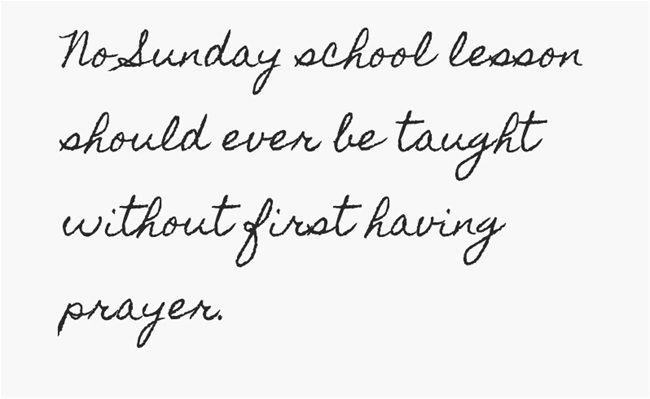
No Sunday school lesson should ever be taught without first having prayer. This should be the first thing that you do before class begins and the last thing you should do at the end of class. We must acknowledge that we can only know the things of God by the Spirit of God so ask God for the Holy Spirit that He would help you and the students understand what is being taught, what the context is, and what the outcomes should be. Listen to what Paul told the Corinthian church (1 Cor 1:10-14), “these things God has revealed to us through the Spirit. For the Spirit searches everything, even the depths of God. For who knows a person’s thoughts except the spirit of that person, which is in him? So also no one comprehends the thoughts of God except the Spirit of God. Now we have received not the spirit of the world, but the Spirit who is from God, that we might understand the things freely given us by God. And we impart this in words not taught by human wisdom but taught by the Spirit, interpreting spiritual truths to those who are spiritual. The natural person does not accept the things of the Spirit of God, for they are folly to him, and he is not able to understand them because they are spiritually discerned.” Jesus said that “the Advocate, the Holy Spirit, whom the Father will send in my name, will teach you all things and will remind you of everything I have said to you” (John 14:26) and that the “anointing (Holy Spirit) teaches you about all things and as that anointing is real, not counterfeit–just as it has taught you, remain in him” (1 John 2:27).
Sunday School Lessons
Most churches provide Sunday school teachers with teacher copies of the lessons that are associated with the copies that the students will have. The teacher should attempt to use as much of the Scriptures that are in these lessons as time may permit. If a lesson doesn’t have many Scriptures, find some that are relevant to the lessons. The real power of teaching is not in the lessons, it is not in the effectiveness of the teacher, and it is not in the attentiveness of the students…it’s what Paul wrote in Romans 1:16 “For I am not ashamed of the gospel, for it is the power of God for salvation to everyone who believes, to the Jew first and also to the Greek.” There is your power source; the Word of God. All you have to do is unleash it. You take the Word of God, have the Spirit of God apply it, and you have God’s effectual power to enable the student to learn. Undoubtedly,” the word of the cross is folly to those who are perishing, but to us who are being saved it is the power of God” (1 Cor 1:18). If you want to empower students with learning, you must use the Word of God above all of the other teachings in the lesson. This includes Bible commentaries or the Sunday school lesson books; their commentaries might be inspiring but they are not inspired by God. God says that “my word…that goes out from my mouth; it shall not return to me empty, but it shall accomplish that which I purpose, and shall succeed in the thing for which I sent it” (Isaiah 55:11). Use of God’s Word is the most important part of any Sunday school teaching. If your church did not provide you with Sunday school lesson books, ask for some. If they are unable to provide them due to financial considerations, then the next few sections of this article, hopefully, can give you other resources. Use the Bible as much as you possibly can; it is the greatest source for God’s power there is in teaching Sunday school. When you are reading the Scriptures you will use, be sure and take turns and include everyone.
An Historical Approach
When Stephen was brought before the Jewish leaders for preaching the gospel and accused by false witnesses, what did he do? Stephen gave them a history lesson of the nation of Israel and proved that Jesus was indeed the Messiah and that they had murdered Him (Acts 7). This was a type of apologetic approach that many Sunday school teachers already use. There are so many different portions of the Bible than can be incorporated into Sunday school lessons that there is at least one for every specific lesson that a teacher wants to cover. For example, if you are focusing on evangelism, and every believer is commanded to participate in the Great Commission (Matt 28:18-20; Acts 1:8), you can use Stephen’s approach or perhaps Paul’s approach when he witnessed to the Greeks in Athens on Mar’s Hill (at the Areopagus) in Acts 17. Paul even used some of their own Greek philosophers (17:28) to point them to the One, True God. He spoke of a coming day of judgment and about the resurrection (17:31) and it mattered little to Paul that some mocked his teachings because there were others that wanted to hear more about it and wanted him to speak again on these things (17:32).
The story of the fall of mankind in Genesis is a great beginning point about why we are all born into sin (Psalm 51:5) and was the reason why our sins had separated us from a Holy God (Isaiah 59:1-2), that we became enemies of God because of our sins (Rom 5:10) and this was why Jesus came and lived a sinless life and died for us while we were still sinners (Rom 5:8) and for those who have repented and trusted in Him we now have peace with God (Rom 5:1) and the Father now sees us as having the same righteousness that the Son of God has (2 Cor 5:21). A clear presentation of the gospel should be given in every lesson. Unless the teacher knows how to be saved and knows how to present it, they might not make a good teacher and until the students know what the gospel is (Rom 10:9-13) they can never be saved (if they aren’t already) and they won’t know how to share it with a lost person.
Is it an Adult, Teen, or Children’s Class?
A huge factor in determining how to teach is who you teach. That is, are you going to be teaching adults, teens, or children? If you are teaching adults, you will not need many manipulatives. When I taught adults, I occasionally used examples of things in the lesson that was being taught and the same principle applies to teens. Teens love to watch videos and there are many sterling programs that teach youth from many different resources. As for children, you will want to keep them engaged and so having a certain amount of activities is a great way to teach them about the things of God. Many manipulatives can easily be assimilated into object lessons that relate to your lesson. Having snacks, drawing activities, Bible videos, and hand manipulatives can help to create enthusiasm for young learners. It’s good if you can have the child bring something that they created in class to take home with them so that they can show their parents what they did and what was taught in the class.
Additional Helpful Ideas
I love the idea of having name badges or stickers where you can read each person’s name. It helps the teacher in the event that they don’t know everyone by name. It helps those who have just joined the church or the class too. Make sure and allow them to ask questions. It’s a good idea to ask your students questions too to make sure that they understand the lesson and ask open ended questions that don’t require a simple yes or a no.
A great way to learn about God and the Bible is to teach a class because the teacher should know more about the lesson than those who are being taught. Make sure that everyone is participating. Give everyone a chance to be included. Don’t allow only one or two people to dominate and so ask others “What do you think?” Make sure you have a lesson plan made out as far in advance as possible in the event that you cannot teach the class and a substitute can take your class over if they need to. Things come up. People get sick, others take vacations, still others have unplanned things come up. Make sure and meet with your substitute in advance and have them be familiar with your lessons. Many churches that supply Sunday school books have more than one teacher’s book so allow anyone who substitutes for you to have a copy of the lesson book. By all means, get an attendance record started and include the names, ages (if teens or children), and the dates that they attend or are absent.
Conclusion
I taught Sunday school for many years and thoroughly enjoyed it. There are fewer things that are more rewarding than having someone express the desire to be saved. It’s very possible that someone in your class is not saved so always open with prayer and close with prayer but always present what the gospel so that everyone can understand what it means to repent, confess their sins, and to put their trust in Christ. Know how to present the gospel like Jesus did. Know what to say to a person who expresses the desire to be saved. Know enough of the important Scriptures that you can turn to when you want to show someone from the Bible how they can be saved (e.g. Rom 10:9-13). If you have a suggestion, please write it down in the comments section below because this article is not a comprehensive article about how to teach Sunday school. I would appreciate learning from you and I am certain others would too.
Another Reading on Patheos to Check Out: What Did Jesus Really Look Like: A Look at the Bible Facts
 Article by Jack Wellman
Jack Wellman is Pastor of the Mulvane Brethren church in Mulvane Kansas. Jack is also the Senior Writer at What Christians Want To Know whose mission is to equip, encourage, and energize Christians and to address questions about the believer’s daily walk with God and the Bible. You can follow Jack on Google Plus or check out his book Blind Chance or Intelligent Design available on Amazon
Previous Post

July 19, 2014
7 Great Quotes About God With Commentary
Next Post
August 2, 2014 How Abraham's Promised Seed Was Fulfilled in Christ
Browse Our Archives
Select a Category Bible Answers Bible Definitions Bible Story Bible Study Bible Verses Christian Books Christian Entertainment Christian Fathers Christian Mothers Christian Quotes Devotional Famous Christians Music News Parables Prayers Quotes Sunday School Lesson Uncategorized Youth Sermons
Select a Month October 2019 September 2019 August 2019 July 2019 June 2019 May 2019 April 2019 March 2019 February 2019 January 2019 December 2018 November 2018 October 2018 September 2018 August 2018 July 2018 June 2018 May 2018 April 2018 March 2018 February 2018 January 2018 December 2017 November 2017 October 2017 September 2017 August 2017 July 2017 June 2017 May 2017 April 2017 March 2017 February 2017 January 2017 December 2016 November 2016 October 2016 September 2016 August 2016 July 2016 June 2016 May 2016 March 2016 February 2016 January 2016 December 2015 November 2015 October 2015 September 2015 August 2015 July 2015 June 2015 May 2015 April 2015 March 2015 February 2015 January 2015 December 2014 November 2014 October 2014 September 2014 August 2014 July 2014 June 2014 May 2014 April 2014 March 2014 February 2014 January 2014 December 2013 November 2013 October 2013 September 2013 August 2013 July 2013 June 2013 May 2013 April 2013 March 2013
Follow Us!
TAKE THE
Religious Wisdom Quiz
According to Jesus, how should we treat our neighbor?
Select your answer to see how you score.
Ignore them As ourselves With suspicion With anger
Related posts from Christian Crier
5 Prayers For Doctors Before Surgery

5 Good Things To Pray For Daily

How To Prepare For A Bible Study?
TRENDING AT PATHEOS Evangelical

The REST of Your Life: A Creative Wrestles...
This week I had a conversation with a good friend from church....

How the author of the world's best hymn...
I've been working with John Newton for a while now. This makes...

Long before this Lectio Divina, Psalm 130 - the song - started...

What About the Trees? Another Living Parable
After I finished writing the last article about falling leaves as a...

Why Classical Education Is a Conversation, Not a...
Come and Read: Joy in Classical Education When I was a little...

Cornell University has received a great deal of negative publicity and intense...
view all Evangelical blogs
Ad-Free & Subscriber Log-In Subscription Support
- About Us
- 2026 Calendar
- Videos
- Podcasts
- Library of World Religions
- Faith In Media Tracker
- Advertise With Us
- Write for Us
- Privacy Policy
- Terms of Service
- Do Not Sell My Data
- Contact Us
- Radiant Digital
- Manage Newsletter Subscriptions
- Unsubscribe From Notifications
- Sitemap
Copyright 2008-2026, Patheos. All rights reserved.
Subscription Support Ad-Free & Subscriber Log-In
Follow Patheos