
BuddhistCatholicContemplativeEvangelicalGeneral ChristianHinduJewishLatter-day SaintMuslimNew VisionsProgressive Christian
Beliefs
- Buddhist
- Catholic
- Contemplative
- Evangelical
- General Christian
- Hindu
- Jewish
- Latter-day Saint
- More Voices
- Muslim
- New Visions
- Pagan
- Progressive Christian
Topics
- Religion News
- Food and Religion
- Sports and Religion
- Religious Art
- Religious Music and Entertainment
- Religious Events
- History and Religion
- Style and Religion
- Politics and Religion
- Women in Religion
- Recreation Outdoors and Religion
- Business Finance and Religion
- Careers Workplace and Religion
- Education and Religion
- Family Parenting and Religion
- Health Fitness and Religion
- Home and Religion
- Relationships and Religion
- Technology and Religion
- Travel and Religion
Columnists
- Buddhist Columnists
- Business Finance and Religion Columnists
- Careers Workplace and Religion Columnists
- Catholic Columnists
- Contemplative Columnists
- Education and Religion Columnists
- Evangelists Columnists
- Family Parenting and Religion Columnists
- General Christian Columnists
- Health Fitness and Religion Columnists
- Hindu Columnists
- History and Religion Columnists
- Home and Religion Columnists
- Jewish Columnists
- More Voices Columnists
- Latter Day Columnists
- Muslim Columnists
- New Visions Columnists
- Nonreligious Columnists
- Pagan Columnists
- Politics and Religion Columnists
- Progressive Columnists
- Recreation Outdoors and Religion Columnists
- Relationships and Religion Columnists
- Religion News Columnists
- Religious Art Columnists
- Religious Events Columnists
- Religious Music and Entertainment Columnists
- Sports and Religion Columnists
- Style and Religion Columnists
- Technology and Religion Columnists
- Travel and Religion Columnists
- Women in Religion Columnists
Resource Library
- 2026 Calendar
- Library of World Religions
- The 100 Most Holy Places on Earth
- Patheos Answers
- Podcasts
- Videos
- Faith Leaders Database
- Anglican Episcopalian
- Bahai
- Baptist
- Buddhism
- Christianity
- Confucianism
- Eastern Orthodoxy
- Hinduism
- Holiness and Pentecostal
- ISKCON
- Islam
- Judaism
- Lutheran
- Methodist
- The Church of Jesus Christ of Latter-day Saints
- New Age
- Paganism
- Presbytarian and Reformed
- Protestantism
- Religion Behind the Scenes
- Roman Catholic
- Scientology
- Shia Islam
- Sikhism
- Sufism
- Sunni Islam
- Taoism
- Zen
- See all religions
Research Tools
 Ad-Free & Subscriber Log-In Subscription Support
Ad-Free & Subscriber Log-In Subscription Support
Follow Patheos 

- Trending:
- Forgiveness
- |
- Marriage
- |
- Consciousness
- |
- Death Penalty
- |
- Election
- |
- Halloween
 Christian Crier
- Home
- Evangelical
- What Is The Difference Between The Soul and The Spirit? A Bible Study
What Is The Difference Between The Soul and The Spirit? A Bible Study
Last updated on: April 26, 2014 at 4:44 pm by Jack Wellman
What Is The Difference Between The Soul and The Spirit? A Bible Study 2014-04-26T16:44:25-05:00 Jack Wellman
Patheos Explore the world's faith through different perspectives on religion and spirituality! Patheos has the views of the prevalent religions and spiritualities of the world.
What is the difference between a person’s soul and their spirit? Are they the same or are the completely different? What does the Bible say about it?
What the Bible says About the Soul
Genesis 2:7 “Then the Lord God formed man of dust from the ground, and breathed into his nostrils the breath of life; and man became a living soul.”
Some translations say that the “man became a living being” but the literal Hebrew word in this verse for soul is “chay” which means “living, alive.” Let’s look at what the New Testament Greek word for soul, “psyche” means. This word sounds much like the human mind which we call the psyche. The word psyche in the Greek means “breath” or “the breath of life” so this same word in Greek and in Hebrew seem to be saying that the soul is the living, breathing life and is alive. In Matthew 10:28 Jesus uses the word soul and has the same Greek word” psyche” in it.
*Matthew 10:28 “*Do not fear those who kill the body but are unable to kill the soul; but rather fear Him who is able to destroy both soul and body in hell.”
Here is the same precise word but the body and the soul appear to be different. Jesus said to not fear those who can kill the body (the physical life) but rather fear Him, God, Who can destroy both body (the physical life) and soul (the psyche) in hell. If we take these together we see that the soul cannot be destroyed by physical death and lives on beyond the grave so the soul cannot die when the body dies because Jesus said that they are “unable to kill the soul.” Next, look at Hebrews 4:12 to see that the soul and spirit are separate things.
Hebrews 4:12 “For the word of God is living and active, sharper than any two-edged sword, piercing to the division of soul and of spirit, of joints and of marrow, and discerning the thoughts and intentions of the heart.”
There is obviously a division between the soul and the spirit. God’s Word can literally divide the two but there is a tie between the two because the “two-edged sword” which is the Word of God, pierces or penetrates them and enters between the soul and the spirit. Finally let’s look at what Paul wrote in 1 Thessalonians 5:23.
“Now may the God of peace himself sanctify you completely, and may your whole spirit and soul and body be kept blameless at the coming of our Lord Jesus Christ.”
Paul refers to the spirit and the soul as different as we would expect but then he adds another “and” by saying “and the body.” The soul then could be thought of as the psyche or intellect and is not the body but the mind. The soul cannot be destroyed by death but the body can (Matt 10:28) so it lives on beyond the grave. Job suffered greatly and he wrote in Job 14:14
“If a man dies, shall he live again? All the days of my service I would wait, till my renewal should come.”
Job knew that a man will live again. His question was a rhetorical one. Yes, the body will live again because he says he would wait “till my renewal should come.” The word for “live” in Hebrew in Job 14:14 is close to the word “chay” in Hebrew. Job’s “live” was the Hebrew word “chayah” in which one of the meanings of this word is “quicken” or to “make alive.” Ezekiel wrote “The soul who sins shall die” (Ezk 18:20a) but we see a different word here in the Hebrew which is “nephesh” and is closely related to a physical being as it means “creature, living being (with life in the blood),” and “the man himself, person.” Thusly, we need to look at the original words and Ezekiel uses the soul as a living, breathing, life-in-the-blood, being.
In conclusion then about the soul, the soul is the physical intellect or the psyche and is where decisions are made and will and emotions reside. The soul can die, all die (1 Cor 15:22) but Job knew that he would see his Redeemer again as he wrote in Job 19:25-26 “For I know that my Redeemer lives, and at the last he will stand upon the earth. And after my skin has been thus destroyed, yet in my flesh I shall see God.”
What the Bible says about the Spirit
James wrote about the soul of the human in James 2:26:
“For as the body apart from the spirit is dead, so also faith apart from works is dead.”
If the body is apart from or separated from the spirit it is dead. That seems to be what James is saying. Just as if faith is not joined to works it means it’s dead, so too if the body is not joined to the spirit, it’s dead. Paul wrote about the spirit of man and the Holy Spirit in Romans 8:16.
“The Spirit himself bears witness with our spirit that we are children of God.”
The Spirit, you might notice is capitalized so we know this is a proper noun and is actually the Holy Spirit and the Holy Spirit bears witness, which in a court of law, we know what a witness does; A witness gives tangible, quantifiable evidence that is admissible to our spirit, the human spirit, that we are children of God. After Jesus was resurrected into a physical body He could pass through walls and appear suddenly, because spirit is like the wind and goes wherever it pleases (John 3:8). You cannot see the spirit but Jesus was more than spirit. He said in Luke 24:39:
“See my hands and my feet, that it is I myself. Touch me, and see. For a spirit does not have flesh and bones as you see that I have.”
Clearly the spirit is not physical. He told the Samaritan woman at the well that we should worship God in spirit and in truth (John 4:24). Jesus may have said this because in the spirit of man is the sphere of God-consciousness. The human spirit is enlightened by the Holy Spirit to be able to comprehend spiritual truths; truths like we need a Savior because of our sinful, fallen nature; we know that Savior is Jesus when the Spirit of God reveals this to us by the Father’s effectual call (John 6:44). Paul said as much when he wrote in 1 Corinthians 2:11:
“For who knows a person’s thoughts except the spirit of that person, which is in him? So also no one comprehends the thoughts of God except the Spirit of God.”
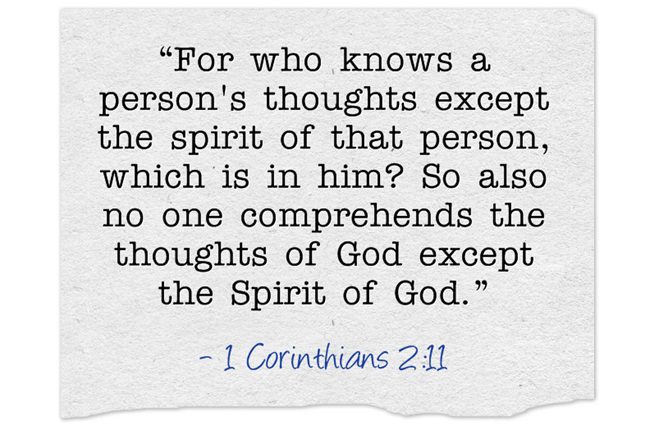
Here the human equation is that a person can know their own thoughts only by “the spirit of that person.” A final Scripture helps us to clarify the human spirit in 1 Corinthians 2:12-16:
“Now we have received not the spirit of the world, but the Spirit who is from God, that we might understand the things freely given us by God. And we impart this in words not taught by human wisdom but taught by the Spirit, interpreting spiritual truths to those who are spiritual. The natural person does not accept the things of the Spirit of God, for they are folly to him, and he is not able to understand them because they are spiritually discerned. The spiritual person judges all things, but is himself to be judged by no one. “For who has understood the mind of the Lord so as to instruct him?” But we have the mind of Christ.”
Notice that there is the spirit of the world. The natural person’s spirit cannot comprehend the things of God because they are only know by the Holy Spirit as they are spiritually discerned. Indeed, the human spirit that does not have the Holy Spirit cannot understand God or His Word.
Conclusion
Mankind is actually composed of what I have heard called a trinity of body, soul, and spirit. The three are not the same. The body has the blood pumping, skin sweating, and is purely physical and will die someday. The soul is the set of emotions, intellect, and will and will live again, in one place or another (heaven or hell). The spirit is the natural, carnal mind in an unconverted person. When the human spirit is enlightened by the Holy Spirit, they can know at least parts of the mind or will of God. The soul lives on beyond the grave and will retain all prior knowledge of their life in the body but the Holy Spirit can reveal how to live beyond the grave. Everyone will die someday. It’s only a matter of time. If you have not repented then you cannot understand your need for the Savior. If you never have trusted Christ, then take Jesus’ somber warning to heart, “Do not fear those who kill the body but are unable to kill the soul; but rather fear Him who is able to destroy both soul and body in hell” (Matt 10:28).
Another Reading on Patheos to Check Out: What Did Jesus Really Look Like: A Look at the Bible Facts
 Article by Jack Wellman
Jack Wellman is Pastor of the Mulvane Brethren church in Mulvane Kansas. Jack is also the Senior Writer at What Christians Want To Know whose mission is to equip, encourage, and energize Christians and to address questions about the believer’s daily walk with God and the Bible. You can follow Jack on Google Plus or check out his book Blind Chance or Intelligent Design available on Amazon
Previous Post

April 26, 2014
Bible Study Topics And Discussion Ideas for Teens
Next Post
April 26, 2014 Top 15 Christian Baby Girl Names From The Bible
Browse Our Archives
Select a Category Bible Answers Bible Definitions Bible Story Bible Study Bible Verses Christian Books Christian Entertainment Christian Fathers Christian Mothers Christian Quotes Devotional Famous Christians Music News Parables Prayers Quotes Sunday School Lesson Uncategorized Youth Sermons
Select a Month October 2019 September 2019 August 2019 July 2019 June 2019 May 2019 April 2019 March 2019 February 2019 January 2019 December 2018 November 2018 October 2018 September 2018 August 2018 July 2018 June 2018 May 2018 April 2018 March 2018 February 2018 January 2018 December 2017 November 2017 October 2017 September 2017 August 2017 July 2017 June 2017 May 2017 April 2017 March 2017 February 2017 January 2017 December 2016 November 2016 October 2016 September 2016 August 2016 July 2016 June 2016 May 2016 March 2016 February 2016 January 2016 December 2015 November 2015 October 2015 September 2015 August 2015 July 2015 June 2015 May 2015 April 2015 March 2015 February 2015 January 2015 December 2014 November 2014 October 2014 September 2014 August 2014 July 2014 June 2014 May 2014 April 2014 March 2014 February 2014 January 2014 December 2013 November 2013 October 2013 September 2013 August 2013 July 2013 June 2013 May 2013 April 2013 March 2013
Follow Us!
TAKE THE
Religious Wisdom Quiz
What does Paul say godliness with what is great gain?
Select your answer to see how you score.
Prayer Faith Contentment Love
Related posts from Christian Crier

What Does The Bible Say About Our Thoughts?

Do Colors Have Special Meaning In The Bible?

The Glass – Half Empty Or Half Full?

TRENDING AT PATHEOS Evangelical

How the author of the world's best hymn...
I've been working with John Newton for a while now. This makes...

Long before this Lectio Divina, Psalm 130 - the song - started...

What About the Trees? Another Living Parable
After I finished writing the last article about falling leaves as a...

Why Classical Education Is a Conversation, Not a...
Come and Read: Joy in Classical Education When I was a little...

Falling Leaves: A Living Parable on Letting Go
I’ve spent the vast majority of my life in the southeast corner...

Cornell University has received a great deal of negative publicity and intense...
view all Evangelical blogs
Ad-Free & Subscriber Log-In Subscription Support
- About Us
- 2026 Calendar
- Videos
- Podcasts
- Library of World Religions
- Faith In Media Tracker
- Advertise With Us
- Write for Us
- Privacy Policy
- Terms of Service
- Do Not Sell My Data
- Contact Us
- Radiant Digital
- Manage Newsletter Subscriptions
- Unsubscribe From Notifications
- Sitemap
Copyright 2008-2026, Patheos. All rights reserved.
Subscription Support Ad-Free & Subscriber Log-In
Follow Patheos