
BuddhistCatholicContemplativeEvangelicalGeneral ChristianHinduJewishLatter-day SaintMuslimNew VisionsProgressive Christian
Beliefs
- Buddhist
- Catholic
- Contemplative
- Evangelical
- General Christian
- Hindu
- Jewish
- Latter-day Saint
- More Voices
- Muslim
- New Visions
- Pagan
- Progressive Christian
Topics
- Religion News
- Food and Religion
- Sports and Religion
- Religious Art
- Religious Music and Entertainment
- Religious Events
- History and Religion
- Style and Religion
- Politics and Religion
- Women in Religion
- Recreation Outdoors and Religion
- Business Finance and Religion
- Careers Workplace and Religion
- Education and Religion
- Family Parenting and Religion
- Health Fitness and Religion
- Home and Religion
- Relationships and Religion
- Technology and Religion
- Travel and Religion
Columnists
- Buddhist Columnists
- Business Finance and Religion Columnists
- Careers Workplace and Religion Columnists
- Catholic Columnists
- Contemplative Columnists
- Education and Religion Columnists
- Evangelists Columnists
- Family Parenting and Religion Columnists
- General Christian Columnists
- Health Fitness and Religion Columnists
- Hindu Columnists
- History and Religion Columnists
- Home and Religion Columnists
- Jewish Columnists
- More Voices Columnists
- Latter Day Columnists
- Muslim Columnists
- New Visions Columnists
- Nonreligious Columnists
- Pagan Columnists
- Politics and Religion Columnists
- Progressive Columnists
- Recreation Outdoors and Religion Columnists
- Relationships and Religion Columnists
- Religion News Columnists
- Religious Art Columnists
- Religious Events Columnists
- Religious Music and Entertainment Columnists
- Sports and Religion Columnists
- Style and Religion Columnists
- Technology and Religion Columnists
- Travel and Religion Columnists
- Women in Religion Columnists
Resource Library
- 2026 Calendar
- Library of World Religions
- The 100 Most Holy Places on Earth
- Patheos Answers
- Podcasts
- Videos
- Faith Leaders Database
- Anglican Episcopalian
- Bahai
- Baptist
- Buddhism
- Christianity
- Confucianism
- Eastern Orthodoxy
- Hinduism
- Holiness and Pentecostal
- ISKCON
- Islam
- Judaism
- Lutheran
- Methodist
- The Church of Jesus Christ of Latter-day Saints
- New Age
- Paganism
- Presbytarian and Reformed
- Protestantism
- Religion Behind the Scenes
- Roman Catholic
- Scientology
- Shia Islam
- Sikhism
- Sufism
- Sunni Islam
- Taoism
- Zen
- See all religions
Research Tools
 Ad-Free & Subscriber Log-In Subscription Support
Ad-Free & Subscriber Log-In Subscription Support
Follow Patheos 

- Trending:
- Forgiveness
- |
- Marriage
- |
- Consciousness
- |
- Death Penalty
- |
- Election
- |
- Halloween
 Christian Crier
- Home
- Evangelical
- Joshua and the Walls of Jericho Bible Story: Lesson, Summary and Study
Joshua and the Walls of Jericho Bible Story: Lesson, Summary and Study
Last updated on: April 20, 2014 at 10:32 am by Jack Wellman
Joshua and the Walls of Jericho Bible Story: Lesson, Summary and Study 2014-04-20T10:32:52-05:00 Jack Wellman
Patheos Explore the world's faith through different perspectives on religion and spirituality! Patheos has the views of the prevalent religions and spiritualities of the world.
There are many great Bible lessons to learn from studying the story of Joshua and the walls of Jericho.
Joshua Bible Character Summary
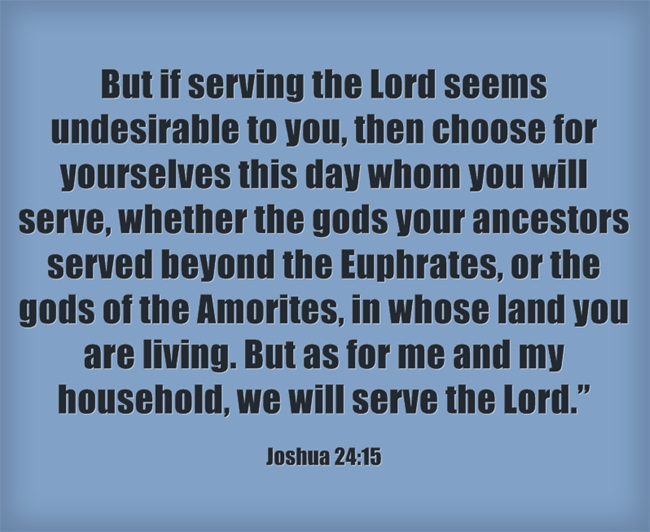
Joshua was one of the two faithful witnesses who spied the land of promise in the Old Testament but the other 10 witnesses were afraid to cross over the River Jordan and so the Israelites remained in the wilderness another 40 years because they feared man which really meant they didn’t trust God. After Moses’ death, Joshua became the leader of Israel and took them across to the land that God had promised Abraham, Isaac, and Jacob hundreds of years earlier. Joshua was a leader chosen by God Himself and publicly announced by Moses to be Israel’s leader. One thing about Joshua is that he never promoted himself as a leader; he simply followed God’s commands and served under Moses faithfully for more than 40 years proving himself faithful, trustworthy, and obedient to all that God commanded him. Joshua is an arch-type of Jesus Christ as he led the people into the Promised Land and served the Lord with diligence and without complaint all the days of his life. His words today still reverberate with powerful meaning as the father of his home by saying in his final days, “as for me and my house, we will serve the Lord” (Joshua 24:15).
The City-State of Jericho
Jericho was a city-state that lay in the eastern provinces of the Promised Land but it had to go because it was fully given over to paganism and was a center for worship for innumerable false gods and God did not want any trace of idolatrous people’s living where the Israel was to worship only God. Jericho is thought to mean “Moon City” and it naturally related to a pagan god. Moreover, Jericho stood between and all that God has promised Israel so here is a breakdown of the events leading up to the fall of Jericho in Joshua chapter six.
6:1-2 “Now Jericho was tightly shut because of the sons of Israel; no one went out and no one came in. The Lord said to Joshua, “See, I have given Jericho into your hand, with its king and the valiant warriors.”
Notice that Israel had cutoff and encircled the city prior to their marching around it. They had isolated it from any possible escape and even before the city was to fall, God had already declared that He had “given Jericho into” the hands of Israel, including its king and the valiant warriors. By God saying “See, I have given Jericho into your hand” He was declaring victory before the walls ever came down, even before the marching started, indicating that victory is fully a work of God and not of man. God was teaching Israel to see things as God does…as if they already are before it comes to be…to see with the eyes of faith. It mattered little to God that it was a heavily fortified city-state with fierce, experienced warriors that God called “valiant,” meaning they were fearless, courageous warriors.
6:3-5 “You shall march around the city, all the men of war circling the city once. You shall do so for six days. Also seven priests shall carry seven trumpets of rams’ horns before the ark; then on the seventh day you shall march around the city seven times, and the priests shall blow the trumpets. It shall be that when they make a long blast with the ram’s horn, and when you hear the sound of the trumpet, all the people shall shout with a great shout; and the wall of the city will fall down flat, and the people will go up every man straight ahead.”
The number six is the number of mankind for he was created on this same day but the number seven has significance in the Bible as it’s symbolic of a totality of perfection or completeness like the seven-day week and on the seventh day the city would fall down flat and then the people were to take the city straight away. Imagine walking around a major, fortified city for six days. The sound of the trumpet along with the loud shout may be an expression of God’s time to perform His mighty deed and the walls being flattened allowed the Israelites to march into the city from every side which may be another reason they had encircled the city-state.
6:9-11 “The armed men went before the priests who blew the trumpets, and the rear guard came after the ark, while they continued to blow the trumpets. But Joshua commanded the people, saying, “You shall not shout nor let your voice be heard nor let a word proceed out of your mouth, until the day I tell you, ‘Shout!’ Then you shall shout!” So he had the ark of the Lord taken around the city, circling it once; then they came into the camp and spent the night in the camp.
The priests blew the trumpets but the people held their shouts until given the word indicating that they had to wait for God and the ark of the Lord is representative of His very presence with His people and so Christians today have to often wait for God to do what He desires to do in their lives but even before He does, He is still present with them.
6:12-14 ”Now Joshua rose early in the morning, and the priests took up the ark of the Lord. The seven priests carrying the seven trumpets of rams’ horns before the ark of the Lord went on continually, and blew the trumpets; and the armed men went before them and the rear guard came after the ark of the Lord, while they continued to blow the trumpets. Thus the second day they marched around the city once and returned to the camp; they did so for six days.”
In time, the people in Jericho had to begin to wonder about their future for the word had spread about the miracles of God and they had come to be feared by those nations who had engaged with the Israelites. Joshua didn’t delay as he and the priests took the ark (symbolic of God’s presence) with them and did so early in the morning, which indicates that this was their priority. They did this for six days and possibly even the Israelites themselves must have begun to wonder how and when this would end, something the residents of Jericho must have also been thinking about.
6:15-17 “Then on the seventh day they rose early at the dawning of the day and marched around the city in the same manner seven times; only on that day they marched around the city seven times. At the seventh time, when the priests blew the trumpets, Joshua said to the people, “Shout! For the Lord has given you the city. The city shall be under the ban, it and all that is in it belongs to the Lord; only Rahab the harlot and all who are with her in the house shall live, because she hid the messengers whom we sent.”
God spared Rahab who had helped Israel by hiding the spies which shows that God extends grace to those outside of the nation of Israel just as today. God is no respecter of persons and anyone can be saved because salvation is a matter of grace and not by race. For certain, this was a victory given by God who “has given the city” to them as He had promised in the beginning, showing that before things are, God sees them as already having been accomplished for He has the effectual power to bring about all that He wills and purposes. The outcome was as good as done before it even happened and “So the people shouted, and priests blew the trumpets; and when the people heard the sound of the trumpet, the people shouted with a great shout and the wall fell down flat, so that the people went up into the city, every man straight ahead, and they took the city” (Joshua 6:20).
Jericho and Archeological Finds
The walls of Jericho were nothing like we might see in castles today. The walls were six feet thick and up to 26 feet high and sat atop a 46 foot embankment making the city almost impregnable. A German excavation of the site found that all of the walls had collapsed, with the exception of one small section that was still standing on what would have been about 8 feet above the ground. Could this have been the only place left standing(Sellin and Watzinger 1973: 58) where Rahab was spared who had hide the Israelite spies)? During the excavations, they discovered that the citizens had dwellings within the walls themselves. They also discovered that the walls had collapsed and had fallen straight down (Joshua 6:5) and that hundreds of thousands of mud bricks from the city’s wall must have come crashing straight down to the ground level, falling to the base of the retaining walls (Italian-Palestinian excavation, 1997, location 8.), just as God had foretold (Joshua 6:20). Not only that, but the entire city had burned (Joshua 6:24) with walls and floors blacked and reddened by fire (Kenyon 1981: 370).
Conclusion
The account of the walls of Jericho falling down is one of human improbability and God’s ability. It is not just a story in the Bible but an actual, historical account that mathces closely to what archeologists have excavated. Joshua may have been the leader of the nation but its true leader was God. In fact, the Hebrew name Joshua means “Jehovah is salvation” or “God saves” so it is appropriate that Jesus’ name is the short form of the Hebrew name Jehoshua and so Jesus means “God saves” or “The Lord is Salvation” or in short, “the Savior” so it is basically has the same meaning as Joshua. In fact, in Hebrew, Joshua’s and Jesus’ name is pronounced “Yaw-SHOO-uh.”
If you have not come to a personal relationship with Jesus then you have no relationship with God at all. It is only through Jesus Christ that one can gain access to the Father in heaven (John 6:44) and if anyone comes to Christ in faith after repentance, then Jesus says to them “I will raise him up on the last day.” That last day will be either joining Christ in the Kingdom of Heaven forever or forever being separated from Him with no second chance (Rev 20:11-15). If you choose to believe, then you already have eternal life (John 3:16-17) but if not, you’ll stand condemned for all time (John 3:18). Joshua’s words from the ancient of days still echo as relevant today as the day they were spoken where he said “choose for yourselves today whom you will serve” (Joshua 24:15) but if you reject God’s Son, Jesus Christ then “He will not forgive your transgression or your sins” (Joshua 24:19).
Another Reading on Patheos to Check Out: What Did Jesus Really Look Like: A Look at the Bible Facts
 Article by Jack Wellman
Jack Wellman is Pastor of the Mulvane Brethren church in Mulvane Kansas. Jack is also the Senior Writer at What Christians Want To Know whose mission is to equip, encourage, and energize Christians and to address questions about the believer’s daily walk with God and the Bible. You can follow Jack on Google Plus or check out his book Blind Chance or Intelligent Design available on Amazon
Kenyon, K.M. 1957 Digging Up Jericho. London: Ernest Benn. 1981 Excavations at Jericho, Vol. 3. London: British School of Archaeology in Jerusalem.
Sellin, E., and Watzinger, C. 1973 Jericho die Ergebnisse der Ausgrabungen. Osnabrück: Otto Zeller, reprint of 1913 edition.
Previous Post

April 15, 2014
David and Goliath Bible Story: Lesson, Summary and Study
Next Post
April 20, 2014 Cain and Abel Bible Story: Lesson, Summary and Study
Browse Our Archives
Select a Category Bible Answers Bible Definitions Bible Story Bible Study Bible Verses Christian Books Christian Entertainment Christian Fathers Christian Mothers Christian Quotes Devotional Famous Christians Music News Parables Prayers Quotes Sunday School Lesson Uncategorized Youth Sermons
Select a Month October 2019 September 2019 August 2019 July 2019 June 2019 May 2019 April 2019 March 2019 February 2019 January 2019 December 2018 November 2018 October 2018 September 2018 August 2018 July 2018 June 2018 May 2018 April 2018 March 2018 February 2018 January 2018 December 2017 November 2017 October 2017 September 2017 August 2017 July 2017 June 2017 May 2017 April 2017 March 2017 February 2017 January 2017 December 2016 November 2016 October 2016 September 2016 August 2016 July 2016 June 2016 May 2016 March 2016 February 2016 January 2016 December 2015 November 2015 October 2015 September 2015 August 2015 July 2015 June 2015 May 2015 April 2015 March 2015 February 2015 January 2015 December 2014 November 2014 October 2014 September 2014 August 2014 July 2014 June 2014 May 2014 April 2014 March 2014 February 2014 January 2014 December 2013 November 2013 October 2013 September 2013 August 2013 July 2013 June 2013 May 2013 April 2013 March 2013
Follow Us!
TAKE THE
Religious Wisdom Quiz
What did Daniel’s vision of the ram and the goat represent?
Select your answer to see how you score.
The Medo-Persian and Greek Empires The fall of Jerusalem The battle of good and evil The end of the world
Related posts from Christian Crier
Blind Bartimaeus And The Salvation Of The Sinner
Joshua's Transition Into Leadership

The Exodus And Christian Conversion
TRENDING AT PATHEOS Evangelical

The REST of Your Life: A Creative Wrestles...
This week I had a conversation with a good friend from church....

How the author of the world's best hymn...
I've been working with John Newton for a while now. This makes...

Long before this Lectio Divina, Psalm 130 - the song - started...

What About the Trees? Another Living Parable
After I finished writing the last article about falling leaves as a...

Why Classical Education Is a Conversation, Not a...
Come and Read: Joy in Classical Education When I was a little...

Cornell University has received a great deal of negative publicity and intense...
view all Evangelical blogs
Ad-Free & Subscriber Log-In Subscription Support
- About Us
- 2026 Calendar
- Videos
- Podcasts
- Library of World Religions
- Faith In Media Tracker
- Advertise With Us
- Write for Us
- Privacy Policy
- Terms of Service
- Do Not Sell My Data
- Contact Us
- Radiant Digital
- Manage Newsletter Subscriptions
- Unsubscribe From Notifications
- Sitemap
Copyright 2008-2026, Patheos. All rights reserved.
Subscription Support Ad-Free & Subscriber Log-In
Follow Patheos