
BuddhistCatholicContemplativeEvangelicalGeneral ChristianHinduJewishLatter-day SaintMuslimNew VisionsProgressive Christian
Beliefs
- Buddhist
- Catholic
- Contemplative
- Evangelical
- General Christian
- Hindu
- Jewish
- Latter-day Saint
- More Voices
- Muslim
- New Visions
- Pagan
- Progressive Christian
Topics
- Religion News
- Food and Religion
- Sports and Religion
- Religious Art
- Religious Music and Entertainment
- Religious Events
- History and Religion
- Style and Religion
- Politics and Religion
- Women in Religion
- Recreation Outdoors and Religion
- Business Finance and Religion
- Careers Workplace and Religion
- Education and Religion
- Family Parenting and Religion
- Health Fitness and Religion
- Home and Religion
- Relationships and Religion
- Technology and Religion
- Travel and Religion
Columnists
- Buddhist Columnists
- Business Finance and Religion Columnists
- Careers Workplace and Religion Columnists
- Catholic Columnists
- Contemplative Columnists
- Education and Religion Columnists
- Evangelists Columnists
- Family Parenting and Religion Columnists
- General Christian Columnists
- Health Fitness and Religion Columnists
- Hindu Columnists
- History and Religion Columnists
- Home and Religion Columnists
- Jewish Columnists
- More Voices Columnists
- Latter Day Columnists
- Muslim Columnists
- New Visions Columnists
- Nonreligious Columnists
- Pagan Columnists
- Politics and Religion Columnists
- Progressive Columnists
- Recreation Outdoors and Religion Columnists
- Relationships and Religion Columnists
- Religion News Columnists
- Religious Art Columnists
- Religious Events Columnists
- Religious Music and Entertainment Columnists
- Sports and Religion Columnists
- Style and Religion Columnists
- Technology and Religion Columnists
- Travel and Religion Columnists
- Women in Religion Columnists
Resource Library
- 2026 Calendar
- Library of World Religions
- The 100 Most Holy Places on Earth
- Patheos Answers
- Podcasts
- Videos
- Faith Leaders Database
- Anglican Episcopalian
- Bahai
- Baptist
- Buddhism
- Christianity
- Confucianism
- Eastern Orthodoxy
- Hinduism
- Holiness and Pentecostal
- ISKCON
- Islam
- Judaism
- Lutheran
- Methodist
- The Church of Jesus Christ of Latter-day Saints
- New Age
- Paganism
- Presbytarian and Reformed
- Protestantism
- Religion Behind the Scenes
- Roman Catholic
- Scientology
- Shia Islam
- Sikhism
- Sufism
- Sunni Islam
- Taoism
- Zen
- See all religions
Research Tools
 Ad-Free & Subscriber Log-In Subscription Support
Ad-Free & Subscriber Log-In Subscription Support
Follow Patheos 

- Trending:
- Forgiveness
- |
- Marriage
- |
- Consciousness
- |
- Death Penalty
- |
- Election
- |
- Halloween
 Christian Crier
- Home
- Evangelical
- What is the Purpose Behind the Gospel of John? A Bible Study
What is the Purpose Behind the Gospel of John? A Bible Study
Last updated on: June 22, 2015 at 10:09 am by Jack Wellman
What is the Purpose Behind the Gospel of John? A Bible Study 2015-06-22T10:09:20-05:00 Jack Wellman
Patheos Explore the world's faith through different perspectives on religion and spirituality! Patheos has the views of the prevalent religions and spiritualities of the world.
Why did John write the gospel bearing his own name? What audience was he writing to? What was the purpose for the gospel of John?
Who was John?
John was most certainly a Jew and he identifies himself in this gospel as “the disciple whom Jesus loved” (13:23). John and his elder brother James (Acts 12:2) were known as the sons of Zebedee” (Matt 10:2-4) but were also referred to as the “Sons of Thunder” (Mark 3:17) and so there is little doubt that this was the disciple John that is mentioned by name in the other 3 gospels (Luke 6:12-16). In the other gospels, John is usually in the close circle of disciples of Peter and James and is also often reclining on Jesus bosom or near to Him, in particular during the Passover just prior to Jesus’ trial and crucifixion (John 13:23). Most Bible scholars and church historians are comfortable with John as the author of this book. Some of the earliest church fathers seem certain that John was the author which was why it was accepted so easily into the cannon of the New Testament. Irenaeus, who testified on Polycarp’s authority, wrote in the early part of the second century that John was the author. Polycarp was John’s own disciple. Theophilus quoted and taught from the Gospel of John unambiguously (A.D. 181) as did Justin Martyr, Papias, and Claudius Apollinaris, and Tatian who was Justin Martyr’s student.1
Who was John Written to?
John was written to the church, both then and now, but I also believe it was written for unbelievers as well because the Gospel of John focuses more on the divinity of Jesus Christ than any of the other gospels. It is much different than the synoptic gospels of Matthew, Mark, and Luke. These gospels are closely related in material and their narratives even though their intended audiences are different. The Gospel of John focuses on signs and miracles and places unique significance on these and their connection with faith. John links faith with miracles more than all the other gospels combined.
The Purpose of John
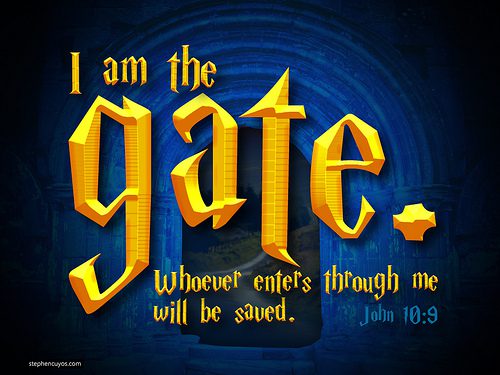
If this gospel had a specific purpose statement it would be “that you may believe that Jesus is the Christ, the Son of God, and that by believing you may have life in his name” (20:31). The word “believe” appears over 100 times and ties in belief with having eternal life. The most famous or at least the most familiar verse in all the Bible may be John 3:16 where belief is open to anyone who chooses to believe and all those who believe can inherit eternal life. This gospel contains some of the most powerful verses in the Bible where belief is necessarily joined with a person receiving eternal life and that this life is irrevocable and cannot be lost (John 6:37, 39; 10:10:28-29).
This gospel begins before Genesis’ 1:1 “In the beginning.” John 1:1 starts out before the creation when there was only God and with God was the Word and the Word was God (1:1-2) and this Word, Jesus Christ, became flesh (Gen 1:14) but did not originate as mankind did…that is by flesh and blood (1:13). Some cults teach that man can become God but the Bible teaches that God became Man in the Person of Jesus Christ. The gospel is both apologetic and evangelistic. John writes with a sense of purpose and intentionality in an effort to convince the reader that Jesus Christ is divine, that He is the incarnate God-Man, being both God and Man.
The Gospel of John has a large amount of material not found in the other gospels and is the only one that has the entire High Priestly Prayer along with Jesus’ extensive farewell message (chapters 14-17). This gospel portrays the Passion in its most intense portrayal. It is noteworthy that John’s gospel also happens to be one of the most theological in content in its description of Jesus and in His relationship with the Father. John almost seems intent on writing to convince the reader that Jesus Christ is divine, that He is the incarnate God-Man, and that He is both God and Man. As such, He is the only One who can take away the sins of humanity.
Conclusion
The gospel of John is my favorite because it elevates the divinity of Jesus Christ and that He is God that humbled Himself and condescended to our level. He was both human and divine…both Man and God. This God-Man was both 100% Man while still being fully 100% God. With the understanding of this being a poor example, it would be like this: I was born in Kansas and so I am 100% Kansan. However, since Kansas is in America, I am also 100% American so even I can be both 100% Kansan and 100% American at the same time without this adding up to 200%. In this same way, Jesus is fully God and fully Man. The main difference is that this Man died for you. His life, being God, was infinitely worth more than any human life could be worth and since He is God and Man, His life was sufficient to take away every human sin that has ever occurred or will occur. This is conditioned on a person repenting, seeing the sinfulness of their sin, seeing the need for a Savior, and then putting their trust in that Savior.
Are you willing to repent and trust in His death for you? If not, you will die in your sins and live with eternal regret without ever having a second chance. While you are reading this, there is still time. Bend the knee, bend your heart, repent and confess your sinfulness, just as I did, and then do what I did…trust in the only Name that can save you…Jesus Christ( Acts 4:12; 16:30-31). There is no other way (John 14:6). Jesus tells anyone who would listen that “Whoever believes in me, though he die, yet shall he live” (John 11:25). Choose today in whom you can believe. The stakes are as high as they can possibly be. I’m betting everything on the Son of God. What about you?
Another Reading on Patheos to Check Out: What Did Jesus Really Look Like: A Look at the Bible Facts
 Article by Jack Wellman
Jack Wellman is Pastor of the Mulvane Brethren church in Mulvane Kansas. Jack is also the Senior Writer at What Christians Want to Know whose mission is to equip, encourage, and energize Christians and to address questions about the believer’s daily walk with God and the Bible. You can follow Jack on Google Plus or check out his book Blind Chance or Intelligent Design available on Amazon.
photo credit: Fr. Stephen, MSC via photopin cc
1 D.A. Carson and Douglas J. Moo. An Introduction to the New Testament. (Grand Rapids, MI: Zondervan Publishing House, 2009), 229.
Previous Post

March 20, 2014
5 Bible Lessons to Learn From the Book of Genesis
Next Post
March 27, 2014 The Importance Of Showing Love To Others In The Life Of A Christian
Browse Our Archives
Select a Category Bible Answers Bible Definitions Bible Story Bible Study Bible Verses Christian Books Christian Entertainment Christian Fathers Christian Mothers Christian Quotes Devotional Famous Christians Music News Parables Prayers Quotes Sunday School Lesson Uncategorized Youth Sermons
Select a Month October 2019 September 2019 August 2019 July 2019 June 2019 May 2019 April 2019 March 2019 February 2019 January 2019 December 2018 November 2018 October 2018 September 2018 August 2018 July 2018 June 2018 May 2018 April 2018 March 2018 February 2018 January 2018 December 2017 November 2017 October 2017 September 2017 August 2017 July 2017 June 2017 May 2017 April 2017 March 2017 February 2017 January 2017 December 2016 November 2016 October 2016 September 2016 August 2016 July 2016 June 2016 May 2016 March 2016 February 2016 January 2016 December 2015 November 2015 October 2015 September 2015 August 2015 July 2015 June 2015 May 2015 April 2015 March 2015 February 2015 January 2015 December 2014 November 2014 October 2014 September 2014 August 2014 July 2014 June 2014 May 2014 April 2014 March 2014 February 2014 January 2014 December 2013 November 2013 October 2013 September 2013 August 2013 July 2013 June 2013 May 2013 April 2013 March 2013
Follow Us!
TAKE THE
Religious Wisdom Quiz
What was the primary method of food preservation in Biblical times?
Select your answer to see how you score.
Pickling Smoking Drying Salting
Related posts from Christian Crier

What Does The Bible Say About Our Thoughts?

Do Colors Have Special Meaning In The Bible?

The Glass – Half Empty Or Half Full?

TRENDING AT PATHEOS Evangelical

The REST of Your Life: A Creative Wrestles...
This week I had a conversation with a good friend from church....

How the author of the world's best hymn...
I've been working with John Newton for a while now. This makes...

Long before this Lectio Divina, Psalm 130 - the song - started...

What About the Trees? Another Living Parable
After I finished writing the last article about falling leaves as a...

Why Classical Education Is a Conversation, Not a...
Come and Read: Joy in Classical Education When I was a little...

Cornell University has received a great deal of negative publicity and intense...
view all Evangelical blogs
Ad-Free & Subscriber Log-In Subscription Support
- About Us
- 2026 Calendar
- Videos
- Podcasts
- Library of World Religions
- Faith In Media Tracker
- Advertise With Us
- Write for Us
- Privacy Policy
- Terms of Service
- Do Not Sell My Data
- Contact Us
- Radiant Digital
- Manage Newsletter Subscriptions
- Unsubscribe From Notifications
- Sitemap
Copyright 2008-2026, Patheos. All rights reserved.
Subscription Support Ad-Free & Subscriber Log-In
Follow Patheos