
BuddhistCatholicContemplativeEvangelicalGeneral ChristianHinduJewishLatter-day SaintMuslimNew VisionsProgressive Christian
Beliefs
- Buddhist
- Catholic
- Contemplative
- Evangelical
- General Christian
- Hindu
- Jewish
- Latter-day Saint
- More Voices
- Muslim
- New Visions
- Pagan
- Progressive Christian
Topics
- Religion News
- Food and Religion
- Sports and Religion
- Religious Art
- Religious Music and Entertainment
- Religious Events
- History and Religion
- Style and Religion
- Politics and Religion
- Women in Religion
- Recreation Outdoors and Religion
- Business Finance and Religion
- Careers Workplace and Religion
- Education and Religion
- Family Parenting and Religion
- Health Fitness and Religion
- Home and Religion
- Relationships and Religion
- Technology and Religion
- Travel and Religion
Columnists
- Buddhist Columnists
- Business Finance and Religion Columnists
- Careers Workplace and Religion Columnists
- Catholic Columnists
- Contemplative Columnists
- Education and Religion Columnists
- Evangelists Columnists
- Family Parenting and Religion Columnists
- General Christian Columnists
- Health Fitness and Religion Columnists
- Hindu Columnists
- History and Religion Columnists
- Home and Religion Columnists
- Jewish Columnists
- More Voices Columnists
- Latter Day Columnists
- Muslim Columnists
- New Visions Columnists
- Nonreligious Columnists
- Pagan Columnists
- Politics and Religion Columnists
- Progressive Columnists
- Recreation Outdoors and Religion Columnists
- Relationships and Religion Columnists
- Religion News Columnists
- Religious Art Columnists
- Religious Events Columnists
- Religious Music and Entertainment Columnists
- Sports and Religion Columnists
- Style and Religion Columnists
- Technology and Religion Columnists
- Travel and Religion Columnists
- Women in Religion Columnists
Resource Library
- 2026 Calendar
- Library of World Religions
- The 100 Most Holy Places on Earth
- Patheos Answers
- Podcasts
- Videos
- Faith Leaders Database
- Anglican Episcopalian
- Bahai
- Baptist
- Buddhism
- Christianity
- Confucianism
- Eastern Orthodoxy
- Hinduism
- Holiness and Pentecostal
- ISKCON
- Islam
- Judaism
- Lutheran
- Methodist
- The Church of Jesus Christ of Latter-day Saints
- New Age
- Paganism
- Presbytarian and Reformed
- Protestantism
- Religion Behind the Scenes
- Roman Catholic
- Scientology
- Shia Islam
- Sikhism
- Sufism
- Sunni Islam
- Taoism
- Zen
- See all religions
Research Tools
 Ad-Free & Subscriber Log-In Subscription Support
Ad-Free & Subscriber Log-In Subscription Support
Follow Patheos 

- Trending:
- Forgiveness
- |
- Marriage
- |
- Consciousness
- |
- Death Penalty
- |
- Election
- |
- Halloween
 Christ and Pop Culture
- Home
- Evangelical
- Religious Music & Entertainment
- Authenticating Ourselves to Death
Authenticating Ourselves to Death
Last updated on: February 21, 2014 at 3:28 pm by Alan Noble
Authenticating Ourselves to Death 2014-02-21T15:28:01-07:00 Alan Noble
Patheos Explore the world's faith through different perspectives on religion and spirituality! Patheos has the views of the prevalent religions and spiritualities of the world.
Image: 50 Watts via Flickr (CCBY2.0)
“The only transcendence that remains is that of oneself over oneself, that of an authentic ego over an inauthentic one” –Luc Ferry, Man Made God.
J.D. Salinger may be the quintessential American author of the “authentic.” His most well-known character, Holden Caulfield, is obsessed with a “phony” world in which no one values innocence and sincerity, where people love bad movies and ignore true moments of beauty. This obsession has been the source of derision and popularity for The Catcher in the Rye. Critics dismiss Caulfield’s adolescent whining as egotistical, while fans of the novel sympathize with his desire for something really beautiful and true in an increasingly profane and mediated age. But whatever you think of Holden, his anxiety is instructive for those of us who live in a culture where personal image has become formalized through social networks.
Holden felt ill when he witnessed someone self-consciously putting on a public image. For example, he tells us that whenever he heard someone say that something was “Grand” he would want to puke. Like so many words of our own time, “Grand” became an empty, clichéd term of vague approval that only served to trivialize whatever it referred to. It would be like if someone asked us how married life was treating us and we replied, “Awesome”–a diminutive in the shell of a superlative. This kind of artificiality drives Holden to a breakdown, but it also creates in him a deep hunger for the innocent and sincere. In a world where everyone appears to be pretending all the time, Holden loses his orientation and can no longer feel where he belongs.
Maybe you can’t imagine wanting to vomit when someone says “Awesome!”, but Holden’s anxiety is a basic modern one: if our identity is the most basic and essential thing about us, the thing that we can know and which defines us and our worth, then our greatest fear is an identity crisis–when we no longer know who we are. But Holden discovers that almost the whole of society is suffering from an identity crisis that they refuse to acknowledge, and so everyone just goes around acting, playing the part of a secure identity, when really, there might not be any authentic Self beneath all our “grand” posturing.
Read more in this issue of CaPCMag!
Since The Catcher in the Rye‘s publication, “sincerity” or “authenticity” has only grown as contemporary virtue, precisely because we continue to believe that the most basic and essential thing about us is our identity. And, of course, the industry of identity promotion has only grown exponentially since Holden first complained about corny movies. Some of the most powerful businesses of our time are services which help us carefully shape and share our public image: Facebook, Twitter, Instagram, Tumblr, LinkedIn, etc. We are lucky if we can to listen to music without unintentionally announcing to all our friends what song we’re currently listening to (thanks, Spotify!).
I don’t think Holden would get out of bed in 2014, I really don’t. The very thing he finds so repulsive about his world has become the center of our social existence. So, it’s really not surprising that we find such a strong movement towards sincerity and intentionality. Most of us would rather embrace self-image-making technology and work harder to create an identity that makes us feel fulfilled and meaningful. But for many people, that’s just not an option. We have to believe we are being something true. But I think if Holden saw me reading Kinfolk Magazine on a bus, he’d call me a phony, still. And he’d probably be right, in a sense–a concern that Ethan McCarthy raises later in this issue.
Image- cdrummbks via Flickr (CCBY2.0)
It’s not until Salinger’s next novel, Franny and Zooey, that we get a substantive response to Caulfield’s phony world. In it, Franny has a mental breakdown as she tries to accomplish what Holden couldn’t: to find some pure, basic identity inside herself which she could truly believe in. Franny believes she kind find this ground by saying the “Jesus prayer” (“Lord Jesus Christ, have mercy on me”) without ceasing, ridding herself of egotism completely. But this spiritual quest only leads her to a dramatic emotional breakdown. Her recovery comes from the intervention of her brother, Zooey, who admonishes her not to look inward to find a pure “Franny,” but to turn outward to her neighbor in service. The “secret” Franny is looking for is that we can’t find authenticity by looking for our true self. If we try to be “real” or “sincere,” we’ll only end up focused on ourselves even more. Instead, Zooey tells her to act with her whole heart for the sake of everyone else in the world, seeing that even the crummiest, phoniest person is in a sense Jesus. As Christ tells us in Matthew 25:40, “Truly, I say to you, as you did it to one of the least of these my brothers, you did it to me.”
Salinger’s novels are hardly Christian in their “worldview,” but there is some deep, common grace truth in this conclusion, one that I believe contemporary culture and the church would do well to heed. Because the most basic and essential truth of our existence is not our identity, but Christ’s. And so any quest for our “authentic self” will end poorly. And perhaps Zooey’s right. Perhaps we need to turn our attention and energy outward, toward others, seeking to act faithfully and excellently in everything we do, as we do it unto the Lord.
This article was adapted from the editor’s letter in the most recent issue of Christ and Pop Culture Magazine, “Authenticating Ourselves to Death.”
Previous Post

February 19, 2014
Downton Abbey: People Talk
Browse Our Archives
Select a Category Asides Elsewhere Featured Film Games General Culture Headline Literature Music Of the Moment Podcast Politics RetroPost Sports Technology Television Uncategorized Viral
Select a Month February 2014 January 2014 December 2013 November 2013 October 2013 September 2013 August 2013 July 2013 June 2013 May 2013 April 2013 March 2013 February 2013 January 2013 December 2012 November 2012 October 2012 September 2012 August 2012 July 2012 June 2012 May 2012 April 2012 March 2012 February 2012 January 2012 December 2011 November 2011 October 2011 September 2011 August 2011 July 2011 June 2011 May 2011 April 2011 March 2011 February 2011 January 2011 December 2010 November 2010 October 2010 September 2010 August 2010 July 2010 June 2010 May 2010 April 2010 March 2010 February 2010 January 2010 December 2009 November 2009 October 2009 September 2009 August 2009 July 2009 June 2009 May 2009 April 2009 March 2009 February 2009 January 2009 December 2008 November 2008 October 2008 September 2008 August 2008 July 2008 June 2008 May 2008 April 2008 March 2008 February 2008 January 2008 December 2007 November 2007
TAKE THE
Religious Wisdom Quiz
Who taught, "Love your enemies and pray for those who persecute you"?
Select your answer to see how you score.
Paul John Jesus James
Related posts from Christ and Pop Culture

CAPC Podcast #4: Hot Pockets, Steven Furtick's Elevation...

Olympic Metaphors and Marriage

ABCFamily's "The Fosters" and the Power of Adoption
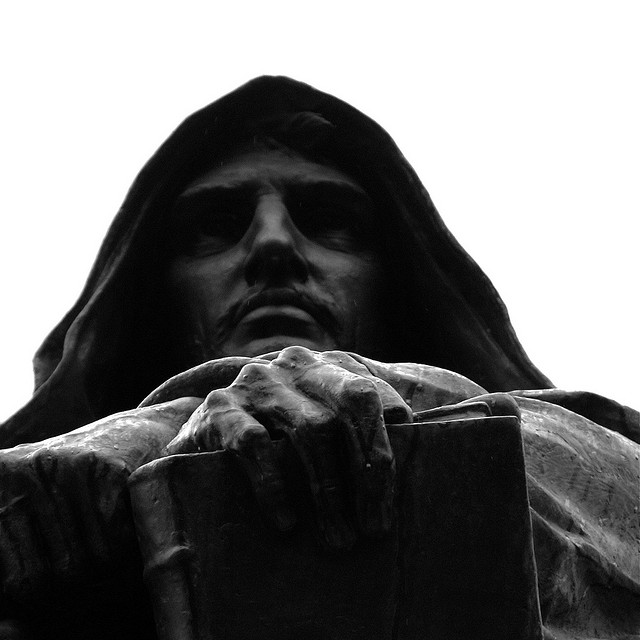
On the Anniversary of His Execution, What Can...
TRENDING AT PATHEOS Evangelical

How the author of the world's best hymn...
I've been working with John Newton for a while now. This makes...

Long before this Lectio Divina, Psalm 130 - the song - started...

What About the Trees? Another Living Parable
After I finished writing the last article about falling leaves as a...

Why Classical Education Is a Conversation, Not a...
Come and Read: Joy in Classical Education When I was a little...

Falling Leaves: A Living Parable on Letting Go
I’ve spent the vast majority of my life in the southeast corner...

Cornell University has received a great deal of negative publicity and intense...
view all Evangelical blogs
Ad-Free & Subscriber Log-In Subscription Support
- About Us
- 2026 Calendar
- Videos
- Podcasts
- Library of World Religions
- Faith In Media Tracker
- Advertise With Us
- Write for Us
- Privacy Policy
- Terms of Service
- Do Not Sell My Data
- Contact Us
- Radiant Digital
- Manage Newsletter Subscriptions
- Unsubscribe From Notifications
- Sitemap
Copyright 2008-2026, Patheos. All rights reserved.
Subscription Support Ad-Free & Subscriber Log-In
Follow Patheos