
BuddhistCatholicContemplativeEvangelicalGeneral ChristianHinduJewishLatter-day SaintMuslimNew VisionsProgressive Christian
Beliefs
- Buddhist
- Catholic
- Contemplative
- Evangelical
- General Christian
- Hindu
- Jewish
- Latter-day Saint
- More Voices
- Muslim
- New Visions
- Pagan
- Progressive Christian
Topics
- Religion News
- Food and Religion
- Sports and Religion
- Religious Art
- Religious Music and Entertainment
- Religious Events
- History and Religion
- Style and Religion
- Politics and Religion
- Women in Religion
- Recreation Outdoors and Religion
- Business Finance and Religion
- Careers Workplace and Religion
- Education and Religion
- Family Parenting and Religion
- Health Fitness and Religion
- Home and Religion
- Relationships and Religion
- Technology and Religion
- Travel and Religion
Columnists
- Buddhist Columnists
- Business Finance and Religion Columnists
- Careers Workplace and Religion Columnists
- Catholic Columnists
- Contemplative Columnists
- Education and Religion Columnists
- Evangelists Columnists
- Family Parenting and Religion Columnists
- General Christian Columnists
- Health Fitness and Religion Columnists
- Hindu Columnists
- History and Religion Columnists
- Home and Religion Columnists
- Jewish Columnists
- More Voices Columnists
- Latter Day Columnists
- Muslim Columnists
- New Visions Columnists
- Nonreligious Columnists
- Pagan Columnists
- Politics and Religion Columnists
- Progressive Columnists
- Recreation Outdoors and Religion Columnists
- Relationships and Religion Columnists
- Religion News Columnists
- Religious Art Columnists
- Religious Events Columnists
- Religious Music and Entertainment Columnists
- Sports and Religion Columnists
- Style and Religion Columnists
- Technology and Religion Columnists
- Travel and Religion Columnists
- Women in Religion Columnists
Resource Library
- 2026 Calendar
- Library of World Religions
- The 100 Most Holy Places on Earth
- Patheos Answers
- Podcasts
- Videos
- Faith Leaders Database
- Anglican Episcopalian
- Bahai
- Baptist
- Buddhism
- Christianity
- Confucianism
- Eastern Orthodoxy
- Hinduism
- Holiness and Pentecostal
- ISKCON
- Islam
- Judaism
- Lutheran
- Methodist
- The Church of Jesus Christ of Latter-day Saints
- New Age
- Paganism
- Presbytarian and Reformed
- Protestantism
- Religion Behind the Scenes
- Roman Catholic
- Scientology
- Shia Islam
- Sikhism
- Sufism
- Sunni Islam
- Taoism
- Zen
- See all religions
Research Tools
 Ad-Free & Subscriber Log-In Subscription Support
Ad-Free & Subscriber Log-In Subscription Support
Follow Patheos 

- Trending:
- Forgiveness
- |
- Marriage
- |
- Consciousness
- |
- Death Penalty
- |
- Election
- |
- Halloween
 Christ and Pop Culture
- Home
- Evangelical
- Religious Music & Entertainment
- Not Fit for Dinner: May Day and the Danger of Violence
Not Fit for Dinner: May Day and the Danger of Violence
Last updated on: May 4, 2012 at 7:00 am by C. Ryan Knight
Not Fit for Dinner: May Day and the Danger of Violence 2012-05-04T07:00:25-06:00 C. Ryan Knight
Patheos Explore the world's faith through different perspectives on religion and spirituality! Patheos has the views of the prevalent religions and spiritualities of the world.
Each Friday in Not Fit for Dinner, C. Ryan Knight explores political issues and the preconceptions guiding our understanding of and responses to them.
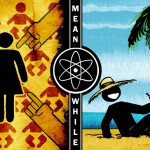
Note from Editor: Violent Protesters not Pictured. Probably.
The most recent May Day renewed debate about the place of violence in social movements like Occupy Wall Street. Emerging from their hibernation, Occupiers expressed hope that the movement’s May Day protests would be invigorating and launch an American Spring—a hope that some have said fizzled after disappointing results. (This criticism has not gone unanswered.)
The Occupy protests that gained the most attention on May Day did so through violence. The center of the first major episode of violence in the Occupy movement, Oakland saw another wave of clashes and tear gas. Seattle experienced an outbreak of vandalism. Tension ran high in New York as protesters were arrested for what was deemed “disorderly conduct.”
Historically, May Day has had a shaky relationship with violence. It is a labor rights holiday born out of the Haymarket Affair in Chicago back in 1886, where protesters and police died when tension boiled over. The holiday is not officially recognized in the United States. (Even Google avoids stirring trouble with a holiday Doodle in the US, using it abroad each year instead.)
Violence does not always emerge from May Day. In 1971, a group that became known as the May Day Tribe gathered to shut down Washington, D.C. unless America itself “shut down” the Vietnam War. Influenced by the non-violent resistance of the civil rights movement, the May Day Tribe focused instead on advancing their People’s Peace Treaty and allowing congressmen opposed to the war to make speeches.
Like the May Day Tribe, Occupiers remained essentially non-violent last fall and winter. Still, the movement has always left room for violence through its acceptance of what’s known as “diversity of tactics,” a series of strategies for effective social activism. The initial non-violent action the movement took before winter helped it gain its fame through unjust instances of police brutality.
The movement’s drift into violence this week is cause for concern. There are significant dangers if Occupy Wall Street does not return to nonviolent tactics and denounce the recent violence. Last October, author and editor Nathan Schneider warned that violence could end up undoing the movement’s legitimacy and power. The August 2011 London riots came and went largely because of the reliance upon violence. With social movements, violence attracts attention and wows people, but it frequently fails to make a lasting impression. Also, those critical of movements like Occupy Wall Street consider their case closed when violence breaks out.
The model for the effectiveness of non-violent resistance is of course the composite account of Jesus’ arrest. Peter attempts to defend his Lord and cuts off a soldier’s ear. Christ, however, intervenes not against the soldiers but against Peter: “Stop! No more of this” (Mark 22.51). Violence would have interfered with what had to occur.
Also See: Rendering Unto Caesar
It should be said that Christ’s arrest marks the all-important moment where the “plan of salvation” essentially reaches the point of no return. The Occupy Wall Street movement, with its May Day efforts, can by no means claim equal importance to what takes place at this point in Scripture (as in Matthew 26.47-56, Mark 14.43-52, and John 18.1-13). The movement can only offer the chance of change, not salvation of any sort.
Nonetheless, this monumental episode in Christ’s life makes an important point: in the hour of danger when change must be accomplished, that change risks being hindered when someone (or groups of people) attempts to advance that change through violence.
The success of Occupy DC May Day is arguably due to its peaceful proceedings. Reporter Emily Crockett described the DC May Day as community-based and lively, what with “inequality” pong being played (with water, rest assured), teach-ins about organized labor throughout history, and so forth. Through all this, there was a sense of joyous reunion for protesters present.
Educational and community-building activities such as those in DC strengthen the Occupy movement far more than vandalism and violence. Protesters’ efforts will only improve if they endure violence without fighting back. The Occupy Wall Street movement and its offshoots would be very wise to omit violence from its diversity of tactics as they try to regain momentum.
Previous Post

May 3, 2012
The Moviegoer: "The Kid with a Bike" and the Love that Never Leaves
Next Post
May 4, 2012 The Televangelists: "Grimm" Reveals that The Other is Often Ourselves
Browse Our Archives
Select a Category Asides Elsewhere Featured Film Games General Culture Headline Literature Music Of the Moment Podcast Politics RetroPost Sports Technology Television Uncategorized Viral
Select a Month February 2014 January 2014 December 2013 November 2013 October 2013 September 2013 August 2013 July 2013 June 2013 May 2013 April 2013 March 2013 February 2013 January 2013 December 2012 November 2012 October 2012 September 2012 August 2012 July 2012 June 2012 May 2012 April 2012 March 2012 February 2012 January 2012 December 2011 November 2011 October 2011 September 2011 August 2011 July 2011 June 2011 May 2011 April 2011 March 2011 February 2011 January 2011 December 2010 November 2010 October 2010 September 2010 August 2010 July 2010 June 2010 May 2010 April 2010 March 2010 February 2010 January 2010 December 2009 November 2009 October 2009 September 2009 August 2009 July 2009 June 2009 May 2009 April 2009 March 2009 February 2009 January 2009 December 2008 November 2008 October 2008 September 2008 August 2008 July 2008 June 2008 May 2008 April 2008 March 2008 February 2008 January 2008 December 2007 November 2007
TAKE THE
Religious Wisdom Quiz
Where did Elijah confront the prophets of Baal?
Select your answer to see how you score.
Mount Zion Mount Sinai Mount Horeb Mount Carmel
Related posts from Christ and Pop Culture

Mike Huckabee, Helpless Women, and Straw Men

Brain Death and Dialogue: What Two News Stories...
How I Changed My Mind About Abortion

Marijuana Legalization in Black and White: The Racial...
TRENDING AT PATHEOS Evangelical

The REST of Your Life: A Creative Wrestles...
This week I had a conversation with a good friend from church....

How the author of the world's best hymn...
I've been working with John Newton for a while now. This makes...

Long before this Lectio Divina, Psalm 130 - the song - started...

What About the Trees? Another Living Parable
After I finished writing the last article about falling leaves as a...

Why Classical Education Is a Conversation, Not a...
Come and Read: Joy in Classical Education When I was a little...

Cornell University has received a great deal of negative publicity and intense...
view all Evangelical blogs
Ad-Free & Subscriber Log-In Subscription Support
- About Us
- 2026 Calendar
- Videos
- Podcasts
- Library of World Religions
- Faith In Media Tracker
- Advertise With Us
- Write for Us
- Privacy Policy
- Terms of Service
- Do Not Sell My Data
- Contact Us
- Radiant Digital
- Manage Newsletter Subscriptions
- Unsubscribe From Notifications
- Sitemap
Copyright 2008-2026, Patheos. All rights reserved.
Subscription Support Ad-Free & Subscriber Log-In
Follow Patheos