
BuddhistCatholicContemplativeEvangelicalGeneral ChristianHinduJewishLatter-day SaintMuslimNew VisionsProgressive Christian
Beliefs
- Buddhist
- Catholic
- Contemplative
- Evangelical
- General Christian
- Hindu
- Jewish
- Latter-day Saint
- More Voices
- Muslim
- New Visions
- Pagan
- Progressive Christian
Topics
- Religion News
- Food and Religion
- Sports and Religion
- Religious Art
- Religious Music and Entertainment
- Religious Events
- History and Religion
- Style and Religion
- Politics and Religion
- Women in Religion
- Recreation Outdoors and Religion
- Business Finance and Religion
- Careers Workplace and Religion
- Education and Religion
- Family Parenting and Religion
- Health Fitness and Religion
- Home and Religion
- Relationships and Religion
- Technology and Religion
- Travel and Religion
Columnists
- Buddhist Columnists
- Business Finance and Religion Columnists
- Careers Workplace and Religion Columnists
- Catholic Columnists
- Contemplative Columnists
- Education and Religion Columnists
- Evangelists Columnists
- Family Parenting and Religion Columnists
- General Christian Columnists
- Health Fitness and Religion Columnists
- Hindu Columnists
- History and Religion Columnists
- Home and Religion Columnists
- Jewish Columnists
- More Voices Columnists
- Latter Day Columnists
- Muslim Columnists
- New Visions Columnists
- Nonreligious Columnists
- Pagan Columnists
- Politics and Religion Columnists
- Progressive Columnists
- Recreation Outdoors and Religion Columnists
- Relationships and Religion Columnists
- Religion News Columnists
- Religious Art Columnists
- Religious Events Columnists
- Religious Music and Entertainment Columnists
- Sports and Religion Columnists
- Style and Religion Columnists
- Technology and Religion Columnists
- Travel and Religion Columnists
- Women in Religion Columnists
Resource Library
- 2026 Calendar
- Library of World Religions
- The 100 Most Holy Places on Earth
- Patheos Answers
- Podcasts
- Videos
- Faith Leaders Database
- Anglican Episcopalian
- Bahai
- Baptist
- Buddhism
- Christianity
- Confucianism
- Eastern Orthodoxy
- Hinduism
- Holiness and Pentecostal
- ISKCON
- Islam
- Judaism
- Lutheran
- Methodist
- The Church of Jesus Christ of Latter-day Saints
- New Age
- Paganism
- Presbytarian and Reformed
- Protestantism
- Religion Behind the Scenes
- Roman Catholic
- Scientology
- Shia Islam
- Sikhism
- Sufism
- Sunni Islam
- Taoism
- Zen
- See all religions
Research Tools
 Ad-Free & Subscriber Log-In Subscription Support
Ad-Free & Subscriber Log-In Subscription Support
Follow Patheos 

- Trending:
- Forgiveness
- |
- Marriage
- |
- Consciousness
- |
- Death Penalty
- |
- Election
- |
- Halloween

-
Explore
- Home
- Evangelical
- The Unfortunate Necessity of Denominations
The Unfortunate Necessity of Denominations
Last updated on: April 13, 2016 at 10:30 am by Adam Kyle
The Unfortunate Necessity of Denominations 2016-04-13T10:30:29-05:00 Adam Kyle
Patheos Explore the world's faith through different perspectives on religion and spirituality! Patheos has the views of the prevalent religions and spiritualities of the world.
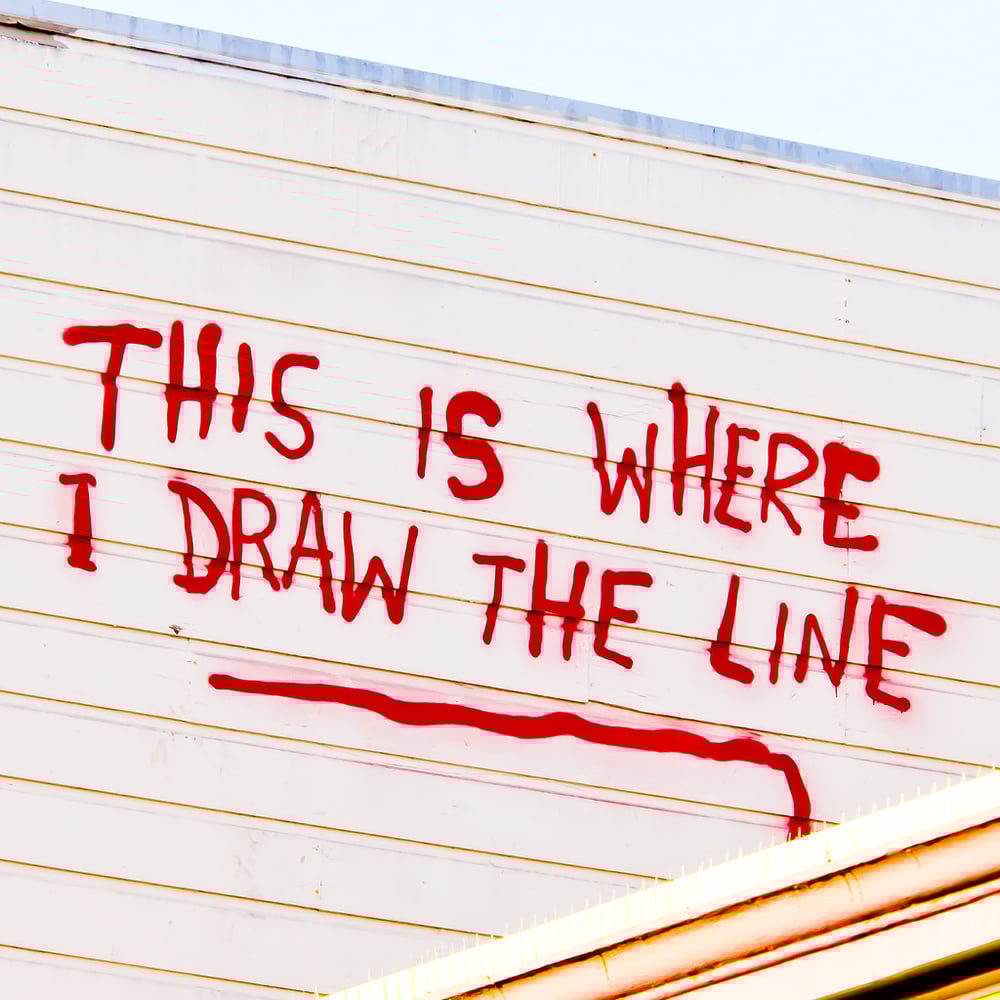 Image Source: This is Where I Draw the Line by Thomas Hawk; CC 2.0
Over the past several years, I have had a lot of interactions and experiences with Christians from all over the theological board. Working at a Christian bookstore and being a socialite who loves to meet new people, I have met a number of brothers and sisters from different denominations. When I started studying theology for myself, I was astonished to realize that practically every doctrine I grew up believing as a Baptist had some fancy, academic name attached to it, but more so that there are, in most cases, multiple biblical views conflicting and complementing the ones to which I had always kept close.
Growing up, I was aware of the existence of different denominations and I remember understanding only vaguely how they differ from my mainstream Southern Baptist Church. One of my most memorable experiences with another denomination before I was in high school was when I went to my friend’s mega church one Sunday. I remember feeling a little uncomfortable with what I saw, simply because I had never experienced anything like it before. There was a coffee shop in the lobby, a small indoor jungle gym, and even a place to eat. Now my church wasn’t a necessarily small church (our membership was around 2000), but we didn’t have these extravagant luxuries.
Those luxuries aren’t necessarily denomination specific, but aside from the material differences I had noticed, there were some practices and activities that took place during the sermon that seemed strangely foreign to me. I would say most of us who were raised in a Christian household have experienced this at one time or another, and even new Christians can be shocked by the liturgical variety they find when church hunting.
For a majority of my spiritual walk, I had never given a second thought to the need for denominations in the Christian church. It wasn’t until the past couple of years that I started hearing a significant number of comments like “Oh, I’m just a Christian,” or “I just believe the Bible.” Without giving it too much thought, such comments seem harmless. In fact, if you find something wrong with them, you are often labeled as someone who wants to cause division among the body of Christ.
Many Christians nowadays follow this Non-denominational, unity-in-all-things mindset, but like all trends, it’s important for us to take a look at what it’s doing to our faith.
At the root of this issue, there are a growing number of individuals in the church (especially new Christians) who look at the vast number denominations and immediately think they are directly responsible for unnecessary division, and therefor must be a flawed church model. Most will then conclude that a church that is not affiliated with a denomination, creed, or catechism will have more unity and thus be more God-centered. Some make the argument against denominations, and in many cases systematic theology in general, that they tend to be based off of man’s beliefs (especially those denominations who hold closely to a creed, catechism, or are named after a founder), and therefore must also be flawed. Of course, these are typically the same people who spend their weeks reading from their Study Bibles, reading books by their favorite Christian authors, and going to church on Sunday to listen to their pastor preach, hardly ever questioning a word of what they say.
There is an extent to which I would definitely agree with the above argument; the word of man is never as authoritative as the word of God. Our canon is closed, and no human being can provide us with a revelation on the same level of scripture. Having said that, there is a reason churches follow teachings of influential figures in history. Sola Scriptura is not the same as Solo Scriptura.
God ordains men to shepherd his flock, and gives strict qualifications for those who do in 1 Timothy and Titus. This goes for preachers, elders, authors, and theologians. With this idea in mind, let’s take a look at Martin Luther. This man was a brilliant theologian who attempted to reform the Catholic Church. Any modern day protestant follows his teachings to one extent or another, because we believe his teachings are more biblical than the papist practices he worked so diligently to correct. Most people who actively follow the non-denominational mindset are the same people who will choose to divorce hundreds of years of church history in favor of their own private interpretation, which is one reasons these theological differences come up.
Many of us, if asked if we were Catholic, would respond with something like “No, I’m a Christian” or “I’m a protestant.” Why do we say this? Because we have significant disagreements with Catholic teachings and we don’t want to be identified with that particular body. Our beliefs line up much more with protestant teachings rather than Catholic ones, so we identify ourselves as Protestants.
This argument can even be taken to the larger picture. As human beings with sentient thoughts, different experiences, and different backgrounds, we have a mass variety of cultures, religions, and worldviews.
As Christians, we have fundamental disagreements with most of the world around us. In the western world, there is a large push for secularism liberalism and humanism, and as people who follow Jesus Christ we do not wish to associate ourselves with the secular culture and atheistic religious philosophy. Therefor, we call ourselves Christians, and rightly so. The term “Christian” is our way of saying we follow the whole Bible and believe there is only one truth, one way, one life.
This is the same philosophy that is important for us to hold amongst our Christian brothers and sisters. The unfortunate things is, God has given us a perfect manual for living (Psa 19:7) equipping us for every good work (2 Tim 3:16-17), but as sinners, no one man can interpret what is perfect perfectly all of the time. If we could, we would not have some 40,000 different sects of the Christian church.
For us Christians, it is our duty to learn God’s word and be constantly striving for a deeper knowledge of his attributes. Think of it like falling in love with another person. You cannot truly fall in love with someone until you get to know him or her on a deep and intimate level. Falling and staying in love with God require spending time with Him and studying His word to understand how He works. That’s why we have systematic theology. It is a way for us to understand more of God while recognizing we will never fully understand how He works.
Unfortunately and naturally, this in-depth doctrinal study often times leads to differences in interpretation. That is, essentially, why we have different denominations in the church. Differences in biblical interpretation can range anywhere from church government, salvation, the covenants, and practical issues. These are things that could, and often do, cause disunity if they are all represented in one ecclesiological church setting.
Non-denominational churches often times do not have a way of confessing their particular stances on secondary issues, which more often than not will cause confusion and will do more to prevent that deeper knowledge of God that we all must strive for. In many cases, those in non-denominational or interdenominational churches who do in fact begin to start having a deeper theological understanding of scripture find issues with the way their church is run or what is preached from the pulpit. Yet, there is not always a good way to address it because the church may not be confessional (meaning openly holding to certain doctrines or confessions), and once you start bringing theological labels into the mix to express your point, you immediately void the whole concept of non-confessionalism that, at the core, non-denominational churches hold to.
There are several non-denominational churches in my hometown that are very charismatic in nature. I have heard from numerous people who go to those churches that “they just believe the Bible,” or when asked about their denomination they respond with something like “I don’t have a denomination. If it’s not in the Bible, I don’t use it to identify myself.” I find this interesting, considering they have no problem calling themselves charismatics or Pentecostals, but refuse to use a denominational label. They will confess to their views on spiritual gifts and soteriology (study of salvation), and even their views on the end times (dispensational premillennialism, i.e., anything related to John Hagee, the Blood Moons hysteria, or the Left Behind series), but refuse to do so under the umbrella of a Pentecostal denomination. To sum it up, they have no problem following movements with labels, but not organizations with labels. Even so, despite what they may or not openly confess to, they call themselves Christians, which is not necessarily a biblical term either.
The term “Christian” did not come into the picture until a little more than a decade after Christ’s death. The label was not something the apostles or any churches used, because at that point they weren’t “Christians” as we Americans would see it, they were a sect of Judaism that believed the Gospel of Jesus Christ and were inclusive to gentile believers. In fact, “Christian” was meant to be a derogatory term used by outsiders. Our English translations do not use the term “Christian,” however most Greek manuscripts use a nuance of that word no more than three times, and it is not used by believers, it is used by outsiders. For whatever reason, this nuance is not friendly to English, and so is not translated as such. So as you can see, the word “Christian” is not a biblical term, at least in the way we use it today. And yet, there is nothing wrong with using that term, because it provides a legitimate way of separating ourselves based on what we believe from the rest of the world.
Unfortunately, the term “Christian” means absolutely nothing in the eyes of more and more people in our country. Basically, if one hold to any of Jesus’ views, they call themselves a Christian. There are individuals who are pro-homosexual marriage and pro-abortion who call themselves Christians. Do we want to be identified with those types of people? No, we do not, so that is why we often times have to take things one step further and identify ourselves with a sect of Christianity. By doing this we offer people a much more specified summary of our belief system and worldviews.
I have a friend of mine who is extremely progressive, both theologically and politically, and would describe himself as a Christian. He goes to a progressive non-denominational church in my hometown. He is a great guy and I love him to death, but he has told me on multiple occasions how much he hates denominations. One day we were talking, and I asked him what would happen if he and I started a ministry together. His response was something along the lines of “it would be a disaster.” He was right. Because my theological and political beliefs vary greatly from his, we would have disagreements in virtually all areas of our ministry.
The beauty of our situation is since he’s progressive and I’m a Southern Baptist, we have the freedom to worship separately and still be brothers, plus our relationship is much more edifying with an appropriate separation than if we were forced to do an entire ministry together. We have the ability to discuss our differences in theology in a situation where neither of us feels like we have to sacrifice biblical convictions to “compromise” for the sake of our ministry.
And that’s the main point: we have to stop thinking of denominations as a mode to cause division within the church. As the old saying goes, “unity does not equal uniformity.” We have to start thinking of them in terms of the freedom we have to keep the convictions we have while sharing unity in the Gospel of Jesus Christ.
Soli Deo Gloria
Previous Post

September 22, 2015
The Good, The Bad, and The Dumb: Reasons To Leave a Church
Next Post

September 30, 2015 Stop Scrolling: 10 Hidden Gems on Netflix
Browse Our Archives
Select a Category #ShoutYourAbortion 10 Commandments 2016 Election 2017 2020 Election Abortion Accelerate Books Adultery America Andy Stanley Arminianism Ashley Madison Atonement B&H Academic Baptism Barry Horner Beauty Biblical Elders Billy Graham Blog Book Review Bruce Jenner Caitlyn Jenner Calvin Calvinism Cheating Chick-fil-A Children Christ Christian History Christian Living Christian Podcasts Christianity Christmas Church History Church Leadership Civil Disobedience Constitutional Coronavirus Culture Death Demoninations Discipleship Doctrine Doctrine of God Donald Trump Ecclesiology Entertainment Eschatology Ethics Evangelical Evangelism Evil Evolution Fear Forgive Yourself Forgiveness Francis Chan Future Israel Gay Marriage Gender Genesis George Floyd Gospel Government Gun Control Halloween hamartiology Heavenly Reward Hermeneutics History Hollywood Holy Spirit Homeschool Homosexual Homosexuality Hope Hospitality Humor Husband Infant Baptism Interview Jesus John Piper Josh Duggar Joshua Harris Judgment Justice Kathy Griffin Kim Davis Leadership Logic Love Manhood Marriage Martin Luther Messianic Prophecy Miscarriage Mocking Modesty Money Movie Reviews Music Music Review Netflix New Testament Obergefell Old Testament Parenting Pastor Pastoring Persecution Planned Parenthood Podcast Politics Pop Culture Pornography Prayer Preaching Predestination Pride Prosperity Gospel Rachel Held Evans Racism Ravi Zacharias Redemption Reformation 500 Reformation Day Reformed Theology Relationship Repentance Salvation Same Sex Marriage Satan Satire Scripture Seminary Sex Sin slavery Sola Scriptura Soteriology Sovereignty Spiritual Gifts Spurgeon Star Wars Steven Furtick Suffering Sufficiency of Scripture Sunday School Supreme Court Technology Testimony The Church The Lord of the Rings The Problem of Evil The Shack Theology Theonomy Tithing Transgenderism Tullian Tchividjian Uncategorized Universalism Vanity Fair Video Games Virgin Birth Voting Wife Women Worldview Worship
Select a Month June 2025 April 2025 March 2025 March 2024 February 2024 January 2024 December 2023 June 2023 April 2023 March 2023 January 2023 December 2022 November 2022 October 2022 September 2022 August 2022 July 2022 June 2022 May 2022 April 2022 March 2022 February 2022 January 2022 December 2021 November 2021 October 2021 August 2021 July 2021 June 2021 May 2021 April 2021 March 2021 February 2021 January 2021 December 2020 November 2020 October 2020 September 2020 August 2020 July 2020 June 2020 May 2020 April 2020 March 2020 February 2020 January 2020 December 2019 November 2019 October 2019 September 2019 August 2019 July 2019 June 2019 May 2019 April 2019 March 2019 February 2019 January 2019 December 2018 November 2018 October 2018 September 2018 August 2018 July 2018 June 2018 May 2018 April 2018 March 2018 February 2018 January 2018 December 2017 November 2017 October 2017 September 2017 August 2017 July 2017 June 2017 May 2017 April 2017 March 2017 February 2017 January 2017 December 2016 November 2016 October 2016 September 2016 August 2016 July 2016 June 2016 May 2016 April 2016 March 2016 February 2016 January 2016 December 2015 November 2015 October 2015 September 2015 August 2015 July 2015 June 2015 May 2015 April 2015 March 2015 February 2015 January 2015 December 2014 November 2014 October 2014 September 2014 August 2014 July 2014
Follow Us!
TAKE THE
Religious Wisdom Quiz
In Jude, what did Michael the archangel dispute with the devil about?
Select your answer to see how you score.
The body of Moses Authority over Israel Entrance to heaven The soul of Enoch
Related posts from The Chorus In The Chaos

Why the ‘He Gets Us’ Super Bowl Commercial...
Sorry Tim Keller, People Reject Christ Because They...

I’m Not All That Impressed with Exvangelical Deconstruction...

TRENDING AT PATHEOS Evangelical

The REST of Your Life: A Creative Wrestles...
This week I had a conversation with a good friend from church....

How the author of the world's best hymn...
I've been working with John Newton for a while now. This makes...

Long before this Lectio Divina, Psalm 130 - the song - started...

What About the Trees? Another Living Parable
After I finished writing the last article about falling leaves as a...

Why Classical Education Is a Conversation, Not a...
Come and Read: Joy in Classical Education When I was a little...

Cornell University has received a great deal of negative publicity and intense...
view all Evangelical blogs
Ad-Free & Subscriber Log-In Subscription Support
- About Us
- 2026 Calendar
- Videos
- Podcasts
- Library of World Religions
- Faith In Media Tracker
- Advertise With Us
- Write for Us
- Privacy Policy
- Terms of Service
- Do Not Sell My Data
- Contact Us
- Radiant Digital
- Manage Newsletter Subscriptions
- Unsubscribe From Notifications
- Sitemap
Copyright 2008-2026, Patheos. All rights reserved.
Subscription Support Ad-Free & Subscriber Log-In
Follow Patheos