
BuddhistCatholicContemplativeEvangelicalGeneral ChristianHinduJewishLatter-day SaintMuslimNew VisionsProgressive Christian
Beliefs
- Buddhist
- Catholic
- Contemplative
- Evangelical
- General Christian
- Hindu
- Jewish
- Latter-day Saint
- More Voices
- Muslim
- New Visions
- Pagan
- Progressive Christian
Topics
- Religion News
- Food and Religion
- Sports and Religion
- Religious Art
- Religious Music and Entertainment
- Religious Events
- History and Religion
- Style and Religion
- Politics and Religion
- Women in Religion
- Recreation Outdoors and Religion
- Business Finance and Religion
- Careers Workplace and Religion
- Education and Religion
- Family Parenting and Religion
- Health Fitness and Religion
- Home and Religion
- Relationships and Religion
- Technology and Religion
- Travel and Religion
Columnists
- Buddhist Columnists
- Business Finance and Religion Columnists
- Careers Workplace and Religion Columnists
- Catholic Columnists
- Contemplative Columnists
- Education and Religion Columnists
- Evangelists Columnists
- Family Parenting and Religion Columnists
- General Christian Columnists
- Health Fitness and Religion Columnists
- Hindu Columnists
- History and Religion Columnists
- Home and Religion Columnists
- Jewish Columnists
- More Voices Columnists
- Latter Day Columnists
- Muslim Columnists
- New Visions Columnists
- Nonreligious Columnists
- Pagan Columnists
- Politics and Religion Columnists
- Progressive Columnists
- Recreation Outdoors and Religion Columnists
- Relationships and Religion Columnists
- Religion News Columnists
- Religious Art Columnists
- Religious Events Columnists
- Religious Music and Entertainment Columnists
- Sports and Religion Columnists
- Style and Religion Columnists
- Technology and Religion Columnists
- Travel and Religion Columnists
- Women in Religion Columnists
Resource Library
- 2026 Calendar
- Library of World Religions
- The 100 Most Holy Places on Earth
- Patheos Answers
- Podcasts
- Videos
- Faith Leaders Database
- Anglican Episcopalian
- Bahai
- Baptist
- Buddhism
- Christianity
- Confucianism
- Eastern Orthodoxy
- Hinduism
- Holiness and Pentecostal
- ISKCON
- Islam
- Judaism
- Lutheran
- Methodist
- The Church of Jesus Christ of Latter-day Saints
- New Age
- Paganism
- Presbytarian and Reformed
- Protestantism
- Religion Behind the Scenes
- Roman Catholic
- Scientology
- Shia Islam
- Sikhism
- Sufism
- Sunni Islam
- Taoism
- Zen
- See all religions
Research Tools
 Ad-Free & Subscriber Log-In Subscription Support
Ad-Free & Subscriber Log-In Subscription Support
Follow Patheos 

- Trending:
- Forgiveness
- |
- Marriage
- |
- Consciousness
- |
- Death Penalty
- |
- Election
- |
- Halloween

-
Explore
- Home
- Evangelical
- The Lord’s Supper: Remembering and Proclaiming Christ Until He Comes
The Lord’s Supper: Remembering and Proclaiming Christ Until He Comes
Last updated on: April 11, 2016 at 10:55 pm by Grayson Gilbert
The Lord’s Supper: Remembering and Proclaiming Christ Until He Comes 2016-04-11T22:55:15-05:00 Grayson Gilbert
Patheos Explore the world's faith through different perspectives on religion and spirituality! Patheos has the views of the prevalent religions and spiritualities of the world.
In the first chapter, Köstenberger argues convincingly for the Last Supper being a Passover meal. He navigates through some of the seemingly contradictory accounts between the Synoptics and the Gospel of John. He notes specifically that the Synoptics clearly call the Last Supper a Passover meal, yet some scholars contend it was not because they were mistaken with the chronology or took theological liberties (9-10). In this section, Köstenberger displays these arguments and offers counter-arguments against them. Beyond this, he gives a few examples from later NT writings (Acts 2:42; 1 Cor. 5:7, 15:20) used to espouse a position against inerrancy, yet also adequately offers a rebuttal. In the final section of this article, Köstenberger offers 12 subtle, yet substantial inner-textual evidences from the Synoptics to further demonstrate his thesis that the Last Supper is indeed a Passover meal. This section is a brief, yet excellent, content-packed treatment against those who would hold that the Last Supper was not a Passover meal.
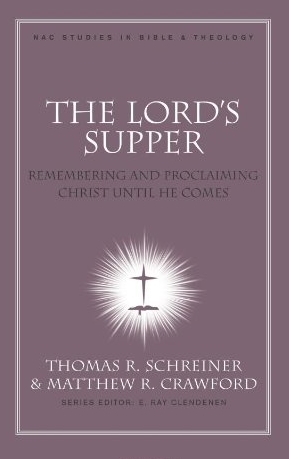 Pennington was enjoyable to read, even though I didn’t necessarily agree with all of his conclusions verbatim on the matter of the fourfold witness of the Lord’s Supper. At a few points, I found myself asking him to get to the point, as he was keen to draw metaphorical language in illustration. This is more of a personal liking than one of necessity, as I am more of a “get to the point before you lose my interest” type of guy. In the latter half of his article, Pennington raises 5 common identifiers tying in the narrative of the Last Supper to the Passion, thus, demonstrating the multiple levels of theological significance to the meal itself. The first: the breaking of the bread and pouring of the wine are a parabolic enactment of Jesus’ sacrificial death. The second: the fulfillment of the Passover and the new Exodus. Third: the inauguration of the New Covenant. Fourth: community and identity formation are brought to culmination in the Supper, and lastly, as the Supper is to be seen as an appetizer to the eschatological banquet.
James Hamilton heads up the chapter entitled “The Lord’s Supper in Paul.” In this chapter, Hamilton deals mainly with Paul’s treatment of the supper in 1 Cor., navigating through the various issues riff within the Corinthian church. Thus, as Paul’s theology is revealed, Hamilton argues, we are not seeing a systematic outline of the Supper – but a reactionary treatment based on the sins of factionalism, sexual sin, suits, mistreatment of lower classes, and so forth. There are a few points with which I feel Hamilton strays from the text, such as the higher class being present with the lower class in 1 Cor. 11 when the abuses were present, as opposed to a more traditional reading of the echelons eating without the “have nots,” leaving no food and later, that those who partook of the Supper and drank judgment upon themselves were not Christians beforehand, rather than the traditional view of those who are Christians, yet drank unworthily. However, beyond some of these disagreements, Hamilton does well addressing the themes Paul sets forth for the Supper.
The next two chapters, “A Glorious Inebriation”: Eucharistic Thought and Piety in the Patristic Era, and Carolingian Conflict: Two Monks on the Mass, give an historical framework for the Lord’s Supper. In the first of these two chapters, Haykin deals with Justin Martyr, Irenaeus, Cyprian, Ambrose, and Basil, in their respective stances. While each section on these historical figures is brief, it seems as if he was able to condense the material adequately in order to fit the need. This chapter could easily have been longer, giving more subtleties and depth to each man, but alas, only so much ink can be spilt in an article. Although I will say I was remiss to not see Augustine included in this section, arguably for his influence within the church as a late Patristic “contestant.” The second historical chapter is penned by David S. Hogg and deals with the medieval Eucharistic debate between Radbertus and Ratramnus. For a brief recap, Radbertus held to the physical presence of Christ in the elements while Ratramnus held to the spiritual presence. It would be well worth reader’s time to pay particular attention to this chapter, as historical debates naturally lead to differing outcomes and practices.
The next several chapters are devoted to Eucharistic thought among Roman Catholics (historically developed and present-day), the Reformers (Luther, Zwingli, Calvin), and the Baptist approach to the Supper. It would be easy for me to say that I liked Allison’s chapter the most in this book. He is an incredibly bright man and divides the issue fairly cleanly with respect to the Roman Catholic teaching on the Eucharist. If you’d like further reading from Allison on the RC church, pick up his other book from Crossway on Roman Catholic Theology (I’ve been through little of this book – but it is superb from what I have read). Through the chapters speaking on the Reformers, the reader is allowed a lens to the past in order to better comprehend the present (hence the divide liturgically between Lutherans and the Reformed camp). Beyond this, these chapters help to dispel a few notable myths that have made their way through church history (in particular, see the part about Zwingli). The last chapter in this section, dealing particularly with the historical beliefs through Baptists, deals extensively with the debate of an open/closed communion (though I don’t feel this is solely relegated to the Baptist history as a point of contention).
The last three chapters of the book deal more extensively with practical issues regarding the Lord’s Supper (with the last chapter of the book being the stronger of the three chapters). If one has paid particular attention to the weaknesses of the American church over the span of time, it really is not all of a surprising read in this section. The first of the three chapters, The Lord’s Supper: Celebrating the Past and Future in the Present, brings the reader to take a periscope view of the focus of the Supper, that is, looking intently to the past, present, and future aspects of the Eucharist. The second chapter deals more extensively with the nature of how the Supper affects our disposition to the remainder of the world in witness. More clearly, because we gather out of celebration and love for one another in unity of the gospel in light of what Christ has done, we then are able to display the nature of a people set apart. Even more clearly, the Supper is the place where we learn Christianity 101, and we keep coming back to it each time we partake. Finally, the last chapter of the book deals with the actual practical issues of how to observe the Supper. This portion will undoubtedly catch the most flack from people – yet I found it immensely helpful in simply thinking more in depth about the “ordinary” aspects of the Supper (i.e. how often should we partake; full loaf or pieces of bread/cracker; wine or juice). These are things a church develops a practice on, and most partaking of the elements don’t think beyond the actual act of taking the bread and the cup in contrition.
Overall, I enjoyed this book quite a bit. It has the weaknesses of any other book that contains brief articles on any given subject; some will be better than others, yet all are limited on time, space, and depth to a certain degree. If you are a Baptist, I would recommend reading this book (as it is specifically stated to be a Baptist book about Baptist thought on the Lord’s Supper). If you are not a Baptist, I would still recommend this book, as it gives an inside look to some of the particularities and distinctions of the Baptist faith – yet it also gives some very helpful chapters on the Lord’s Supper in general. Again, Allison’s section alone is worth the price of this book – and you will surely not be disappointed with the other portions.
Banner Image Credit: Day 158: Diffusion of Knowledge by Quinn Dombrowski; CC 2.0
Disclosure: I received this book free from Baker Academic through the media reviewer program. The opinions I have expressed are my own, and I was not required to write a positive review. I am disclosing this in accordance with the Federal Trade Commission’s 16 CFR, Part 255.
Previous Post

October 14, 2015
A Letter To The New Calvinist
Next Post

October 15, 2015 9 Christian Doctrines To Live (AND DIE) For
Browse Our Archives
Select a Category #ShoutYourAbortion 10 Commandments 2016 Election 2017 2020 Election Abortion Accelerate Books Adultery America Andy Stanley Arminianism Ashley Madison Atonement B&H Academic Baptism Barry Horner Beauty Biblical Elders Billy Graham Blog Book Review Bruce Jenner Caitlyn Jenner Calvin Calvinism Cheating Chick-fil-A Children Christ Christian History Christian Living Christian Podcasts Christianity Christmas Church History Church Leadership Civil Disobedience Constitutional Coronavirus Culture Death Demoninations Discipleship Doctrine Doctrine of God Donald Trump Ecclesiology Entertainment Eschatology Ethics Evangelical Evangelism Evil Evolution Fear Forgive Yourself Forgiveness Francis Chan Future Israel Gay Marriage Gender Genesis George Floyd Gospel Government Gun Control Halloween hamartiology Heavenly Reward Hermeneutics History Hollywood Holy Spirit Homeschool Homosexual Homosexuality Hope Hospitality Humor Husband Infant Baptism Interview Jesus John Piper Josh Duggar Joshua Harris Judgment Justice Kathy Griffin Kim Davis Leadership Logic Love Manhood Marriage Martin Luther Messianic Prophecy Miscarriage Mocking Modesty Money Movie Reviews Music Music Review Netflix New Testament Obergefell Old Testament Parenting Pastor Pastoring Persecution Planned Parenthood Podcast Politics Pop Culture Pornography Prayer Preaching Predestination Pride Prosperity Gospel Rachel Held Evans Racism Ravi Zacharias Redemption Reformation 500 Reformation Day Reformed Theology Relationship Repentance Salvation Same Sex Marriage Satan Satire Scripture Seminary Sex Sin slavery Sola Scriptura Soteriology Sovereignty Spiritual Gifts Spurgeon Star Wars Steven Furtick Suffering Sufficiency of Scripture Sunday School Supreme Court Technology Testimony The Church The Lord of the Rings The Problem of Evil The Shack Theology Theonomy Tithing Transgenderism Tullian Tchividjian Uncategorized Universalism Vanity Fair Video Games Virgin Birth Voting Wife Women Worldview Worship
Select a Month June 2025 April 2025 March 2025 March 2024 February 2024 January 2024 December 2023 June 2023 April 2023 March 2023 January 2023 December 2022 November 2022 October 2022 September 2022 August 2022 July 2022 June 2022 May 2022 April 2022 March 2022 February 2022 January 2022 December 2021 November 2021 October 2021 August 2021 July 2021 June 2021 May 2021 April 2021 March 2021 February 2021 January 2021 December 2020 November 2020 October 2020 September 2020 August 2020 July 2020 June 2020 May 2020 April 2020 March 2020 February 2020 January 2020 December 2019 November 2019 October 2019 September 2019 August 2019 July 2019 June 2019 May 2019 April 2019 March 2019 February 2019 January 2019 December 2018 November 2018 October 2018 September 2018 August 2018 July 2018 June 2018 May 2018 April 2018 March 2018 February 2018 January 2018 December 2017 November 2017 October 2017 September 2017 August 2017 July 2017 June 2017 May 2017 April 2017 March 2017 February 2017 January 2017 December 2016 November 2016 October 2016 September 2016 August 2016 July 2016 June 2016 May 2016 April 2016 March 2016 February 2016 January 2016 December 2015 November 2015 October 2015 September 2015 August 2015 July 2015 June 2015 May 2015 April 2015 March 2015 February 2015 January 2015 December 2014 November 2014 October 2014 September 2014 August 2014 July 2014
Follow Us!
TAKE THE
Religious Wisdom Quiz
What did Jesus ride into Jerusalem on?
Select your answer to see how you score.
A horse A chariot A donkey A camel
Related posts from The Chorus In The Chaos

‘Two Cities,Two Loves’, a Look at Christians and...
Inerrancy and the Gospels: How to Handle Narrative...
God's Glory Revealed in Christ

'I Don't Need Theology, I Just Need Jesus'...
TRENDING AT PATHEOS Evangelical

How the author of the world's best hymn...
I've been working with John Newton for a while now. This makes...

Long before this Lectio Divina, Psalm 130 - the song - started...

What About the Trees? Another Living Parable
After I finished writing the last article about falling leaves as a...

Why Classical Education Is a Conversation, Not a...
Come and Read: Joy in Classical Education When I was a little...

Falling Leaves: A Living Parable on Letting Go
I’ve spent the vast majority of my life in the southeast corner...

Cornell University has received a great deal of negative publicity and intense...
view all Evangelical blogs
Ad-Free & Subscriber Log-In Subscription Support
- About Us
- 2026 Calendar
- Videos
- Podcasts
- Library of World Religions
- Faith In Media Tracker
- Advertise With Us
- Write for Us
- Privacy Policy
- Terms of Service
- Do Not Sell My Data
- Contact Us
- Radiant Digital
- Manage Newsletter Subscriptions
- Unsubscribe From Notifications
- Sitemap
Copyright 2008-2026, Patheos. All rights reserved.
Subscription Support Ad-Free & Subscriber Log-In
Follow Patheos