
BuddhistCatholicContemplativeEvangelicalGeneral ChristianHinduJewishLatter-day SaintMuslimNew VisionsProgressive Christian
Beliefs
- Buddhist
- Catholic
- Contemplative
- Evangelical
- General Christian
- Hindu
- Jewish
- Latter-day Saint
- More Voices
- Muslim
- New Visions
- Pagan
- Progressive Christian
Topics
- Religion News
- Food and Religion
- Sports and Religion
- Religious Art
- Religious Music and Entertainment
- Religious Events
- History and Religion
- Style and Religion
- Politics and Religion
- Women in Religion
- Recreation Outdoors and Religion
- Business Finance and Religion
- Careers Workplace and Religion
- Education and Religion
- Family Parenting and Religion
- Health Fitness and Religion
- Home and Religion
- Relationships and Religion
- Technology and Religion
- Travel and Religion
Columnists
- Buddhist Columnists
- Business Finance and Religion Columnists
- Careers Workplace and Religion Columnists
- Catholic Columnists
- Contemplative Columnists
- Education and Religion Columnists
- Evangelists Columnists
- Family Parenting and Religion Columnists
- General Christian Columnists
- Health Fitness and Religion Columnists
- Hindu Columnists
- History and Religion Columnists
- Home and Religion Columnists
- Jewish Columnists
- More Voices Columnists
- Latter Day Columnists
- Muslim Columnists
- New Visions Columnists
- Nonreligious Columnists
- Pagan Columnists
- Politics and Religion Columnists
- Progressive Columnists
- Recreation Outdoors and Religion Columnists
- Relationships and Religion Columnists
- Religion News Columnists
- Religious Art Columnists
- Religious Events Columnists
- Religious Music and Entertainment Columnists
- Sports and Religion Columnists
- Style and Religion Columnists
- Technology and Religion Columnists
- Travel and Religion Columnists
- Women in Religion Columnists
Resource Library
- 2026 Calendar
- Library of World Religions
- The 100 Most Holy Places on Earth
- Patheos Answers
- Podcasts
- Videos
- Faith Leaders Database
- Anglican Episcopalian
- Bahai
- Baptist
- Buddhism
- Christianity
- Confucianism
- Eastern Orthodoxy
- Hinduism
- Holiness and Pentecostal
- ISKCON
- Islam
- Judaism
- Lutheran
- Methodist
- The Church of Jesus Christ of Latter-day Saints
- New Age
- Paganism
- Presbytarian and Reformed
- Protestantism
- Religion Behind the Scenes
- Roman Catholic
- Scientology
- Shia Islam
- Sikhism
- Sufism
- Sunni Islam
- Taoism
- Zen
- See all religions
Research Tools
 Ad-Free & Subscriber Log-In Subscription Support
Follow Patheos 

- Trending:
- Advent
- |
- Forgiveness
- |
- Thanksgiving
- |
- Election
- |
- Seasonal Holidays
- |
- Marriage

-
Explore
- Home
- Evangelical
- Stop Defending the Indefensible: A Plea Concerning Ravi Zacharias
Stop Defending the Indefensible: A Plea Concerning Ravi Zacharias
Last updated on: February 12, 2021 at 2:06 pm by Grayson Gilbert
Stop Defending the Indefensible: A Plea Concerning Ravi Zacharias 2021-02-12T14:06:15-05:00 Grayson Gilbert
Patheos Explore the world's faith through different perspectives on religion and spirituality! Patheos has the views of the prevalent religions and spiritualities of the world.
I wrote a post not too long ago that caused a firestorm of controversy on social media, calling on Christians to look at the life of Ravi Zacharias as a profound warning. In it, my basic plea to people was that they consider their own ways before the Lord—that they see if there were patterns of besetting sin that would not only disqualify pastors from the pastorate, but even if the everyday layman was plagued with sins, which the apostle Paul would say that such a practice of these things would bar them from inheriting the Kingdom of God. The reason I say this caused a firestorm was that many believed I weighed in prematurely on the matter. Yet there were a great number of comments which led me to believe that many were outraged over me “touching the Lord’s anointed.” The reason I say this is that even though an investigative report has come out and Ravi Zacharias International Ministries has penned an open letter, the comments remain much the same today as they were then.
I stand by every word of that post, as I did then, believing that it is of the utmost importance that professing Christians not only take such things seriously in their own lives, but hold pastors and prominent figures within parachurch organizations to account with regard to Scripture’s own statements on these matters. In the Evangelical world, this is often an unpopular sentiment, much to the open shame of the church. We truly do need to contend with what it means for a minister to remain above reproach, lest we give reason for the unbelieving world to blaspheme. I say all of this, not as a “I told you so,” but as a means to offer up yet another plea to my fellow evangelicals, largely because I still don’t believe many take the warnings of Scripture all that seriously.
I say this in light of many continued comments surrounding what has been revealed in the gross sexual misconduct spanning multiple women over the course of multiple years, the misrepresentation of his academic credentials, and even the financial impropriety of Ravi Zacharias. Many have taken to defending Ravi Zacharias, saying things like, “It’s funny that these allegations only come when he can’t defend himself.” Others still say that we will never truly know, in spite of the evidence brought forth. Others have claimed this is the work of Satan himself, in seeking to discredit the ministry of the late apologist.
The reality is that it matters very little if he can defend himself. There’s nothing to defend. Long before his death, allegations of sexual misconduct rose against the late apologist and they were summarily dismissed, downplayed, and in some cases, simply hidden from the public’s eyes through non-disclosure agreements and hush bribes. The time for transparency came much earlier for Ravi Zacharias. The time for defending himself, or, more appropriately, confessing for the litany of allegations brought against him for ministerial misconduct, came years prior to his death. What matters is that we do have credible evidence to support the allegations brought forth—and even then some. I will agree though with the commenters who say it is Satanic, but not on account of the allegations being baseless, misconstrued, etc., simply to discredit his ministry. It is Satanic behavior. There is no way to mince words with this, and we ought not so cavalierly speak in defense of a man that should be given no defense in his actions.
What is perhaps all the more grotesque to me in people’s defense of Ravi Zacharias is that even the unbelieving world inherently knows these things are worthy of condemnation. This is something worthy of unilateral agreement—that especially ministers who purport to serve the Most High in such a public fashion—ought to have a life that mirrors their profession of faith all the more than the average individual. If the world knows this truth, how much more ought the church? The reason for this is simple, in that it is born out of the fact that ministers of the gospel are held to a higher account. Theirs is a stricter judgment (James 3:1). There’s no amount of hemming and hawing that will explain this truth away, yet time and again, the Evangelical world defends her heroes in spite of the gross immorality they have been caught red-handed in.
The broader church has repeatedly defended not only those who teach poor doctrine, but those whose lives reflect an inordinate love of money, are engaged in nefarious sexual misconduct, have proven that their character is not upright and moral, but filled with malice, fits of anger, and nearly every other manifestation of indulgence in the flesh. In other words: the broader evangelical world defends those who are not fit for ministry knowingly, excusing away the fact that they can’t meet the basic requirements of the pastorate. Time and again, they defend such men rather than stand with the Scripture’s assessment, which finds them utterly lacking. This should be a rather obvious statement that needs no utterance, but things should not be this way.
Here is particularly where I sense the most important lesson to the church comes, one which I fear many are guilty of missing and will continue to miss, simply because they won’t accept reality. The warning is that we are to take heed of such things, lest we too fall into gross misconduct and apostasy (1 Cor. 10:12). Our Lord Himself said that all things hidden will be revealed and made known to all (Lk. 8:17). Yet, rather than accept that the Lord Himself has brought these things to light in all such cases of ministerial misconduct, many within the church simply downplay it, explain it away, or reject it altogether.
In other words: they take no heed of it, and stand in the same precarious position themselves. They stand with one foot over the cliffside looking back in defense of the indefensible. They are quick to give leeway where none ought to be given—all for the sake of protecting the brand. Things should not be this way. The church’s concern ought to be all the more focused on rooting out from her midst those whose criminal behavior not only profoundly damages those within her midst, but the reputation of Christ Himself. Instead of this though, many rush to defend the indefensible yet again, or quickly affirm the profession of faith of one whose words of purported truthfulness have proven to mean very little at this time.
Whether or not Ravi Zacharias repented in his final days remains a thing to be seen. This is a thing between he and the Lord. The gospel truly is scandalous, in that even the worst offender can find forgiveness from the Lord if they are truly repentant. In the same breath, the profound warning passages of Scripture don’t give an inch, especially where we would like to take a mile. The path is narrow and few will enter (Matt. 7:13-14). Those who make a practice of sin will not inherit the Kingdom of God (Gal. 5:21). Those whose belly is their god—who live in unbridled passion of the flesh—are set for destruction (Phil. 3:19). Those who ravage the sheep of His fold shall in no way find themselves at His mercy (Jd. 1:8-16). Those who destroy God’s temple, that is, the church of the living God, will in turn be destroyed (1 Cor. 3:16-17). Yet one thing is crystal clear: even if he repented in his last days, Ravi Zacharias will have been saved only through flames (1 Cor. 3:10-14).
Regardless of that outcome, I believe people don’t learn this lesson because many don’t understand the true nature of repentance. Without a proper understanding of genuine repentance, the church will not only continue to defend the indefensible with men like Ravi Zacharias, but even within themselves. In other words, they will not come to genuine repentance, and run the risk of embodying those terrifying words of Christ in Matthew 7:21-23, “Not everyone who says to Me, ‘Lord, Lord,’ will enter the kingdom of heaven, but the one who does the will of My Father who is in heaven will enter. Many will say to Me on that day, ‘Lord, Lord, did we not prophesy in Your name, and in Your name cast out demons, and in Your name perform many miracles?’ And then I will declare to them, ‘I never knew you; leave Me, you who practice lawlessness.’”
Many often latch on to the idea of repentance being a change of mind due to the etymological definition of the Greek word μετάνοια (metanoia). While this is correct—there is an important distinction that many fail to make, in that Scripture treats the mind and the heart as one. When the Scriptures speak to the mind of the individual, it is referring to the “seat” of one’s emotions, intellect, intentions, convictions, etc. To make that more clear: it refers to the whole person, meaning repentance is not simply an intellectual exercise, but a profoundly spiritual one that encompasses the whole of one’s being. It is not a matter of just thinking differently, but a heart that reflects an earnest belief and love of this newfound truth, most notably, in a love that produces actions consistent with that truth.
The person who is truly repentant is one who will walk in repentance. They will not simply feel guilt attached to the prospect of being caught, or their sin being revealed, but they will feel a sense of godly shame and sorrow attached to their sin. They will have, as Scripture puts it, a broken spirit and a contrite heart (Ps. 51:17). They will realize they have offended a holy God in their sin and seek to turn from it in order to live a life that is pleasing to Christ, making much of His glorious gospel by seeking to walk in a worthy manner of the salvation they have been granted. Their sorrow will not be one of avoiding the earthly consequences of being caught—nor escaping the proper disciplinary action of the church as outlined in Matt. 18:15-20. Such sorrow is only the sorrow of the world, which produces death (2 Cor. 7:10).
To put it as plainly as possible, the truly repentant one will seek to fight sin rather than gratify the flesh and its desires. There will transparency rather than concealment. There will be temporal loss graciously and gratefully incurred so that they do not forfeit their heavenly reward. Yet most notably, there will be a change—a change in not only the intellect, but in the life of the believer. For some, repentance in certain areas may be as quick as the turning of a speedboat; they change course with little effort, right the ship, and take off in the opposite direction as swiftly as possible. For other, more difficult issues of repentance, it may be like the turning of an aircraft carrier. It will be slow, methodical, and clunky, but there will be a turning back in the right direction.
I say this with no pleasure, but given the vast majority of cases of pastoral and ministerial failure in the evangelical world amongst its most prominent leaders, this is more often than not, the opposite of what people have in mind. At best, people look for an expression of sorrow, yet they rarely look for a changed life as a result of such sorrow. That process takes time, great personal expense, and more. That process seeks the restitution of wrongs committed, not a concealment thereof. Yet most importantly, that process does not seek to avoid the consequences of sin—but runs to embrace them, knowing that though discipline from the Lord is unpleasant, it is a demonstration of His love, and produces a harvest of righteousness and peace for those who have been trained by it (Heb. 12:7-11).
Genuine repentance does not seek to defend one’s honor in the midst of wrong-doing. Those who understand repentance properly will not defend the indefensible. Instead, they will call people to repentance, walking them through the proper stages of church discipline, even if it means casting the unrepentant one out as an unbeliever, Christian celebrity or no. In the event that the person is no longer alive to repent or be cast out of the church, such as in the case of the late Ravi Zacharias, they will not make excuses for such behavior. They will not defend the indefensible. The reason for this is simple: they recognize that Christ’s death actually demands we do not minimize sin. The Scriptures say that if we confess our sins, He is faithful and just to forgive us our sins, and to cleanse us of all unrighteousness. That word “if” is vitally important and we do no favors to any in this world by downplaying the significance of it, especially amongst the evangelical church’s celebrity darlings.
If the church continues to downplay the seriousness of these things in favor of protecting the brand, I fear many will not only continue to excuse worse behavior than even this in their heroes, but in themselves. More clearly: if one is willing to excuse such heinous behavior in those they admire, what is to stop them from excusing it in themselves? The risks to this are life and death, especially when we consider the words of Scripture: “One who justifies the wicked and one who condemns the righteous, both of them alike are an abomination to the LORD” (Pro. 17:15).
Previous Post

February 1, 2021
The Danger of Emphasizing the "Exciting" Testimony
Next Post

February 19, 2021 Being Slow to Speak in an Age of Perpetual Outrage
Browse Our Archives
Select a Category #ShoutYourAbortion 10 Commandments 2016 Election 2017 2020 Election Abortion Accelerate Books Adultery America Andy Stanley Arminianism Ashley Madison Atonement B&H Academic Baptism Barry Horner Beauty Biblical Elders Billy Graham Blog Book Review Bruce Jenner Caitlyn Jenner Calvin Calvinism Cheating Chick-fil-A Children Christ Christian History Christian Living Christian Podcasts Christianity Christmas Church History Church Leadership Civil Disobedience Constitutional Coronavirus Culture Death Demoninations Discipleship Doctrine Doctrine of God Donald Trump Ecclesiology Entertainment Eschatology Ethics Evangelical Evangelism Evil Evolution Fear Forgive Yourself Forgiveness Francis Chan Future Israel Gay Marriage Gender Genesis George Floyd Gospel Government Gun Control Halloween hamartiology Heavenly Reward Hermeneutics History Hollywood Holy Spirit Homeschool Homosexual Homosexuality Hope Hospitality Humor Husband Infant Baptism Interview Jesus John Piper Josh Duggar Joshua Harris Judgment Justice Kathy Griffin Kim Davis Leadership Logic Love Manhood Marriage Martin Luther Messianic Prophecy Miscarriage Mocking Modesty Money Movie Reviews Music Music Review Netflix New Testament Obergefell Old Testament Parenting Pastor Pastoring Persecution Planned Parenthood Podcast Politics Pop Culture Pornography Prayer Preaching Predestination Pride Prosperity Gospel Rachel Held Evans Racism Ravi Zacharias Redemption Reformation 500 Reformation Day Reformed Theology Relationship Repentance Salvation Same Sex Marriage Satan Satire Scripture Seminary Sex Sin slavery Sola Scriptura Soteriology Sovereignty Spiritual Gifts Spurgeon Star Wars Steven Furtick Suffering Sufficiency of Scripture Sunday School Supreme Court Technology Testimony The Church The Lord of the Rings The Problem of Evil The Shack Theology Theonomy Tithing Transgenderism Tullian Tchividjian Uncategorized Universalism Vanity Fair Video Games Virgin Birth Voting Wife Women Worldview Worship
Select a Month June 2025 April 2025 March 2025 March 2024 February 2024 January 2024 December 2023 June 2023 April 2023 March 2023 January 2023 December 2022 November 2022 October 2022 September 2022 August 2022 July 2022 June 2022 May 2022 April 2022 March 2022 February 2022 January 2022 December 2021 November 2021 October 2021 August 2021 July 2021 June 2021 May 2021 April 2021 March 2021 February 2021 January 2021 December 2020 November 2020 October 2020 September 2020 August 2020 July 2020 June 2020 May 2020 April 2020 March 2020 February 2020 January 2020 December 2019 November 2019 October 2019 September 2019 August 2019 July 2019 June 2019 May 2019 April 2019 March 2019 February 2019 January 2019 December 2018 November 2018 October 2018 September 2018 August 2018 July 2018 June 2018 May 2018 April 2018 March 2018 February 2018 January 2018 December 2017 November 2017 October 2017 September 2017 August 2017 July 2017 June 2017 May 2017 April 2017 March 2017 February 2017 January 2017 December 2016 November 2016 October 2016 September 2016 August 2016 July 2016 June 2016 May 2016 April 2016 March 2016 February 2016 January 2016 December 2015 November 2015 October 2015 September 2015 August 2015 July 2015 June 2015 May 2015 April 2015 March 2015 February 2015 January 2015 December 2014 November 2014 October 2014 September 2014 August 2014 July 2014
Follow Us!
TAKE THE
Religious Wisdom Quiz
Which Christian group is known for practicing strict nonviolence?
Select your answer to see how you score.
Lutherans Methodists Presbyterians Mennonites
Related posts from The Chorus In The Chaos

We Must Contend With What it Means for...
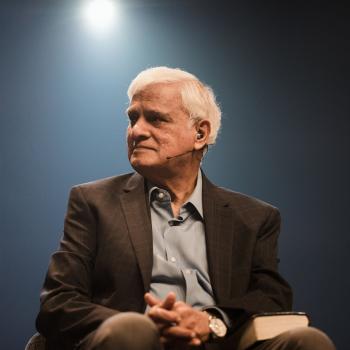
Ravi Zacharias: Let His Life Serve as a...


On Art Azurdia and Men Without Chests
TRENDING AT PATHEOS Evangelical

When you hear the word riches, what comes to mind? For most...

Don’t Miss the Parents: A Creative Christmas Meditation
As we enter the Advent Season, I see many people trying to...

Making Stones Into Bread: Choosing the “Right” Work
I was on my online arts ministry Zoom meeting with the International...

Ukraine’s exhausted Christians face fifth winter of war
By Julian Lukins The full-scale war in Ukraine is taking “a serious...

Russell Brand's Conviction is not anti-Christian Persecution
How do we shed the reputation that the Church is OK with...

Have you ever caught yourself saying, “I’ll do it tomorrow,” or “Now...
view all Evangelical blogs
Ad-Free & Subscriber Log-In Subscription Support
- About Us
- 2026 Calendar
- Videos
- Podcasts
- Library of World Religions
- Faith In Media Tracker
- Advertise With Us
- Write for Us
- Privacy Policy
- Terms of Service
- Do Not Sell My Data
- Contact Us
- Radiant Digital
- Manage Newsletter Subscriptions
- Unsubscribe From Notifications
- Sitemap
Copyright 2008-2026, Patheos, part of the Radiant Digital network of media brands. All rights reserved.
Subscription Support Ad-Free & Subscriber Log-In
Follow Patheos