
BuddhistCatholicContemplativeEvangelicalGeneral ChristianHinduJewishLatter-day SaintMuslimNew VisionsProgressive Christian
Beliefs
- Buddhist
- Catholic
- Contemplative
- Evangelical
- General Christian
- Hindu
- Jewish
- Latter-day Saint
- More Voices
- Muslim
- New Visions
- Pagan
- Progressive Christian
Topics
- Religion News
- Food and Religion
- Sports and Religion
- Religious Art
- Religious Music and Entertainment
- Religious Events
- History and Religion
- Style and Religion
- Politics and Religion
- Women in Religion
- Recreation Outdoors and Religion
- Business Finance and Religion
- Careers Workplace and Religion
- Education and Religion
- Family Parenting and Religion
- Health Fitness and Religion
- Home and Religion
- Relationships and Religion
- Technology and Religion
- Travel and Religion
Columnists
- Buddhist Columnists
- Business Finance and Religion Columnists
- Careers Workplace and Religion Columnists
- Catholic Columnists
- Contemplative Columnists
- Education and Religion Columnists
- Evangelists Columnists
- Family Parenting and Religion Columnists
- General Christian Columnists
- Health Fitness and Religion Columnists
- Hindu Columnists
- History and Religion Columnists
- Home and Religion Columnists
- Jewish Columnists
- More Voices Columnists
- Latter Day Columnists
- Muslim Columnists
- New Visions Columnists
- Nonreligious Columnists
- Pagan Columnists
- Politics and Religion Columnists
- Progressive Columnists
- Recreation Outdoors and Religion Columnists
- Relationships and Religion Columnists
- Religion News Columnists
- Religious Art Columnists
- Religious Events Columnists
- Religious Music and Entertainment Columnists
- Sports and Religion Columnists
- Style and Religion Columnists
- Technology and Religion Columnists
- Travel and Religion Columnists
- Women in Religion Columnists
Resource Library
- 2026 Calendar
- Library of World Religions
- The 100 Most Holy Places on Earth
- Patheos Answers
- Podcasts
- Videos
- Faith Leaders Database
- Anglican Episcopalian
- Bahai
- Baptist
- Buddhism
- Christianity
- Confucianism
- Eastern Orthodoxy
- Hinduism
- Holiness and Pentecostal
- ISKCON
- Islam
- Judaism
- Lutheran
- Methodist
- The Church of Jesus Christ of Latter-day Saints
- New Age
- Paganism
- Presbytarian and Reformed
- Protestantism
- Religion Behind the Scenes
- Roman Catholic
- Scientology
- Shia Islam
- Sikhism
- Sufism
- Sunni Islam
- Taoism
- Zen
- See all religions
Research Tools
 Ad-Free & Subscriber Log-In Subscription Support
Ad-Free & Subscriber Log-In Subscription Support
Follow Patheos 

- Trending:
- Forgiveness
- |
- Marriage
- |
- Consciousness
- |
- Death Penalty
- |
- Election
- |
- Halloween

-
Explore
- Home
- Evangelical
- Pathos, Ethos, and Logos; Regaining the Ground for Coherent Logic
Pathos, Ethos, and Logos; Regaining the Ground for Coherent Logic
Last updated on: September 12, 2016 at 6:00 am by Grayson Gilbert
Pathos, Ethos, and Logos; Regaining the Ground for Coherent Logic 2016-09-09T12:13:37-05:00 Grayson Gilbert
Patheos Explore the world's faith through different perspectives on religion and spirituality! Patheos has the views of the prevalent religions and spiritualities of the world.
Far too often we express virtue in emotion without virtue in thought. While there are countless expressions with which this is made manifest, perhaps the easiest way for us to see this is simply by scrolling through the news feed of our social media of choice. For most people, complex topics with emotionally charged consequences are far too difficult to navigate without letting the latter control the former. More clearly, it seems we have lost the ability to communicate rationally about heated topics without leaping headlong into personal attacks, a lack of verifiable claims, and an arsenal of pithy one-liners. Yet this is precisely what is praised: the one who sounds good, yet has very little idea of the topic he or she waxes so eloquently upon.
Most people have not done the work behind what it takes to know a subject well – and with how many people are self-proclaimed experts at everything, one is left to wonder very little if they indeed are experts in anything at all. Yet when their expertise is challenged with widely known studies or questioning the rationale behind their adoption of a position, what tends to happen is not further, informed discussion. One person adopts candor that belittles their sparring partner, another lobs crystal clear insults, another offers strong opinions without veracity, and yet another is copying and pasting from some other forum where a person with more time and knowledge has taken time to carefully form an argument. Generally speaking, it is only a matter of time before things become ugly and rationale has left altogether with most persons involved. This is precisely what I have in mind when I say, “Far too often we express virtue in emotion without virtue in thought.” We focus upon the “ethos” and “pathos” of our heroes and our self – yet scarcely give rise to examining the logical grounds upon which they/we stand.
The art of persuasion, therefore, is not so much in the artfulness of the writer, the credibility of the speaker, or intellect of the thinker. The art is in the discernment of the receiver – because there is nothing which stands in a neutral disposition to them and they must disseminate between truth and falsehood. As with all forms of art, discernment is a practice which must be honed in so that it may flourish without hindrance. It requires a great deal of effort and an objective standard by which it can be measured against. Thousands of voices are crying out as experts on every topic of our day – yet very few truly understand the positions they’ve claimed expertise in, with the result of emotionally passionate, yet intellectually vapid arguments. For a society that lauds such a thing, rational discourse is more difficult to come by when we face difficult topics that tend to cause conflict. Yet the more troublesome aspect is that a society who lauds emotionally charge rhetoric lends credibility to one who does not deserve it.
The mantra of our age is no different than ones previous: if it feels good, it is right in our own eyes, and does not infringe upon autonomy, then any firm, contrary opinion is folly. The apex of a civilized culture is generally seen in a righteousness or virtue in the truth – for to lend one toward this true virtue, one would be bound to go beyond mere signaling of said virtue and embrace objective truth in abject humility. Few, however, wish to believe there is such a thing as objective truth – at least within the realm of the spiritual. Herein do we find the issue though: it seems that though there is an art to persuasion, people have no desire to be persuaded; me thinks this harkens back to the point of there being no neutrality.
In essence, there cannot be neutrality simply by virtue of what truth is: it leaves something to be either false or true. With this being the case, that which represents untruth is not neutral in disposition – but opposed to the truth. However, lest we leave our discerner without culpability, they too are in a disposition opposed to the truth simply by their desire to satiate a lust for autonomy, free from the bounds of moral truth. One might be so bold as to approach truth on epistemological grounds – yet scarcely will they approach it on metaphysical grounds because this gives credence to an over-arching ethical framework that by necessity would be objective and applicable for all. The unique thing that fails to be reconciled with is that by their lust for autonomy, they have made themselves indentured servants to that which is untrue, for by embracing truth, it would require not only a changed mind – but changed conduct.
The sneaking suspicion I have is not that people are unaware of this in the least. Rather, they assign virtue to emotion over and above virtue in thought – and thereby, lend creditability to the one who woos them by appealing to their predisposed, subjective opinion of what is right – a la Judges 17:6. They have said, “We have no King!” thinking thereby they have defrocked their Creator, yet instead they have simply dulled their senses by appeasing what they believe to be freedom. Persuasion then has oft been relegated to the art of appealing toward one’s sensibilities, utterly bound by subjectivity or cloaked in empiricism, which again, denies the reality of a spiritual metaphysics in personhood. Yet this is precisely what makes man different than a mere beast; he is not simply a logical being, but a moral one at that. Though Aristotle gave Pathos, Ethos, and Logos as the means by which one ought to enter into this philosophical debate – it became a mere game wherein existentialism was devoid of origins and left without objective criteria in the quest for understanding a metaphysics of personhood. It became the proverb wherein three blind men seek to describe an elephant from three different angles and presuppositions, all the while missing the fact that it is an elephant.
However, in this particular case, the elephant has been revealed and there is no real confusion, save the pretentious virtue-signaling of faux humility in stating that one cannot know who God is. Or better yet – that God has obfuscated the truth in such a manner that His very essence and being is not clearly shown to all men. Nature itself contests this trite idea, as it serves to condemn all men on the basis of unbelief and ingratitude. The natural man, though shaking his fist at the God he’s convinced doesn’t exist, stands by very nature of his rebellion as a testament to the God he denies. However, it is the one claiming Christ that perplexes me when they subscribe to these same tenets, which are so trite and obviously false.
While we shan’t ever come to a point wherein we fully understand everything about God, we shall indeed know God as He has revealed Himself if we are willing to put in the necessary hard-work and embrace a true humility that genuinely believes we need to be taught. This presumes there are teachers apt to do the job, whom He has given particular gifting toward. In this, we must remember that He delights to reveal Himself to those who seek Him and He has always used feeble men to do such a great task. This is abundantly far from the obnoxious idea of the one who claims it a virtue to not know anything about God – or feigns a spiritual hierarchy in “letting the Spirit teach them” without being willing to lift a book or sit under the instruction of workmen approved. Yet this also puts to death the idea of one who says, “With God, there is no thing required of man to believe in order for him to escape condemnation.” The one claiming Christ then cannot refute such things – they can only reject them in faux humility.
It is neither humble nor accurate for any claiming Christ to argue that there cannot be objective truth or that they shouldn’t seek it. It is even further from the truth if one claims they cannot find it! This is the sentiment of a dying age – not those redeemed by the very blood of Christ. Christians, having the divine Logos revealed in the person of Christ through His holy scriptures, should know better than to virtue-signal with this faux humility and treat the Word of God with such low regard. Christians, having the highest order of authority to appeal to – have no means beyond effectual unbelief to reject the scriptures. Yet lest we forget, there is also inherent beauty, an ethos, to the text itself – most clearly in the person of Christ who was tempted in every respect and calls Himself our brother.
On all fronts the Christian finds the highest regard for each mode of persuasion that Aristotle coined – yet what is even more remarkable is the notion that God, in His power and might, can sovereignly pluck one in overt rejection of all such things if He so desires. Indeed, these criteria have been shown to be even too low for the content of the scriptures. All things not being equal though – the disposition of man is in opposition to the truth because they are in a natural disposition against the truth-Giver. Man will either submit himself to the text or he shall play at virtue; he shall be as the scoffer and the mocker whom lady wisdom rejects when the day of calamity has come.
If the fear of the Lord is the beginning of wisdom and this manifests itself in a love of the Word and submission to it, one thing is quite certain: rejection of the Scripture’s highest place in our lives is not done on an intellectual basis.
Featured Image: Mr Spock by Guillaume Lardier; CC 2.0
Previous Post
September 9, 2016
What Happens When Arminians Are Consistent In Their Theology

Browse Our Archives
Select a Category #ShoutYourAbortion 10 Commandments 2016 Election 2017 2020 Election Abortion Accelerate Books Adultery America Andy Stanley Arminianism Ashley Madison Atonement B&H Academic Baptism Barry Horner Beauty Biblical Elders Billy Graham Blog Book Review Bruce Jenner Caitlyn Jenner Calvin Calvinism Cheating Chick-fil-A Children Christ Christian History Christian Living Christian Podcasts Christianity Christmas Church History Church Leadership Civil Disobedience Constitutional Coronavirus Culture Death Demoninations Discipleship Doctrine Doctrine of God Donald Trump Ecclesiology Entertainment Eschatology Ethics Evangelical Evangelism Evil Evolution Fear Forgive Yourself Forgiveness Francis Chan Future Israel Gay Marriage Gender Genesis George Floyd Gospel Government Gun Control Halloween hamartiology Heavenly Reward Hermeneutics History Hollywood Holy Spirit Homeschool Homosexual Homosexuality Hope Hospitality Humor Husband Infant Baptism Interview Jesus John Piper Josh Duggar Joshua Harris Judgment Justice Kathy Griffin Kim Davis Leadership Logic Love Manhood Marriage Martin Luther Messianic Prophecy Miscarriage Mocking Modesty Money Movie Reviews Music Music Review Netflix New Testament Obergefell Old Testament Parenting Pastor Pastoring Persecution Planned Parenthood Podcast Politics Pop Culture Pornography Prayer Preaching Predestination Pride Prosperity Gospel Rachel Held Evans Racism Ravi Zacharias Redemption Reformation 500 Reformation Day Reformed Theology Relationship Repentance Salvation Same Sex Marriage Satan Satire Scripture Seminary Sex Sin slavery Sola Scriptura Soteriology Sovereignty Spiritual Gifts Spurgeon Star Wars Steven Furtick Suffering Sufficiency of Scripture Sunday School Supreme Court Technology Testimony The Church The Lord of the Rings The Problem of Evil The Shack Theology Theonomy Tithing Transgenderism Tullian Tchividjian Uncategorized Universalism Vanity Fair Video Games Virgin Birth Voting Wife Women Worldview Worship
Select a Month June 2025 April 2025 March 2025 March 2024 February 2024 January 2024 December 2023 June 2023 April 2023 March 2023 January 2023 December 2022 November 2022 October 2022 September 2022 August 2022 July 2022 June 2022 May 2022 April 2022 March 2022 February 2022 January 2022 December 2021 November 2021 October 2021 August 2021 July 2021 June 2021 May 2021 April 2021 March 2021 February 2021 January 2021 December 2020 November 2020 October 2020 September 2020 August 2020 July 2020 June 2020 May 2020 April 2020 March 2020 February 2020 January 2020 December 2019 November 2019 October 2019 September 2019 August 2019 July 2019 June 2019 May 2019 April 2019 March 2019 February 2019 January 2019 December 2018 November 2018 October 2018 September 2018 August 2018 July 2018 June 2018 May 2018 April 2018 March 2018 February 2018 January 2018 December 2017 November 2017 October 2017 September 2017 August 2017 July 2017 June 2017 May 2017 April 2017 March 2017 February 2017 January 2017 December 2016 November 2016 October 2016 September 2016 August 2016 July 2016 June 2016 May 2016 April 2016 March 2016 February 2016 January 2016 December 2015 November 2015 October 2015 September 2015 August 2015 July 2015 June 2015 May 2015 April 2015 March 2015 February 2015 January 2015 December 2014 November 2014 October 2014 September 2014 August 2014 July 2014
Follow Us!
TAKE THE
Religious Wisdom Quiz
Who said, "Here am I, send me"?
Select your answer to see how you score.
Elijah Ezekiel Isaiah Jeremiah
Related posts from The Chorus In The Chaos

Why the ‘He Gets Us’ Super Bowl Commercial...
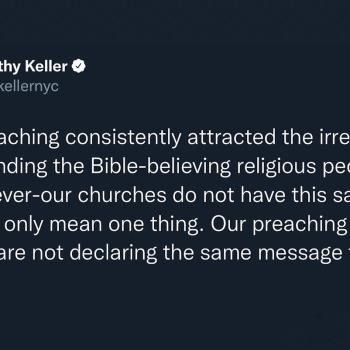
Sorry Tim Keller, People Reject Christ Because They...


I Fear for You if You’re Not Growing...
TRENDING AT PATHEOS Evangelical

How the author of the world's best hymn...
I've been working with John Newton for a while now. This makes...

Long before this Lectio Divina, Psalm 130 - the song - started...

What About the Trees? Another Living Parable
After I finished writing the last article about falling leaves as a...

Why Classical Education Is a Conversation, Not a...
Come and Read: Joy in Classical Education When I was a little...

Falling Leaves: A Living Parable on Letting Go
I’ve spent the vast majority of my life in the southeast corner...

Cornell University has received a great deal of negative publicity and intense...
view all Evangelical blogs
Ad-Free & Subscriber Log-In Subscription Support
- About Us
- 2026 Calendar
- Videos
- Podcasts
- Library of World Religions
- Faith In Media Tracker
- Advertise With Us
- Write for Us
- Privacy Policy
- Terms of Service
- Do Not Sell My Data
- Contact Us
- Radiant Digital
- Manage Newsletter Subscriptions
- Unsubscribe From Notifications
- Sitemap
Copyright 2008-2026, Patheos. All rights reserved.
Subscription Support Ad-Free & Subscriber Log-In
Follow Patheos