
BuddhistCatholicContemplativeEvangelicalGeneral ChristianHinduJewishLatter-day SaintMuslimNew VisionsProgressive Christian
Beliefs
- Buddhist
- Catholic
- Contemplative
- Evangelical
- General Christian
- Hindu
- Jewish
- Latter-day Saint
- More Voices
- Muslim
- New Visions
- Pagan
- Progressive Christian
Topics
- Religion News
- Food and Religion
- Sports and Religion
- Religious Art
- Religious Music and Entertainment
- Religious Events
- History and Religion
- Style and Religion
- Politics and Religion
- Women in Religion
- Recreation Outdoors and Religion
- Business Finance and Religion
- Careers Workplace and Religion
- Education and Religion
- Family Parenting and Religion
- Health Fitness and Religion
- Home and Religion
- Relationships and Religion
- Technology and Religion
- Travel and Religion
Columnists
- Buddhist Columnists
- Business Finance and Religion Columnists
- Careers Workplace and Religion Columnists
- Catholic Columnists
- Contemplative Columnists
- Education and Religion Columnists
- Evangelists Columnists
- Family Parenting and Religion Columnists
- General Christian Columnists
- Health Fitness and Religion Columnists
- Hindu Columnists
- History and Religion Columnists
- Home and Religion Columnists
- Jewish Columnists
- More Voices Columnists
- Latter Day Columnists
- Muslim Columnists
- New Visions Columnists
- Nonreligious Columnists
- Pagan Columnists
- Politics and Religion Columnists
- Progressive Columnists
- Recreation Outdoors and Religion Columnists
- Relationships and Religion Columnists
- Religion News Columnists
- Religious Art Columnists
- Religious Events Columnists
- Religious Music and Entertainment Columnists
- Sports and Religion Columnists
- Style and Religion Columnists
- Technology and Religion Columnists
- Travel and Religion Columnists
- Women in Religion Columnists
Resource Library
- 2026 Calendar
- Library of World Religions
- The 100 Most Holy Places on Earth
- Patheos Answers
- Podcasts
- Videos
- Faith Leaders Database
- Anglican Episcopalian
- Bahai
- Baptist
- Buddhism
- Christianity
- Confucianism
- Eastern Orthodoxy
- Hinduism
- Holiness and Pentecostal
- ISKCON
- Islam
- Judaism
- Lutheran
- Methodist
- The Church of Jesus Christ of Latter-day Saints
- New Age
- Paganism
- Presbytarian and Reformed
- Protestantism
- Religion Behind the Scenes
- Roman Catholic
- Scientology
- Shia Islam
- Sikhism
- Sufism
- Sunni Islam
- Taoism
- Zen
- See all religions
Research Tools
 Ad-Free & Subscriber Log-In Subscription Support
Ad-Free & Subscriber Log-In Subscription Support
Follow Patheos 

- Trending:
- Forgiveness
- |
- Marriage
- |
- Consciousness
- |
- Death Penalty
- |
- Election
- |
- Halloween

-
Explore
- Home
- Evangelical
- Future Israel: Book Review
Future Israel: Book Review
Last updated on: April 13, 2016 at 10:03 am by Grayson Gilbert
Future Israel: Book Review 2016-04-13T10:03:22-05:00 Grayson Gilbert
Patheos Explore the world's faith through different perspectives on religion and spirituality! Patheos has the views of the prevalent religions and spiritualities of the world.
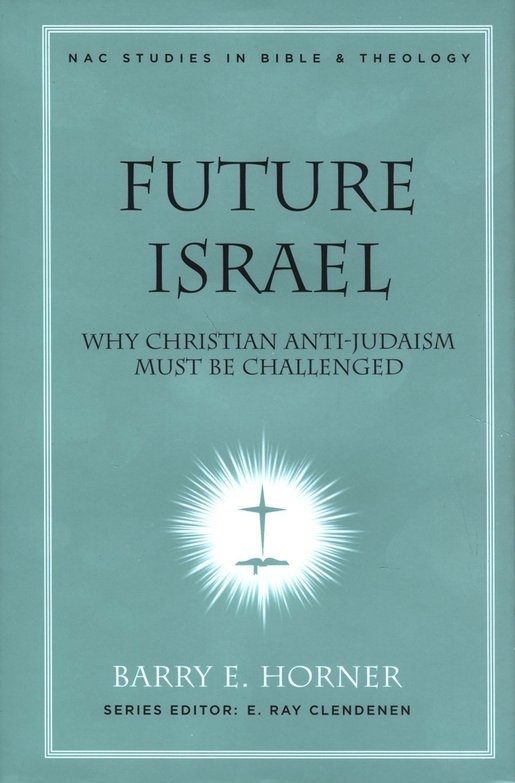
I wish to premise this review with the disclosure that I have long been convinced of a Dispensational hermeneutic. While I would label myself a Progressive dispy (with a small “d”), I recognize many readers of this review are not of the same conviction and hold to the traditional Reformed views. I chose this book, as it is a topic of interest – and for my desire to continually re-examine my position to assess the weaknesses and strengths.
I have long caught flack from many holding to a Covenantal position, likening all Dispensationalists to John Hagee or tenets akin to Christian Zionism. I enter in this discussion of the review with the hopes of being able to navigate what tends to be a rather heated, yet ignorant debate. Far too often, false characterizations take place, exegetical arguments are dismissed, and jokes are made to deflect a probing question. We are dealing with a serious topic, and I hope to give this book a fair shake, yet also usher a gentle plea for my Covenantal brothers and sisters to simply think further about this.
Rather than break the book down by specific chapter contents, it seems pertinent to divide the book into two portions containing these. The first, which I would break from chapters 1-7 detail an extensive look through the historical development of supercessionism. The second, chapters 8-12, detail Horner’s thesis exegetically, closing the book with a pastoral plea in chapter 12.
While I appreciated Horner’s careful consideration to the historical development of anti-Judaic tendencies, I feel as if this portion of the book could have been condensed. However, this is not a detriment to the overall thesis of his work, in consideration of the content within the following chapters. It seems as if the first seven chapters deal with setting the cause of re-examination to an age-old hermeneutic. When challenging long-standing interpretations, we ought to have good reason; this is precisely what Horner does in laying the historical roots of these theological presuppositions.
The fruit of this work is displayed especially in his treatment of Romans 11 in chapters 10-11. This is the passage seemingly overlooked by many, or distorted in favor of a spiritualization of the text. Beyond this, many often preclude an historical interpretation of the text (accordingly to the original audience) in favor of personal interpretation. This is not to say we cannot personalize the text – but the litmus of any interpretation is based in what the author intended to say and how that applies. Here is where I feel Horner does an excellent job treating Paul fairly – and while many may disagree with that sentiment, I would simply ask consideration of the argument presented in the remaining half of this book.
It is in this last half of the book that Horner deals with the more problematic inferences to a Covenantal view. He argues for the irrevocability of the promises to national Israel on the basis of God’s immutability, distinguishes between the unilateral and bilateral covenant, and takes careful consideration of supercessionist arguments against these as well. Here you will see Horner interact with common passages used to refute his position, namely Galatians 6:16, Ephesians 2:11-22, Philippians 3:2-3, and 1 Peter 2:9-10. Beyond this, Horner advocates those Jews who remain in unbelief are yet enemies of God needing to be reconciled to Him through faith in Christ. Though, he argues, national Israel has affection upon them from the Lord on the basis of God’s irrevocable covenant and the fulfillment of it, no man gets a “free pass” simply because of their ethnicity.
In closing, we must remember that the abuse of a doctrinal position does not disqualify the exegetical argument. Rather, the basis of exegesis is simply what the text lays out. More plainly, simply because anti-Judaism has been a common result from supercessionism, does not adequately refute the doctrine. Here is where I would simply ask my Reformed brethren to caution. Regardless of where you land on this – know that there is the potential to shift toward an unhealthy view of the Jewish people.
This is the precise thing that can happen in areas of Christian liberty, or even other doctrines. Calvinism, for example, can lead one to a faulty security in their salvation. In that same vein – I would also caution Dispys of taking the argument to an illogical conclusion. Holding to an economy of God’s redemptive plan disregarding Covenantal hermeneutics can lead one to an unhealthy obsession with Israel, eschatological prophecy, and even antinomianism. However, I would see this to be an indication of faulty reasoning and study method, rather than the doctrine itself.
Whether you are Covenantal or Dispensational, I would recommend reading this book. It is good to read books you agree with and disagree with simply to develop your understanding – yet most importantly, assess whether your hermeneutic is adequately reflecting the exegetical basis and salvific economy of the Bible. This is incredibly important – and we ought not deflect simply because we feel overwhelmed or we already have a predisposition to reject the argument. Read this book with an open bible, prayerfully, and thoughtfully. If you do so and still disagree with his thesis – good for you. You have at least done some legwork and been challenged adequately.
Disclosure: I received this book free from Baker Academic through the media reviewer program. The opinions I have expressed are my own, and I was not required to write a positive review. I am disclosing this in accordance with the Federal Trade Commission’s 16 CFR, Part 255.
NAC Series in Bible & Theology
Previous Post

August 14, 2015
10 Ways To Help Prevent Your Pastor From Depression
Next Post

August 21, 2015 Ashley Madison, Josh Duggar, and Shiny Baubles
Browse Our Archives
Select a Category #ShoutYourAbortion 10 Commandments 2016 Election 2017 2020 Election Abortion Accelerate Books Adultery America Andy Stanley Arminianism Ashley Madison Atonement B&H Academic Baptism Barry Horner Beauty Biblical Elders Billy Graham Blog Book Review Bruce Jenner Caitlyn Jenner Calvin Calvinism Cheating Chick-fil-A Children Christ Christian History Christian Living Christian Podcasts Christianity Christmas Church History Church Leadership Civil Disobedience Constitutional Coronavirus Culture Death Demoninations Discipleship Doctrine Doctrine of God Donald Trump Ecclesiology Entertainment Eschatology Ethics Evangelical Evangelism Evil Evolution Fear Forgive Yourself Forgiveness Francis Chan Future Israel Gay Marriage Gender Genesis George Floyd Gospel Government Gun Control Halloween hamartiology Heavenly Reward Hermeneutics History Hollywood Holy Spirit Homeschool Homosexual Homosexuality Hope Hospitality Humor Husband Infant Baptism Interview Jesus John Piper Josh Duggar Joshua Harris Judgment Justice Kathy Griffin Kim Davis Leadership Logic Love Manhood Marriage Martin Luther Messianic Prophecy Miscarriage Mocking Modesty Money Movie Reviews Music Music Review Netflix New Testament Obergefell Old Testament Parenting Pastor Pastoring Persecution Planned Parenthood Podcast Politics Pop Culture Pornography Prayer Preaching Predestination Pride Prosperity Gospel Rachel Held Evans Racism Ravi Zacharias Redemption Reformation 500 Reformation Day Reformed Theology Relationship Repentance Salvation Same Sex Marriage Satan Satire Scripture Seminary Sex Sin slavery Sola Scriptura Soteriology Sovereignty Spiritual Gifts Spurgeon Star Wars Steven Furtick Suffering Sufficiency of Scripture Sunday School Supreme Court Technology Testimony The Church The Lord of the Rings The Problem of Evil The Shack Theology Theonomy Tithing Transgenderism Tullian Tchividjian Uncategorized Universalism Vanity Fair Video Games Virgin Birth Voting Wife Women Worldview Worship
Select a Month June 2025 April 2025 March 2025 March 2024 February 2024 January 2024 December 2023 June 2023 April 2023 March 2023 January 2023 December 2022 November 2022 October 2022 September 2022 August 2022 July 2022 June 2022 May 2022 April 2022 March 2022 February 2022 January 2022 December 2021 November 2021 October 2021 August 2021 July 2021 June 2021 May 2021 April 2021 March 2021 February 2021 January 2021 December 2020 November 2020 October 2020 September 2020 August 2020 July 2020 June 2020 May 2020 April 2020 March 2020 February 2020 January 2020 December 2019 November 2019 October 2019 September 2019 August 2019 July 2019 June 2019 May 2019 April 2019 March 2019 February 2019 January 2019 December 2018 November 2018 October 2018 September 2018 August 2018 July 2018 June 2018 May 2018 April 2018 March 2018 February 2018 January 2018 December 2017 November 2017 October 2017 September 2017 August 2017 July 2017 June 2017 May 2017 April 2017 March 2017 February 2017 January 2017 December 2016 November 2016 October 2016 September 2016 August 2016 July 2016 June 2016 May 2016 April 2016 March 2016 February 2016 January 2016 December 2015 November 2015 October 2015 September 2015 August 2015 July 2015 June 2015 May 2015 April 2015 March 2015 February 2015 January 2015 December 2014 November 2014 October 2014 September 2014 August 2014 July 2014
Follow Us!
TAKE THE
Religious Wisdom Quiz
Who prayed three times a day facing Jerusalem?
Select your answer to see how you score.
Micah Daniel Jonah Ezekiel
Related posts from The Chorus In The Chaos

‘Two Cities,Two Loves’, a Look at Christians and...
Inerrancy and the Gospels: How to Handle Narrative...

Free Theological Resources Omnibus
God's Glory Revealed in Christ
TRENDING AT PATHEOS Evangelical

The REST of Your Life: A Creative Wrestles...
This week I had a conversation with a good friend from church....

How the author of the world's best hymn...
I've been working with John Newton for a while now. This makes...

Long before this Lectio Divina, Psalm 130 - the song - started...

What About the Trees? Another Living Parable
After I finished writing the last article about falling leaves as a...

Why Classical Education Is a Conversation, Not a...
Come and Read: Joy in Classical Education When I was a little...

Cornell University has received a great deal of negative publicity and intense...
view all Evangelical blogs
Ad-Free & Subscriber Log-In Subscription Support
- About Us
- 2026 Calendar
- Videos
- Podcasts
- Library of World Religions
- Faith In Media Tracker
- Advertise With Us
- Write for Us
- Privacy Policy
- Terms of Service
- Do Not Sell My Data
- Contact Us
- Radiant Digital
- Manage Newsletter Subscriptions
- Unsubscribe From Notifications
- Sitemap
Copyright 2008-2026, Patheos. All rights reserved.
Subscription Support Ad-Free & Subscriber Log-In
Follow Patheos