
BuddhistCatholicContemplativeEvangelicalGeneral ChristianHinduJewishLatter-day SaintMuslimNew VisionsProgressive Christian
Beliefs
- Buddhist
- Catholic
- Contemplative
- Evangelical
- General Christian
- Hindu
- Jewish
- Latter-day Saint
- More Voices
- Muslim
- New Visions
- Pagan
- Progressive Christian
Topics
- Religion News
- Food and Religion
- Sports and Religion
- Religious Art
- Religious Music and Entertainment
- Religious Events
- History and Religion
- Style and Religion
- Politics and Religion
- Women in Religion
- Recreation Outdoors and Religion
- Business Finance and Religion
- Careers Workplace and Religion
- Education and Religion
- Family Parenting and Religion
- Health Fitness and Religion
- Home and Religion
- Relationships and Religion
- Technology and Religion
- Travel and Religion
Columnists
- Buddhist Columnists
- Business Finance and Religion Columnists
- Careers Workplace and Religion Columnists
- Catholic Columnists
- Contemplative Columnists
- Education and Religion Columnists
- Evangelists Columnists
- Family Parenting and Religion Columnists
- General Christian Columnists
- Health Fitness and Religion Columnists
- Hindu Columnists
- History and Religion Columnists
- Home and Religion Columnists
- Jewish Columnists
- More Voices Columnists
- Latter Day Columnists
- Muslim Columnists
- New Visions Columnists
- Nonreligious Columnists
- Pagan Columnists
- Politics and Religion Columnists
- Progressive Columnists
- Recreation Outdoors and Religion Columnists
- Relationships and Religion Columnists
- Religion News Columnists
- Religious Art Columnists
- Religious Events Columnists
- Religious Music and Entertainment Columnists
- Sports and Religion Columnists
- Style and Religion Columnists
- Technology and Religion Columnists
- Travel and Religion Columnists
- Women in Religion Columnists
Resource Library
- 2026 Calendar
- Library of World Religions
- The 100 Most Holy Places on Earth
- Patheos Answers
- Podcasts
- Videos
- Faith Leaders Database
- Anglican Episcopalian
- Bahai
- Baptist
- Buddhism
- Christianity
- Confucianism
- Eastern Orthodoxy
- Hinduism
- Holiness and Pentecostal
- ISKCON
- Islam
- Judaism
- Lutheran
- Methodist
- The Church of Jesus Christ of Latter-day Saints
- New Age
- Paganism
- Presbytarian and Reformed
- Protestantism
- Religion Behind the Scenes
- Roman Catholic
- Scientology
- Shia Islam
- Sikhism
- Sufism
- Sunni Islam
- Taoism
- Zen
- See all religions
Research Tools
 Ad-Free & Subscriber Log-In Subscription Support
Ad-Free & Subscriber Log-In Subscription Support
Follow Patheos 

- Trending:
- Forgiveness
- |
- Marriage
- |
- Consciousness
- |
- Death Penalty
- |
- Election
- |
- Halloween

-
Explore
- Home
- Evangelical
- Fathers, Rise Up and Lead Your Family
Fathers, Rise Up and Lead Your Family
Last updated on: January 14, 2020 at 4:54 pm by Grayson Gilbert
Fathers, Rise Up and Lead Your Family 2020-01-14T16:54:08-05:00 Grayson Gilbert
Patheos Explore the world's faith through different perspectives on religion and spirituality! Patheos has the views of the prevalent religions and spiritualities of the world.
Despite modern efforts to minimize the importance of fathers, the reality is that dads will invariably set the tone of the entire household. Regardless if they are active or passive in their leadership, they will lead by example. The negligent and lazy father will set the tone for his sons; they too shall more than likely grow to be negligent and lazy men. The diligent and hard-working father will likewise lay a path before his sons to walk when they grow to be men. This is not to say that a father’s faithfulness is somehow an “ace in the hole” when it comes to the faithfulness of their adult children, nor that it is impossible for a child to break the mold of their father and carve out a new path for future generations to follow. Yet it is to say that a father’s role as the shepherd in the family is far more important than most truly grasp.
Our wives and children deserve so much more than passive leadership, or abdication of the role to someone else. The truth is: it is not the job of a youth pastor, friend, or the proverbial village to raise your children. That’s your job. Yet this next part is also vitally important: it is not the job of your wife to be the one who directs the way the family will go. You can shirk your responsibility all day long. You can let people tell you that the roles of men and women within the church and home are not different in any sense. You can embrace the ethos of a culture that “empowers” women by asking them to bear both curses. You can do any number of things to placate your conscience or take a place of prominence over your calling as a father, yet when you stand before God to give an account of your life there will be no excuse to be had.
There is a reason why men often take the brunt of the focus when it comes to the way of the household; you are responsible for the direction it goes; not your wife, not your children, not your pastor. You. If you think that is unfair, so what? Act like men. Do the hard thing. Own the responsibility you were blessed to receive and never make apologies for the fact that God has decreed you to be the leader in the home. At the same time, let all that you do be done in love and faithfulness to God Himself, lest you be a tyrant of a man who neglects the wisdom of his wife and the tender hearts of his children. All the while, recognize that if there is some deficiency in your household, it is a reflection of you.
I remember a time where I sat with my own pastor while I was in seminary, and he asked me the simple question, “If you had a church full of people like you, would you consider it a good church?” My heart sank because I knew the answer was that I wouldn’t consider it a good church. I know my pitfalls, my struggles, my stubbornness, and my pet sins quite well. Yet the point was not lost on me; the local church you shepherd is a reflection of you as the pastor, for good and bad. That doesn’t mean everything that goes on at an individual level is reflective of the pastor’s heart and actions, but rather, as one leads, the rest will generally follow. Our weaknesses become their weaknesses, just as our strengths become their own.
The same thing applies within the home. The mannerisms of your wife, but especially of your children, are a reflection of you. It is no small wonder then that children who grow to be negligent in attending to matters of the Christian faith had a father who was also negligent. It ought not to be surprising to us when a child leaves home and embraces all sorts of ungodliness if we never trained them, nor made the hard decision to remove them from bad influences and wayward peers. We cannot be shocked when our children place their priorities on everything but Christ if we found every reason we could to miss church, study the Scriptures, or practice basic disciplines of godliness. Furthermore, if a child grows to be an undisciplined man because we were inconsistent in our discipline of them—can we truly be at a loss for words on how it happened?
If we are to be found faithful fathers, we need to know then precisely what it is we are to do. My primary focus will be on one biblical text that I believe is an incredible summary of the role of the father in the home (Eph. 6:4). As this post is focusing primarily on one’s role as father, and not as husband, I will not be treating the pertinent texts on what it means to be a biblical husband (Eph. 5:25-32; Col. 3:19; 1 Peter 3:7). However, I do wish to draw your attention to the fact that Paul switches from “parents” in Eph. 6:1 specifically then to “fathers” in Eph. 6:4. Notice that he does not include mothers here, but exclusively fathers, and this is radically important if we are to understand our responsibility before God and our children.
Fathers, do not provoke your children to anger, but bring them up in the discipline and instruction of the Lord (Eph. 6:4).
When we look at the structure of the passage itself, we find two imperatives (commands) within the passage; the first is a negative command (“μή παροργίζετε” which is commonly translated as “do not provoke”), the second is a positive command (“ἐκτρέφετε αὐτὰ” which is commonly translated as “bring them up”). The first command (by way of prohibition through the negative particle “μή”) speaks of the idea of provoking our children to anger. The term itself is used in only one other passage in the New Testament, which likewise speaks toward a provocation to anger (Rom. 10:19). We find in the sister verse of our passage (Col. 3:21) that Paul hits at the same idea with fathers, except this time the term used (ἐρεθίζετε) drives towards an exasperation of the child, or a means of stirring up resentment and bitterness. It is important to note that the negative command here bears an ongoing aspect, which very simply means this command is to always be in practice.
There are any number of ways one can provoke a child to wrath and drive them to resentment, but perhaps the most common are:
- The father is not consistent in his own behavior towards his children. One moment he is laughing and joking around, the next he is blowing up in anger towards his children. They never know what mood dad will be in and they are constantly on edge.
- The father is inconsistent in his application of discipline. One day the child receives a punishment for his behavior and the next he can do the same with no punishment. Firm boundaries are never established, so the child never has legitimate structure.
- The father holds double standards, where he will continually bark at his children for things they do, yet he is never willing to hold himself to the same standard. Children rightly see this man as a hypocrite who is unworthy of respect.
- The father continually pours out criticism, yet never gives praise when and where it is due. When a child experiences nothing but criticism over and again, they notice dad only sees the negative and never the good they do (or even try to do, yet fail). Dad can never be pleased, and the child knows it.
- The father shows favoritism in the home. Dad constantly compares the behavior of his children and asks why one can’t be like the other. Not only do they see their brother or sister win dad’s affections, but they see that their brother or sister can do no wrong in dad’s eyes.
- The father is physically or verbally abusive, absent from home, belittling, condescending, etc.
The second command then, which comes at a strong contrast to the negative command, is that fathers are to instead bring their children up in the discipline and instruction of the Lord. The word Paul uses here (ἐκτρέφετε) is found twice in NT, both times in the book of Ephesians (5:29 and 6:4). The term itself implies nourishment, as if through food—yet this nourishment has a specific instrument by which this goal is accomplished: the discipline (παιδείᾳ) and instruction (νουθεσίᾳ) of the Lord. Again, this command bears no reference to completion, so it is an ongoing means of discipline and instruction in a distinctively Christian manner.
The idea here relates not simply to a formal time of instruction, but in a training that involves admonishment, correction, rebuke, encouragement, and so forth. In essence then, it is a command encompassing the idea that fathers see and know their children’s deficiencies and nurture them in such a manner that correction, in the form of godly behavior, will follow. There are a number of qualities to the “discipline” and “instruction” that Paul has in mind, but the prepositional phrase “of the Lord” bears the distinct idea that they are from the Lord. In other words, it is the long-haul vision of the father to provide “spiritual food” to his child from the means God has given him, which is most plainly found in the Scriptures.
Two ways we can be found faithful in this are as follows:
- We train them in obedience to the Lord’s commands, which are too numerous to list. Some are as simple as how to work hard and provide for a family and be a good steward of God’s provisions, but others are more complex (i.e. how to love your wife as Christ loves the church).
- We rebuke or admonish them for sinful behavior. Again, think principally here, as there are many commands within Scripture of what we are to flee from. What that means on a practical level is that we establish boundaries and expectations aligned with Scripture, and we are consistent in our application of the authority God has granted us within the home.
Yet again, as a final word, it must be stated that we cannot expect our household to flourish if we are passive fathers. We cannot expect our sons to treat women as something more than mere sexual objects if we are consistently giving ourselves over to ogling lewd and provocative women. We will not impart to them the importance of the local church if we are skipping church for the opening weekend for hunting, or the Sunday game. We will not stress the importance of knowing the Bible if we can’t be bothered to open it up ourselves and dive deeply into the recesses of God’s truth to us. You cannot give that which you do not possess.
As in all things in the Christian life, the Lord Jesus is our standard; if we are to be faithful fathers, we must resemble our own Lord. Today is the day you correct the path, or perhaps start carving out a new one because you certainly did not experience this type of upbringing from your father. You have your children for such precious, little time—and even this is not guaranteed. Be the example. Be the strong man of God to them. Be the father you wished you had, or be an even more faithful father than your father before you. You set the tone. You set the direction. Be unapologetic about that—and yet do all of it in the spirit of love and humility. Recognize that God gave you the privilege to lead, and then own it. Do the hard thing. Day after day, rise up, and be the man who leads, and do it well, all to the glory of God.
Previous Post

January 10, 2020
Choose Your Words Carefully
Next Post

January 20, 2020 God's Glory Revealed in Christ
Browse Our Archives
Select a Category #ShoutYourAbortion 10 Commandments 2016 Election 2017 2020 Election Abortion Accelerate Books Adultery America Andy Stanley Arminianism Ashley Madison Atonement B&H Academic Baptism Barry Horner Beauty Biblical Elders Billy Graham Blog Book Review Bruce Jenner Caitlyn Jenner Calvin Calvinism Cheating Chick-fil-A Children Christ Christian History Christian Living Christian Podcasts Christianity Christmas Church History Church Leadership Civil Disobedience Constitutional Coronavirus Culture Death Demoninations Discipleship Doctrine Doctrine of God Donald Trump Ecclesiology Entertainment Eschatology Ethics Evangelical Evangelism Evil Evolution Fear Forgive Yourself Forgiveness Francis Chan Future Israel Gay Marriage Gender Genesis George Floyd Gospel Government Gun Control Halloween hamartiology Heavenly Reward Hermeneutics History Hollywood Holy Spirit Homeschool Homosexual Homosexuality Hope Hospitality Humor Husband Infant Baptism Interview Jesus John Piper Josh Duggar Joshua Harris Judgment Justice Kathy Griffin Kim Davis Leadership Logic Love Manhood Marriage Martin Luther Messianic Prophecy Miscarriage Mocking Modesty Money Movie Reviews Music Music Review Netflix New Testament Obergefell Old Testament Parenting Pastor Pastoring Persecution Planned Parenthood Podcast Politics Pop Culture Pornography Prayer Preaching Predestination Pride Prosperity Gospel Rachel Held Evans Racism Ravi Zacharias Redemption Reformation 500 Reformation Day Reformed Theology Relationship Repentance Salvation Same Sex Marriage Satan Satire Scripture Seminary Sex Sin slavery Sola Scriptura Soteriology Sovereignty Spiritual Gifts Spurgeon Star Wars Steven Furtick Suffering Sufficiency of Scripture Sunday School Supreme Court Technology Testimony The Church The Lord of the Rings The Problem of Evil The Shack Theology Theonomy Tithing Transgenderism Tullian Tchividjian Uncategorized Universalism Vanity Fair Video Games Virgin Birth Voting Wife Women Worldview Worship
Select a Month June 2025 April 2025 March 2025 March 2024 February 2024 January 2024 December 2023 June 2023 April 2023 March 2023 January 2023 December 2022 November 2022 October 2022 September 2022 August 2022 July 2022 June 2022 May 2022 April 2022 March 2022 February 2022 January 2022 December 2021 November 2021 October 2021 August 2021 July 2021 June 2021 May 2021 April 2021 March 2021 February 2021 January 2021 December 2020 November 2020 October 2020 September 2020 August 2020 July 2020 June 2020 May 2020 April 2020 March 2020 February 2020 January 2020 December 2019 November 2019 October 2019 September 2019 August 2019 July 2019 June 2019 May 2019 April 2019 March 2019 February 2019 January 2019 December 2018 November 2018 October 2018 September 2018 August 2018 July 2018 June 2018 May 2018 April 2018 March 2018 February 2018 January 2018 December 2017 November 2017 October 2017 September 2017 August 2017 July 2017 June 2017 May 2017 April 2017 March 2017 February 2017 January 2017 December 2016 November 2016 October 2016 September 2016 August 2016 July 2016 June 2016 May 2016 April 2016 March 2016 February 2016 January 2016 December 2015 November 2015 October 2015 September 2015 August 2015 July 2015 June 2015 May 2015 April 2015 March 2015 February 2015 January 2015 December 2014 November 2014 October 2014 September 2014 August 2014 July 2014
Follow Us!
TAKE THE
Religious Wisdom Quiz
What was the primary beverage in biblical times?
Select your answer to see how you score.
Water Wine Beer Milk
Related posts from The Chorus In The Chaos

God's Expectation of Orthodoxy: Tell the Children

Covetousness: Theft of the Heart

Elders, Love Your Family More Than You Love...
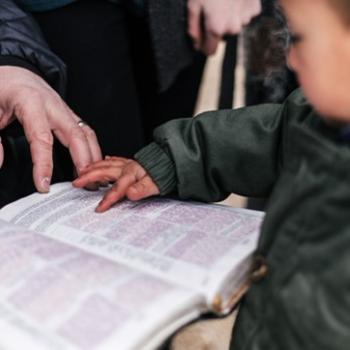
The Most Influential Children’s Catechism
TRENDING AT PATHEOS Evangelical

The REST of Your Life: A Creative Wrestles...
This week I had a conversation with a good friend from church....

How the author of the world's best hymn...
I've been working with John Newton for a while now. This makes...

Long before this Lectio Divina, Psalm 130 - the song - started...

What About the Trees? Another Living Parable
After I finished writing the last article about falling leaves as a...

Why Classical Education Is a Conversation, Not a...
Come and Read: Joy in Classical Education When I was a little...

Cornell University has received a great deal of negative publicity and intense...
view all Evangelical blogs
Ad-Free & Subscriber Log-In Subscription Support
- About Us
- 2026 Calendar
- Videos
- Podcasts
- Library of World Religions
- Faith In Media Tracker
- Advertise With Us
- Write for Us
- Privacy Policy
- Terms of Service
- Do Not Sell My Data
- Contact Us
- Radiant Digital
- Manage Newsletter Subscriptions
- Unsubscribe From Notifications
- Sitemap
Copyright 2008-2026, Patheos. All rights reserved.
Subscription Support Ad-Free & Subscriber Log-In
Follow Patheos