
BuddhistCatholicContemplativeEvangelicalGeneral ChristianHinduJewishLatter-day SaintMuslimNew VisionsProgressive Christian
Beliefs
- Buddhist
- Catholic
- Contemplative
- Evangelical
- General Christian
- Hindu
- Jewish
- Latter-day Saint
- More Voices
- Muslim
- New Visions
- Pagan
- Progressive Christian
Topics
- Religion News
- Food and Religion
- Sports and Religion
- Religious Art
- Religious Music and Entertainment
- Religious Events
- History and Religion
- Style and Religion
- Politics and Religion
- Women in Religion
- Recreation Outdoors and Religion
- Business Finance and Religion
- Careers Workplace and Religion
- Education and Religion
- Family Parenting and Religion
- Health Fitness and Religion
- Home and Religion
- Relationships and Religion
- Technology and Religion
- Travel and Religion
Columnists
- Buddhist Columnists
- Business Finance and Religion Columnists
- Careers Workplace and Religion Columnists
- Catholic Columnists
- Contemplative Columnists
- Education and Religion Columnists
- Evangelists Columnists
- Family Parenting and Religion Columnists
- General Christian Columnists
- Health Fitness and Religion Columnists
- Hindu Columnists
- History and Religion Columnists
- Home and Religion Columnists
- Jewish Columnists
- More Voices Columnists
- Latter Day Columnists
- Muslim Columnists
- New Visions Columnists
- Nonreligious Columnists
- Pagan Columnists
- Politics and Religion Columnists
- Progressive Columnists
- Recreation Outdoors and Religion Columnists
- Relationships and Religion Columnists
- Religion News Columnists
- Religious Art Columnists
- Religious Events Columnists
- Religious Music and Entertainment Columnists
- Sports and Religion Columnists
- Style and Religion Columnists
- Technology and Religion Columnists
- Travel and Religion Columnists
- Women in Religion Columnists
Resource Library
- 2026 Calendar
- Library of World Religions
- The 100 Most Holy Places on Earth
- Patheos Answers
- Podcasts
- Videos
- Faith Leaders Database
- Anglican Episcopalian
- Bahai
- Baptist
- Buddhism
- Christianity
- Confucianism
- Eastern Orthodoxy
- Hinduism
- Holiness and Pentecostal
- ISKCON
- Islam
- Judaism
- Lutheran
- Methodist
- The Church of Jesus Christ of Latter-day Saints
- New Age
- Paganism
- Presbytarian and Reformed
- Protestantism
- Religion Behind the Scenes
- Roman Catholic
- Scientology
- Shia Islam
- Sikhism
- Sufism
- Sunni Islam
- Taoism
- Zen
- See all religions
Research Tools
 Ad-Free & Subscriber Log-In Subscription Support
Ad-Free & Subscriber Log-In Subscription Support
Follow Patheos 

- Trending:
- Forgiveness
- |
- Marriage
- |
- Consciousness
- |
- Death Penalty
- |
- Election
- |
- Halloween

-
Explore
- Home
- Evangelical
- “Experimenter” Movie Review
“Experimenter” Movie Review
Last updated on: April 8, 2016 at 2:18 pm by Jonathan Dorst
“Experimenter” Movie Review 2016-04-08T14:18:31-05:00 Jonathan Dorst
Patheos Explore the world's faith through different perspectives on religion and spirituality! Patheos has the views of the prevalent religions and spiritualities of the world.
In 1961, a professor at Yale named Stanley Milgram conducted a now-famous series of experiments to test the power of authority in people’s lives. These ‘obedience experiments’ form the core drama of the creative 2015 biopic, Experimenter. The test involved two subjects, who were told they were part of an experiment and given the roles of ‘Teacher’ and ‘Learner.’ The Teacher was given a series of test questions to read to the learner in the next room and if the Learner got a question wrong, the Teacher was to give him an electric shock. The shocks began with a small, but still testy, 25 volts and went all the way up, incrementally, to 450 volts. Milgram wanted to see if anyone would continue to give shocks all the way to the end if told to do so by an authority figure.
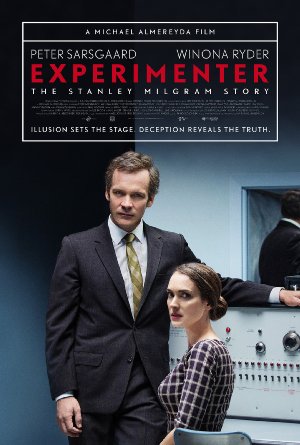
Milgram was shocked (pardon the pun) to find that nearly 65% of participants went all the way to 450 volts, despite the Learner’s screams of pain and eventual silence. Of course (and this is not a spoiler), the pain was staged, the Learner was an actor (in the film excellently cast with Jim Gaffigan) who wasn’t actually being shocked. Nonetheless, the subjects playing the teacher role never once tried to open the door to check on the Learner whom they thought was in great distress, maybe even dead. Only 35% out of hundreds of subjects refused to continue administering pain, despite the persistent instruction of the authority figure in the white coat telling them that they must continue for the purposes of the exercise.
What made this experiment so compelling for Stanley Milgram was that he was Jewish, and he did the experiments only 16 years after the end of the Holocaust. This was the same year as Adolph Eichmann’s famous trial in which the Nazi henchman claimed to merely be following orders, saying, “I never did anything great or small without obtaining in advance express instructions from Adolf Hitler or any of my superiors.” In the film, Milgram debriefs some of his test subjects with questions like, “Why did you listen to this man and not the man in pain?” To one man (played by John Leguizamo) he asks, “Who bore the responsibility for the fact that this man was being shocked?” The man’s answer is telling, “I don’t know.”
What Professor Milgram wanted to know was, how is systematic genocide possible in the modern world? How can civilized human beings act so barbaric? And, is the character of the typical American any different from that of the typical German? His answer (at least as the film portrays him) is ultimately that there is both an external reason: we sometimes act against our better nature because the situation demands it, and an internal reason: there is such a thing as an ‘agentic’ personality that simply follows the rules of authority and will not go against the rules even if common sense or morality dictate resistance.
What was interesting to me about the film were Milgram’s colleagues, who not only predicted that he would have a hard time getting anyone to give the full range of shocks, but were offended by his conclusions. One professor even claims it is the job of science to lift up human ethics, not drag it down. Many academics then and now, despite the traumas associated with World War II, still refuse to believe that human nature is inherently evil. Even Milgram believed that his experiments showed more about the ‘plasticity’ of human nature, than any kind of evil side of humanity. But, the Holocaust cannot be explained by human nature being good but bendable. The old Calvinist view of total depravity, that sin has naturally caused every part of human nature to be fallen, seems like the simplest and most likely explanation (to put Ockham’s razor to use) for the Holocaust, especially given the fact that genocide is a regular occurrence, not a one-time anomaly. As an old preacher once told me, “I’m not Hitler or Stalin, but it’s not for lack of talent.”
But, even with a biblical view of human nature, the Holocaust is still not easy to understand, especially when you start putting yourself in the shoes of the German people. Watching this film, you should ask yourself not just, ‘What would I have done in Milgram’s experiment with only a lab technician to disappoint?’ but ‘What would I have done in Nazi Germany if compelled by a gun to the head to join the SS or drive a train car to the gas chambers?’ We know that the number of Christians who actively opposed Hitler in Germany was small. We would all like to think that we would have been like Dietrich Bonhoeffer in speaking out (and apparently getting involved in an assassination attempt), but the reality is that few of us cherish submitting to martyrdom like Bonhoeffer.
Experimenter as a film is very factual and surprising. I was expecting it to play out the initial experiment in a very dramatic way, only revealing the twist of the actor at the very end. But, the film plays more than fair, showing the setup with the actor as we go along. What keeps it from being a documentary is the drama around Stanley and his wife, as well as his career path and response to his work. We also learn that the obedience experiment was not the only experiment Milgram did, he also did a number of other interesting studies: the small world experiment, singing before strangers, the lone skygazer, and the power of photographic evidence among them. You’ll have to watch the film to understand what those studies were about, but the obedience experiment remains Milgram’s most famous study.
Peter Sarsgaard as Milgram breaks the fourth wall to narrate much of the action to us, an effective technique that emulates a scientist interpreting experiment data. Another interesting technique that director Michael Almereyda employs is the use of back screens that are very obviously back screens, as the characters are in color and the screens show black and white footage. This technique evokes 60’s films such as Psycho and helps situate us in a different era, while still helping us identify with the characters, who seem modern, and whose work is still very resonant today and not stuck in some bygone era. A third technique involves characters breaking into song at points, including Milgram himself singing the words of Oscar Hammerstein’s “Some Enchanted Evening”: “Who can explain it? Who can tell you why? Fools give you reasons, wise men never try.” The words in their original context refer to love, but in the film point to the difficulty of explaining human nature through scientific observation.
Perhaps the most jarring technique the film employs is having an elephant- a literal elephant- follow Stanley as he walks. This happens briefly and is not referred to by any of the characters. The obvious reading of the elephant is that he’s the ‘elephant in the room.’ But, what is the elephant? What is not being talked about in a film that explores so much and asks so many good questions? The elephant only appears twice in the film, near the beginning and near the end, but Stanley’s dialogue at those moments is significant. The first time the elephant appears, Stanley is talking about his birth and upbringing and it’s the first time we learn that he is Jewish. The second time it appears, Stanley is talking about 1984, the year he lectured frequently (often about George Orwell and his famous book about authority, 1984) but also the year he died. Birth and death invoke ultimate questions about God, religion, and the afterlife. But, the film never mentions God or the afterlife. In trying to understand the subject of authority, as well as the depths of human nature and depravity, for many people, including researchers who begin with naturalistic presuppositions, God truly is the elephant in the room.
Previous Post

March 5, 2016
One Gaping Hole in Andy Stanley's Small-Church Rant
Next Post

March 13, 2016 A Look at Eschatology (1/3): Why Study The End Times?
Browse Our Archives
Select a Category #ShoutYourAbortion 10 Commandments 2016 Election 2017 2020 Election Abortion Accelerate Books Adultery America Andy Stanley Arminianism Ashley Madison Atonement B&H Academic Baptism Barry Horner Beauty Biblical Elders Billy Graham Blog Book Review Bruce Jenner Caitlyn Jenner Calvin Calvinism Cheating Chick-fil-A Children Christ Christian History Christian Living Christian Podcasts Christianity Christmas Church History Church Leadership Civil Disobedience Constitutional Coronavirus Culture Death Demoninations Discipleship Doctrine Doctrine of God Donald Trump Ecclesiology Entertainment Eschatology Ethics Evangelical Evangelism Evil Evolution Fear Forgive Yourself Forgiveness Francis Chan Future Israel Gay Marriage Gender Genesis George Floyd Gospel Government Gun Control Halloween hamartiology Heavenly Reward Hermeneutics History Hollywood Holy Spirit Homeschool Homosexual Homosexuality Hope Hospitality Humor Husband Infant Baptism Interview Jesus John Piper Josh Duggar Joshua Harris Judgment Justice Kathy Griffin Kim Davis Leadership Logic Love Manhood Marriage Martin Luther Messianic Prophecy Miscarriage Mocking Modesty Money Movie Reviews Music Music Review Netflix New Testament Obergefell Old Testament Parenting Pastor Pastoring Persecution Planned Parenthood Podcast Politics Pop Culture Pornography Prayer Preaching Predestination Pride Prosperity Gospel Rachel Held Evans Racism Ravi Zacharias Redemption Reformation 500 Reformation Day Reformed Theology Relationship Repentance Salvation Same Sex Marriage Satan Satire Scripture Seminary Sex Sin slavery Sola Scriptura Soteriology Sovereignty Spiritual Gifts Spurgeon Star Wars Steven Furtick Suffering Sufficiency of Scripture Sunday School Supreme Court Technology Testimony The Church The Lord of the Rings The Problem of Evil The Shack Theology Theonomy Tithing Transgenderism Tullian Tchividjian Uncategorized Universalism Vanity Fair Video Games Virgin Birth Voting Wife Women Worldview Worship
Select a Month June 2025 April 2025 March 2025 March 2024 February 2024 January 2024 December 2023 June 2023 April 2023 March 2023 January 2023 December 2022 November 2022 October 2022 September 2022 August 2022 July 2022 June 2022 May 2022 April 2022 March 2022 February 2022 January 2022 December 2021 November 2021 October 2021 August 2021 July 2021 June 2021 May 2021 April 2021 March 2021 February 2021 January 2021 December 2020 November 2020 October 2020 September 2020 August 2020 July 2020 June 2020 May 2020 April 2020 March 2020 February 2020 January 2020 December 2019 November 2019 October 2019 September 2019 August 2019 July 2019 June 2019 May 2019 April 2019 March 2019 February 2019 January 2019 December 2018 November 2018 October 2018 September 2018 August 2018 July 2018 June 2018 May 2018 April 2018 March 2018 February 2018 January 2018 December 2017 November 2017 October 2017 September 2017 August 2017 July 2017 June 2017 May 2017 April 2017 March 2017 February 2017 January 2017 December 2016 November 2016 October 2016 September 2016 August 2016 July 2016 June 2016 May 2016 April 2016 March 2016 February 2016 January 2016 December 2015 November 2015 October 2015 September 2015 August 2015 July 2015 June 2015 May 2015 April 2015 March 2015 February 2015 January 2015 December 2014 November 2014 October 2014 September 2014 August 2014 July 2014
Follow Us!
TAKE THE
Religious Wisdom Quiz
What Christian group worships on Saturday instead of Sunday?
Select your answer to see how you score.
Seventh-day Adventists Presbyterians Pentecostals Baptists
Related posts from The Chorus In The Chaos

The Serious Comedy of 'Instant Family'

'A Quiet Place': A Story of Sacrifice in...

What is a Heretic? Netflix's 'Christian Film' Come...
How Was Samson Righteous? A Review of Pure...
TRENDING AT PATHEOS Evangelical

The REST of Your Life: A Creative Wrestles...
This week I had a conversation with a good friend from church....

How the author of the world's best hymn...
I've been working with John Newton for a while now. This makes...

Long before this Lectio Divina, Psalm 130 - the song - started...

What About the Trees? Another Living Parable
After I finished writing the last article about falling leaves as a...

Why Classical Education Is a Conversation, Not a...
Come and Read: Joy in Classical Education When I was a little...

Cornell University has received a great deal of negative publicity and intense...
view all Evangelical blogs
Ad-Free & Subscriber Log-In Subscription Support
- About Us
- 2026 Calendar
- Videos
- Podcasts
- Library of World Religions
- Faith In Media Tracker
- Advertise With Us
- Write for Us
- Privacy Policy
- Terms of Service
- Do Not Sell My Data
- Contact Us
- Radiant Digital
- Manage Newsletter Subscriptions
- Unsubscribe From Notifications
- Sitemap
Copyright 2008-2026, Patheos. All rights reserved.
Subscription Support Ad-Free & Subscriber Log-In
Follow Patheos