
BuddhistCatholicContemplativeEvangelicalGeneral ChristianHinduJewishLatter-day SaintMuslimNew VisionsProgressive Christian
Beliefs
- Buddhist
- Catholic
- Contemplative
- Evangelical
- General Christian
- Hindu
- Jewish
- Latter-day Saint
- More Voices
- Muslim
- New Visions
- Pagan
- Progressive Christian
Topics
- Religion News
- Food and Religion
- Sports and Religion
- Religious Art
- Religious Music and Entertainment
- Religious Events
- History and Religion
- Style and Religion
- Politics and Religion
- Women in Religion
- Recreation Outdoors and Religion
- Business Finance and Religion
- Careers Workplace and Religion
- Education and Religion
- Family Parenting and Religion
- Health Fitness and Religion
- Home and Religion
- Relationships and Religion
- Technology and Religion
- Travel and Religion
Columnists
- Buddhist Columnists
- Business Finance and Religion Columnists
- Careers Workplace and Religion Columnists
- Catholic Columnists
- Contemplative Columnists
- Education and Religion Columnists
- Evangelists Columnists
- Family Parenting and Religion Columnists
- General Christian Columnists
- Health Fitness and Religion Columnists
- Hindu Columnists
- History and Religion Columnists
- Home and Religion Columnists
- Jewish Columnists
- More Voices Columnists
- Latter Day Columnists
- Muslim Columnists
- New Visions Columnists
- Nonreligious Columnists
- Pagan Columnists
- Politics and Religion Columnists
- Progressive Columnists
- Recreation Outdoors and Religion Columnists
- Relationships and Religion Columnists
- Religion News Columnists
- Religious Art Columnists
- Religious Events Columnists
- Religious Music and Entertainment Columnists
- Sports and Religion Columnists
- Style and Religion Columnists
- Technology and Religion Columnists
- Travel and Religion Columnists
- Women in Religion Columnists
Resource Library
- 2026 Calendar
- Library of World Religions
- The 100 Most Holy Places on Earth
- Patheos Answers
- Podcasts
- Videos
- Faith Leaders Database
- Anglican Episcopalian
- Bahai
- Baptist
- Buddhism
- Christianity
- Confucianism
- Eastern Orthodoxy
- Hinduism
- Holiness and Pentecostal
- ISKCON
- Islam
- Judaism
- Lutheran
- Methodist
- The Church of Jesus Christ of Latter-day Saints
- New Age
- Paganism
- Presbytarian and Reformed
- Protestantism
- Religion Behind the Scenes
- Roman Catholic
- Scientology
- Shia Islam
- Sikhism
- Sufism
- Sunni Islam
- Taoism
- Zen
- See all religions
Research Tools
 Ad-Free & Subscriber Log-In Subscription Support
Ad-Free & Subscriber Log-In Subscription Support
Follow Patheos 

- Trending:
- Forgiveness
- |
- Marriage
- |
- Consciousness
- |
- Death Penalty
- |
- Election
- |
- Halloween

-
Explore
- Home
- Evangelical
- A Look at Eschatology (2/3): An Overview of Each Position
A Look at Eschatology (2/3): An Overview of Each Position
Last updated on: February 7, 2017 at 5:31 pm by Guest Contributor
A Look at Eschatology (2/3): An Overview of Each Position 2017-02-07T17:31:30-05:00 Guest Contributor
Patheos Explore the world's faith through different perspectives on religion and spirituality! Patheos has the views of the prevalent religions and spiritualities of the world.

Banner Photo Attribution: “The End of Time” By Paulo Valdivieso; CC 2.0
Before we start looking at the four main views of eschatology (as there are many subdivisions, far too many to address for our brief purposes), and before we take a look at some of the differences between these primary views, it is vitally important that we are all on the same page as far as knowing what beliefs all Christian views on eschatology hold in common in order to be considered orthodox. Of course there are areas in eschatology that Christians will continue to debate until Christ returns. However, there are some beliefs that must be adhered to if one is truly to be labeled Christian.
First, Scripture forces all Christians to believe in the visible and bodily return of Jesus Christ. Second, Scriptures attest to the fact that there will be a resurrection of all people from all time. Third, there will be a judgment of all people from all time. Every view of eschatology that we will be looking at hold these beliefs.
Dispensational Premillennialism
Compared to the other three primary eschatological views, dispensationalism is historically a recent doctrine. The details and summation of this view were first introduced by John Nelson Darby, a disillusioned Anglican priest who became a leader in the Plymouth Brethren group in England around 1830. In fact, his take on eschatology caused a division among the Plymouth Brethren group.
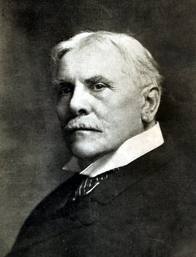
https://www.flickr.com/photos/goawayreadsomebooks/6924885482/in/photolist-bxVRch
Dispensationalism really hit its stride when it was popularized by the well known Scofield Reference Bible and it is currently the most adhered to eschatological position in the United States.
Dispensationalism’s main principle is that the history of humanity is divided up into different periods (or dispensations), and God deals with humanity on the basis of some particular principle for each dispensation. It should be said that not all dispensationalists agree on how many dispensations there are.
CHARACTERISTIC BELIEFS:
- The promises in Scripture made to Abraham and David are unconditional promises and are in no way promises made to, or fulfilled by, the Church.
- God has completely separate plans for the Church and Israel.
- The church is barely, if even at all, seen in the OT prophetic works.
- Jesus Christ came to offer a literal, earthly kingdom to Israel and the Jews.
- However, the Jews rejected this offer from God and are guilty of having Jesus crucified.
- Jesus Christ will come again to “rapture” the Church and to establish the earthly kingdom that was promised to Israel.
- The second coming happens in two stages (MacArthur, p.87).
- First the “rapture” happens, when Christ comes “for” the saints and they are caught up to meet Him in the air (Ibid.).
- Second, Jesus’ returns to earth and when He does He comes “with” His saints,
- also referred to as “The Appearing” (Ibid.).
- In between these two events they place Daniel’s 70th week – the seven years known as the Tribulation (Ibid.).
- There are at least three resurrections within this view: believers before the millennium (at the rapture), unbelievers after the millennium, and of the “tribulation saints” (those who become believers during the tribulation).
Historic Premillennialism
CHARACTERISTIC BELIEFS:
- Old Testament prophecy clearly has portions foreseeing the Church, which is in direct opposition to dispensationalism.
- The reason for the first coming of Christ was to die for the sins of humanity and not to set up an earthly kingdom for the Jews, also In opposition to dispensationalism.
- The Second Coming of Christ will be just a single event, which is in opposition to the the two stages of His coming that dispensationalism speaks of (coming for the saints and the coming with the saints).
- Christ’s return will happen before the millennium, which is in agreement with dispensationalism.
- The Church will have to go through the tribulation period (Mt. 24:3-22), which is in direct opposition to dispensationalism.
- There will be two resurrections – those who are Christ-followers before the millennium, and those who have rejected Christ after the millennium. Another distinction from dispensationalism.
Amillennialism
CHARACTERISTIC BELIEFS:
- The New Testament church is the true, spiritual Israel of God (Gal.6:16).
- Satan was bound, or limited, to a large degree during the earthly ministry of Jesus, keeping him restrained as the gospel was being preached to the world (Mt. 12:29; Lk. 10:18, 19).
- The Kingdom of God is a reality that is in operation today due to the fact Christ was, and is, victorious and is ruling His “subjects” by His Word and by the Spirit of God (Lk. 17:20, 21).
- The Kingdom of God is redemptive and spiritual in nautre and not political and literally physical (Jn. 18:36).
- The millennium, as well as the “first resurrection” found in Rev. 20:4-6, describes the current reign of the souls of those believers who have died and are with Christ in heaven.
- The millennium is the time frame between the two comings of Christ, or to phrase it more definitively, between the return of the “ascended Son to glory, his mission to earth completed, and the loosing of Satan ‘for a little while'” (Hughes).
- In opposition to the postmillennial view, amillennialists do not believe that the Scripture predicts some sort of golden age eutopia in the world before Christ returns.
- Both good and evil forces will progressively mature (Mt. 13:24-30, 37-43, 47-50), which agrees with premillennialism.
- A time of severe apostasy will occur right before the return of Christ (Rev. 20:7, 8).
- Some amillennialists do believe the above mentioned apostasy will be led by “the Antichrist,” but the majority of amillennialists, pointing out that the word “antichrist” is not even mentioned in Revelation, believe that the “Beast” of Revelation was actually a contemporary of the apostle John (Rev. 13:11-18).
- Even though the kingdom of God is viewed as a current reality, amillennialists also look forward to a “future, glorious, kingdom that is perfected for eternity at the return of Christ” (Anthony Hoekma).
- When Christ returns He will resurrect everyone at the same time (Jn. 5:25-30).
- The general judgment and rewards will follow the resurrection mentioned above.
- Christ will create a new heaven and new earth in perfect condition which will endure for eternity, often referred to as the eternal kingdom.
Postmillennialism
CHARACTERISTIC BELIEFS:
- The New Testament church is the true, spiritual Israel of God (Gal.6:16), which agrees with amillennialism.
- The Kingdom of God is in operation today, which is in agreement with amillennialism.
- The Kingdom of God is redemptive and spiritual in nautre and not political and literally physical (Jn. 18:36), agreeing with amillennialism.
- A gradual victory of authentic Christianity through the Holy Spirit will take place before the return of Christ, which is in opposition to amillennialism.
- The millennial period will close at the time of Christ’s second coming, which is in agreement with amillennialism.
- When Christ returns He will resurrect everyone at the same time (Jn. 5:25-30), agreeing with amillennialism.
- The general judgment and rewards will follow the resurrection mentioned above, also agreeing with amillennialism.
- Christ will create a new heaven and new earth in perfect condition which will endure for eternity, often referred to as the eternal kingdom, another agreement with amillennialism.
Also In This Series
- A Look at Eschatology: Why Study The End Times?
- A Look at Eschatology: An Overview of Each Position
- A Look at Eschatology: The Book of Revelation, The Antichrist, and a Conclusion
This was a guest post from Dr. Jeff Hagan.
Jeff is an ordained Christian minister with over 23 years of ministry experience. He has attended Gordon-Conwell Theological Seminary, Luther Rice Seminary, Tyndale Seminary and a handful of other institutes as well. He has earned several degrees including the Doctor of Christian Education and the Doctor of Theology.
Dispensational Premillennialism
Previous Post

March 13, 2016
A Look at Eschatology (1/3): Why Study The End Times?
Browse Our Archives
Select a Category #ShoutYourAbortion 10 Commandments 2016 Election 2017 2020 Election Abortion Accelerate Books Adultery America Andy Stanley Arminianism Ashley Madison Atonement B&H Academic Baptism Barry Horner Beauty Biblical Elders Billy Graham Blog Book Review Bruce Jenner Caitlyn Jenner Calvin Calvinism Cheating Chick-fil-A Children Christ Christian History Christian Living Christian Podcasts Christianity Christmas Church History Church Leadership Civil Disobedience Constitutional Coronavirus Culture Death Demoninations Discipleship Doctrine Doctrine of God Donald Trump Ecclesiology Entertainment Eschatology Ethics Evangelical Evangelism Evil Evolution Fear Forgive Yourself Forgiveness Francis Chan Future Israel Gay Marriage Gender Genesis George Floyd Gospel Government Gun Control Halloween hamartiology Heavenly Reward Hermeneutics History Hollywood Holy Spirit Homeschool Homosexual Homosexuality Hope Hospitality Humor Husband Infant Baptism Interview Jesus John Piper Josh Duggar Joshua Harris Judgment Justice Kathy Griffin Kim Davis Leadership Logic Love Manhood Marriage Martin Luther Messianic Prophecy Miscarriage Mocking Modesty Money Movie Reviews Music Music Review Netflix New Testament Obergefell Old Testament Parenting Pastor Pastoring Persecution Planned Parenthood Podcast Politics Pop Culture Pornography Prayer Preaching Predestination Pride Prosperity Gospel Rachel Held Evans Racism Ravi Zacharias Redemption Reformation 500 Reformation Day Reformed Theology Relationship Repentance Salvation Same Sex Marriage Satan Satire Scripture Seminary Sex Sin slavery Sola Scriptura Soteriology Sovereignty Spiritual Gifts Spurgeon Star Wars Steven Furtick Suffering Sufficiency of Scripture Sunday School Supreme Court Technology Testimony The Church The Lord of the Rings The Problem of Evil The Shack Theology Theonomy Tithing Transgenderism Tullian Tchividjian Uncategorized Universalism Vanity Fair Video Games Virgin Birth Voting Wife Women Worldview Worship
Select a Month June 2025 April 2025 March 2025 March 2024 February 2024 January 2024 December 2023 June 2023 April 2023 March 2023 January 2023 December 2022 November 2022 October 2022 September 2022 August 2022 July 2022 June 2022 May 2022 April 2022 March 2022 February 2022 January 2022 December 2021 November 2021 October 2021 August 2021 July 2021 June 2021 May 2021 April 2021 March 2021 February 2021 January 2021 December 2020 November 2020 October 2020 September 2020 August 2020 July 2020 June 2020 May 2020 April 2020 March 2020 February 2020 January 2020 December 2019 November 2019 October 2019 September 2019 August 2019 July 2019 June 2019 May 2019 April 2019 March 2019 February 2019 January 2019 December 2018 November 2018 October 2018 September 2018 August 2018 July 2018 June 2018 May 2018 April 2018 March 2018 February 2018 January 2018 December 2017 November 2017 October 2017 September 2017 August 2017 July 2017 June 2017 May 2017 April 2017 March 2017 February 2017 January 2017 December 2016 November 2016 October 2016 September 2016 August 2016 July 2016 June 2016 May 2016 April 2016 March 2016 February 2016 January 2016 December 2015 November 2015 October 2015 September 2015 August 2015 July 2015 June 2015 May 2015 April 2015 March 2015 February 2015 January 2015 December 2014 November 2014 October 2014 September 2014 August 2014 July 2014
Follow Us!
TAKE THE
Religious Wisdom Quiz
Who built the ark?
Select your answer to see how you score.
Noah David Solomon Moses
Related posts from The Chorus In The Chaos

A Brief Case for Amillennialism
The Beast of Revelation Exposed

Is Daniel Authentic Prophecy? (Part 2/2)
Is Daniel Authentic Prophecy? (Part 1/2)
TRENDING AT PATHEOS Evangelical

The REST of Your Life: A Creative Wrestles...
This week I had a conversation with a good friend from church....

How the author of the world's best hymn...
I've been working with John Newton for a while now. This makes...

Long before this Lectio Divina, Psalm 130 - the song - started...

What About the Trees? Another Living Parable
After I finished writing the last article about falling leaves as a...

Why Classical Education Is a Conversation, Not a...
Come and Read: Joy in Classical Education When I was a little...

Cornell University has received a great deal of negative publicity and intense...
view all Evangelical blogs
Ad-Free & Subscriber Log-In Subscription Support
- About Us
- 2026 Calendar
- Videos
- Podcasts
- Library of World Religions
- Faith In Media Tracker
- Advertise With Us
- Write for Us
- Privacy Policy
- Terms of Service
- Do Not Sell My Data
- Contact Us
- Radiant Digital
- Manage Newsletter Subscriptions
- Unsubscribe From Notifications
- Sitemap
Copyright 2008-2026, Patheos. All rights reserved.
Subscription Support Ad-Free & Subscriber Log-In
Follow Patheos