
BuddhistCatholicContemplativeEvangelicalGeneral ChristianHinduJewishLatter-day SaintMuslimNew VisionsProgressive Christian
Beliefs
- Buddhist
- Catholic
- Contemplative
- Evangelical
- General Christian
- Hindu
- Jewish
- Latter-day Saint
- More Voices
- Muslim
- New Visions
- Pagan
- Progressive Christian
Topics
- Religion News
- Food and Religion
- Sports and Religion
- Religious Art
- Religious Music and Entertainment
- Religious Events
- History and Religion
- Style and Religion
- Politics and Religion
- Women in Religion
- Recreation Outdoors and Religion
- Business Finance and Religion
- Careers Workplace and Religion
- Education and Religion
- Family Parenting and Religion
- Health Fitness and Religion
- Home and Religion
- Relationships and Religion
- Technology and Religion
- Travel and Religion
Columnists
- Buddhist Columnists
- Business Finance and Religion Columnists
- Careers Workplace and Religion Columnists
- Catholic Columnists
- Contemplative Columnists
- Education and Religion Columnists
- Evangelists Columnists
- Family Parenting and Religion Columnists
- General Christian Columnists
- Health Fitness and Religion Columnists
- Hindu Columnists
- History and Religion Columnists
- Home and Religion Columnists
- Jewish Columnists
- More Voices Columnists
- Latter Day Columnists
- Muslim Columnists
- New Visions Columnists
- Nonreligious Columnists
- Pagan Columnists
- Politics and Religion Columnists
- Progressive Columnists
- Recreation Outdoors and Religion Columnists
- Relationships and Religion Columnists
- Religion News Columnists
- Religious Art Columnists
- Religious Events Columnists
- Religious Music and Entertainment Columnists
- Sports and Religion Columnists
- Style and Religion Columnists
- Technology and Religion Columnists
- Travel and Religion Columnists
- Women in Religion Columnists
Resource Library
- 2026 Calendar
- Library of World Religions
- The 100 Most Holy Places on Earth
- Patheos Answers
- Podcasts
- Videos
- Faith Leaders Database
- Anglican Episcopalian
- Bahai
- Baptist
- Buddhism
- Christianity
- Confucianism
- Eastern Orthodoxy
- Hinduism
- Holiness and Pentecostal
- ISKCON
- Islam
- Judaism
- Lutheran
- Methodist
- The Church of Jesus Christ of Latter-day Saints
- New Age
- Paganism
- Presbytarian and Reformed
- Protestantism
- Religion Behind the Scenes
- Roman Catholic
- Scientology
- Shia Islam
- Sikhism
- Sufism
- Sunni Islam
- Taoism
- Zen
- See all religions
Research Tools
 Ad-Free & Subscriber Log-In Subscription Support
Ad-Free & Subscriber Log-In Subscription Support
Follow Patheos 

- Trending:
- Forgiveness
- |
- Marriage
- |
- Consciousness
- |
- Death Penalty
- |
- Election
- |
- Halloween

-
Explore
- Home
- Evangelical
- Choose Your Words Carefully
Choose Your Words Carefully
Last updated on: January 10, 2020 at 2:52 pm by Grayson Gilbert
Choose Your Words Carefully 2020-01-10T14:52:22-05:00 Grayson Gilbert
Patheos Explore the world's faith through different perspectives on religion and spirituality! Patheos has the views of the prevalent religions and spiritualities of the world.
Far too often we use words so flippantly that when we see them in the Scriptures or hear of them ascribed to the Lord, we lose any sense of impact or grandeur that might usually accompany them. When everything is described as “awesome” then God Himself cannot be not awesome, simply because God is outside of and above created order, and we have then relegated what is common to creation to be like the Creator. Some might find this level of reasoning to be pedantic, but the heart of what I’m trying to express is not some sort of overly formal usage of language where colloquialism disappears altogether. Rather, my goal is to simply argue that at some point, words mean something. Words convey something.
Now, if one were to leave it here, this is an altogether silly thesis. Everyone would agree that words mean something and convey something. That is how language works, after all. Yet the point I am making drives beyond this simple assertion. It is that words mean something precise. Words—especially for the Christian—are the means God has used to express the inexpressible, which is God Himself. What’s more than this is that through speech, God has carefully revealed the precise details of His dealings with mankind. Creation itself testifies to the existence of God (Ps. 19:1-4; Rom. 1:18-20) and yet it is by His incarnate and inscripturated Word that He has chosen to specially reveal Himself to mankind (Heb. 1:1-3). The point being that though natural revelation clearly reveals God and His truth as it relates to the natural world, special revelation reveals God and His truth as it relates to His Son.
The repercussions of this extend to the very idea that when words are used to describe God Himself, we ought to be considerate of how we then use such words. If we use such words flippantly, we are in very real danger of thinking flippant thoughts of God Himself when we see such words used to describe Him or His dealings with mankind. The point is not to say that Niagara Falls can’t be described as majestic and powerful, or awe-inspiring, but that as we think of such things, our foremost thought ought to be one that recognizes such “majesty” and “power” are laughable in comparison—that whatever awe the natural world might inspire, it pales in comparison to the awe to be had in the Lord of all the earth, whose majesty fills it. God is majestic, which very simply means for us that any sense of majesty we experience this side of heaven is a mere shadow of the full majesty of God. Yet if everything is majestic to you—if the Alps are equally as majestic as an inbred Pug—the word truly means nothing to you.
This same problem extends to how we comprehend things like love, justice, equity, and so on and so forth. What I am driving towards, if I can be more clear, is that when we ascribe something a quality or nature, we ought to be doing so with reference to the Creator of said qualities and natures—especially if these are communicable attributes (i.e. those attributes which are common to both man and God). If something is said to be awe-inspiring, it ought to truly be awe-inspiring, and not just “neat”. If something is to be “magnificent,” it will not do for it to be uninspiring in reality. If something is to be considered “beautiful,” it will not do for it to be hideous. These words find their meaning in the context of the truth, and as all truth is God’s truth, these words find their meanings in God Himself. What that means on a very practical level is that something like beauty is not in the eye of the beholder; beauty is an objective quality, because God determines beauty and gives characteristics of things that are altogether lovely and pleasing.
In much the same manner, when we think of any word, we ought to think of it rightly, that is, in its objective meaning and relation to the One who defines this meaning. It cannot mean something to you that is different than me. It must have an actual, objective meaning, and that meaning comes from the One who is Lord over language and expression itself. Thus, when we describe what something like “love” is—we must do so with reference to God Himself. When we describe what “justice” is—we must do so with reference to God Himself. When we describe what “goodness” is—we must do so with reference to God Himself. In every instance where one finds qualities of nature described, we must be quick to understand these things in light of God’s own character.
The reason I say this is simple: if God, for example, is love, His love is not separate from His being, which then means love itself is not separate from His decree, nor His actions. To state this principle more plainly: everything that God is, is love, therefore, everything that God does is loving. Love itself finds its definition in God Himself. The same could be said of God’s justice, mercy, holiness, etc. The idea being that we don’t start with our conception of these ideals, nor especially the world’s conception of these ideals, and then move toward understanding God by them. Instead, we understand these traits by understanding God Himself. Without a right understanding of the nature and character of God, we will never understand, properly speaking, what “love” is, nor for that matter what justice, holiness, and loyalty are, among a host of other things.
This becomes incredibly practical when we discuss things like the sovereignty of God in Salvation, or whether or not God is to be considered just in His command to the Israelites to kill every man, woman, and child of the Amalekites (1 Sam. 15:3). This is one of the reasons I am an advocate of defining the terms when you end up debating with someone, not because the terms necessarily mean two different things, but people tend to define things quite differently depending on their presuppositions. Yet to be sure, this is not simply of “in-house” importance. This is a crucial point in the discussion on homosexuality, at least in terms of how the broader culture has defined and understood what “love” is. The same principle carries through when we examine the culture of death behind abortion (after all, it is “my body, my choice”). It seems an obvious statement to make, but words are at the heart of every debate, and how we understand and employ them makes all the difference. Yet the difference is not seen solely in the outcome of the debate, whether or not we are found persuasive, nor if we’ve conveyed things as we’d hoped at the outset. What is of greater import is if what we have conveyed through our use of words is true.
Once we start to ask that question of ourselves, the topic becomes altogether more alarming, especially if we consider that we are judged for every careless word uttered from our lips, or that those who teach incur a stricter judgment because of how swift to sin and ruinous the tongue can be (Matt. 12:36; Ja. 3:1-12; Pro 10:19). Perhaps more to the point then is that as Christians, we are to be mastered by the idea that the words we speak are not simply to be words of truth, but those which are edifying to the body (Eph. 4:29). We, of all people, ought to be primarily concerned that we represent God and His truth accurately, yet we must also be concerned with how we represent such truths.
Again, one might sense the overall argument here to be pedantic, that I am being too much of an alarmist by dialing in on using words flippantly. Perhaps this is true; perhaps I am being puritanical, if one is so inclined to take that word as a pejorative. Yet if words mean something, and we routinely convey something by those words that is not true, whether through an outright lie or in frivolity, I do not find it a stretch to say we hold some fundamental misconception of God Himself, or that we lack basic wisdom. I sense it is of little wonder that even a fool is considered wise when he keeps his mouth shut (Pro. 17:28). The idea then brings us back to taking deliberate care in what we express and how we express it, lest when we open our mouths, it is only to sufficiently muddy the waters of understanding and leave others worse off for hearing us.
Previous Post

January 9, 2020
Stop Sexualizing the Beautiful Friendship of Frodo and Sam
Next Post

January 14, 2020 Fathers, Rise Up and Lead Your Family
Browse Our Archives
Select a Category #ShoutYourAbortion 10 Commandments 2016 Election 2017 2020 Election Abortion Accelerate Books Adultery America Andy Stanley Arminianism Ashley Madison Atonement B&H Academic Baptism Barry Horner Beauty Biblical Elders Billy Graham Blog Book Review Bruce Jenner Caitlyn Jenner Calvin Calvinism Cheating Chick-fil-A Children Christ Christian History Christian Living Christian Podcasts Christianity Christmas Church History Church Leadership Civil Disobedience Constitutional Coronavirus Culture Death Demoninations Discipleship Doctrine Doctrine of God Donald Trump Ecclesiology Entertainment Eschatology Ethics Evangelical Evangelism Evil Evolution Fear Forgive Yourself Forgiveness Francis Chan Future Israel Gay Marriage Gender Genesis George Floyd Gospel Government Gun Control Halloween hamartiology Heavenly Reward Hermeneutics History Hollywood Holy Spirit Homeschool Homosexual Homosexuality Hope Hospitality Humor Husband Infant Baptism Interview Jesus John Piper Josh Duggar Joshua Harris Judgment Justice Kathy Griffin Kim Davis Leadership Logic Love Manhood Marriage Martin Luther Messianic Prophecy Miscarriage Mocking Modesty Money Movie Reviews Music Music Review Netflix New Testament Obergefell Old Testament Parenting Pastor Pastoring Persecution Planned Parenthood Podcast Politics Pop Culture Pornography Prayer Preaching Predestination Pride Prosperity Gospel Rachel Held Evans Racism Ravi Zacharias Redemption Reformation 500 Reformation Day Reformed Theology Relationship Repentance Salvation Same Sex Marriage Satan Satire Scripture Seminary Sex Sin slavery Sola Scriptura Soteriology Sovereignty Spiritual Gifts Spurgeon Star Wars Steven Furtick Suffering Sufficiency of Scripture Sunday School Supreme Court Technology Testimony The Church The Lord of the Rings The Problem of Evil The Shack Theology Theonomy Tithing Transgenderism Tullian Tchividjian Uncategorized Universalism Vanity Fair Video Games Virgin Birth Voting Wife Women Worldview Worship
Select a Month June 2025 April 2025 March 2025 March 2024 February 2024 January 2024 December 2023 June 2023 April 2023 March 2023 January 2023 December 2022 November 2022 October 2022 September 2022 August 2022 July 2022 June 2022 May 2022 April 2022 March 2022 February 2022 January 2022 December 2021 November 2021 October 2021 August 2021 July 2021 June 2021 May 2021 April 2021 March 2021 February 2021 January 2021 December 2020 November 2020 October 2020 September 2020 August 2020 July 2020 June 2020 May 2020 April 2020 March 2020 February 2020 January 2020 December 2019 November 2019 October 2019 September 2019 August 2019 July 2019 June 2019 May 2019 April 2019 March 2019 February 2019 January 2019 December 2018 November 2018 October 2018 September 2018 August 2018 July 2018 June 2018 May 2018 April 2018 March 2018 February 2018 January 2018 December 2017 November 2017 October 2017 September 2017 August 2017 July 2017 June 2017 May 2017 April 2017 March 2017 February 2017 January 2017 December 2016 November 2016 October 2016 September 2016 August 2016 July 2016 June 2016 May 2016 April 2016 March 2016 February 2016 January 2016 December 2015 November 2015 October 2015 September 2015 August 2015 July 2015 June 2015 May 2015 April 2015 March 2015 February 2015 January 2015 December 2014 November 2014 October 2014 September 2014 August 2014 July 2014
Follow Us!
TAKE THE
Religious Wisdom Quiz
Who sat at the Beautiful Gate begging before Peter healed him?
Select your answer to see how you score.
A lame man A blind man A Roman centurion A rich ruler
Related posts from The Chorus In The Chaos

Why the ‘He Gets Us’ Super Bowl Commercial...
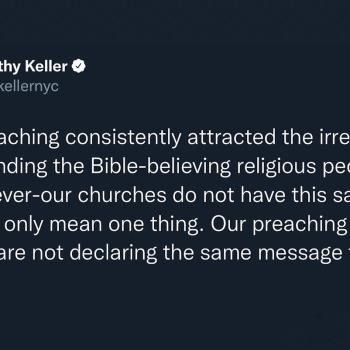
Sorry Tim Keller, People Reject Christ Because They...

Being Slow to Speak in an Age of...

TRENDING AT PATHEOS Evangelical

How the author of the world's best hymn...
I've been working with John Newton for a while now. This makes...

Long before this Lectio Divina, Psalm 130 - the song - started...

What About the Trees? Another Living Parable
After I finished writing the last article about falling leaves as a...

Why Classical Education Is a Conversation, Not a...
Come and Read: Joy in Classical Education When I was a little...

Falling Leaves: A Living Parable on Letting Go
I’ve spent the vast majority of my life in the southeast corner...

Cornell University has received a great deal of negative publicity and intense...
view all Evangelical blogs
Ad-Free & Subscriber Log-In Subscription Support
- About Us
- 2026 Calendar
- Videos
- Podcasts
- Library of World Religions
- Faith In Media Tracker
- Advertise With Us
- Write for Us
- Privacy Policy
- Terms of Service
- Do Not Sell My Data
- Contact Us
- Radiant Digital
- Manage Newsletter Subscriptions
- Unsubscribe From Notifications
- Sitemap
Copyright 2008-2026, Patheos. All rights reserved.
Subscription Support Ad-Free & Subscriber Log-In
Follow Patheos