
BuddhistCatholicContemplativeEvangelicalGeneral ChristianHinduJewishLatter-day SaintMuslimNew VisionsProgressive Christian
Beliefs
- Buddhist
- Catholic
- Contemplative
- Evangelical
- General Christian
- Hindu
- Jewish
- Latter-day Saint
- More Voices
- Muslim
- New Visions
- Pagan
- Progressive Christian
Topics
- Religion News
- Food and Religion
- Sports and Religion
- Religious Art
- Religious Music and Entertainment
- Religious Events
- History and Religion
- Style and Religion
- Politics and Religion
- Women in Religion
- Recreation Outdoors and Religion
- Business Finance and Religion
- Careers Workplace and Religion
- Education and Religion
- Family Parenting and Religion
- Health Fitness and Religion
- Home and Religion
- Relationships and Religion
- Technology and Religion
- Travel and Religion
Columnists
- Buddhist Columnists
- Business Finance and Religion Columnists
- Careers Workplace and Religion Columnists
- Catholic Columnists
- Contemplative Columnists
- Education and Religion Columnists
- Evangelists Columnists
- Family Parenting and Religion Columnists
- General Christian Columnists
- Health Fitness and Religion Columnists
- Hindu Columnists
- History and Religion Columnists
- Home and Religion Columnists
- Jewish Columnists
- More Voices Columnists
- Latter Day Columnists
- Muslim Columnists
- New Visions Columnists
- Nonreligious Columnists
- Pagan Columnists
- Politics and Religion Columnists
- Progressive Columnists
- Recreation Outdoors and Religion Columnists
- Relationships and Religion Columnists
- Religion News Columnists
- Religious Art Columnists
- Religious Events Columnists
- Religious Music and Entertainment Columnists
- Sports and Religion Columnists
- Style and Religion Columnists
- Technology and Religion Columnists
- Travel and Religion Columnists
- Women in Religion Columnists
Resource Library
- 2026 Calendar
- Library of World Religions
- The 100 Most Holy Places on Earth
- Patheos Answers
- Podcasts
- Videos
- Faith Leaders Database
- Anglican Episcopalian
- Bahai
- Baptist
- Buddhism
- Christianity
- Confucianism
- Eastern Orthodoxy
- Hinduism
- Holiness and Pentecostal
- ISKCON
- Islam
- Judaism
- Lutheran
- Methodist
- The Church of Jesus Christ of Latter-day Saints
- New Age
- Paganism
- Presbytarian and Reformed
- Protestantism
- Religion Behind the Scenes
- Roman Catholic
- Scientology
- Shia Islam
- Sikhism
- Sufism
- Sunni Islam
- Taoism
- Zen
- See all religions
Research Tools
 Ad-Free & Subscriber Log-In Subscription Support
Ad-Free & Subscriber Log-In Subscription Support
Follow Patheos 

- Trending:
- Forgiveness
- |
- Marriage
- |
- Consciousness
- |
- Death Penalty
- |
- Election
- |
- Halloween

-
Explore
- Home
- Evangelical
- A Short Case For Infant Baptism
A Short Case For Infant Baptism
Last updated on: April 13, 2016 at 6:57 am by Jonathan Dorst
A Short Case For Infant Baptism 2016-04-13T06:57:16-05:00 Jonathan Dorst
Patheos Explore the world's faith through different perspectives on religion and spirituality! Patheos has the views of the prevalent religions and spiritualities of the world.
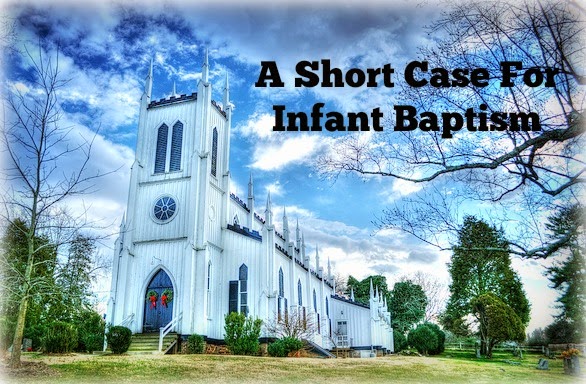
[Title Photo Attribution: Original Photo Source; CC 2.0
There are many misconceptions among modern American evangelicals about the practice of infant baptism. The first is that only Catholics and ‘liberals’ practice it, probably as a way of avoiding having to talk about sin and Jesus. The truth, however, is that it is a widespread practice, and from a global perspective is certainly the dominant practice, as it includes 2 of the 3 branches of Christianity, the Orthodox and Catholic, as well as Anglicans/Episcopalians, Lutherans, Presbyterians/Reformed, Methodists, some Nazarenes and some United Church of Christ (UCC). I will not attempt to speak to the theology and practice of all of those traditions, I will only represent my own tradition, as a Presbyterian in the Reformed tradition. I do so affirming the inerrancy of Scripture, the deity and uniqueness of Christ as the only way of Salvation, and the orthodoxy found in the Apostles’ and Nicene Creed.
We can all agree that the Bible does not make an explicit case for infant baptism. There is no verse that says, “Thou shalt baptize thy babies.” On the other hand, it needs to be seen that there is no verse that condemns the practice either.
The closest that my Baptist friends (I went to Baylor and even was a Baptist for a while) would come to finding a verse to deny the practice is to say that the formula in Acts 2:38 is the formula for salvation and believer’s baptism. In that verse, the apostle Peter says, “Repent and be baptized every one of you in the name of Jesus Christ for the forgiveness of your sins, and you will receive the gift of the Holy Spirit.” The problem with using Peter’s word as a formula is that the formula changes throughout the New Testament. Jesus says in Mark 1:15, “Repent and believe in the gospel.” Does that mean we don’t need to be baptized also? Paul tells the Philippian jailer, “Believe in the Lord Jesus, and you will be saved, you and your household.” Then, in Acts 26, when Paul is recounting his work to Agrippa, he says that he “declared… that they should repent and turn to God, performing deeds in keeping with their repentance.” Clearly, there is more to salvation than simply repenting and being baptized- Peter’s formula is true, but not exhaustive. The other problem with using Peter’s words in Acts 2:38 as a clear proof-text for believer’s baptism is that you have to divorce the very next verse from its clear connection to the covenant made with Abraham and his descendants, “For the promise is for you and for your children and for all who are far off, everyone whom the Lord our God calls to himself.”
Moving forward on the supposition that infant baptism is neither explicitly taught nor repudiated in the Bible, I propose instead to build a foundation upon which infant baptism sits. My favored metaphor is a table with five legs. Once you see the truth of the ‘legs’ you will be able to see that they give clear support to the ’table,’ the practice of infant baptism.
The 5 Legs That Prop Up the Table of Infant Baptism
1. Election
If you do not get the doctrine of election, you will not get infant baptism. Paul describes a chain of events that God does in saving us in Romans 8, “Those whom he foreknew he also predestined to be conformed to the image of his Son… and those he predestined he also called, and those whom he called he also justified, and those whom he justified he also glorified.” In biblical soteriology, God is the author of salvation, and for those for whom He begins the process, he finishes the process.
When it comes to baptism, in light of election, we don’t baptize people to start a new process; we baptize them to give a visible picture of what God is already doing. If election is true, a believer’s salvation is guaranteed, and baptizing an infant (without, of course, their consent or desire) is a picture of God’s sovereignty in salvation. It’s significant that baptism is not something that you do any acting in, it’s done to you. God is the main actor in a baptism- the water that represents His cleansing is poured out on us, the Holy Spirit is given to us. This is a gift, lest any man should boast.
Election, of course, does not cover over our responsibility to repent and believe the good news. When we baptize a child we understand that this same child must put his or her trust in Jesus Christ as Lord and Savior before the eternal benefits are embraced. Baptism is like an engagement, justification is the wedding.
2. Original Sin
The concept of original sin is that when Adam sinned, sin was introduced into the world and infected all of his descendants. Therefore we aren’t just sinners because we sin, we sin because we are sinners, born under the curse of sin passed down to us in our human nature.
Infant baptism recognizes the truth of the fact that we are born sinful and therefore are born in rebellion to God. There is no ‘age of accountability’ in the Bible, where a child is neutral until he can make moral choices for himself. So, what do we do with our children, who are born wicked? We put them into union with God and the church. That union is baptism, the sign and seal of God’s covenant with His people. Paul declares in 1 Corinthians 7:14 that the children of Christian parents are ‘holy.’ Paul does not make this explicit, but as a first century Jewish man with an encyclopedic knowledge of the Old Testament, it’s almost certain that he would have understood that the only way that they can be holy is through covenant with God.
3. Covenant Continuity
The way that God structured His relationship to His people in the Old Testament is through use of a covenant, a standard ancient form of treaty or bond. In Genesis 17, God made an everlasting covenant with Abraham and commanded him to circumcise every male child in his household, which was to serve as a sign of the covenant between them (Gen. 17:9-14). That sign has both temporal and eternal significance attached to it. While the covenant is not the same thing as election, as people can move in and out of the covenant, it is basically equivalent to the concept of the ‘visible church.’
With the death and resurrection of Christ, the sign of the covenant was changed to baptism, in order to reflect the reality that a bloody sign (circumcision) was no longer appropriate, now that Christ has shed His blood for the remission of sins (Heb. 9:23-10:14; Matt. 28:19-20). Because baptism has replaced circumcision as the sign of the covenant, Paul connected the significance of the two rites, and described baptism as the ‘circumcision of Christ’ (Col. 2:11-12).
4. The Household Baptisms of Acts
I am aware that these passages are hotly contested, but it seems significant that when Lydia and the Philippians jailer and others are converted we are immediately told that they are baptized, “and [their] household as well.” Households in ancient times were often quite large, often including multiple generations and family units. It’s of course possible that every person in those households also professed faith (which would also assume there were no small children) before they were baptized, but it seems more likely that when the head of the household believed, the whole household was marked as God’s. Especially when we read a comment like the one at the end of the story of the Philippian jailer, “And he rejoiced along with his entire household that he had believed in God.” There is no mention of anyone besides the jailer believing, but they are all baptized.
The household baptismal accounts in Acts demonstrate that the principle of family solidarity that applied in the Old Testament period still holds true in the New Testament era. They also make it highly probable that Acts, contrary to popular opinion, contains explicit accounts of children being baptized (Acts 10:24-48; 16:11-15; 16:25-34).
5. Church History
Simply put, the church has always practiced infant baptism. It was not until the 1500’s that the Anabaptists (who were considered heretical at the time) introduced the teaching that baptism should only be for those who have made a profession of faith.
Origen wrote around 250 AD: “On this account also the church had a tradition from the apostles to give baptism even to infants. For they to whom the secrets of the divine mysteries were given knew that there is in all persons the natural stains of sin which must be washed away by the water and the Spirit.”
Cyprian of Carthage, in arguing for infants to be baptized as soon as possible, wrote in 253 AD, “As to what pertains to the case of infants: You [Fidus] said that they ought not to be baptized within the second or third day after their birth, that the old law of circumcision must be taken into consideration, and that you did not think that one should be baptized and sanctified within the eighth day after his birth. In our council it seemed to us far otherwise. No one agreed to the course which you thought should be taken. Rather, we all judge that the mercy and grace of God ought to be denied to no man born.”
It is possible that the church erred for 1,500 years in its practice. But, that doesn’t put much trust in the Holy Spirit’s leading of His church, and it ignores the principle that, in theology, if it’s a new concept that no one else has seen before, it’s probably bad exegesis.
Previous Post

October 15, 2014
You Can't Spell COMPLAIN Without P-A-I-N
Next Post

October 27, 2014 The Curious Theology Behind The Hymn "It Is Well With My Soul"
Browse Our Archives
Select a Category #ShoutYourAbortion 10 Commandments 2016 Election 2017 2020 Election Abortion Accelerate Books Adultery America Andy Stanley Arminianism Ashley Madison Atonement B&H Academic Baptism Barry Horner Beauty Biblical Elders Billy Graham Blog Book Review Bruce Jenner Caitlyn Jenner Calvin Calvinism Cheating Chick-fil-A Children Christ Christian History Christian Living Christian Podcasts Christianity Christmas Church History Church Leadership Civil Disobedience Constitutional Coronavirus Culture Death Demoninations Discipleship Doctrine Doctrine of God Donald Trump Ecclesiology Entertainment Eschatology Ethics Evangelical Evangelism Evil Evolution Fear Forgive Yourself Forgiveness Francis Chan Future Israel Gay Marriage Gender Genesis George Floyd Gospel Government Gun Control Halloween hamartiology Heavenly Reward Hermeneutics History Hollywood Holy Spirit Homeschool Homosexual Homosexuality Hope Hospitality Humor Husband Infant Baptism Interview Jesus John Piper Josh Duggar Joshua Harris Judgment Justice Kathy Griffin Kim Davis Leadership Logic Love Manhood Marriage Martin Luther Messianic Prophecy Miscarriage Mocking Modesty Money Movie Reviews Music Music Review Netflix New Testament Obergefell Old Testament Parenting Pastor Pastoring Persecution Planned Parenthood Podcast Politics Pop Culture Pornography Prayer Preaching Predestination Pride Prosperity Gospel Rachel Held Evans Racism Ravi Zacharias Redemption Reformation 500 Reformation Day Reformed Theology Relationship Repentance Salvation Same Sex Marriage Satan Satire Scripture Seminary Sex Sin slavery Sola Scriptura Soteriology Sovereignty Spiritual Gifts Spurgeon Star Wars Steven Furtick Suffering Sufficiency of Scripture Sunday School Supreme Court Technology Testimony The Church The Lord of the Rings The Problem of Evil The Shack Theology Theonomy Tithing Transgenderism Tullian Tchividjian Uncategorized Universalism Vanity Fair Video Games Virgin Birth Voting Wife Women Worldview Worship
Select a Month June 2025 April 2025 March 2025 March 2024 February 2024 January 2024 December 2023 June 2023 April 2023 March 2023 January 2023 December 2022 November 2022 October 2022 September 2022 August 2022 July 2022 June 2022 May 2022 April 2022 March 2022 February 2022 January 2022 December 2021 November 2021 October 2021 August 2021 July 2021 June 2021 May 2021 April 2021 March 2021 February 2021 January 2021 December 2020 November 2020 October 2020 September 2020 August 2020 July 2020 June 2020 May 2020 April 2020 March 2020 February 2020 January 2020 December 2019 November 2019 October 2019 September 2019 August 2019 July 2019 June 2019 May 2019 April 2019 March 2019 February 2019 January 2019 December 2018 November 2018 October 2018 September 2018 August 2018 July 2018 June 2018 May 2018 April 2018 March 2018 February 2018 January 2018 December 2017 November 2017 October 2017 September 2017 August 2017 July 2017 June 2017 May 2017 April 2017 March 2017 February 2017 January 2017 December 2016 November 2016 October 2016 September 2016 August 2016 July 2016 June 2016 May 2016 April 2016 March 2016 February 2016 January 2016 December 2015 November 2015 October 2015 September 2015 August 2015 July 2015 June 2015 May 2015 April 2015 March 2015 February 2015 January 2015 December 2014 November 2014 October 2014 September 2014 August 2014 July 2014
Follow Us!
TAKE THE
Religious Wisdom Quiz
What does "Absalom" mean in Hebrew?
Select your answer to see how you score.
Son of Righteousness Father of Peace Mighty Warrior God is My Strength
Related posts from The Chorus In The Chaos

The Covenant Keeping God of Genesis 15

Where to Find Covenant Theology in the New...

The Real Issues At Play in the Baptism...

The Sign of the Covenant: A Biblical Defense...
TRENDING AT PATHEOS Evangelical

The REST of Your Life: A Creative Wrestles...
This week I had a conversation with a good friend from church....

How the author of the world's best hymn...
I've been working with John Newton for a while now. This makes...

Long before this Lectio Divina, Psalm 130 - the song - started...

What About the Trees? Another Living Parable
After I finished writing the last article about falling leaves as a...

Why Classical Education Is a Conversation, Not a...
Come and Read: Joy in Classical Education When I was a little...

Cornell University has received a great deal of negative publicity and intense...
view all Evangelical blogs
Ad-Free & Subscriber Log-In Subscription Support
- About Us
- 2026 Calendar
- Videos
- Podcasts
- Library of World Religions
- Faith In Media Tracker
- Advertise With Us
- Write for Us
- Privacy Policy
- Terms of Service
- Do Not Sell My Data
- Contact Us
- Radiant Digital
- Manage Newsletter Subscriptions
- Unsubscribe From Notifications
- Sitemap
Copyright 2008-2026, Patheos. All rights reserved.
Subscription Support Ad-Free & Subscriber Log-In
Follow Patheos