
BuddhistCatholicContemplativeEvangelicalGeneral ChristianHinduJewishLatter-day SaintMuslimNew VisionsProgressive Christian
Beliefs
- Buddhist
- Catholic
- Contemplative
- Evangelical
- General Christian
- Hindu
- Jewish
- Latter-day Saint
- More Voices
- Muslim
- New Visions
- Pagan
- Progressive Christian
Topics
- Religion News
- Food and Religion
- Sports and Religion
- Religious Art
- Religious Music and Entertainment
- Religious Events
- History and Religion
- Style and Religion
- Politics and Religion
- Women in Religion
- Recreation Outdoors and Religion
- Business Finance and Religion
- Careers Workplace and Religion
- Education and Religion
- Family Parenting and Religion
- Health Fitness and Religion
- Home and Religion
- Relationships and Religion
- Technology and Religion
- Travel and Religion
Columnists
- Buddhist Columnists
- Business Finance and Religion Columnists
- Careers Workplace and Religion Columnists
- Catholic Columnists
- Contemplative Columnists
- Education and Religion Columnists
- Evangelists Columnists
- Family Parenting and Religion Columnists
- General Christian Columnists
- Health Fitness and Religion Columnists
- Hindu Columnists
- History and Religion Columnists
- Home and Religion Columnists
- Jewish Columnists
- More Voices Columnists
- Latter Day Columnists
- Muslim Columnists
- New Visions Columnists
- Nonreligious Columnists
- Pagan Columnists
- Politics and Religion Columnists
- Progressive Columnists
- Recreation Outdoors and Religion Columnists
- Relationships and Religion Columnists
- Religion News Columnists
- Religious Art Columnists
- Religious Events Columnists
- Religious Music and Entertainment Columnists
- Sports and Religion Columnists
- Style and Religion Columnists
- Technology and Religion Columnists
- Travel and Religion Columnists
- Women in Religion Columnists
Resource Library
- 2026 Calendar
- Library of World Religions
- The 100 Most Holy Places on Earth
- Patheos Answers
- Podcasts
- Videos
- Faith Leaders Database
- Anglican Episcopalian
- Bahai
- Baptist
- Buddhism
- Christianity
- Confucianism
- Eastern Orthodoxy
- Hinduism
- Holiness and Pentecostal
- ISKCON
- Islam
- Judaism
- Lutheran
- Methodist
- The Church of Jesus Christ of Latter-day Saints
- New Age
- Paganism
- Presbytarian and Reformed
- Protestantism
- Religion Behind the Scenes
- Roman Catholic
- Scientology
- Shia Islam
- Sikhism
- Sufism
- Sunni Islam
- Taoism
- Zen
- See all religions
Research Tools
 Ad-Free & Subscriber Log-In Subscription Support
Ad-Free & Subscriber Log-In Subscription Support
Follow Patheos 

- Trending:
- Forgiveness
- |
- Marriage
- |
- Consciousness
- |
- Death Penalty
- |
- Election
- |
- Halloween
 Charting Church Leadership
- Home
- Careers, Workplace and Religion
- Paul models resistance to discrimination
Paul models resistance to discrimination
Last updated on: January 1, 2017 at 10:18 pm by Neil Carlson
Paul models resistance to discrimination 2017-01-01T22:18:53-04:00 Neil Carlson
Patheos Explore the world's faith through different perspectives on religion and spirituality! Patheos has the views of the prevalent religions and spiritualities of the world.
500 years of protest
I am a Protestant. I come from a long history of protestors, of resisters. But is it Christian to protest? Does Scripture support it? How about resistance to discrimination against ethnic and religious minorities?
Resistance certainly has precedent in Reformation history. Today marks the first day of the 500th calendar-year anniversary of the Reformation. The daring, passionate monk Martin Luther posted his 95 theses on the church door in Wittenberg, Germany on All Hallows’ Eve. On Wednesday, I’m looking forward to hearing my colleague Dr. Karin Maag discuss “500 Years Later: Why the Reformation Still Matters” at the Calvin College January Series.
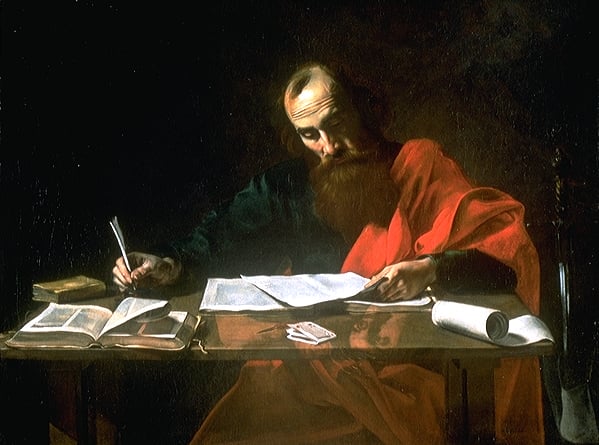
Paul didn’t mince words, neither in person nor in correspondence.
Image: Saint Paul writing his epistles by Valentin de Boulougne.

Justification by faith
At Shawnee Park Christian Reformed Church, this morning’s sermon by Pastor Nicholas Hopkins was about the first of the five Reformation “Solas”: “Sola fide” (“Faith alone”). The text was Galatians 2:15 to 3:14, in which we are taught,
We who are Jews by birth and not sinful Gentiles know that a person is not justified by the works of the law, but by faith in Jesus Christ. So we, too, have put our faith in Christ Jesus that we may be justified by faith in Christ and not by the works of the law, because by the works of the law no one will be justified. (Galatians 2:15-16 NIV)
In Galatians and throughout the New Testament, the doctrine of justification by faith is general, eternal theology. No one, not even God’s chosen people of Israel, can earn their way into heaven through good works of any kind. But it’s much too easy for distant readers like us to perceive a watered-down, bloodless abstraction of the “works of the law.”
“I opposed him to his face”
In context, Paul addressed a specific work demanded by Jewish traditionalists visiting Antioch from Jerusalem: separate tables for inferior ethno-religious groups. Two apostles engaged in a direct confrontation: Saul, also called Paul, and Cephas, also called Peter.
When Cephas came to Antioch, I opposed him to his face, because he stood condemned. For before certain men came from James, he used to eat with the Gentiles. But when they arrived, he began to draw back and separate himself from the Gentiles because he was afraid of those who belonged to the circumcision group. The other Jews joined him in his hypocrisy, so that by their hypocrisy even Barnabas was led astray.
When I saw that they were not acting in line with the truth of the gospel, I said to Cephas in front of them all, “You are a Jew, yet you live like a Gentile and not like a Jew. How is it, then, that you force Gentiles to follow Jewish customs?” (Galatians 2:11-14 NIV, emphasis added)
Therefore, the immediate application of Paul’s vision for justification by faith alone is to resist the specific practice of social ostracism at the dinner table. By extension, it attacks the practice of holding one ethnic group to be superior to another. Paul is an outspoken opponent of discrimination; today, he would surely be an outspoken anti-racist and anti-nationalist.
Resistance is not futile
Though it could be, Paul’s resistance isn’t about the victims of discrimination. He doesn’t express any compassion for the Antiochian Gentiles that Peter shunned. Instead, he attacks the hypocrisy of Cephas. The Gentiles of Galatia even come in for potent ridicule. Paul rails, “You foolish Galatians! Who has bewitched you?” (Galatians 3:1).
What can we conclude, except that Paul demands that those who face discrimination should stand up for themselves? He said they were fools to go along with their legalistic opponents!
Paul’s resistance to Peter (Cephas) continued with a mission to Jerusalem. Ultimately, at the Council of Jerusalem in Acts 15, Paul and his allies persuaded the church. The whole church made a declaration that fully welcomed Gentiles. The only ethical burden was the minimal tasks of avoiding sexual immorality and meat offered to idols.
The letter from the Council of Jerusalem was written by its leader, James the brother of Jesus. He appears by name twice in Galatians (1:19 and 2:9). As I’ve written elsewhere (see “Our model for leadership is a pagan prostitute” on this blog) and lectured about in October, James was already disposed to support a cosmopolitan, anti-nationalist understanding of the gospel. He had endured the tensions between Hebraic and Hellenistic Jews in the early Jerusalem church. That internal tension within Judaism came to a head with Stephen’s stoning in Acts 7.
Communion is eating together
We find the same application to meals again in I Corinthians 11:17-34, where Paul condemns the Corinthian church for “divisions among you” (11:18). He says “those who eat and drink without discerning the body of Christ eat and drink judgment on themselves” (11:29). He commands, “when you gather to eat, you should all eat together” (11:33).
“Discerning the body of Christ” does not mean perceiving a magical attribute in the Eucharistic bread, but rather understanding that the body includes everyone. In 2011, that recognition led to the Christian Reformed Church’s annual Synod to change its doctrine and welcome children into communion without a profession of faith.
Will you follow Paul’s example in 2017? Will you oppose exclusive, judgmental Christianity to its face, and ensure we welcome everyone to the table?
Be a leader: follow Paul as he follows Christ (I Corinthians 11:1 NIV).
Charting Church Leadership is back in business in 2017! Coming soon: leadership book reviews, analysis of election results, and religious demographics.
Previous Post
March 24, 2016
The exemplary restraint of the ultimate conservative leader
Next Post
August 13, 2017 Stephen the deacon was martyred by first-century nationalists
Browse Our Archives
Select a Category About Bible study Business Business Communion Culture and Media Demographics Ethics Movies Political science Psychology Public administration Racial equity Religion Religious Participation Social science
Select a Month August 2017 January 2017 March 2016 January 2016 December 2015 November 2015 October 2015 September 2015
Follow Us!
TAKE THE
Religious Wisdom Quiz
What city did David capture and make his capital?
Select your answer to see how you score.
Bethlehem Gibeon Hebron Jerusalem
Related posts from Charting Church Leadership
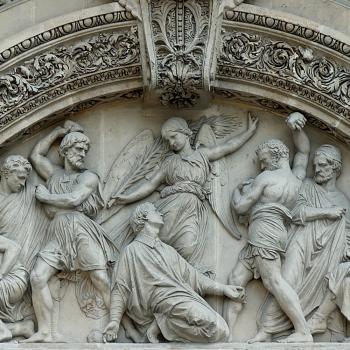
Stephen the deacon was martyred by first-century nationalists
The exemplary restraint of the ultimate conservative leader

Wheaton, model strong leadership: defend Dr. Hawkins
Follow a Jewish carpenter: Joseph
TRENDING AT PATHEOS Careers, Workplace and Religion

St. Francis by Bill Droel Pope Leo XIV declares 2026 as “Year...

Catholics are schooled in the faith by memorizing dogmatic points and lots...

The Good News of Our Human Limitations -...
After another day of trying to meet deadlines and working on projects,...

Quiet Holy Attentiveness (podcast) with Sarah Clarkson
We know that quiet is an essential aspect of the spiritual life,...

Every Vocation Everywhere All At Once
What is a vocation? How does it endure through the years? Can...

I promise this is not going to become a Taylor Swift Studies...
view all Careers, Workplace and Religion blogs
Ad-Free & Subscriber Log-In Subscription Support
- About Us
- 2026 Calendar
- Videos
- Podcasts
- Library of World Religions
- Faith In Media Tracker
- Advertise With Us
- Write for Us
- Privacy Policy
- Terms of Service
- Do Not Sell My Data
- Contact Us
- Radiant Digital
- Manage Newsletter Subscriptions
- Unsubscribe From Notifications
- Sitemap
Copyright 2008-2026, Patheos. All rights reserved.
Subscription Support Ad-Free & Subscriber Log-In
Follow Patheos