
BuddhistCatholicContemplativeEvangelicalGeneral ChristianHinduJewishLatter-day SaintMuslimNew VisionsProgressive Christian
Beliefs
- Buddhist
- Catholic
- Contemplative
- Evangelical
- General Christian
- Hindu
- Jewish
- Latter-day Saint
- More Voices
- Muslim
- New Visions
- Pagan
- Progressive Christian
Topics
- Religion News
- Food and Religion
- Sports and Religion
- Religious Art
- Religious Music and Entertainment
- Religious Events
- History and Religion
- Style and Religion
- Politics and Religion
- Women in Religion
- Recreation Outdoors and Religion
- Business Finance and Religion
- Careers Workplace and Religion
- Education and Religion
- Family Parenting and Religion
- Health Fitness and Religion
- Home and Religion
- Relationships and Religion
- Technology and Religion
- Travel and Religion
Columnists
- Buddhist Columnists
- Business Finance and Religion Columnists
- Careers Workplace and Religion Columnists
- Catholic Columnists
- Contemplative Columnists
- Education and Religion Columnists
- Evangelists Columnists
- Family Parenting and Religion Columnists
- General Christian Columnists
- Health Fitness and Religion Columnists
- Hindu Columnists
- History and Religion Columnists
- Home and Religion Columnists
- Jewish Columnists
- More Voices Columnists
- Latter Day Columnists
- Muslim Columnists
- New Visions Columnists
- Nonreligious Columnists
- Pagan Columnists
- Politics and Religion Columnists
- Progressive Columnists
- Recreation Outdoors and Religion Columnists
- Relationships and Religion Columnists
- Religion News Columnists
- Religious Art Columnists
- Religious Events Columnists
- Religious Music and Entertainment Columnists
- Sports and Religion Columnists
- Style and Religion Columnists
- Technology and Religion Columnists
- Travel and Religion Columnists
- Women in Religion Columnists
Resource Library
- 2026 Calendar
- Library of World Religions
- The 100 Most Holy Places on Earth
- Patheos Answers
- Podcasts
- Videos
- Faith Leaders Database
- Anglican Episcopalian
- Bahai
- Baptist
- Buddhism
- Christianity
- Confucianism
- Eastern Orthodoxy
- Hinduism
- Holiness and Pentecostal
- ISKCON
- Islam
- Judaism
- Lutheran
- Methodist
- The Church of Jesus Christ of Latter-day Saints
- New Age
- Paganism
- Presbytarian and Reformed
- Protestantism
- Religion Behind the Scenes
- Roman Catholic
- Scientology
- Shia Islam
- Sikhism
- Sufism
- Sunni Islam
- Taoism
- Zen
- See all religions
Research Tools
 Ad-Free & Subscriber Log-In Subscription Support
Ad-Free & Subscriber Log-In Subscription Support
Follow Patheos 

- Trending:
- Forgiveness
- |
- Marriage
- |
- Consciousness
- |
- Death Penalty
- |
- Election
- |
- Halloween
 Charting Church Leadership
- Home
- Careers, Workplace and Religion
- Follow a Jewish carpenter: Joseph
Follow a Jewish carpenter: Joseph
Last updated on: February 8, 2016 at 6:43 pm by Neil Carlson
Follow a Jewish carpenter: Joseph 2016-02-08T18:43:11-04:00 Neil Carlson
Patheos Explore the world's faith through different perspectives on religion and spirituality! Patheos has the views of the prevalent religions and spiritualities of the world.
Today, our model for leadership is the Jewish carpenter named Joseph, adoptive father to the Jewish carpenter who is the Son of God, the King of Kings, the Savior of the world, the author and finisher of our faith.

Joseph paid a high personal price for embracing his fiancee’s scandal
Detail of The Flight to Egypt by Nicolas Poussin [public domain], via Wikimedia Commons

It’s Christmastime, so Joseph and his God-given dreams are on our minds. In today’s wave of terrorism-induced anti-immigrant, anti-refugee phobia, we have occasion to recall that Joseph led his wife and newborn son to Egypt as refugees to escape the murderous genocidal schemes of a Middle Eastern dictator named Herod. Given the violent history of the Zealot insurgencies against the Greeks and Romans, would we have welcomed these suspicious visitors if we were in charge of Egypt’s borders?
We are also reminded by the coming of Epiphany that God also gave dreams to the Magi, aristocratic men who came to Palestine to worship Jesus as the King of Kings. Given their likely adherence to theologically suspect Eastern religions and astrology, would we have welcomed them into the faith? Or would we condemn them for their worship of false gods?
But let’s focus now on Joseph’s reaction to the news of his fiancée Mary’s pregnancy:
18 This is how the birth of Jesus the Messiah came about: His mother Mary was pledged to be married to Joseph, but before they came together, she was found to be pregnant through the Holy Spirit.
19 Because Joseph her husband was faithful to the law, and yet did not want to expose her to public disgrace, he had in mind to divorce her quietly. 20 But after he had considered this, an angel of the Lord appeared to him in a dream and said, “Joseph son of David, do not be afraid to take Mary home as your wife, because what is conceived in her is from the Holy Spirit. 21 She will give birth to a son, and you are to give him the name Jesus, because he will save his people from their sins.”
22 All this took place to fulfill what the Lord had said through the prophet: 23 “The virgin will conceive and give birth to a son, and they will call him Immanuel” (which means “God with us”).
24 When Joseph woke up, he did what the angel of the Lord had commanded him and took Mary home as his wife. But he did not consummate their marriage until she gave birth to a son. And he gave him the name Jesus. (Matthew 1:18-25 NIV)
Like many organizational leaders today, Joseph the Jewish carpenter was a good man committed to obeying the law, yet inclined to obey it discreetly to protect Mary as much as possible. These instincts are admirable and commend Joseph as a good man. But good wasn’t what God had in mind. Through his angelic messenger, God challenged Joseph not just to be good, but to take the scandal and the risk upon himself and to take full possession of Mary’s humiliation, despite his innocence.
Personnel protection
Imagine Mary as an employee with a charge of misconduct against her. Contemporary executives and HR departments may handle her case in a conscientious, “best practice” way like Joseph would have done. It is as conciliatory and as discreet as can be—leaving a great deal of public ambiguity about whether the employee is actually guilty, and of what. We can agree that executives are just doing what they must, adhering to the best practices and obligations of modern employment policies, many of which are modern interpretations and applications of biblical principles of justice and mercy.
But while such “best practices” of public relations and personnel discipline are honorable and defensible, they are far from ideal. The angel called Joseph to something much more radical: the public embrace of the scandal and the radical protection of the apparently guilty party. I have previously reviewed research (see “Are you a leader or a predator?”) that shows managers earn trust by protecting their subordinates from external pressures, not by transferring pressures to employees.
May we exempt ourselves from Joseph’s difficult calling on the grounds that the birth of Jesus was an exceptional case, that God does not send angels to call the rest of us to bear the burden Joseph bore? Not if we assign any meaning to the preaching of Jesus: if the first shall be last, if we should go the extra mile, if we should turn the other cheek, if we should love our enemies, if we should seek first the Kingdom of God, how can we say we should not take on the scandals of others as our own?
We must take on the scandal of Christ’s birth and death as our own—why would we as Christian leaders refuse the much lighter burden of bearing our coworkers’ scandals?
As some readers may have intuited, this post is motivated—but only in part—by Wheaton College leadership’s treatment of tenured Professor Larycia Hawkins, placing her on involuntary administrative leave due to a theological controversy involving Islam. More on that specific scandal in the next post.
Please comment below, or join us on Facebook.
Stay in touch! Like Charting Church Leadership on Facebook:
Previous Post

November 25, 2015
Our model for leadership is a pagan prostitute
Next Post

January 28, 2016 Wheaton, model strong leadership: defend Dr. Hawkins
Browse Our Archives
Select a Category About Bible study Business Business Communion Culture and Media Demographics Ethics Movies Political science Psychology Public administration Racial equity Religion Religious Participation Social science
Select a Month August 2017 January 2017 March 2016 January 2016 December 2015 November 2015 October 2015 September 2015
Follow Us!
TAKE THE
Religious Wisdom Quiz
I stood on a wooden platform and read the Law from daybreak till noon, and the people wept. Who am I?
Select your answer to see how you score.
Ezra Moses Joshua Nehemiah
Related posts from Charting Church Leadership
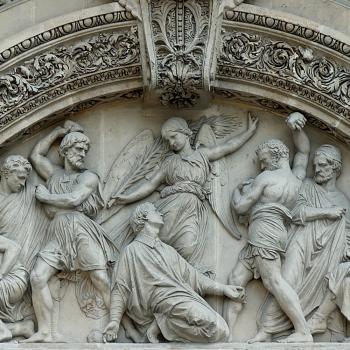
Stephen the deacon was martyred by first-century nationalists
Paul models resistance to discrimination
The exemplary restraint of the ultimate conservative leader
Wheaton, model strong leadership: defend Dr. Hawkins
TRENDING AT PATHEOS Careers, Workplace and Religion

St. Francis by Bill Droel Pope Leo XIV declares 2026 as “Year...

Catholics are schooled in the faith by memorizing dogmatic points and lots...

The Good News of Our Human Limitations -...
After another day of trying to meet deadlines and working on projects,...

Quiet Holy Attentiveness (podcast) with Sarah Clarkson
We know that quiet is an essential aspect of the spiritual life,...

Every Vocation Everywhere All At Once
What is a vocation? How does it endure through the years? Can...

I promise this is not going to become a Taylor Swift Studies...
view all Careers, Workplace and Religion blogs
Ad-Free & Subscriber Log-In Subscription Support
- About Us
- 2026 Calendar
- Videos
- Podcasts
- Library of World Religions
- Faith In Media Tracker
- Advertise With Us
- Write for Us
- Privacy Policy
- Terms of Service
- Do Not Sell My Data
- Contact Us
- Radiant Digital
- Manage Newsletter Subscriptions
- Unsubscribe From Notifications
- Sitemap
Copyright 2008-2026, Patheos. All rights reserved.
Subscription Support Ad-Free & Subscriber Log-In
Follow Patheos