
BuddhistCatholicContemplativeEvangelicalGeneral ChristianHinduJewishLatter-day SaintMuslimNew VisionsProgressive Christian
Beliefs
- Buddhist
- Catholic
- Contemplative
- Evangelical
- General Christian
- Hindu
- Jewish
- Latter-day Saint
- More Voices
- Muslim
- New Visions
- Pagan
- Progressive Christian
Topics
- Religion News
- Food and Religion
- Sports and Religion
- Religious Art
- Religious Music and Entertainment
- Religious Events
- History and Religion
- Style and Religion
- Politics and Religion
- Women in Religion
- Recreation Outdoors and Religion
- Business Finance and Religion
- Careers Workplace and Religion
- Education and Religion
- Family Parenting and Religion
- Health Fitness and Religion
- Home and Religion
- Relationships and Religion
- Technology and Religion
- Travel and Religion
Columnists
- Buddhist Columnists
- Business Finance and Religion Columnists
- Careers Workplace and Religion Columnists
- Catholic Columnists
- Contemplative Columnists
- Education and Religion Columnists
- Evangelists Columnists
- Family Parenting and Religion Columnists
- General Christian Columnists
- Health Fitness and Religion Columnists
- Hindu Columnists
- History and Religion Columnists
- Home and Religion Columnists
- Jewish Columnists
- More Voices Columnists
- Latter Day Columnists
- Muslim Columnists
- New Visions Columnists
- Nonreligious Columnists
- Pagan Columnists
- Politics and Religion Columnists
- Progressive Columnists
- Recreation Outdoors and Religion Columnists
- Relationships and Religion Columnists
- Religion News Columnists
- Religious Art Columnists
- Religious Events Columnists
- Religious Music and Entertainment Columnists
- Sports and Religion Columnists
- Style and Religion Columnists
- Technology and Religion Columnists
- Travel and Religion Columnists
- Women in Religion Columnists
Resource Library
- 2026 Calendar
- Library of World Religions
- The 100 Most Holy Places on Earth
- Patheos Answers
- Podcasts
- Videos
- Faith Leaders Database
- Anglican Episcopalian
- Bahai
- Baptist
- Buddhism
- Christianity
- Confucianism
- Eastern Orthodoxy
- Hinduism
- Holiness and Pentecostal
- ISKCON
- Islam
- Judaism
- Lutheran
- Methodist
- The Church of Jesus Christ of Latter-day Saints
- New Age
- Paganism
- Presbytarian and Reformed
- Protestantism
- Religion Behind the Scenes
- Roman Catholic
- Scientology
- Shia Islam
- Sikhism
- Sufism
- Sunni Islam
- Taoism
- Zen
- See all religions
Research Tools
 Ad-Free & Subscriber Log-In Subscription Support
Ad-Free & Subscriber Log-In Subscription Support
Follow Patheos 

- Trending:
- Forgiveness
- |
- Marriage
- |
- Consciousness
- |
- Death Penalty
- |
- Election
- |
- Halloween
 Charting Church Leadership
- Home
- Careers, Workplace and Religion
- What should we do with “church refugees”?
What should we do with “church refugees”?
Last updated on: October 7, 2015 at 10:15 pm by Neil Carlson
What should we do with “church refugees”? 2015-10-07T22:15:00-04:00 Neil Carlson
Patheos Explore the world's faith through different perspectives on religion and spirituality! Patheos has the views of the prevalent religions and spiritualities of the world.
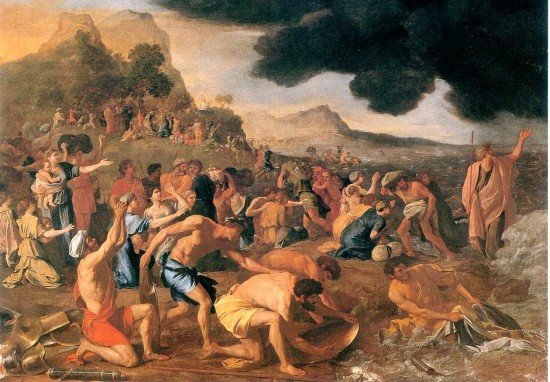
Refugees never have it easy, even if the Red Sea parts.
Who are the people who once were churchgoers but now say they are “Done” with church altogether? If you’re like me, you were once ready to judge: they must be lazy, self-indulgent people who reject Christian morality and lack discipline.
 Such rush to judgment couldn’t be more unfair to many “religious Dones.” And it turns out that our judgment is part of what’s driving them away. We live in unsettled times, and millions of actual refugees experience real physical suffering we should never trivialize by analogy to emotional hardships faced by comfortably rich Americans. But the times equip us better than ever to recognize what it means to be a refugee, and to understand that it’s a difficult, complex mix of voluntary and involuntary action.
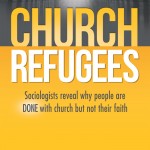
Church Refugees by Josh Packard, PhD, and Ashleigh Hope documents interviews with almost 100 “dechurched” people for “The Dechurched Project.” These “refugees” say they did not leave the church willingly, drifting from its edges; on the contrary, many were central leaders and tireless volunteers. They say they object not to core Christian doctrine, but to judgmental attitudes and paralyzing bureaucracy in the church. They say they seek community rather than ideology. They say they didn’t leave the faith, they left to save their faith from hypocrisy and self-indulgent introspection. At the same time, Packard and Hope note that the “refugees” are on the edges of the church in another way. They are better positioned for outreach than the rest of us:
As we say throughout the book, they’re leaving to do more, not less, and they’re doing it within a broader and more diverse community. They aren’t exhausted or burned out. They aren’t retreating to small, like-minded groups.
In many respects, then, the Dones and the almost Dones are the strongest bridge to the Nones [people who say they have no religious affiliation]. They’re the ones most likely to come into regular contact and be in community with those who have never been to church. (page 137)
Church Refugees has already been ably reviewed by John Hawthorne over on the “Work Cited” blog; I urge you to turn there for a full summary and worthy analysis. The study findings resonate and the methods have integrity, but caution is advisable, as with any research. For example, the study’s “hypersampling” method (using referrals from one interviewee to find others) may have turned up a peculiar pocket of Coloradans.
The point I want to make is simple, and it doesn’t require that we accept the whole study or every “refugee” story uncritically: American churches have a serious talent-retention problem. We ignore a steady, swirling “brain drain.” In too many congregations, service in a leadership position is a prelude to imminent departure. We are uncomfortable with conflict, disagreement, competing ideas; instead of accepting the reality that every good organization has to deal with internal conflict and competition, we try to suppress conflict and innovation, signaling to improvement-seeking potential leaders that we’re not a good investment of their time. We reinforce our hierarchies and insist on our procedures, even when eager leaders are signaling us that hierarchy and process aren’t working well. Our congregations are full of small-government advocates, but we are not very libertarian about our church governance. I know a few of these cases personally:
- A successful technology business executive gave energetic service as a deacon to his congregation. Yet he received no backing from his fellow church leaders. Petty conflicts pushed his buttons. He finished his diaconate faithfully, then immediately took his family to another congregation and focused his talents on his workplace.
- A relative of mine served the church for decades and still participates in a ministry-oriented music group. But a series of scandals and misjudgments in the church quenched his enthusiasm. Now he and his wife stay home on Sundays. He’s well-equipped to manage and motivate teams in Christian service. Instead, he’s on the bench.
- In a study conducted by our center, younger women in a large congregation pointed in frustration to the difficulty of getting timely action on their proposals from the congregation’s layers of governing committees.
- A young associate pastor with great relational skills and hip musical talent was assigned … to visit the elderly. A worthy Christian activity that every pastor should do, but a foolhardy focus for the scarce resource of youthful energy in a congregation desperately needing to attract students, young singles, and young families. Church attendance and revenue gradually shrank, and the associate pastor had to leave, taking his talent with him.
What should we do with church refugees? Join them! Maybe we should become refugees ourselves, not leaving the church, but taking the church on the road, heading for a better land. Loyalty is valuable, and we shouldn’t just give up on the church as an organization. On the contrary, as I’ll argue repeatedly on this blog in the future: we must recognize that any church body has many of the same organizational challenges and opportunities as businesses and governments and nonprofits. But we should be careful that what we are loyal to actually belongs to the Kingdom of God. We may be comfortable in our Egypt, rich with pharaohs, hierarchies, and rules. Even if we get to a “promised land” where refugees find a new home safe from false judgments and oppressive structures, we will have to resist the temptation to look back and set up a king like the Egyptians have.
The church isn’t asking too much of people; it’s asking the wrong things of them. The Dones are done doing things they find to be unconnected with God. (page 133)
What do you think? Comment below, or join us on the Charting Church Leadership Facebook page.
Previous Post

October 3, 2015
Be wise as "The Martian" (and as harmless as doves)
Next Post

October 12, 2015 Church decline? Blame the baby bust
Browse Our Archives
Select a Category About Bible study Business Business Communion Culture and Media Demographics Ethics Movies Political science Psychology Public administration Racial equity Religion Religious Participation Social science
Select a Month August 2017 January 2017 March 2016 January 2016 December 2015 November 2015 October 2015 September 2015
Follow Us!
TAKE THE
Religious Wisdom Quiz
Where did David spare Saul's life when he found him in a cave?
Select your answer to see how you score.
En Gedi Hebron Bethlehem Gilgal
Related posts from Charting Church Leadership

Paul models resistance to discrimination

Let's talk US religion and politics ... with...
Church decline? Blame the baby bust

Facing Facts about the Future of the Church...
TRENDING AT PATHEOS Careers, Workplace and Religion

St. Francis by Bill Droel Pope Leo XIV declares 2026 as “Year...

Catholics are schooled in the faith by memorizing dogmatic points and lots...

The Good News of Our Human Limitations -...
After another day of trying to meet deadlines and working on projects,...

Quiet Holy Attentiveness (podcast) with Sarah Clarkson
We know that quiet is an essential aspect of the spiritual life,...

Every Vocation Everywhere All At Once
What is a vocation? How does it endure through the years? Can...

I promise this is not going to become a Taylor Swift Studies...
view all Careers, Workplace and Religion blogs
Ad-Free & Subscriber Log-In Subscription Support
- About Us
- 2026 Calendar
- Videos
- Podcasts
- Library of World Religions
- Faith In Media Tracker
- Advertise With Us
- Write for Us
- Privacy Policy
- Terms of Service
- Do Not Sell My Data
- Contact Us
- Radiant Digital
- Manage Newsletter Subscriptions
- Unsubscribe From Notifications
- Sitemap
Copyright 2008-2026, Patheos. All rights reserved.
Subscription Support Ad-Free & Subscriber Log-In
Follow Patheos