
BuddhistCatholicContemplativeEvangelicalGeneral ChristianHinduJewishLatter-day SaintMuslimNew VisionsProgressive Christian
Beliefs
- Buddhist
- Catholic
- Contemplative
- Evangelical
- General Christian
- Hindu
- Jewish
- Latter-day Saint
- More Voices
- Muslim
- New Visions
- Pagan
- Progressive Christian
Topics
- Religion News
- Food and Religion
- Sports and Religion
- Religious Art
- Religious Music and Entertainment
- Religious Events
- History and Religion
- Style and Religion
- Politics and Religion
- Women in Religion
- Recreation Outdoors and Religion
- Business Finance and Religion
- Careers Workplace and Religion
- Education and Religion
- Family Parenting and Religion
- Health Fitness and Religion
- Home and Religion
- Relationships and Religion
- Technology and Religion
- Travel and Religion
Columnists
- Buddhist Columnists
- Business Finance and Religion Columnists
- Careers Workplace and Religion Columnists
- Catholic Columnists
- Contemplative Columnists
- Education and Religion Columnists
- Evangelists Columnists
- Family Parenting and Religion Columnists
- General Christian Columnists
- Health Fitness and Religion Columnists
- Hindu Columnists
- History and Religion Columnists
- Home and Religion Columnists
- Jewish Columnists
- More Voices Columnists
- Latter Day Columnists
- Muslim Columnists
- New Visions Columnists
- Nonreligious Columnists
- Pagan Columnists
- Politics and Religion Columnists
- Progressive Columnists
- Recreation Outdoors and Religion Columnists
- Relationships and Religion Columnists
- Religion News Columnists
- Religious Art Columnists
- Religious Events Columnists
- Religious Music and Entertainment Columnists
- Sports and Religion Columnists
- Style and Religion Columnists
- Technology and Religion Columnists
- Travel and Religion Columnists
- Women in Religion Columnists
Resource Library
- 2026 Calendar
- Library of World Religions
- The 100 Most Holy Places on Earth
- Patheos Answers
- Podcasts
- Videos
- Faith Leaders Database
- Anglican Episcopalian
- Bahai
- Baptist
- Buddhism
- Christianity
- Confucianism
- Eastern Orthodoxy
- Hinduism
- Holiness and Pentecostal
- ISKCON
- Islam
- Judaism
- Lutheran
- Methodist
- The Church of Jesus Christ of Latter-day Saints
- New Age
- Paganism
- Presbytarian and Reformed
- Protestantism
- Religion Behind the Scenes
- Roman Catholic
- Scientology
- Shia Islam
- Sikhism
- Sufism
- Sunni Islam
- Taoism
- Zen
- See all religions
Research Tools
 Ad-Free & Subscriber Log-In Subscription Support
Ad-Free & Subscriber Log-In Subscription Support
Follow Patheos 

- Trending:
- Forgiveness
- |
- Marriage
- |
- Consciousness
- |
- Death Penalty
- |
- Election
- |
- Halloween
 The Charlotte Fellows
- Home
- Careers, Workplace and Religion
- “If we were made for relationship with God, why do we often feel lost and distant from him?”
“If we were made for relationship with God, why do we often feel lost and distant from him?”
Last updated on: February 10, 2015 at 5:40 pm by Matt Avery
“If we were made for relationship with God, why do we often feel lost and distant from him?” 2015-02-10T17:40:17-05:00 Matt Avery
Patheos Explore the world's faith through different perspectives on religion and spirituality! Patheos has the views of the prevalent religions and spiritualities of the world.
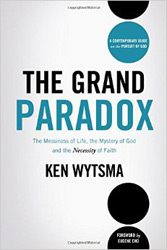 I was recently invited to read and weigh-in on Ken Wytsma’s new book The Grand Paradox: The Messiness of Life, the Mystery of God and the Necessity of Faith as part of the Patheos Book Club. The author describes his book as “a frank conversation about the true nature of the Christian faith” seeking to address the question: “If we were made for relationship with God, why do we often feel lost and distant from him?” The problem with the ensuing 210-page discussion is that our sin isn’t a major part of it. In fact, it’s barely mentioned. The reality, though, is that our sin plays a major role in the matter.
“And you were dead in the trespasses and sins in which you once walked, following the course of this world, following the prince of the power of the air, the spirit that is now at work in the sons of disobedience—among whom we all once lived in the passions of our flesh, carrying out the desires of the body and the mind, and were by nature children of wrath, like the rest of mankind.” (Eph. 2:1-3)
We come into this world spiritually dead. A symptom of our spiritual deadness is a rebellion against God, a hatred of his authority over us. Like everyone else before us, we didn’t want a relationship with God. We wanted to be our own gods. And this disease of sin blinded our eyes so much so that we actually believed that we were okay and that life apart from God was not only possible but preferred!
“But God, being rich in mercy, because of the great love with which he loved us, even when we were dead in our trespasses, made us alive together with Christ—by grace you have been saved.” (Eph. 2:4-5)
The Spirit of God has made our souls alive, and he dwells within us. For the first time, we are able to see things as they truly are: the rebellious self-worship that oozes from our core, the glorious perfection of God, our deserving of an eternal death sentence, and our receiving unmerited and eternal love from our heavenly Father in condemnation’s place. But…we are not yet loosed from the grip of our old selves, not completely (though we will be). Thus, the table is now set for the grand paradox:
“For I do not understand my own actions. For I do not do what I want, but I do the very thing I hate. …For I know that nothing good dwells in me, that is, in my flesh. For I have the desire to do what is right, but not the ability to carry it out. For I do not do the good I want, but the evil I do not want is what I keep on doing. Now if I do what I do not want, it is no longer I who do it, but sin that dwells within me. …For I delight in the law of God, in my inner being, but I see in my members another law waging war against the law of my mind and making me captive to the law of sin that dwells in my members.” (Rom. 7:15-23)
The grand paradox, then, is this ongoing war between our old selves who hate God and our new selves who love God. Jesus’ call to “repent and believe in the gospel” is now rightly understood as continuous and central to our existence, not something that happens once and for all when we come to faith. As the Spirit of God enables us to see and confess more of our sin and ask our loving Father to transform us, he is faithful to “forgive us our sins and to cleanse us from all unrighteousness” (1 John 1:9). God lovingly and supernaturally humbles us in the face of our sin and his love for us; it sobers us up, so to speak.
How does this practically impact our daily lives? The Gospel actually incentivizes us to be honest and open about our sin and shortcomings with God and one another. To do so is evidence that we have believed the Gospel in the first place, evidence that we are not counting on our own efforts to earn right relationship with God, evidence that we believe that the work of Jesus on our behalf is sufficient, evidence that we love and trust God.
“There is therefore now no condemnation for those who are in Christ Jesus. For the law of the Spirit of life has set you free in Christ Jesus from the law of sin and death. For God has done what the law, weakened by the flesh, could not do. By sending his own Son in the likeness of sinful flesh and for sin, he condemned sin in the flesh, in order that the righteous requirement of the law might be fulfilled in us, who walk not according to the flesh but according to the Spirit.” (Romans 8:1-4)
Previous Post

February 27, 2015
Making our wildest dreams come true?
Next Post
February 25, 2015 Seeing purpose in the mundane
Browse Our Archives
Select a Category Uncategorized
Select a Month February 2015
Follow Us!
TAKE THE
Religious Wisdom Quiz
According to Jesus, what should you do when you pray?
Select your answer to see how you score.
Pray loudly for show Pray once a year Only pray at church Pray in secret
Related posts from The Charlotte Fellows

Making our wildest dreams come true?
TRENDING AT PATHEOS Careers, Workplace and Religion

St. Francis by Bill Droel Pope Leo XIV declares 2026 as “Year...

Catholics are schooled in the faith by memorizing dogmatic points and lots...

The Good News of Our Human Limitations -...
After another day of trying to meet deadlines and working on projects,...

Quiet Holy Attentiveness (podcast) with Sarah Clarkson
We know that quiet is an essential aspect of the spiritual life,...

Every Vocation Everywhere All At Once
What is a vocation? How does it endure through the years? Can...

I promise this is not going to become a Taylor Swift Studies...
view all Careers, Workplace and Religion blogs
Ad-Free & Subscriber Log-In Subscription Support
- About Us
- 2026 Calendar
- Videos
- Podcasts
- Library of World Religions
- Faith In Media Tracker
- Advertise With Us
- Write for Us
- Privacy Policy
- Terms of Service
- Do Not Sell My Data
- Contact Us
- Radiant Digital
- Manage Newsletter Subscriptions
- Unsubscribe From Notifications
- Sitemap
Copyright 2008-2026, Patheos. All rights reserved.
Subscription Support Ad-Free & Subscriber Log-In
Follow Patheos