
BuddhistCatholicContemplativeEvangelicalGeneral ChristianHinduJewishLatter-day SaintMuslimNew VisionsProgressive Christian
Beliefs
- Buddhist
- Catholic
- Contemplative
- Evangelical
- General Christian
- Hindu
- Jewish
- Latter-day Saint
- More Voices
- Muslim
- New Visions
- Pagan
- Progressive Christian
Topics
- Religion News
- Food and Religion
- Sports and Religion
- Religious Art
- Religious Music and Entertainment
- Religious Events
- History and Religion
- Style and Religion
- Politics and Religion
- Women in Religion
- Recreation Outdoors and Religion
- Business Finance and Religion
- Careers Workplace and Religion
- Education and Religion
- Family Parenting and Religion
- Health Fitness and Religion
- Home and Religion
- Relationships and Religion
- Technology and Religion
- Travel and Religion
Columnists
- Buddhist Columnists
- Business Finance and Religion Columnists
- Careers Workplace and Religion Columnists
- Catholic Columnists
- Contemplative Columnists
- Education and Religion Columnists
- Evangelists Columnists
- Family Parenting and Religion Columnists
- General Christian Columnists
- Health Fitness and Religion Columnists
- Hindu Columnists
- History and Religion Columnists
- Home and Religion Columnists
- Jewish Columnists
- More Voices Columnists
- Latter Day Columnists
- Muslim Columnists
- New Visions Columnists
- Nonreligious Columnists
- Pagan Columnists
- Politics and Religion Columnists
- Progressive Columnists
- Recreation Outdoors and Religion Columnists
- Relationships and Religion Columnists
- Religion News Columnists
- Religious Art Columnists
- Religious Events Columnists
- Religious Music and Entertainment Columnists
- Sports and Religion Columnists
- Style and Religion Columnists
- Technology and Religion Columnists
- Travel and Religion Columnists
- Women in Religion Columnists
Resource Library
- 2026 Calendar
- Library of World Religions
- The 100 Most Holy Places on Earth
- Patheos Answers
- Podcasts
- Videos
- Faith Leaders Database
- Anglican Episcopalian
- Bahai
- Baptist
- Buddhism
- Christianity
- Confucianism
- Eastern Orthodoxy
- Hinduism
- Holiness and Pentecostal
- ISKCON
- Islam
- Judaism
- Lutheran
- Methodist
- The Church of Jesus Christ of Latter-day Saints
- New Age
- Paganism
- Presbytarian and Reformed
- Protestantism
- Religion Behind the Scenes
- Roman Catholic
- Scientology
- Shia Islam
- Sikhism
- Sufism
- Sunni Islam
- Taoism
- Zen
- See all religions
Research Tools
 Ad-Free & Subscriber Log-In Subscription Support
Ad-Free & Subscriber Log-In Subscription Support
Follow Patheos 

- Trending:
- Forgiveness
- |
- Marriage
- |
- Consciousness
- |
- Death Penalty
- |
- Election
- |
- Halloween
 Chaos and Old Night
- Home
- Catholic
- Beware of unqualified people – UPDATED
Beware of unqualified people – UPDATED
Last updated on: March 2, 2019 at 12:11 am by Sean P. Dailey
Beware of unqualified people – UPDATED 2019-03-02T00:11:20-05:00 Sean P. Dailey
Patheos Explore the world's faith through different perspectives on religion and spirituality! Patheos has the views of the prevalent religions and spiritualities of the world.
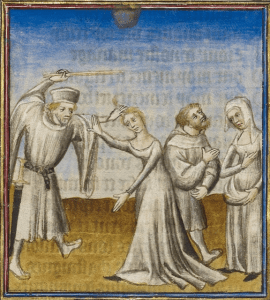 Updated to add additional information I did not know existed when I published this – spd
The Catholic Church is wild about credentials. For instance, you cannot call yourself a theologian without a licentiate or doctorate in theology from an approved university. You would be silly to listen to anyone pontificate on canon law who did not have a canon law degree.
You cannot even call your nonprofit “Catholic” without permission from the local bishop. I know because when my parents founded a Catholic nonprofit in the 1990s, they did not ask permission, and ran afoul of our bishop. They renamed it after a saint. Even that still requires episcopal permission, which they finally got.
Yet, modern Catholics have a penchant for chasing after people who are manifestly unqualified for the positions they hold, or the authority granted to them by the public. Consider the devotion conservative Catholics have for President Trump, a serial adulterer, two-bit grifter, failed casino owner, and reality TV star. Conservative Catholics have a higher regard for him than they do for Pope Francis.
On a somewhat smaller scale is Matt Walsh, a writer who purports to speak authoritatively on Catholic issues, but who brags about his lack of a college (or any other) degree, and who is chiefly known for misogyny, sneering at celebrity suicide victims, and lying about authentic Catholic social teaching.
Then there is the satellite channel EWTN, which calls itself “The Global Catholic Network” and is treated as its own Magisterium by many Catholics, but which actually is run by a lay board of directors.
Catholic media
Regarding the media, I wonder how many of the newspapers or magazines or websites who call themselves Catholic actually have episcopal permission to do so? Probably not many. I am going to assume Catholic Digest, published in the United States, has this permission, because its parent company, Bayard U.S., is owned by the Augustinians of the Assumption.
I single out this publication because it published, recently, an interview with one Leila Miller, editor of a new book, Primal Loss: Now-Adult Children of Divorce Speak.
Besides Primal Loss, Ms. Miller’s published books include Raising Chaste Catholic Men and Made This Way: How to Prepare Kids to Face Today’s Tough Moral Issues. Her Webpage also includes her current blog and archives of her old blog.
Ms. Miller bills herself as a “Catholic Author.” I’m Catholic and I write. I don’t know whether I’d call myself a “Catholic author” or “Catholic writer.” I’m a writer who happens to be Catholic, like J.R.R Tolkien and G.K. Chesterton. And that’s good enough for me.
I also don’t pretend to be an expert on anything. I write about what interests me: politics, the arts, literature, issues in the Catholic Church, and so on. But Ms. Miller, through her book titles, presents herself as an expert on marital relations and child rearing. So, because she’s a “Catholic Author,” and because the Catholic Church is wild about credentials, it is only fair to ask: how much moral theology has Leila Miller studied? Does she have a degree in therapy or psychology? Is she a licensed marriage counselor?
Nowhere—her blog or her Facebook page—does she list any. Blurbs on the back covers of her books tell us she’s a “popular writer and speaker” who’s been on EWTN and in other Catholic media. She has “eight children and several grandchildren.” These aren’t credentials, except maybe in the circles to which she seems to want to appeal.
Marriage and raising children are serious issues, so I would advise Ms. Miller’s audience to find experts to listen to and to stop reading Ms. Miller. Because she gives bad advice and seriously misrepresents Church teaching. For instance, this:
There are very few marriages that won’t go through a time of serious crisis. It’s about pushing past it. Even if separation is necessary because of danger, the Church says that until reconciliation can happen, and the conjugal life can be restored, this should be pushed through because there’s something on the other side. But you must get through the cross. Sometimes people’s entire marriages are a cross.
Encouraging people to “push through” serious crises and remain in abusive relationships is probably the worst thing about this quote, but that’s not all that’s wrong with it. What struck me was how blithely she says, “Sometimes people’s entire marriages are a cross.”
No, no, that’s not how it works. Of all the sacraments, holy matrimony is the only one specifically ordered to human happiness, both emotional and physical. A marriage that is entirely a cross is not to be celebrated. It is to be ended, if the things that make it a cross are serious enough. Also, Jesus died on the cross so we don’t have to. Yes, we can and should unite our sufferings to his, but suffering remains an evil. Ms. Miller’s advice is a grave distortion.
Let’s look at Ms. Miller’s next answer:
St. Ignatius said that when you pick a state in life, you must assume you’re picking something permanent. The “d-word” cannot be on the table. If it is, then in that first crisis, the devil gets his foothold and he’s going to make you think you can leave. The dysfunction doesn’t end with divorce; it just gets exponentially worse.
When a victim of abuse escapes an abusive or chronically unfaithful husband or wife, it gets exponentially better for that victim, and for the children. In abusive or unfaithful relationships, by the time the “d-word” is on the table, it’s not the first crisis. It is not even a crisis. It follows a series of crises, crises that leave permanent scars, internal and external, on the victim and the children.
Next:
The sacrament is presumed indissoluble. We must stop thinking, Maybe I don’t have a valid marriage. Go back and look at the vows. You’re vowing 50 percent bad: sickness, bad times, poverty. You’re agreeing to stay through some pretty bad things until death. Go back and revisit those vows and think, This is what Christ meant. He knew everything, and he still said no divorce. Start believing that divorce is a sin. We’ll solve a lot of our problems.
Of course the Church presumes marriages are valid. That’s how due process works. But who is Leila Miller to tell people they have a valid marriage no matter what? Each situation is different, and anyway that’s why dioceses have marriage tribunals: so professionals can determine the validity of a marriage. Also, Jesus did not say “no divorce.” In Matthew 5:32, he allows it for infidelity.
I am not enough of a theologian to know whether, “Start believing that divorce is a sin” makes Ms. Miller a heretic, but I know enough to know that this directly contradicts Catholic teaching. The Catechism of the Catholic Church deplores divorce, calling it “a grave offence against the natural law.” But it also tells us, “If civil divorce remains the only possible way of ensuring certain legal rights, the care of the children, or the protection of inheritance, it can be tolerated and does not constitute a moral offense.”
Stop following pied pipers
The rest of the interview is more of the same: Ms. Miller telling spouses to stay in abusive marriages (“Sometimes living out that vow is painful. That’s what a vocation is.”) and calling evil good (“It’s the very thing that will make you holy.”).
To be fair to Ms. Miller, she published, the same day I published this, an essay denying that she advocates for abuse. And in the excerpts from the Catholic Digest interview I included above, she allows that separation many be necessary “because of danger.” But I don’t know how she expects people will interpret, “Sometimes people’s entire marriages are a cross,” and her assertion that divorce is a sin, other than as tacit advice to remain in abusive relationships no matter what.
And what she completely omits are annulments. Annulment are a thing. Catholics who get divorced frequently also get an annulment. In fact, you cannot petition for an annulment without first getting a civil divorce. How can that be if divorce is a sin?
No one believes that divorce is an absolute good. But neither is it an absolute evil, as Ms. Miller says. Does it damage children? Of course it does. But watching a disaster of a marriage unfold before their eyes also damages children. So does having a front-row seat to years of abuse or infidelity, or sitting in a hospital waiting room while mom gets treated for injuries from the latest beating.
I think in these cases, divorce could be the start of healing, for both the children and the victim parent.
You don’t have to be a theologian to know that we will not actually “solve a lot of our problems” if we start believing that divorce is a sin. For one thing, peddling nonsense that contradicts Church teaching solves nothing. For another thing, promoting something—anything—as a cure-all is Gnosticism.
I guess I am no longer surprised that Catholics heed advice like this, toxic as it is. But as I wrote above, certain Catholics have penchant for following pied pipers. Reading the facebook pages of both Ms. Miller and some of the people who follow her, I see a lot of crossover between her fans, and Catholics who support Mr. Trump. I think of them as sanctimonious Pharisees. What I can say of the Pharisees in the Gospel is that, while they ignored the spirit of the law, they at least followed the letter of the law. I cannot say as much for Ms. Miller.
Previous Post
February 12, 2019
The new 'Tolkien' biopic: keeping an open mind
Next Post
March 5, 2019 AOC, climate change, abortion, and me
Browse Our Archives
Select a Category Advent/Christmas alarms and discursions American history appreciations and criticisms Arts and entertainment Catholic Church G.K. Chesterton Illinois J.R.R Tolkien Lent Nazi watch politics religion Uncategorized
Select a Month July 2021 June 2021 January 2021 November 2020 October 2020 August 2020 July 2020 February 2020 January 2020 December 2019 August 2019 July 2019 May 2019 April 2019 March 2019 February 2019 January 2019 December 2018 November 2018 October 2018 September 2018 July 2018 June 2018 May 2018
Follow Us!
TAKE THE
Religious Wisdom Quiz
Who was the disciple who doubted Jesus' resurrection?
Select your answer to see how you score.
Judas John Thomas Peter
Related posts from Chaos and Old Night

There is more to a police procedural than...

Blood cries out: the Confederate flag in the...
Dale Ahlquist is on a mission - sadly,...
TRENDING AT PATHEOS Catholic

Rejecting Doom: Christian Hope And Human Action
Christianity is a religion of hope. We are to have hope and...

It’s What Comes From Within Which Matters
One of the most difficult things for us to understand is why...

Why I Choose the Eucharist Over the Sermon
Choose the Eucharist, Not the Sermon What are we supposed to get...

5 Design Elements Found in Spiritually Rooted Homes
Putting Spirituality Into Home Decor Our homes are more than our living...

Credo: A Story of God Told with the...
About 10 years ago, I began to imagine a personal "Credo" that...

The Anatomy of Divine Revelation in Catholic Thought
The claim that God has made Himself known to human beings is...
view all Catholic blogs
Ad-Free & Subscriber Log-In Subscription Support
- About Us
- 2026 Calendar
- Videos
- Podcasts
- Library of World Religions
- Faith In Media Tracker
- Advertise With Us
- Write for Us
- Privacy Policy
- Terms of Service
- Do Not Sell My Data
- Contact Us
- Radiant Digital
- Manage Newsletter Subscriptions
- Unsubscribe From Notifications
- Sitemap
Copyright 2008-2026, Patheos. All rights reserved.
Subscription Support Ad-Free & Subscriber Log-In
Follow Patheos