
BuddhistCatholicContemplativeEvangelicalGeneral ChristianHinduJewishLatter-day SaintMuslimNew VisionsProgressive Christian
Beliefs
- Buddhist
- Catholic
- Contemplative
- Evangelical
- General Christian
- Hindu
- Jewish
- Latter-day Saint
- More Voices
- Muslim
- New Visions
- Pagan
- Progressive Christian
Topics
- Religion News
- Food and Religion
- Sports and Religion
- Religious Art
- Religious Music and Entertainment
- Religious Events
- History and Religion
- Style and Religion
- Politics and Religion
- Women in Religion
- Recreation Outdoors and Religion
- Business Finance and Religion
- Careers Workplace and Religion
- Education and Religion
- Family Parenting and Religion
- Health Fitness and Religion
- Home and Religion
- Relationships and Religion
- Technology and Religion
- Travel and Religion
Columnists
- Buddhist Columnists
- Business Finance and Religion Columnists
- Careers Workplace and Religion Columnists
- Catholic Columnists
- Contemplative Columnists
- Education and Religion Columnists
- Evangelists Columnists
- Family Parenting and Religion Columnists
- General Christian Columnists
- Health Fitness and Religion Columnists
- Hindu Columnists
- History and Religion Columnists
- Home and Religion Columnists
- Jewish Columnists
- More Voices Columnists
- Latter Day Columnists
- Muslim Columnists
- New Visions Columnists
- Nonreligious Columnists
- Pagan Columnists
- Politics and Religion Columnists
- Progressive Columnists
- Recreation Outdoors and Religion Columnists
- Relationships and Religion Columnists
- Religion News Columnists
- Religious Art Columnists
- Religious Events Columnists
- Religious Music and Entertainment Columnists
- Sports and Religion Columnists
- Style and Religion Columnists
- Technology and Religion Columnists
- Travel and Religion Columnists
- Women in Religion Columnists
Resource Library
- 2026 Calendar
- Library of World Religions
- The 100 Most Holy Places on Earth
- Patheos Answers
- Podcasts
- Videos
- Faith Leaders Database
- Anglican Episcopalian
- Bahai
- Baptist
- Buddhism
- Christianity
- Confucianism
- Eastern Orthodoxy
- Hinduism
- Holiness and Pentecostal
- ISKCON
- Islam
- Judaism
- Lutheran
- Methodist
- The Church of Jesus Christ of Latter-day Saints
- New Age
- Paganism
- Presbytarian and Reformed
- Protestantism
- Religion Behind the Scenes
- Roman Catholic
- Scientology
- Shia Islam
- Sikhism
- Sufism
- Sunni Islam
- Taoism
- Zen
- See all religions
Research Tools
 Ad-Free & Subscriber Log-In Subscription Support
Ad-Free & Subscriber Log-In Subscription Support
Follow Patheos 

- Trending:
- Forgiveness
- |
- Marriage
- |
- Consciousness
- |
- Death Penalty
- |
- Election
- |
- Halloween
 Chaos and Old Night
- Home
- Catholic
- Harrowing and beautiful
Harrowing and beautiful
Last updated on: October 24, 2018 at 8:44 pm by Sean P. Dailey
Harrowing and beautiful 2018-10-24T20:44:11-05:00 Sean P. Dailey
Patheos Explore the world's faith through different perspectives on religion and spirituality! Patheos has the views of the prevalent religions and spiritualities of the world.
The Haunting of Hill House
Steve Dietl/Netflix – used for promotional purposes onlyFear is the relinquishment of logic, the willing relinquishing of reasonable patterns. We yield to it or we fight it, but we cannot meet it halfway. –The Haunting of Hill House
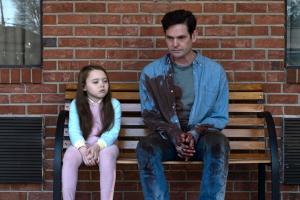
I have now watched director Mike Flanagan’s The Haunting of Hill House all the way through twice. I may watch it a third time. The attraction is hard to describe. It’s good horror. It’s a good story. It’s a good horror story. It has that mysterious spark of magic that all the best stories—whether written or filmed—have. In that last quality it matches that other great Netflix supernatural series, Stranger Things.
Dark, moody, full of dread from start to finish, The Haunting of Hill House, through ten one-hour episodes, starts quiet and builds to a grand crescendo. It gets under your skin and into your psyche. Based loosely on Shirley Jackson’s 1959 novel, it tells the story of the Crain family—Hugh and Olivia and their five children. In the early 1990s, they move into Hill House for the summer, the plan being for Hugh to rehab it and sell it, and finally have enough money to build their forever house.
It doesn’t quite go that way. Hill House may be full of ghosts, but it does not so much haunt the Crain family as start to devour them. Things finally come to a head one night and Hugh escapes in the station wagon with the children, though Olivia is left behind. The wounds gashed into the minds and souls of the children remain with them as they age—and leave Hugh broken and withdrawn.
Mr. Flanagan is no stranger to this territory. One of his earlier movies, Oculus (2013), also is about childhood trauma that lingers into adulthood. He also directed last year’s Netflix adaption of Stephen King’s Gerald’s Game, which I thought was un-filmable, but which Mr. Flanagan pulls off masterfully.
I have not read Ms. Jackson’s novel (I’m buying it this weekend), but Mr. Flanagan manages to weave together the stories of the Crain children while also moving back and forth between that single lost summer at Hill House and the present day. None of them is doing very well.
The youngest, Luke, is a junkie. He’s been in and out of treatment for years and hits up his brother and sisters for money. His twin sister Nell has severe emotional problems. Two more sisters, Shirley and Theodora, live as neighbors but barely tolerate one another. All of them resent the oldest, Steven, because he exploited their childhood experiences in a best-selling book that made him a rich man. Their father, Hugh, lives as a recluse down in Florida.
Then there’s a death in the family and they all have to endure each other’s company.
The reunion at a family member’s funeral is de rigueur in stories like this. But while the convention is for the surviving family members to forgive old wrongs, renew friendships, regroup, and make plans for the Big Final Battle With Evil, The Haunting avoids that cliché: Mr. Flanagan does not heal. He re-opens old wounds.
And so, instead of unity there is finger-pointing and blame. Alcohol-fueled shouting. Possible marital infidelity is thrown in for good measure. And all the time, Hill House—unwanted and unasked for—coils itself around the warring family.
It works. This episode, the sixth, is terrifying. And in case there isn’t enough tension yet, Mr. Flanagan films the episode in just five long takes, the longest of which is seventeen nerve-wracking minutes. And there are still four episodes to go.
The ending of The Haunting of Hill House has generated a lot of argument. Some don’t like it. I found it harrowing—and ultimately very beautiful. Some say the conclusion betrays the ten hours of dread and despair that leads up to it. I disagree. It is hard to explain why without giving anything away, but I reject the notion that a story of overwhelming dread must have a dreadful ending. A eucatastrophe is as valid as a catastrophe, if done well—and may have more meaning.
Just as the horror of Frodo’s succumbing to the Ring and claiming it for his own gave way to the Ring’s destruction and the downfall of Sauron; just as the agony of the Via Dolorosa and the Crucifixion gave way to the Resurrection—so the lies and horrors of Hill House lead to…Well, you’ll just have to watch it.
“Love is the relinquishment of logic,” Steven Crain says, rejecting the sentiment of the above quote, “the willing relinquishing of reasonable patterns. We yield to it or we fight it, but we cannot meet it halfway.”
When you watch The Haunting of Hill House, remember, sacrificial love does not betray.
Previous Post

September 22, 2018
Happy Hobbit Day
Next Post

October 30, 2018 We must keep rising up
Browse Our Archives
Select a Category Advent/Christmas alarms and discursions American history appreciations and criticisms Arts and entertainment Catholic Church G.K. Chesterton Illinois J.R.R Tolkien Lent Nazi watch politics religion Uncategorized
Select a Month July 2021 June 2021 January 2021 November 2020 October 2020 August 2020 July 2020 February 2020 January 2020 December 2019 August 2019 July 2019 May 2019 April 2019 March 2019 February 2019 January 2019 December 2018 November 2018 October 2018 September 2018 July 2018 June 2018 May 2018
Follow Us!
TAKE THE
Religious Wisdom Quiz
What garden did Jesus pray in before His arrest?
Select your answer to see how you score.
Eden Gethsemane Olive Grove Bethlehem
Related posts from Chaos and Old Night

A most unselfish way of giving pleasure

There is more to a police procedural than...

Dale Ahlquist is on a mission - sadly,...

Begging—and answering—the question
TRENDING AT PATHEOS Catholic

Rejecting Doom: Christian Hope And Human Action
Christianity is a religion of hope. We are to have hope and...

It’s What Comes From Within Which Matters
One of the most difficult things for us to understand is why...

Why I Choose the Eucharist Over the Sermon
Choose the Eucharist, Not the Sermon What are we supposed to get...

5 Design Elements Found in Spiritually Rooted Homes
Putting Spirituality Into Home Decor Our homes are more than our living...

Credo: A Story of God Told with the...
About 10 years ago, I began to imagine a personal "Credo" that...

The Anatomy of Divine Revelation in Catholic Thought
The claim that God has made Himself known to human beings is...
view all Catholic blogs
Ad-Free & Subscriber Log-In Subscription Support
- About Us
- 2026 Calendar
- Videos
- Podcasts
- Library of World Religions
- Faith In Media Tracker
- Advertise With Us
- Write for Us
- Privacy Policy
- Terms of Service
- Do Not Sell My Data
- Contact Us
- Radiant Digital
- Manage Newsletter Subscriptions
- Unsubscribe From Notifications
- Sitemap
Copyright 2008-2026, Patheos. All rights reserved.
Subscription Support Ad-Free & Subscriber Log-In
Follow Patheos