
BuddhistCatholicContemplativeEvangelicalGeneral ChristianHinduJewishLatter-day SaintMuslimNew VisionsProgressive Christian
Beliefs
- Buddhist
- Catholic
- Contemplative
- Evangelical
- General Christian
- Hindu
- Jewish
- Latter-day Saint
- More Voices
- Muslim
- New Visions
- Pagan
- Progressive Christian
Topics
- Religion News
- Food and Religion
- Sports and Religion
- Religious Art
- Religious Music and Entertainment
- Religious Events
- History and Religion
- Style and Religion
- Politics and Religion
- Women in Religion
- Recreation Outdoors and Religion
- Business Finance and Religion
- Careers Workplace and Religion
- Education and Religion
- Family Parenting and Religion
- Health Fitness and Religion
- Home and Religion
- Relationships and Religion
- Technology and Religion
- Travel and Religion
Columnists
- Buddhist Columnists
- Business Finance and Religion Columnists
- Careers Workplace and Religion Columnists
- Catholic Columnists
- Contemplative Columnists
- Education and Religion Columnists
- Evangelists Columnists
- Family Parenting and Religion Columnists
- General Christian Columnists
- Health Fitness and Religion Columnists
- Hindu Columnists
- History and Religion Columnists
- Home and Religion Columnists
- Jewish Columnists
- More Voices Columnists
- Latter Day Columnists
- Muslim Columnists
- New Visions Columnists
- Nonreligious Columnists
- Pagan Columnists
- Politics and Religion Columnists
- Progressive Columnists
- Recreation Outdoors and Religion Columnists
- Relationships and Religion Columnists
- Religion News Columnists
- Religious Art Columnists
- Religious Events Columnists
- Religious Music and Entertainment Columnists
- Sports and Religion Columnists
- Style and Religion Columnists
- Technology and Religion Columnists
- Travel and Religion Columnists
- Women in Religion Columnists
Resource Library
- 2026 Calendar
- Library of World Religions
- The 100 Most Holy Places on Earth
- Patheos Answers
- Podcasts
- Videos
- Faith Leaders Database
- Anglican Episcopalian
- Bahai
- Baptist
- Buddhism
- Christianity
- Confucianism
- Eastern Orthodoxy
- Hinduism
- Holiness and Pentecostal
- ISKCON
- Islam
- Judaism
- Lutheran
- Methodist
- The Church of Jesus Christ of Latter-day Saints
- New Age
- Paganism
- Presbytarian and Reformed
- Protestantism
- Religion Behind the Scenes
- Roman Catholic
- Scientology
- Shia Islam
- Sikhism
- Sufism
- Sunni Islam
- Taoism
- Zen
- See all religions
Research Tools
 Ad-Free & Subscriber Log-In Subscription Support
Ad-Free & Subscriber Log-In Subscription Support
Follow Patheos 

- Trending:
- Forgiveness
- |
- Marriage
- |
- Consciousness
- |
- Death Penalty
- |
- Election
- |
- Halloween
 Cooperative Baptist Fellowship
- Home
- Progressive Christian
- A Progressing Church
A Progressing Church
Last updated on: July 27, 2017 at 9:00 am by Guest Contributor
A Progressing Church 2017-07-19T14:04:33-04:00 Guest Contributor
Patheos Explore the world's faith through different perspectives on religion and spirituality! Patheos has the views of the prevalent religions and spiritualities of the world.
By Joshua James
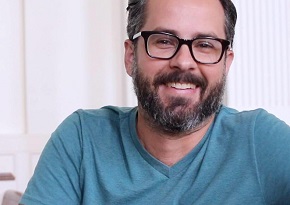
Joshua James
My desktop is a nightmare. I’ve got folders and files and graphics all over the place, most of which I never access — old seminary notes, teaching folders filled with Keynote presentations and syllabi for courses I will probably never teach again, a file labeled “dissertation scraps,” which I keep convincing myself I’ll turn into a journal article or two someday. I’ve even got a folder of “pics of me.” I mean, if you don’t need quick access to a headshot every now and then, you’re doing it all wrong. (jokes.)
Just to fill out the description so you know what you’re dealing with, I’m also the guy who currently has 161 unread texts, 5 missed phone calls, and 4,499 unread email notifications on my phone. I’m sorry.
At the strong encouragement of some friends, I began the arduous task of cleaning up my virtual space yesterday. They had been urging me to engage in this project for some time. I would have continued to fight it, but truth be told, I ran out of room on my computer. Every time I would save something to my desktop, the new file would appear on top of another file.
I know. It’s embarrassing.
Here’s the point.
During my initial cleaning, I found an old file. It was a prospectus for what would become The Restoration Project written back in 2012.
People differ on details surrounding the when of a church start, that is, what needs to take place before one actually begins a church. For some, it is a calculated “soft-launch” or a series of “preview services” after successfully building your “core team” and writing very polished “mission and vision” statements.
We didn’t do much of that.
We were anxious to begin meeting with our friends to read the Bible, pray together, sing some songs, and share a weekly communion meal. So that’s what we did. And if anyone wanted to join us, they were welcomed, as long as they weren’t running from something.
The most preparation we did, beyond schooling and our prayers and discernment, was to write this little document about what we thought we were setting out to do. And here’s what I learned after re-reading it yesterday for the first time in a long time: TRP looks different than we thought it would. Our mission and vision remains similar—we still talk about Jesus and restoration and the ongoing aspects of our participation in God’s restorative work in our own community and in the world around us—but now that we’ve been at it for almost 5 years, I think its meaning and significance and application has shifted.
I think this is largely due to the fact that we know more about who we are trying to reach, how we are trying to reach them, and how we envision the process “working.”
Now we have faces and stories that come to mind when thinking through what we are called to do. It is no longer just theory and speculation.
It’s about working toward the restoration of Salisbury through the vital partnerships that we now have with other churches and non-profits, with missional projects like our local community garden, and in our relationships with the people of Camden Avenue (though even now, these are not as vibrant as we might hope).
It’s about seeing the effects of God’s restorative work in the lives of our members and regular attenders, our emerging leaders and students, the once-jaded churchgoers among us, who have experienced an honest connection with God—even though it looks different than what they were originally told or what they used to expect.
It’s theological (and political and educational and socioeconomic and cultural) diversity, not on paper, but in real life. For those from TRP who may read this, I know we have seemed to attract more of the philosophical diversity in our community, but I’m hopeful that our shared life together, in the midst of our different commitments, proves to be a training ground for an understanding and application of this core theological and missional tenet: we are all created in the image and likeness of God. And as a result, if we coexist with Republicans or Democrats, Calvinists or Arminians, those who are affirming or non-affirming, all while respecting each other as image-bearers of the most high God, perhaps we will look to include and respect other forms of diversity in our community too.
In our first five years, we have also come to know more about ourselves as pastors and leaders and servants in our continually-forming community. And not just with regard to practice. We also realize that we know less about our theology than we once did.
Surrounding ourselves with those who don’t necessarily think like us or believe like us … it helps us to form new questions, new interpretations, new applications.
In all of this, we are in the process of becoming. And I don’t think we could have imagined what TRP is now at the beginning of our journey.
As one of my friends says to church starters and pastors, “The church you pastor isn’t a time capsule—it may look different now from when you started. It may have gone in a direction you didn’t expect, and that’s probably a good thing.”
That has certainly been our story.
TRP is a progressing church.
We are an adapting church.
We are a learning and growing and discerning church.
I believe that our mission and vision will always be about Jesus. If it isn’t, someone please force us to shut the doors. It will also include an emphasis on restoration. We know that there are other themes running throughout the biblical narrative, but we latched on to this one. We believe that through Jesus—through his death and resurrection—God is restoring all things. This truth has fundamentally shaped who we are as a community. Our mission and vision will also include something about our participation in God’s restorative activity. Trusting in Jesus is not just about where we go when we die. It’s about joining in and doing the hard work, here and now. It’s about building for the kingdom, as NT Wright often says. It’s about being an agent of redemption and reconciliation and justice and peace and hope and, yes, restoration.
But in another five years, I hope that the way this works out … what it looks like in actual practice … has progressed even further, that we have continued to adapt, that we have been flexible enough to let God shape us and lead us, and that we are courageous enough to allow it to happen.
And maybe you, too, young church starter, maybe your church won’t look exactly like your prospectus in five years. And maybe another five–ten years after that, God will have continued to call your community to new and uncharted territory—to minister to those on the margins and the outskirts, to include those who have no spiritual home, to serve the least of these, to participate in the kingdom in ways we have been too scared to engage.
And when you allow God to lead like that … that’s probably a good thing.
Joshua James is a commissioned CBF church starter and one of the pastors of The Restoration Project in Salisbury, MD. For more information on TRP, you can visit their website here.
Previous Post

July 25, 2017
The Gift and Grace of Christian Community
Next Post
August 1, 2017 Podcast: Most Common Mistakes of Church Starts, Part 3
Browse Our Archives
Select a Category Advent Advocacy Baptist Black Lives Matter Campbell University CCM Chaplain Children Church Starts Clergy Sexual Misconduct Coaching Culture Environment Equality Ethics Events Field Personnel Health History Human Trafficking Immigration Interfaith Interviews Lent Ministry Missions Payday Pentecost Politics Prayer Race Refugees Religious Liberty Sermon Spirituality Theology Uncategorized United Nations Women Worship Young Adults
Select a Month November 2018 October 2018 September 2018 August 2018 July 2018 June 2018 May 2018 April 2018 March 2018 February 2018 January 2018 December 2017 November 2017 October 2017 September 2017 August 2017 July 2017 June 2017 May 2017 April 2017 March 2017 February 2017 January 2017 December 2016 November 2016 October 2016 February 2016
Follow Us!
TAKE THE
Religious Wisdom Quiz
Who said, "What is impossible with man is possible with God"?
Select your answer to see how you score.
Moses Paul Peter Jesus
Related posts from Cooperative Baptist Fellowship

Repent, and Believe the Good News: Black Lives...
Cooperative Baptist Fellowship

CBF Podcast: Live from the General Assembly Podcast...
Cooperative Baptist Fellowship
CBF Podcast: A Conversation with Michael Wear, Author...
Cooperative Baptist Fellowship
CBF Podcast: A Place At the Table with...
Cooperative Baptist Fellowship
TRENDING AT PATHEOS Progressive Christian

What Being a Modern-Day Apostle Means to Me
In my last column, I discussed the ins and outs of modern-day...

Did Ancient China Once Worship the God of...
Across human history, a common thread weaves through the origins of the...

Love Your Neighbor – Including Earth-Kin: Lev. 19,...
God’s command to love your neighbor means acting in an ethical and...

Lead a Church Study of “Jesus and Lao...
Guest writer Jack Thomas (The Irreverent Reverend) reflects on leading his church...

Pastoral Wisdom for Responding to Sermon Pushback
Getting sermon pushback on your social justice sermon? Learn practical, Proverbs-based strategies...

Principles for Understanding the Apostolic Ministry Today
Whenever people discover that my formal ministry title is "apostle," as in...
view all Progressive Christian blogs
Ad-Free & Subscriber Log-In Subscription Support
- About Us
- 2026 Calendar
- Videos
- Podcasts
- Library of World Religions
- Faith In Media Tracker
- Advertise With Us
- Write for Us
- Privacy Policy
- Terms of Service
- Do Not Sell My Data
- Contact Us
- Radiant Digital
- Manage Newsletter Subscriptions
- Unsubscribe From Notifications
- Sitemap
Copyright 2008-2026, Patheos. All rights reserved.
Subscription Support Ad-Free & Subscriber Log-In
Follow Patheos