
BuddhistCatholicContemplativeEvangelicalGeneral ChristianHinduJewishLatter-day SaintMuslimNew VisionsProgressive Christian
Beliefs
- Buddhist
- Catholic
- Contemplative
- Evangelical
- General Christian
- Hindu
- Jewish
- Latter-day Saint
- More Voices
- Muslim
- New Visions
- Pagan
- Progressive Christian
Topics
- Religion News
- Food and Religion
- Sports and Religion
- Religious Art
- Religious Music and Entertainment
- Religious Events
- History and Religion
- Style and Religion
- Politics and Religion
- Women in Religion
- Recreation Outdoors and Religion
- Business Finance and Religion
- Careers Workplace and Religion
- Education and Religion
- Family Parenting and Religion
- Health Fitness and Religion
- Home and Religion
- Relationships and Religion
- Technology and Religion
- Travel and Religion
Columnists
- Buddhist Columnists
- Business Finance and Religion Columnists
- Careers Workplace and Religion Columnists
- Catholic Columnists
- Contemplative Columnists
- Education and Religion Columnists
- Evangelists Columnists
- Family Parenting and Religion Columnists
- General Christian Columnists
- Health Fitness and Religion Columnists
- Hindu Columnists
- History and Religion Columnists
- Home and Religion Columnists
- Jewish Columnists
- More Voices Columnists
- Latter Day Columnists
- Muslim Columnists
- New Visions Columnists
- Nonreligious Columnists
- Pagan Columnists
- Politics and Religion Columnists
- Progressive Columnists
- Recreation Outdoors and Religion Columnists
- Relationships and Religion Columnists
- Religion News Columnists
- Religious Art Columnists
- Religious Events Columnists
- Religious Music and Entertainment Columnists
- Sports and Religion Columnists
- Style and Religion Columnists
- Technology and Religion Columnists
- Travel and Religion Columnists
- Women in Religion Columnists
Resource Library
- 2026 Calendar
- Library of World Religions
- The 100 Most Holy Places on Earth
- Patheos Answers
- Podcasts
- Videos
- Faith Leaders Database
- Anglican Episcopalian
- Bahai
- Baptist
- Buddhism
- Christianity
- Confucianism
- Eastern Orthodoxy
- Hinduism
- Holiness and Pentecostal
- ISKCON
- Islam
- Judaism
- Lutheran
- Methodist
- The Church of Jesus Christ of Latter-day Saints
- New Age
- Paganism
- Presbytarian and Reformed
- Protestantism
- Religion Behind the Scenes
- Roman Catholic
- Scientology
- Shia Islam
- Sikhism
- Sufism
- Sunni Islam
- Taoism
- Zen
- See all religions
Research Tools
 Ad-Free & Subscriber Log-In Subscription Support
Ad-Free & Subscriber Log-In Subscription Support
Follow Patheos 

- Trending:
- Forgiveness
- |
- Marriage
- |
- Consciousness
- |
- Death Penalty
- |
- Election
- |
- Halloween
 Cooperative Baptist Fellowship
- Home
- Progressive Christian
- Sermon for Sunday: Those who live on the margins
Sermon for Sunday: Those who live on the margins
Last updated on: February 10, 2017 at 12:20 pm by Guest Contributor
Sermon for Sunday: Those who live on the margins 2017-02-10T12:20:19-04:00 Guest Contributor
Patheos Explore the world's faith through different perspectives on religion and spirituality! Patheos has the views of the prevalent religions and spiritualities of the world.
By Jordan Dollar
Then [Rahab] let [the spies] down by a rope through the window, for her house was on the outer side of the city wall and she resided within the wall itself. Joshua 2:15 (NRSV)
When the children of Israel under the leadership of Joshua were contemplating how to overthrow the great city of Jericho, Joshua sent spies into the city. They were sheltered by a prostitute named Rahab. When the king of Jericho came looking for spies, she hid them then sent the king’s forces on a wild goose chase. When night fell, she made the spies promise her that she and her household would be spared in the overthrow of Jericho. When they promised her she would be safe, she let them down through her window and outside of the city.
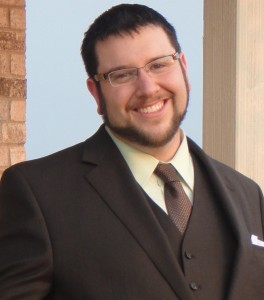
Jordan Dollar
All of this was possible because she was a prostitute. Prostitutes lived in the walls of the city. They lived in the walls of the city because they were marginal, not accepted, treated as less human. The ancient world allowed women only three roles: a virgin in her father’s house, a wife in her husband’s house, or a widow in her child’s house. If a woman was cast aside by her husband, if she had no children, or if her father turned her out, the options were more or less starvation or prostitution.
Prostitution had little to no stigma for the men that visited prostitutes. Indeed in some cultic traditions it could be a form of piety. For the women, however, they were viewed as being less valuable, less human.
Therefore prostitutes lived in the city wall. Because they lived in the walls they would be the first to die if the city was attacked. Because they lived in the walls perhaps while they were being slaughtered more worthy people could escape. Because they lived in the walls, perhaps if there was an attack by night the screams of slaughtered women would wake their betters. Because they lived in the walls Rahab could let the spies down outside the city gates, unnoticed by the sentries.
This story is written from the perspective of the Israelites, so we read it from the perspective of the Israelites. Pause a moment though, and place yourself in Jericho. Rahab is not a hero if you live in Jericho. Rahab is a traitor. Rahab betrayed her people, a people that only granted her a half status. Perhaps had Rahab been valued, treated as a person of worth, she would not need to be a prostitute. Perhaps if Rahab, despite her profession was seen as truly human she wouldn’t have harbored a resentment against her own city. Certainly if Rahab hadn’t been forced to the literal margins of life in the city, she would have not have been able to shelter spies and help them escape. The people of Jericho were a part of their own undoing when they pushed Rahab to the margins.
Throughout history dominant groups have been pushing other groups to the margin. We have placed our thumbs on the scale to try to hold on to a sense of control and familiarity. Each dominant culture has shied away from what they see as being different, and it hurts the humanity of the dominant group. We come to view the other as also being less. Less intelligent, less evolved, less moral, less hardworking . . .each less standing in for less human.
If we did not do this, we could not push others to the margins. Even with as little value as that ancient culture placed on women, I would wager that the residents of Jericho wouldn’t send women to live in the wall and be the first to be slaughtered. In order to make it acceptable it must be prostitutes, which somehow is not synonymous with people.
Slavery exists in America. People are bought and sold, but at all costs we avoid calling them people. When slavery ends, Jim Crow laws begin. When they end, marginalization continues in the form of economic and housing discrimination, unjust school funding, and a biased criminal justice system.
Whether it is racial minorities, early Christians in the Roman empire, women for most of history, early persecuted Baptists, indigenous peoples, members of the LGBTQ community, the physically or mentally handicapped, or any of hundreds of other differences, people keep getting pushed to the margins. People keep getting sent to live in the city wall, and churches have been on both sides.
Many people who did it likely did not realize that they were doing it, or the moral injury that it was doing them. Many churches taking part in marginalization don’t recognize the sin living in their own pews. This much is clear though: the walls of Jericho fell and Rahab endured. It seems to be the way of history that the marginalized cannot remain marginalized forever. Unjust systems falter whether in a few years or across generations. People denied their personhood will come to be seen as equals.
I cannot see a problem that was ever permanently solved by marginalizing people or denying the humanity of others. Perhaps our churches can use their position in the city center to speak up for those living in the walls.
Jordan Dollar is a Cooperative Baptist Fellowship-endorsed chaplain who has served in congregational, hospital, and emergency services settings. He currently serves as a chaplain with Seasons Hospice and Palliative Care in St. Louis, Missouri. Jordan is a native of the St. Louis area and can be found in his garden, by his beehives, or with his wife and two sons.
Previous Post

February 8, 2017
The cost of unity

Browse Our Archives
Select a Category Advent Advocacy Baptist Black Lives Matter Campbell University CCM Chaplain Children Church Starts Clergy Sexual Misconduct Coaching Culture Environment Equality Ethics Events Field Personnel Health History Human Trafficking Immigration Interfaith Interviews Lent Ministry Missions Payday Pentecost Politics Prayer Race Refugees Religious Liberty Sermon Spirituality Theology Uncategorized United Nations Women Worship Young Adults
Select a Month November 2018 October 2018 September 2018 August 2018 July 2018 June 2018 May 2018 April 2018 March 2018 February 2018 January 2018 December 2017 November 2017 October 2017 September 2017 August 2017 July 2017 June 2017 May 2017 April 2017 March 2017 February 2017 January 2017 December 2016 November 2016 October 2016 February 2016
Follow Us!
TAKE THE
Religious Wisdom Quiz
Who traveled with Paul and received letters to lead churches in Crete?
Select your answer to see how you score.
Titus Luke Timothy Barnabas
Related posts from Cooperative Baptist Fellowship

Cooperative Baptist Fellowship

CBF Podcast: A Conversation with Christian Piatt
Cooperative Baptist Fellowship
CBF Podcast: Exodus Preaching, featuring Kenyatta Gilbert
Cooperative Baptist Fellowship
Cooperative Baptist Fellowship
TRENDING AT PATHEOS Progressive Christian

Why Christians Have a Sacred Duty to Vote:...
The Bible offers strong support for the sacred duty to vote. Here...

What Being a Modern-Day Apostle Means to Me
In my last column, I discussed the ins and outs of modern-day...

Did Ancient China Once Worship the God of...
Across human history, a common thread weaves through the origins of the...

Love Your Neighbor – Including Earth-Kin: Lev. 19,...
God’s command to love your neighbor means acting in an ethical and...

Lead a Church Study of “Jesus and Lao...
Guest writer Jack Thomas (The Irreverent Reverend) reflects on leading his church...

Principles for Understanding the Apostolic Ministry Today
Whenever people discover that my formal ministry title is "apostle," as in...
view all Progressive Christian blogs
Ad-Free & Subscriber Log-In Subscription Support
- About Us
- 2026 Calendar
- Videos
- Podcasts
- Library of World Religions
- Faith In Media Tracker
- Advertise With Us
- Write for Us
- Privacy Policy
- Terms of Service
- Do Not Sell My Data
- Contact Us
- Radiant Digital
- Manage Newsletter Subscriptions
- Unsubscribe From Notifications
- Sitemap
Copyright 2008-2026, Patheos. All rights reserved.
Subscription Support Ad-Free & Subscriber Log-In
Follow Patheos