
BuddhistCatholicContemplativeEvangelicalGeneral ChristianHinduJewishLatter-day SaintMuslimNew VisionsProgressive Christian
Beliefs
- Buddhist
- Catholic
- Contemplative
- Evangelical
- General Christian
- Hindu
- Jewish
- Latter-day Saint
- More Voices
- Muslim
- New Visions
- Pagan
- Progressive Christian
Topics
- Religion News
- Food and Religion
- Sports and Religion
- Religious Art
- Religious Music and Entertainment
- Religious Events
- History and Religion
- Style and Religion
- Politics and Religion
- Women in Religion
- Recreation Outdoors and Religion
- Business Finance and Religion
- Careers Workplace and Religion
- Education and Religion
- Family Parenting and Religion
- Health Fitness and Religion
- Home and Religion
- Relationships and Religion
- Technology and Religion
- Travel and Religion
Columnists
- Buddhist Columnists
- Business Finance and Religion Columnists
- Careers Workplace and Religion Columnists
- Catholic Columnists
- Contemplative Columnists
- Education and Religion Columnists
- Evangelists Columnists
- Family Parenting and Religion Columnists
- General Christian Columnists
- Health Fitness and Religion Columnists
- Hindu Columnists
- History and Religion Columnists
- Home and Religion Columnists
- Jewish Columnists
- More Voices Columnists
- Latter Day Columnists
- Muslim Columnists
- New Visions Columnists
- Nonreligious Columnists
- Pagan Columnists
- Politics and Religion Columnists
- Progressive Columnists
- Recreation Outdoors and Religion Columnists
- Relationships and Religion Columnists
- Religion News Columnists
- Religious Art Columnists
- Religious Events Columnists
- Religious Music and Entertainment Columnists
- Sports and Religion Columnists
- Style and Religion Columnists
- Technology and Religion Columnists
- Travel and Religion Columnists
- Women in Religion Columnists
Resource Library
- 2026 Calendar
- Library of World Religions
- The 100 Most Holy Places on Earth
- Patheos Answers
- Podcasts
- Videos
- Faith Leaders Database
- Anglican Episcopalian
- Bahai
- Baptist
- Buddhism
- Christianity
- Confucianism
- Eastern Orthodoxy
- Hinduism
- Holiness and Pentecostal
- ISKCON
- Islam
- Judaism
- Lutheran
- Methodist
- The Church of Jesus Christ of Latter-day Saints
- New Age
- Paganism
- Presbytarian and Reformed
- Protestantism
- Religion Behind the Scenes
- Roman Catholic
- Scientology
- Shia Islam
- Sikhism
- Sufism
- Sunni Islam
- Taoism
- Zen
- See all religions
Research Tools
 Ad-Free & Subscriber Log-In Subscription Support
Ad-Free & Subscriber Log-In Subscription Support
Follow Patheos 

- Trending:
- Forgiveness
- |
- Marriage
- |
- Consciousness
- |
- Death Penalty
- |
- Election
- |
- Halloween
 Cooperative Baptist Fellowship
- Home
- Progressive Christian
- A Case for the Church Year
A Case for the Church Year
Last updated on: December 14, 2016 at 8:00 am by Guest Contributor
A Case for the Church Year 2016-12-08T22:20:38-04:00 Guest Contributor
Patheos Explore the world's faith through different perspectives on religion and spirituality! Patheos has the views of the prevalent religions and spiritualities of the world.
By Amanda Standiford
Each day, we awaken to a new and seemingly louder uproar in the world. Each night, we go to sleep with minds and hearts spinning echoes of the news we’ve read and heard, the tragedies we’ve mourned, the things that feel lost. It is easy to panic and tempting to despair.

Amanda Standiford
And yet we are called to neither. Rather, we are called to wade through the muck and the murk, to be hope-bringers, peacemakers, joy-givers, love-pourers, and light-bearers to our world. It is a high calling and at times a difficult one, but we are not alone.
I am increasingly grateful for the gift of the church year to remind us of this. It grounds us. It offers perspective. It binds us together. It reminds us who we are and what we are, and it keeps us moving.
I grew up vaguely aware of Advent. My Catholic friends gave up things for Lent. That was extent of my familiarity with the church year. I am a descendant of the descendants of the generation that threw out much of what tied us, the Church, to antiquity, to the church throughout the ages, and in the quest for modernity and relevance, a whole tub of full of babies went out with the bathwater. I say this not to cast blame but to set my own context and define my own perspective.
And so here, in my 21st century adulthood, working in the church and trying to help it cast off, for lack of a better term, 1950 — with its personal salvation, its oddly patriotic, institutional church, and its culture wars, all fodder for other writing, perhaps — I find myself eager to reclaim that which was tried and true long before the 20th century and the strange but important phase of humanity that was modernity.
For me, the church year is among the most helpful of those things. It is both anchoring and freeing. It is deeply rooted in the life of Christ, and I love that. It begins with anticipating and then celebrating his birth. And then there are just a few short weeks to walk in his sandals and
remember his life before we begin preparing for his death. And then there’s the death, and more importantly, the resurrection — the gift of Christ with us in a new way, reveled in for seven whole and full weeks each year leading up to the birth of the Church at Pentecost.
And then, delightfully and oh-so-appropriately, there are nearly six months and sometimes more left to lean into the life of the church, into the life of Christ embodied by the Church alive and active in the world. Finally, the church year ends on a lovely and hopeful note — Christ the King Sunday, when we pause to remind ourselves that this is where we’re headed.
The church year is liberating in this way. It offers perspective to remind us that we matter, that the church in our day and age matters. Christ’s life did not end with the ascension or with Pentecost; rather he lives and breathes through us, even today.
There is no need to be the Church of antiquity or the Church of the reformation or even the Church of the modern era. Rather, we are invited to be who we are, at this moment in history, and to have that be perfectly valid. Perhaps we’re the body of Christ in mid-September or on July 21st. It’s not for us to know, but it is for us to be.
And it binds us together.
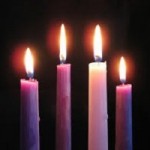
When we follow a different calendar from the world — not one that is discordantly, abrasively different but one that complements and reinterprets — we are gently bound to one another. We are drawn together by the lighting of the Advent candles, the marking of the ashes on our hands and foreheads, the hallelujahs, and the changing colors in our sanctuaries.
We live our lives by Christ’s time because it is a small act of kingdom come, of making the reign of Christ more real in our world. And we need the rituals — we crave them. Our souls are not cut out for willy-nilly church but rather for the predictability of the liturgical year. We need to be reminded that we were a people walking in darkness but that we’ve seen a great light.
We need to be told year after year that though we walk in the light, shadows creep up in and around us. We need to be assured that even in the valley of the shadow of death, the love and the promise of Christ compels us.
There is a lot to be outraged about in our world. It’s a shadowy time. And there is a lot that we should, as the body of Christ, be outraged about.
But these are not the first shadows, nor will they likely be the last. The liturgical year speaks this truth to us, over and over again. There is a time for lament. There is a time for mourning and weeping. There is a time for the work of reconciliation and the many tasks of loving well. And there is a time to rejoice, to dance in the light of our Creator and Sustainer.
There is a season for everything and we are called, not to panic or despair, but to undertake each task in its own time.
Amanda Standiford serves as Minister to Children and Young Families at Lexington Avenue Baptist Church. She and her husband, Adam, and their dog, Gavin, live in Danville, Kentucky. Amanda is a graduate of the Baptist Seminary of Kentucky.
Previous Post

December 12, 2016
Reclaiming Paul in a Pantsuit State of Mind
Next Post
December 15, 2016 Songs of Advent
Browse Our Archives
Select a Category Advent Advocacy Baptist Black Lives Matter Campbell University CCM Chaplain Children Church Starts Clergy Sexual Misconduct Coaching Culture Environment Equality Ethics Events Field Personnel Health History Human Trafficking Immigration Interfaith Interviews Lent Ministry Missions Payday Pentecost Politics Prayer Race Refugees Religious Liberty Sermon Spirituality Theology Uncategorized United Nations Women Worship Young Adults
Select a Month November 2018 October 2018 September 2018 August 2018 July 2018 June 2018 May 2018 April 2018 March 2018 February 2018 January 2018 December 2017 November 2017 October 2017 September 2017 August 2017 July 2017 June 2017 May 2017 April 2017 March 2017 February 2017 January 2017 December 2016 November 2016 October 2016 February 2016
Follow Us!
TAKE THE
Religious Wisdom Quiz
Who said, "Let us build us a city and a tower, whose top may reach unto heaven"?
Select your answer to see how you score.
People of Babel Israelites Chaldeans Egyptians
Related posts from Cooperative Baptist Fellowship

CBF Podcast: Live from the General Assembly Podcast...
Cooperative Baptist Fellowship
CBF Podcast: A Place At the Table with...
Cooperative Baptist Fellowship

CBF Podcast: A Conversation with Christian Piatt
Cooperative Baptist Fellowship

Six Thoughts on Faith-Based Advocacy
Cooperative Baptist Fellowship
TRENDING AT PATHEOS Progressive Christian

What Being a Modern-Day Apostle Means to Me
In my last column, I discussed the ins and outs of modern-day...

Did Ancient China Once Worship the God of...
Across human history, a common thread weaves through the origins of the...

Love Your Neighbor – Including Earth-Kin: Lev. 19,...
God’s command to love your neighbor means acting in an ethical and...

Lead a Church Study of “Jesus and Lao...
Guest writer Jack Thomas (The Irreverent Reverend) reflects on leading his church...

Pastoral Wisdom for Responding to Sermon Pushback
Getting sermon pushback on your social justice sermon? Learn practical, Proverbs-based strategies...

Principles for Understanding the Apostolic Ministry Today
Whenever people discover that my formal ministry title is "apostle," as in...
view all Progressive Christian blogs
Ad-Free & Subscriber Log-In Subscription Support
- About Us
- 2026 Calendar
- Videos
- Podcasts
- Library of World Religions
- Faith In Media Tracker
- Advertise With Us
- Write for Us
- Privacy Policy
- Terms of Service
- Do Not Sell My Data
- Contact Us
- Radiant Digital
- Manage Newsletter Subscriptions
- Unsubscribe From Notifications
- Sitemap
Copyright 2008-2026, Patheos. All rights reserved.
Subscription Support Ad-Free & Subscriber Log-In
Follow Patheos